
Cart
0
Product
Products
(empty)
No products
Free shipping!
Shipping
0 €
Total
Product successfully added to your shopping cart
Quantity
Total
There are 0 items in your cart. There is 1 item in your cart.
Total products
(tax incl.)
Total shipping (tax incl.)
Free shipping!
Total
(tax incl.)
54
Kashan Mohtashem
New
344 x 253 cm (11' 3" x 8' 4")
Persia, early 20th century
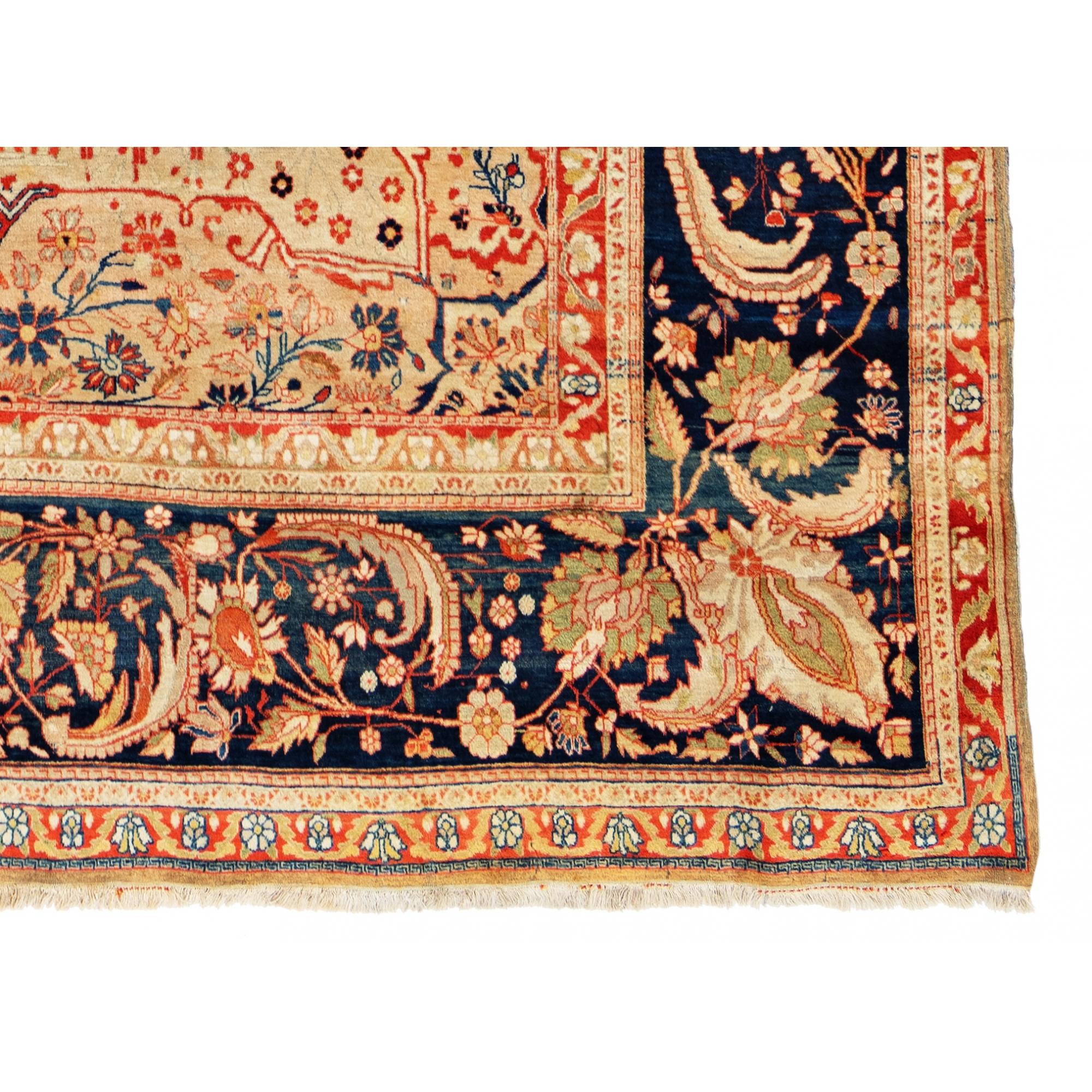
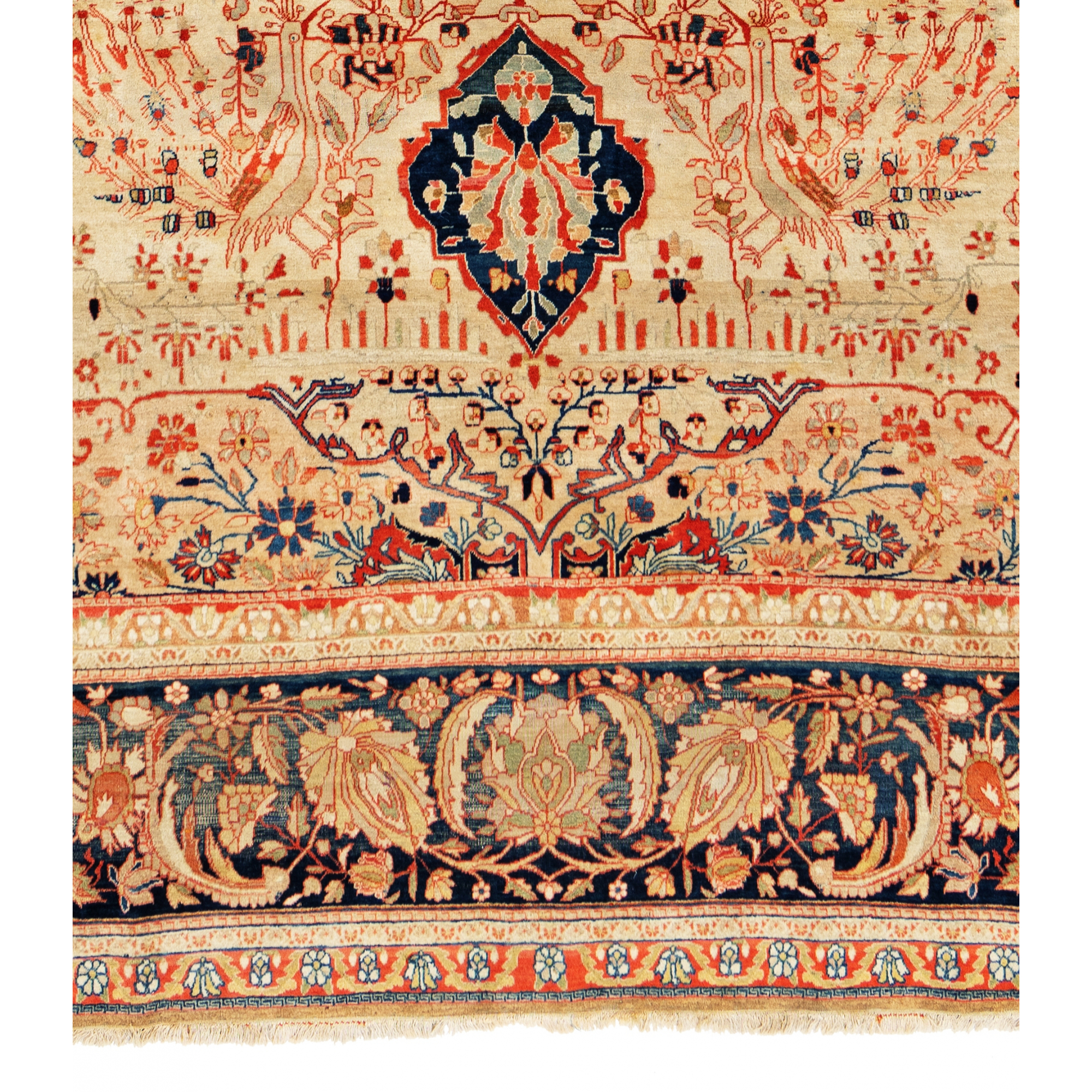
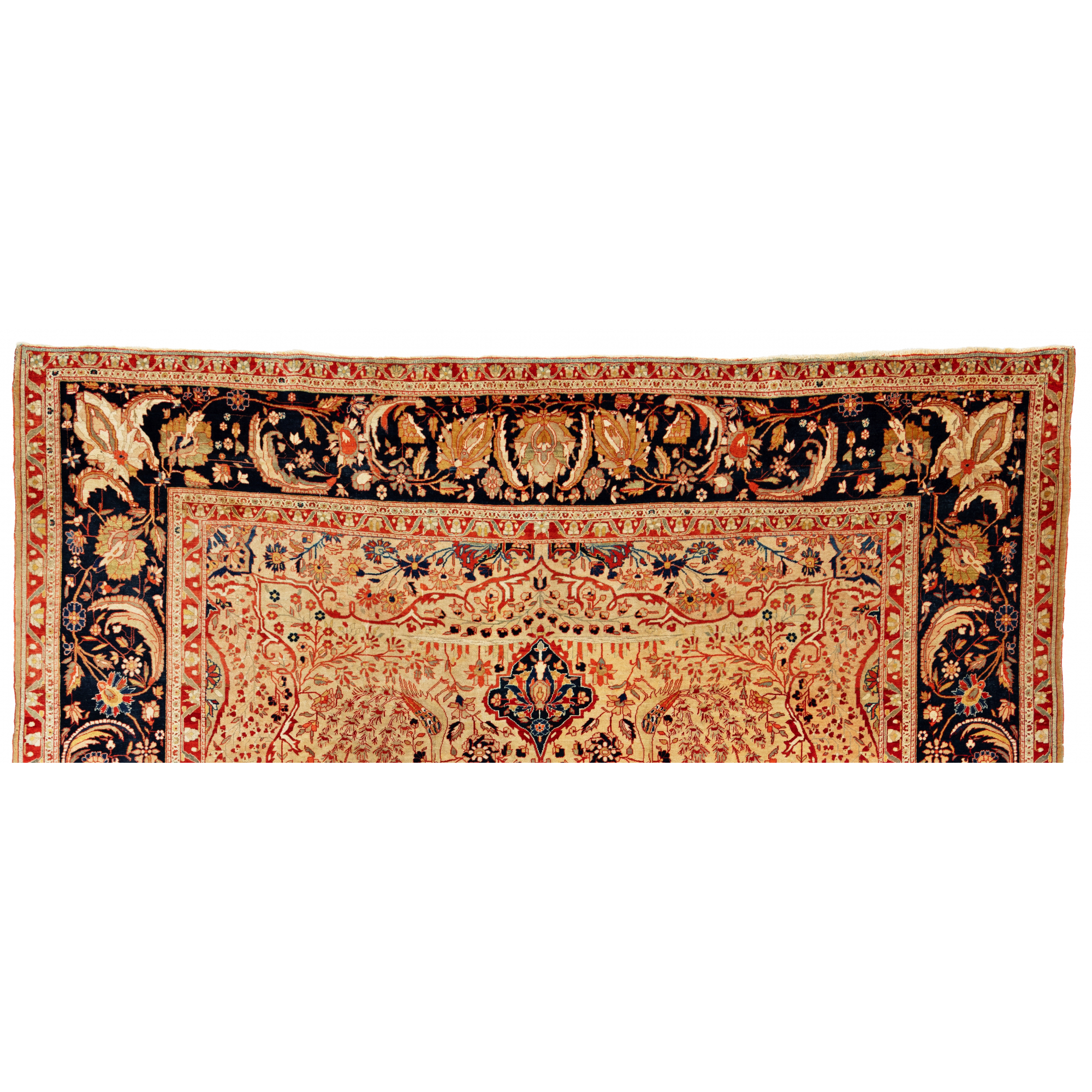
Condition: good, low pile in places in the lower border, upper ends slightly incomplete, selvedges partly restored and partly damaged
Warp: cotton, weft: cotton, pile: wool
In his seminal work "The Persian Carpet", on page 333, Cecil Edwards described the city of Kashan as one of Persia's less attractive cities, unkempt and dilapidated. In the 16th and 17th centuries, the city was three times as large as it was in the 19th century and famous for its silk, wool, and cotton products. At the end of the 19th century, the renaissance of Oriental carpets gave local weavers the opportunity to "build on" their earlier successes. Today, these elegant carpets are among the city's most sought-after antiques.
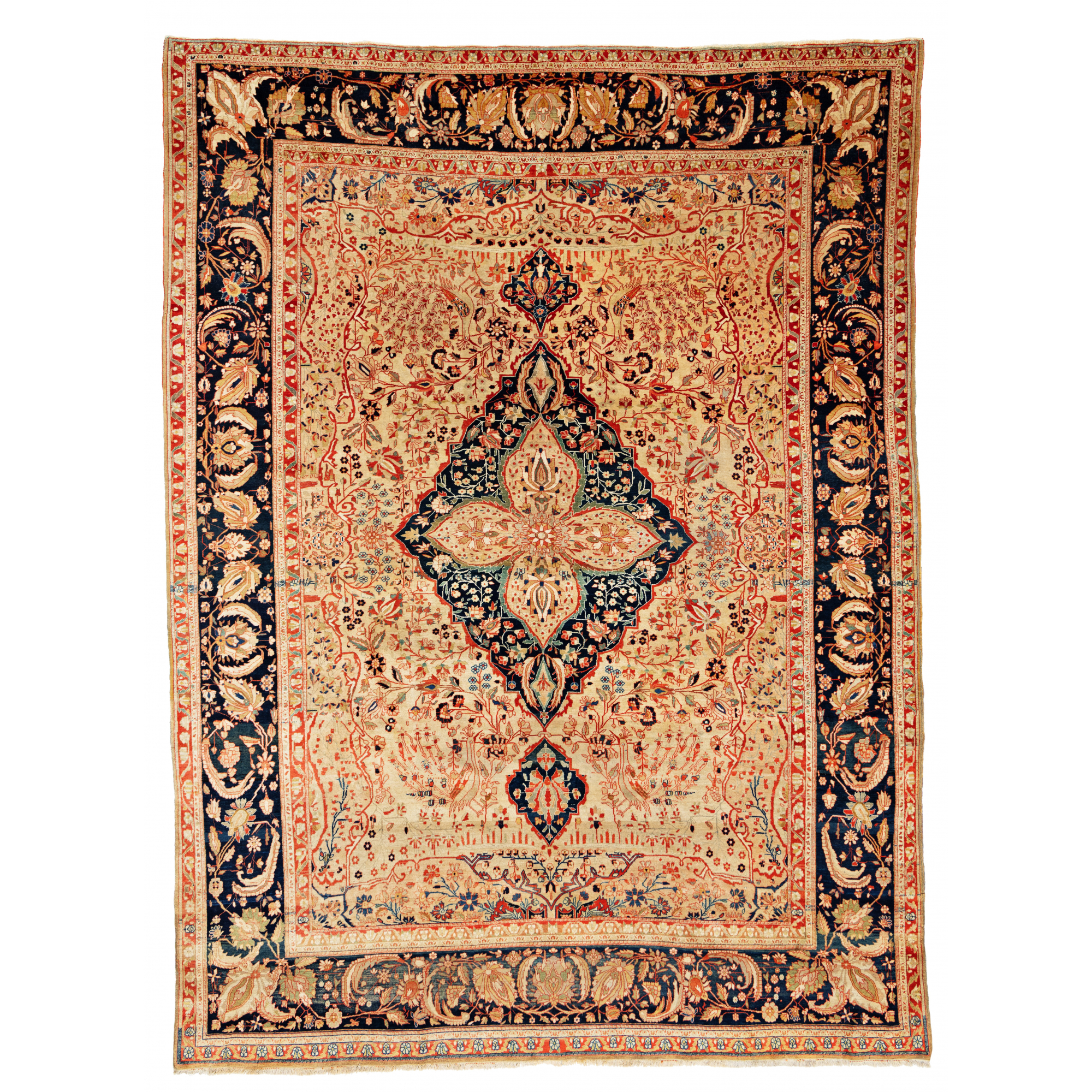
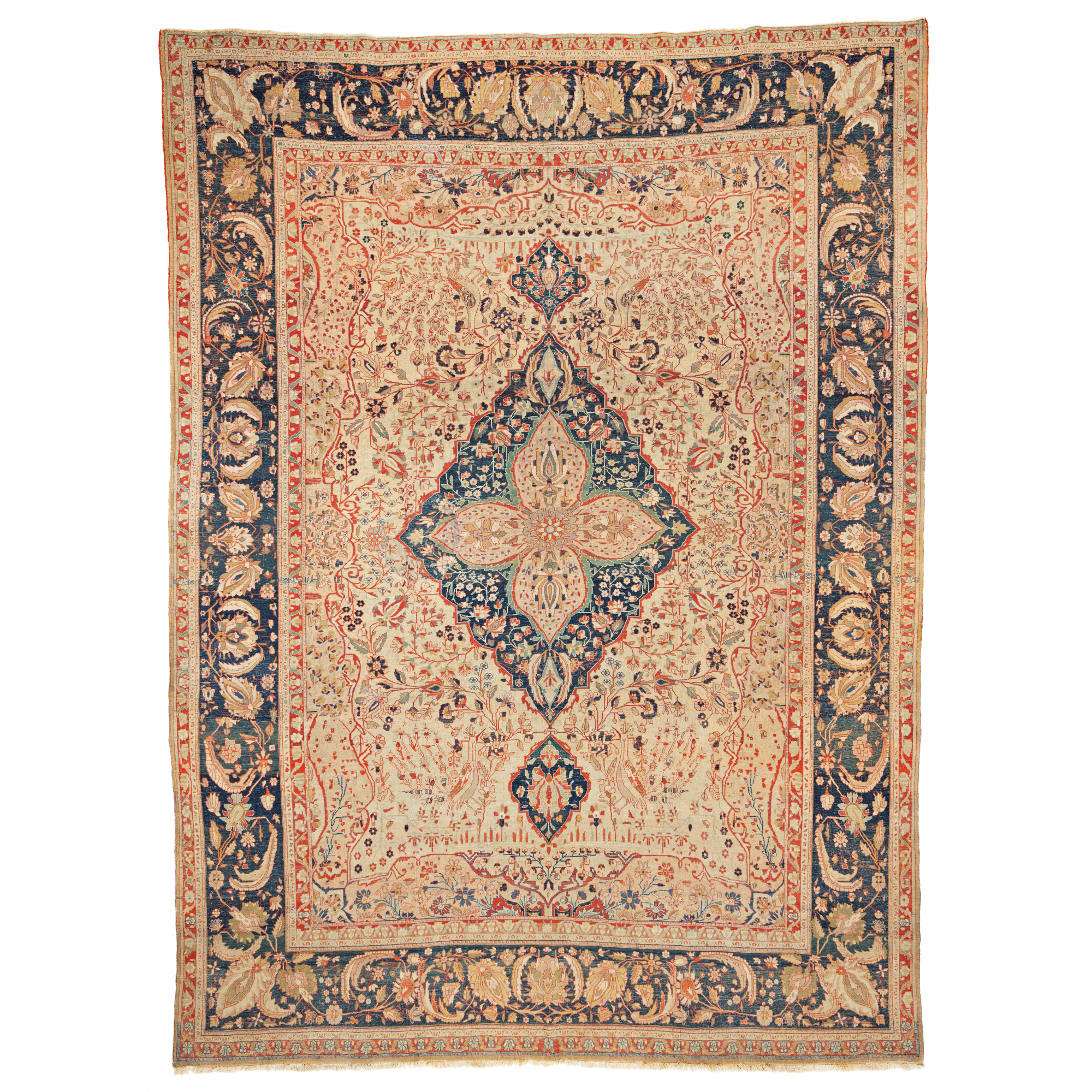
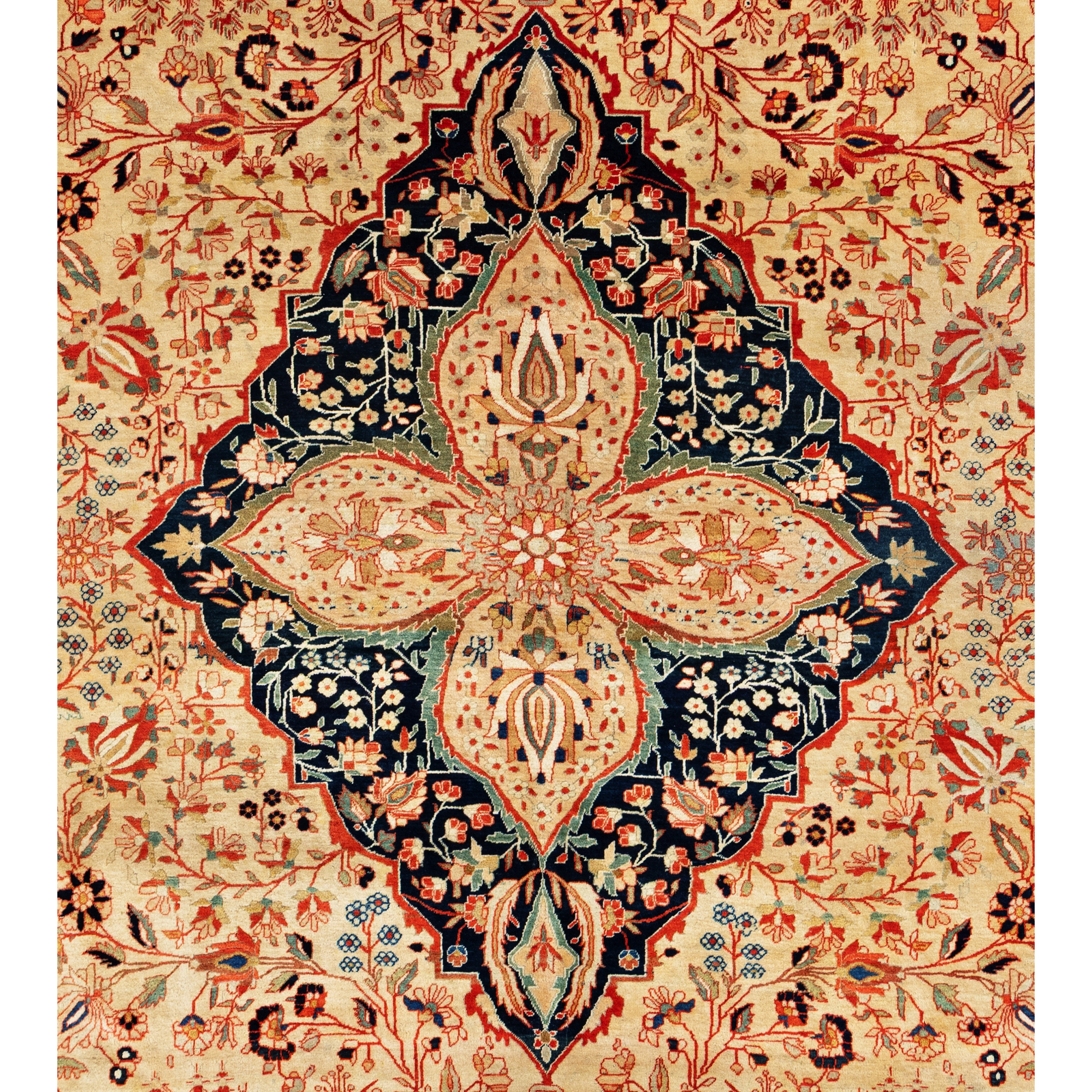
Page 341 features a carpet that, like ours, displays a pointed oval cross in the center. With its serrated borders, this carpet creates a strong sense of movement against the dark blue field and forms a striking contrast to the sharply defined diamond. Two small pendants complete the classical composition. It rests on a subdued-colored field adorned with a multitude of flowers, tendrils, and palmettes.
At the top and bottom edges of the field, next to the small blue medallions, a meadow landscape is depicted on gentle hills. Above it stand two large male peacocks, their beaks buried in a flower. Their magnificent tail feathers fan out widely across the field. The peacocks seem to be vying for the flower's attention.
The dark blue border is drawn with wonderful flair. Through its color coordination with the medallion, it creates a charming contrast to the subtly colored inner field.
A classic piece full of elegance and intrigue.
Estimate: € 20000 - 30000
Persia, early 20th century
Condition: good, low pile in places in the lower border, upper ends slightly incomplete, selvedges partly restored and partly damaged
Warp: cotton, weft: cotton, pile: wool
In his seminal work "The Persian Carpet", on page 333, Cecil Edwards described the city of Kashan as one of Persia's less attractive cities, unkempt and dilapidated. In the 16th and 17th centuries, the city was three times as large as it was in the 19th century and famous for its silk, wool, and cotton products. At the end of the 19th century, the renaissance of Oriental carpets gave local weavers the opportunity to "build on" their earlier successes. Today, these elegant carpets are among the city's most sought-after antiques.
Page 341 features a carpet that, like ours, displays a pointed oval cross in the center. With its serrated borders, this carpet creates a strong sense of movement against the dark blue field and forms a striking contrast to the sharply defined diamond. Two small pendants complete the classical composition. It rests on a subdued-colored field adorned with a multitude of flowers, tendrils, and palmettes.
At the top and bottom edges of the field, next to the small blue medallions, a meadow landscape is depicted on gentle hills. Above it stand two large male peacocks, their beaks buried in a flower. Their magnificent tail feathers fan out widely across the field. The peacocks seem to be vying for the flower's attention.
The dark blue border is drawn with wonderful flair. Through its color coordination with the medallion, it creates a charming contrast to the subtly colored inner field.
A classic piece full of elegance and intrigue.
Estimate: € 20000 - 30000