
Cart
0
Product
Products
(empty)
No products
Free shipping!
Shipping
0 €
Total
Product successfully added to your shopping cart
Quantity
Total
There are 0 items in your cart. There is 1 item in your cart.
Total products
(tax incl.)
Total shipping (tax incl.)
Free shipping!
Total
(tax incl.)
42
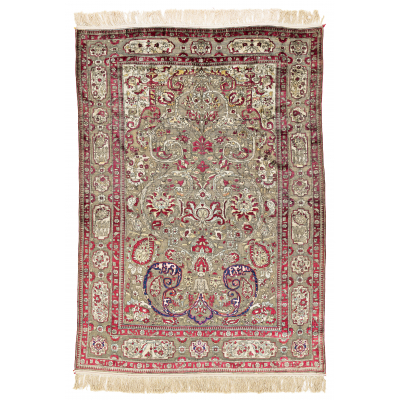
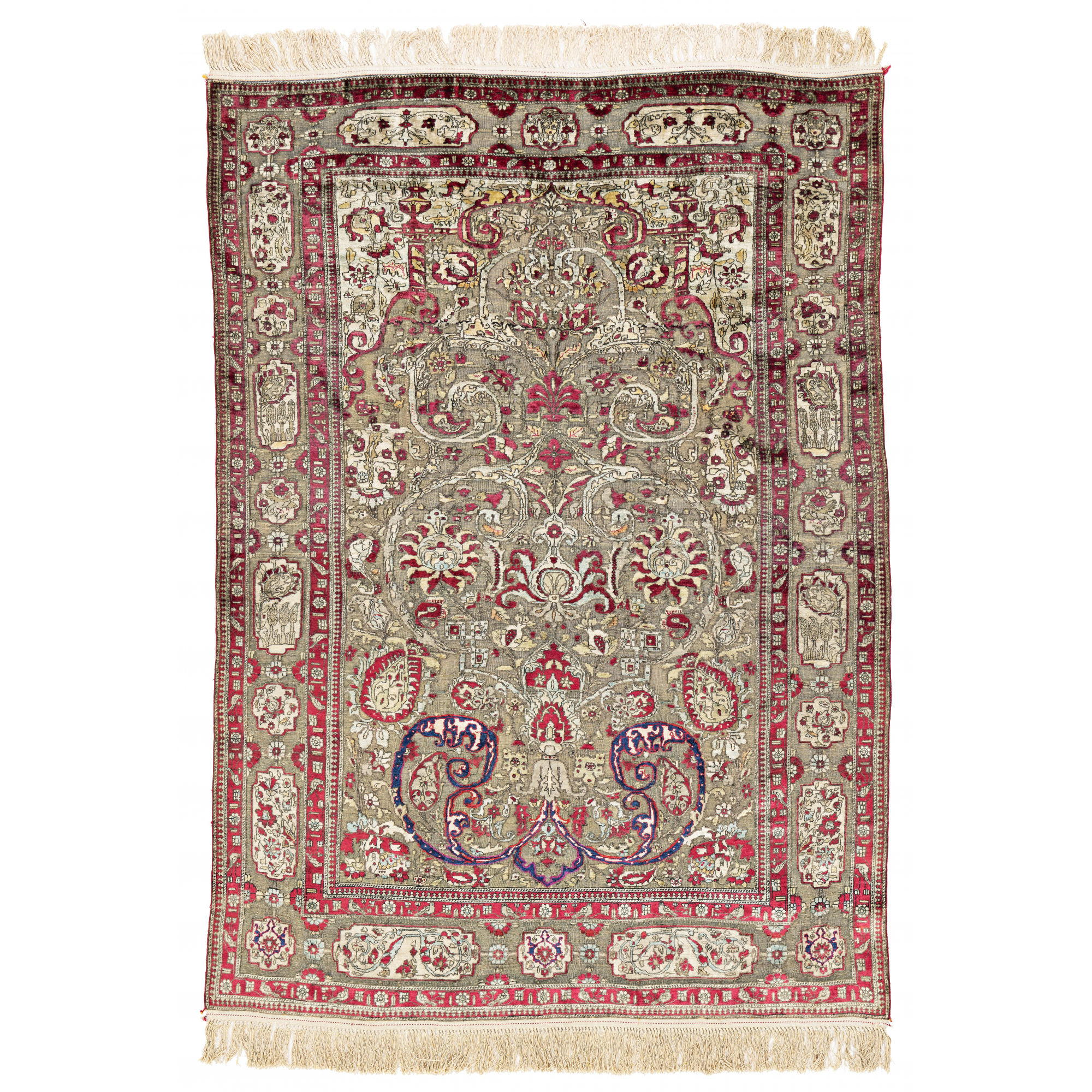
Silk Kashan Mohtashem Souf with metal brocade
New
188 x 133 cm (6' 2" x 4' 4")
Persia, ca. 1900
Condition: very good, full pile, minor small repairs
Warp: silk, weft: silk, pile: silk with metal brocade
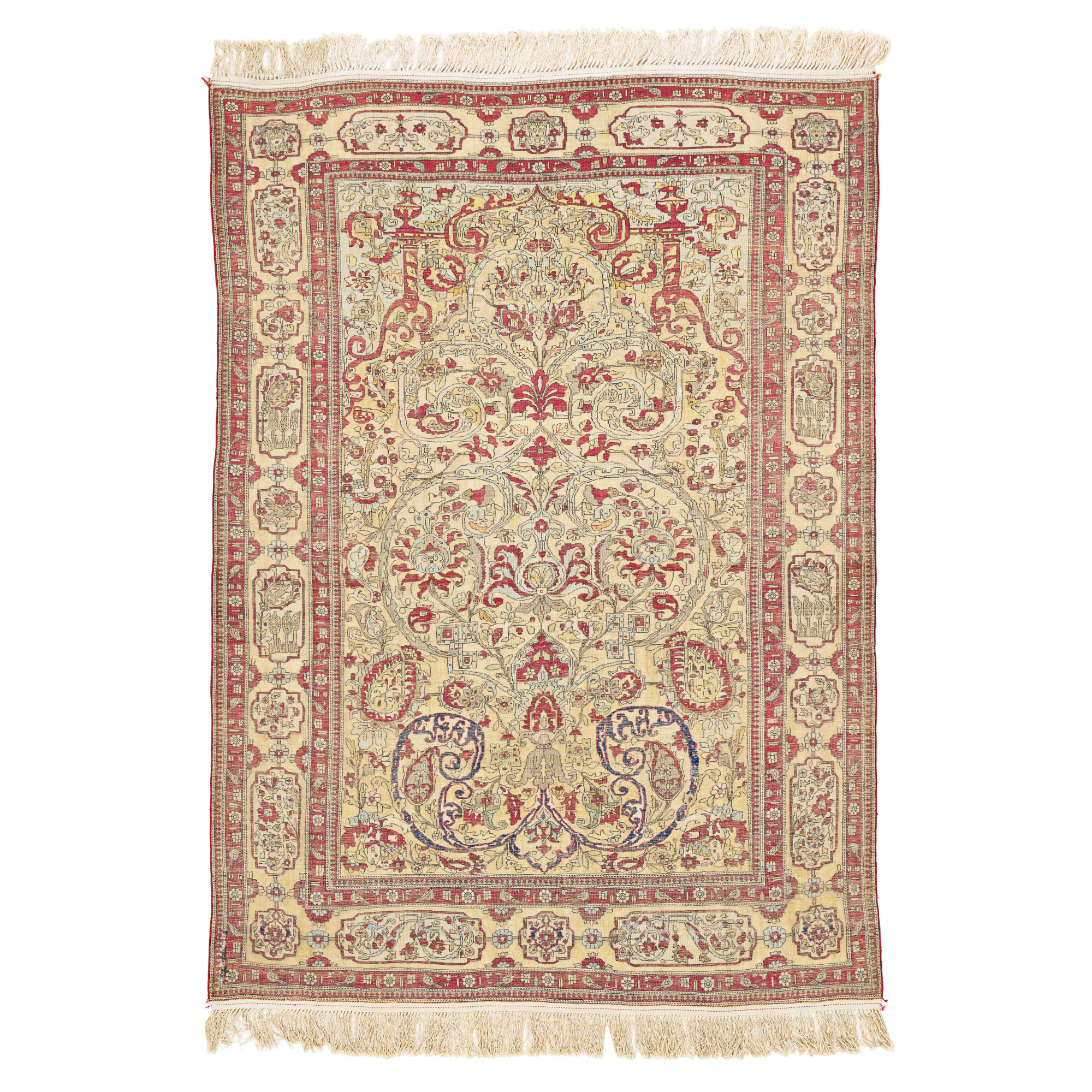
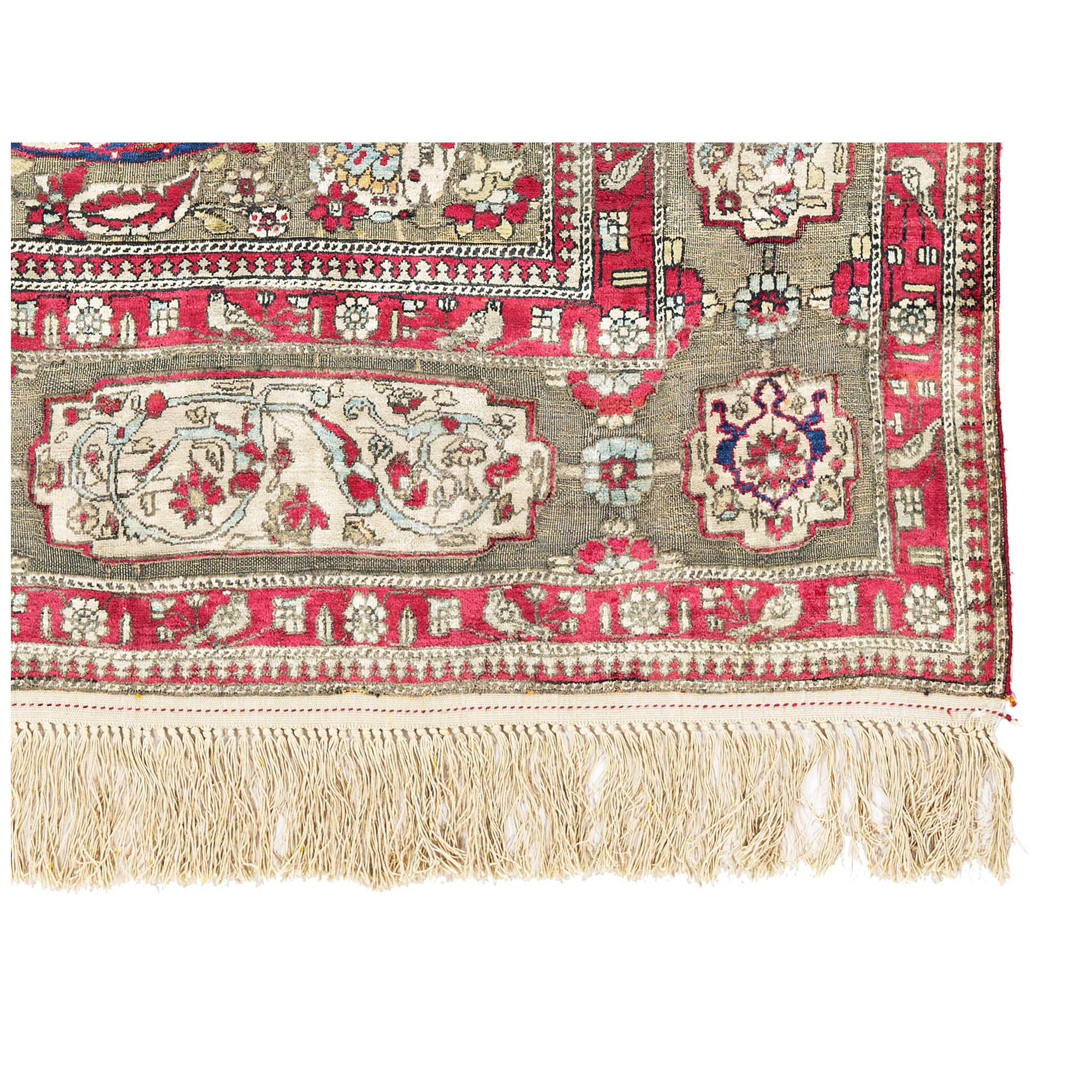
In Safavid Persia in the early 17th century, weavers began to make their already extremely luxurious silk carpets even more exquisite by incorporating metal brocade. This technique was revived in the 19th century by Persia's finest workshops and is known as "Souf." The ground is woven with metal threads, while the design is knotted in silk. As a result, the pattern stands out from the precious silver ground not only visually but also in a three-dimensional way due to its pile.
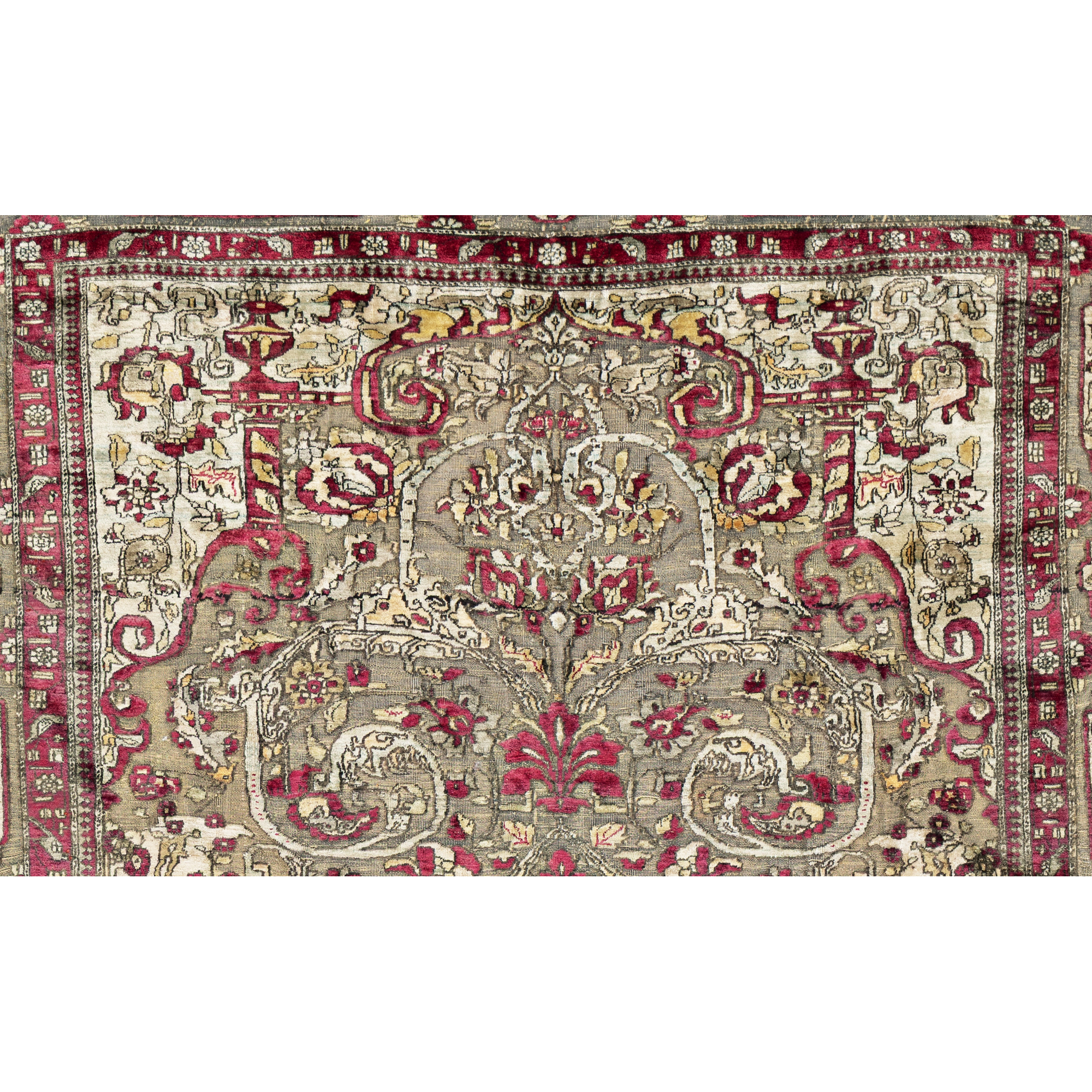
Large-format carpets of this type often feature medallions or spiral scrolls, whereas the smaller examples frequently depict a prayer niche. Most of the latter feature tree or vase motifs. The combination of a niche and scrollwork, on the other hand, is rather rare.
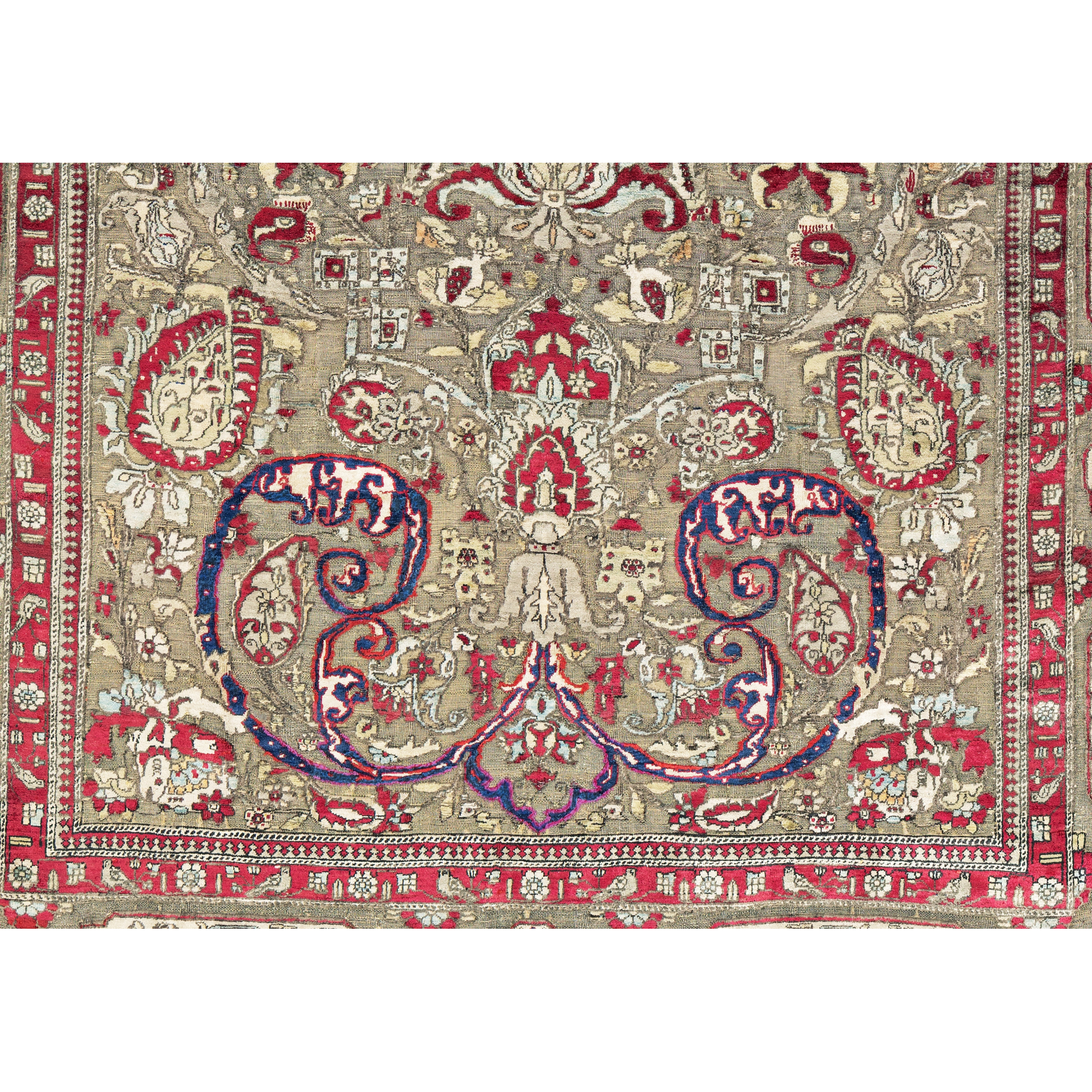
Palmettes and boteh motifs are connected by a dense network of scrollwork, behind which the niche recedes slightly.
This effect is counterbalanced by the architectural design featuring suggested columns topped by vases. Note also the unusual square knot patterns in the lower center of the field.
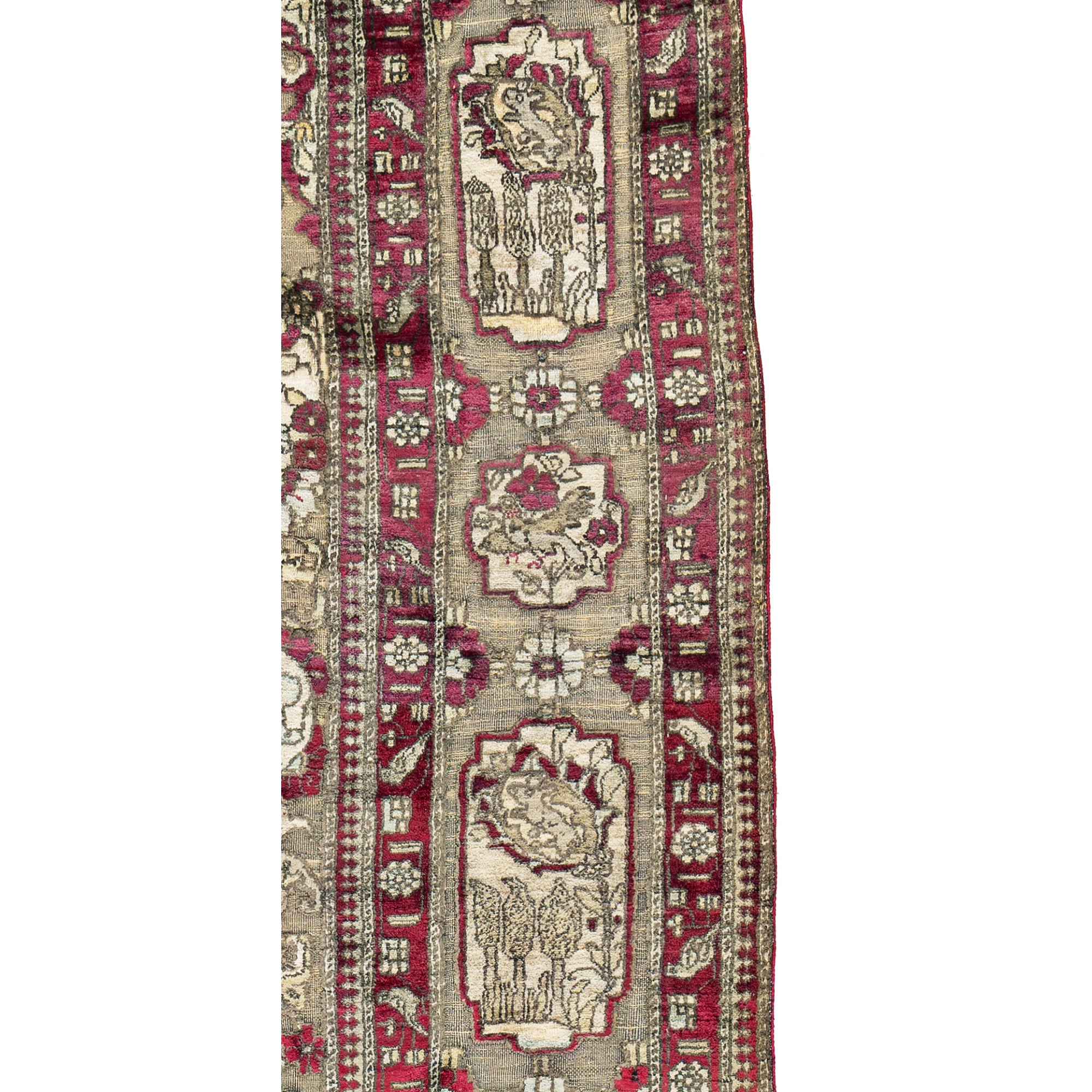
Well hidden, we discover two white fish with red eyes in the lower corners. Animals are also found in the borders. The birds in the red secondary borders are quite obvious. More difficult to spot are the bunnies and ring-necked doves in the main border, whose octagonal and coffered design also draws on Safavid models.
A carpet with this rarer border was featured in Christie's "Oriental Rugs and Carpets," October 10, 2008, Lot 173.
Estimate: € 12000 - 16000
Persia, ca. 1900
Condition: very good, full pile, minor small repairs
Warp: silk, weft: silk, pile: silk with metal brocade
In Safavid Persia in the early 17th century, weavers began to make their already extremely luxurious silk carpets even more exquisite by incorporating metal brocade. This technique was revived in the 19th century by Persia's finest workshops and is known as "Souf." The ground is woven with metal threads, while the design is knotted in silk. As a result, the pattern stands out from the precious silver ground not only visually but also in a three-dimensional way due to its pile.
Large-format carpets of this type often feature medallions or spiral scrolls, whereas the smaller examples frequently depict a prayer niche. Most of the latter feature tree or vase motifs. The combination of a niche and scrollwork, on the other hand, is rather rare.
Palmettes and boteh motifs are connected by a dense network of scrollwork, behind which the niche recedes slightly.
This effect is counterbalanced by the architectural design featuring suggested columns topped by vases. Note also the unusual square knot patterns in the lower center of the field.
Well hidden, we discover two white fish with red eyes in the lower corners. Animals are also found in the borders. The birds in the red secondary borders are quite obvious. More difficult to spot are the bunnies and ring-necked doves in the main border, whose octagonal and coffered design also draws on Safavid models.
A carpet with this rarer border was featured in Christie's "Oriental Rugs and Carpets," October 10, 2008, Lot 173.
Estimate: € 12000 - 16000