
Cart
0
Product
Products
(empty)
No products
Free shipping!
Shipping
0 €
Total
Product successfully added to your shopping cart
Quantity
Total
There are 0 items in your cart. There is 1 item in your cart.
Total products
(tax incl.)
Total shipping (tax incl.)
Free shipping!
Total
(tax incl.)
39
Early South Caucasian Rug
New
288 x 137 cm (9' 5" x 4' 6")
Caucasus, first half 19th century
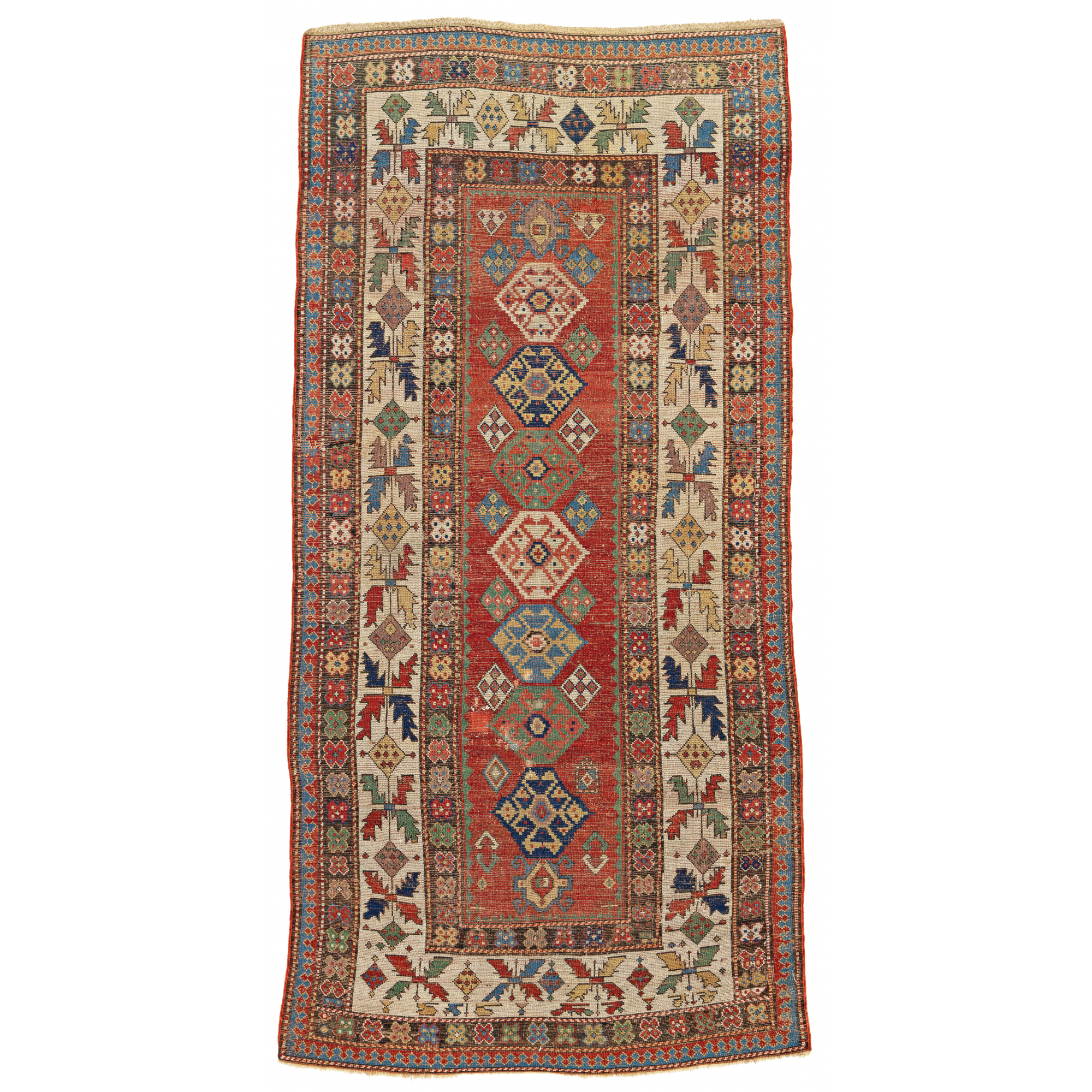
Condition: good for its age, mostly good pile, partially corroded dark brown, scattered small repairs
Warp: wool, weft: wool, pile: wool
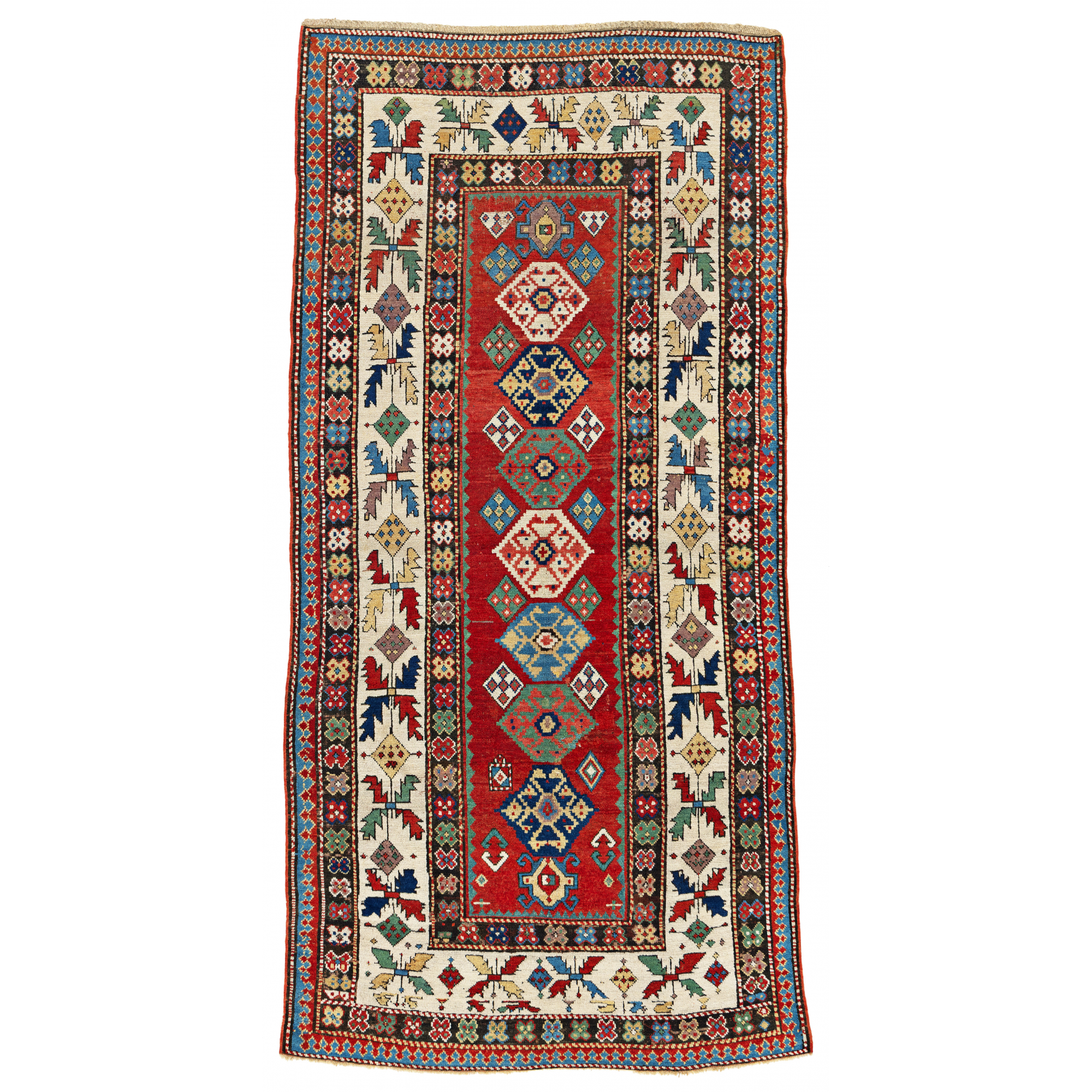
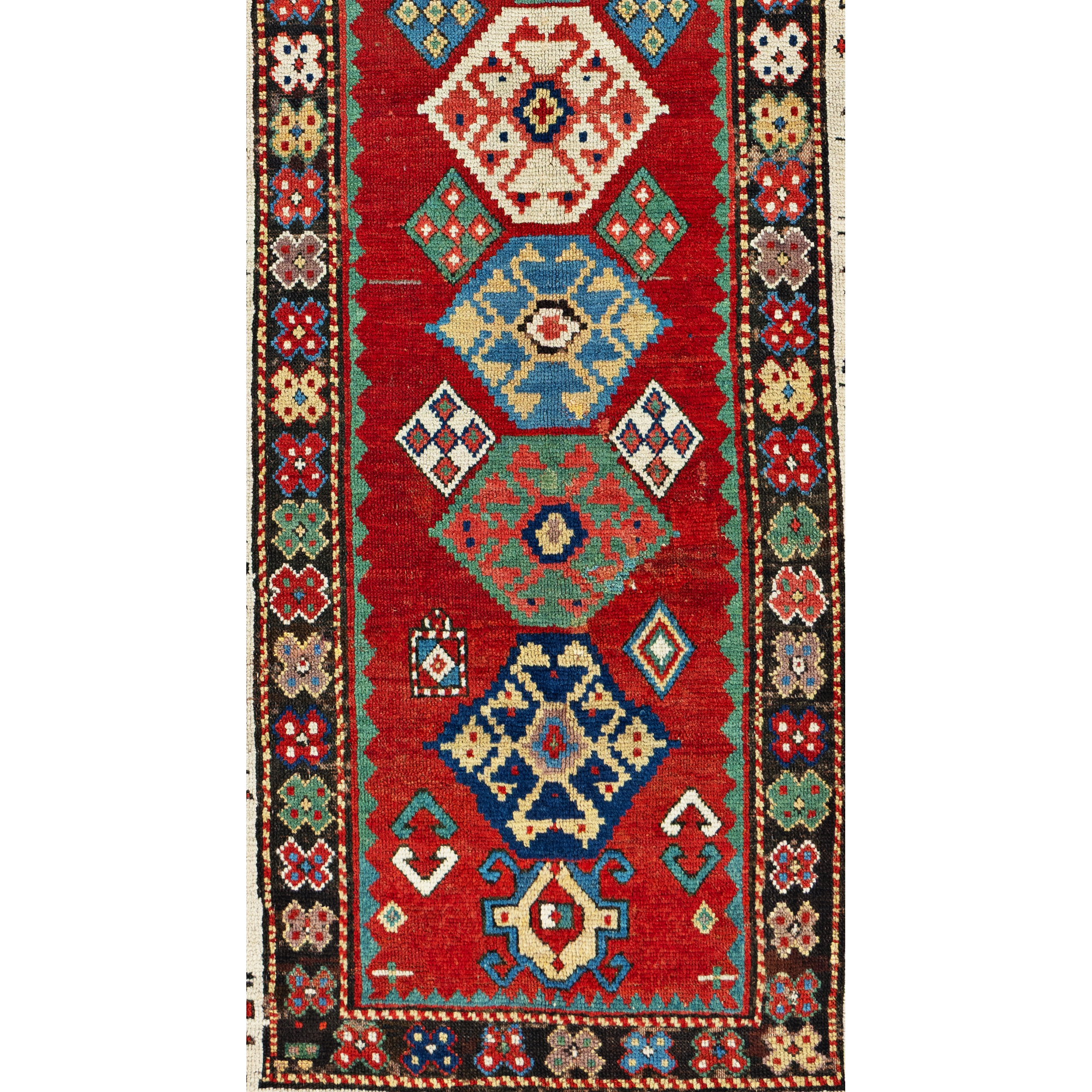
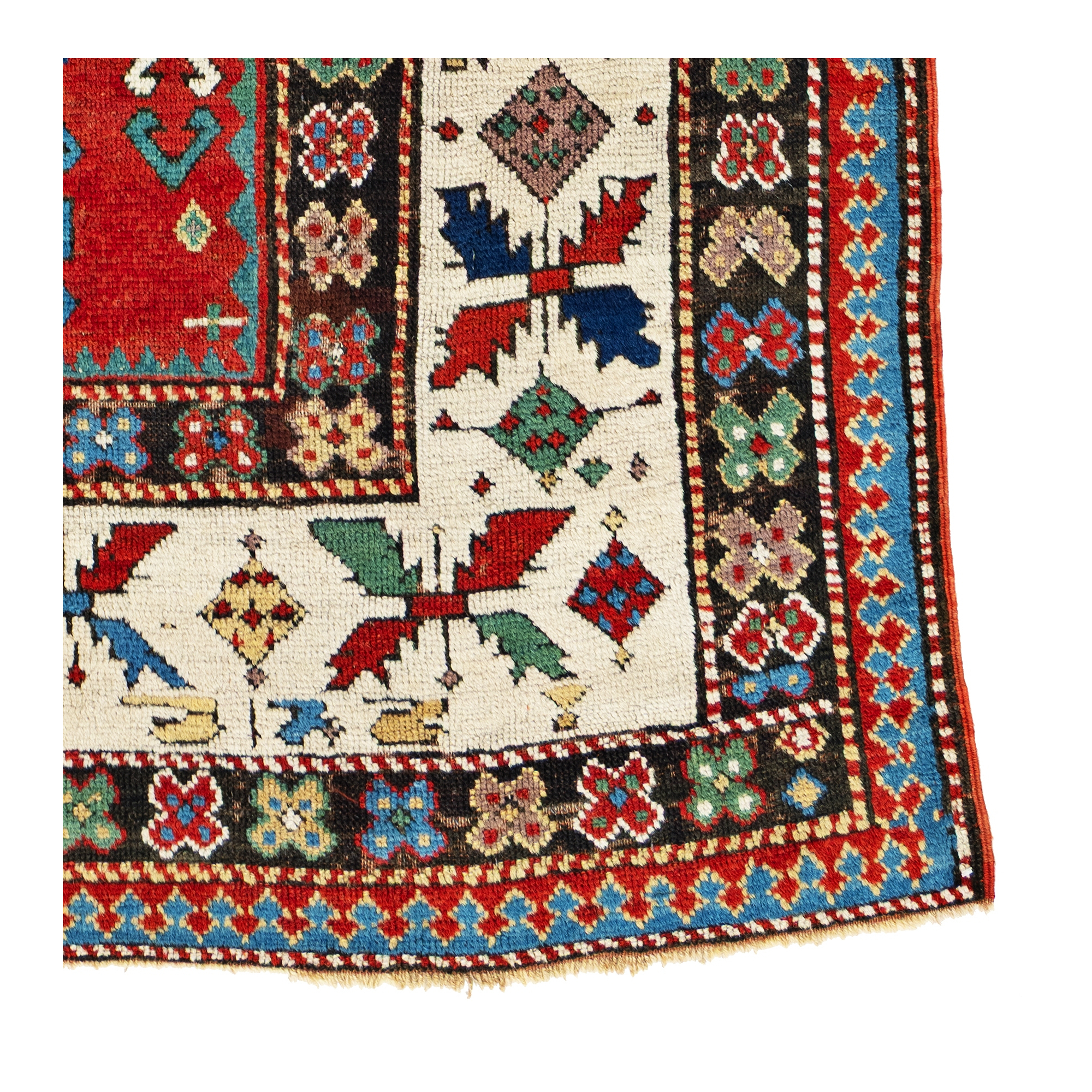
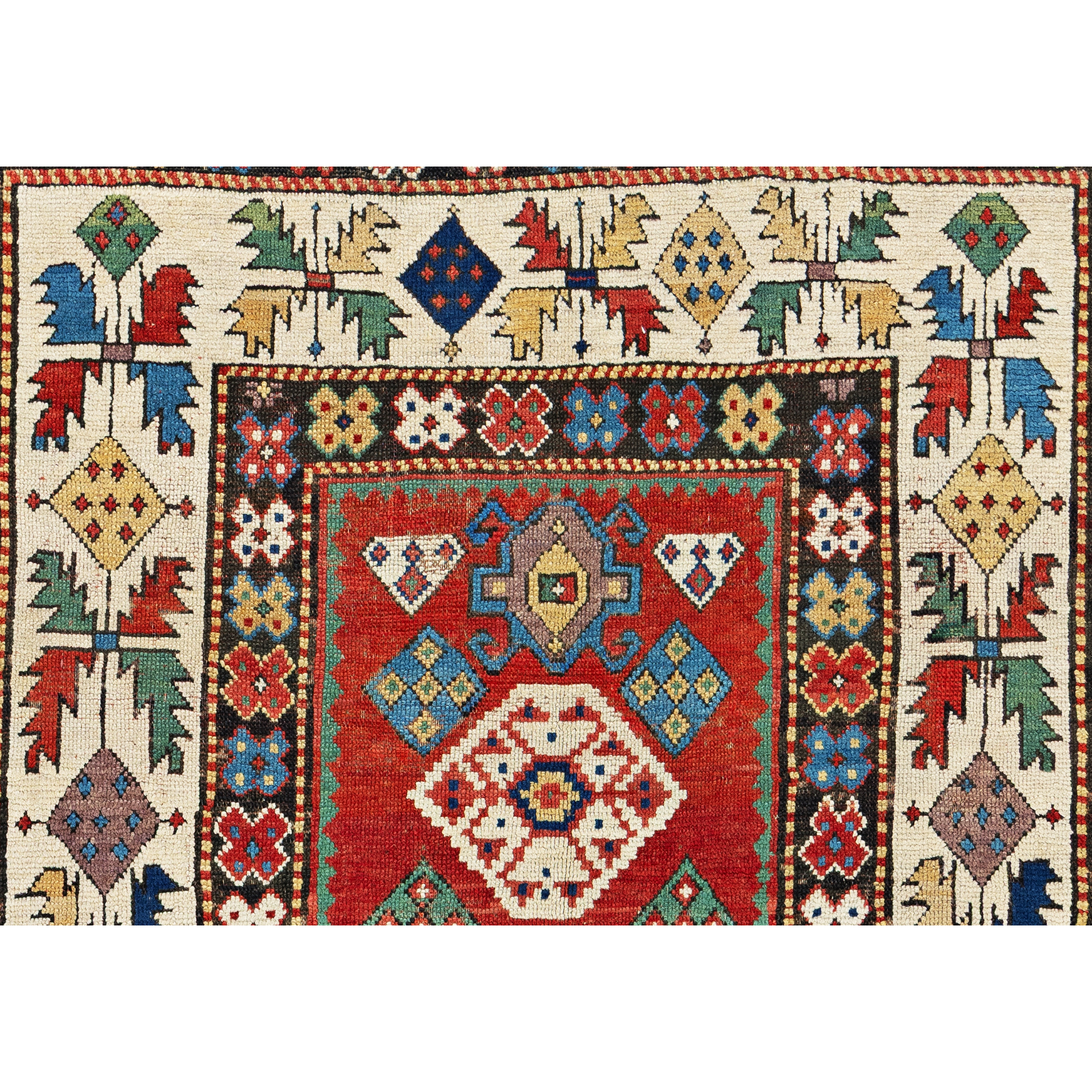
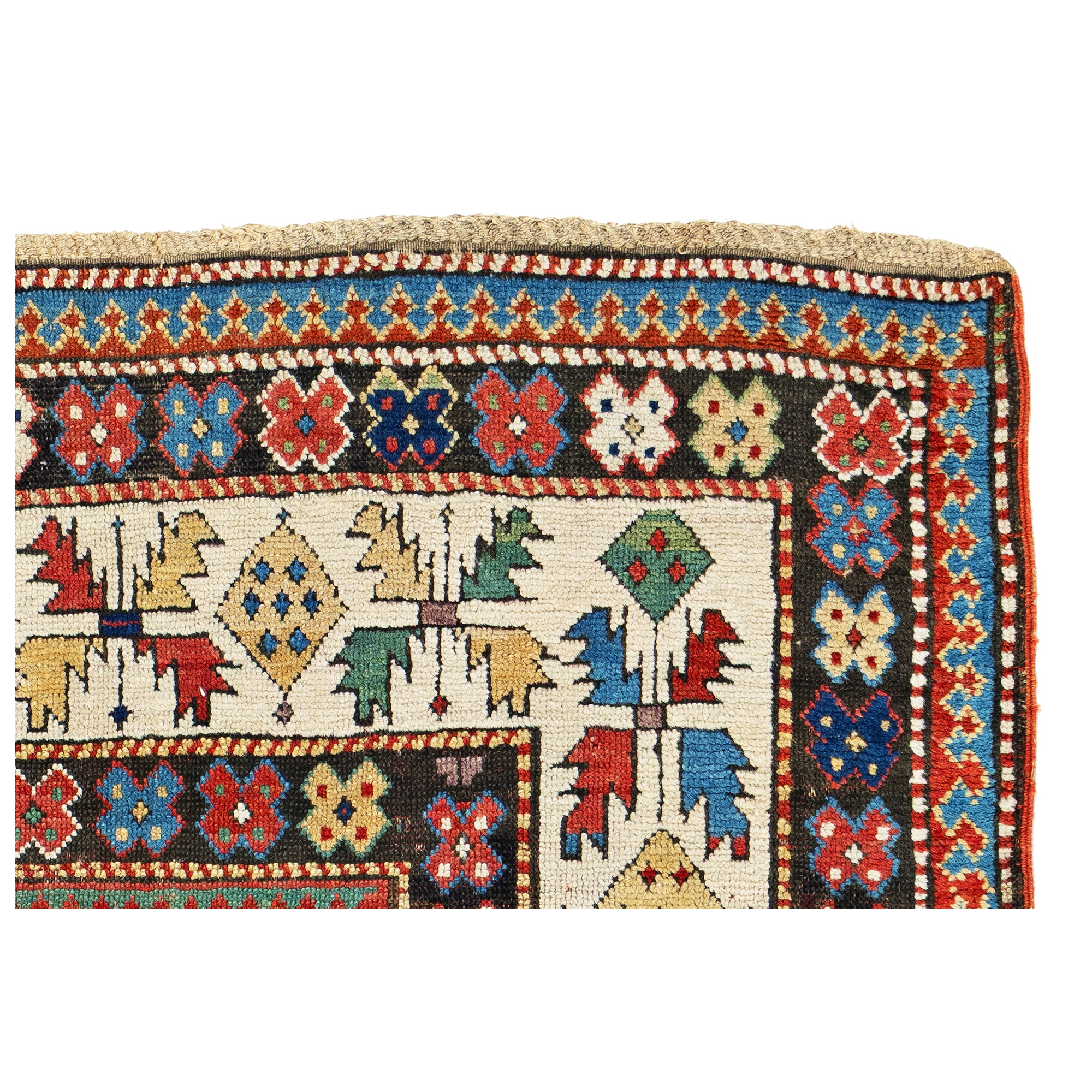
At first glance, there appears to be nothing unusual about this attractive rug. However, upon closer inspection of the octagons on the beautifully abraded field, it becomes apparent that these do not actually belong to the customary repertoire of patterns but are evidently derived from kilims. In Yanni Petsopoulos's 1979 standard work on kilims, several flat-woven pieces from the Caucasus featuring comparable hexagons are published. Good examples for comparison can be found under numbers 301, 302, and 342, as well as in the band-patterned kilims nos. 310 and 318. However, this motif can also be found on the periphery of the Caucasus, in eastern Anatolia, particularly in the Erzurum and Kars regions; see ibid., nos. 269 and 270. Even a Persian example is found under no. 354. At the very bottom and top of the beautifully colored field of our example, however, two motifs appear in each case that clearly stem from the stylistic language of piled carpets. This creates a charming juxtaposition of different textile traditions. The expansive white main border demands special attention. Its design consists of four-leaf motifs and diamonds connected by fine rods. At the very bottom, there is initially a sort of "visual disruption": Apparently, the weaver was not quite sure at the beginning how she should develop the pattern. But the design soon gains confidence. The leaves are rendered increasingly expansive, with the two lower elements of each group of four hanging slightly downward. This gives the border - and ultimately the entire rug - a clear direction. The lively, almost playful design of the border stands in a charming contrast to the strict geometry of the field. To date, little has been written about the extent to which a single weaver might have produced both kilims and piled carpets. In the case of our piece, however, this seems a likely possibility: its weaver was exceptionally skilled at translating the design language familiar from flat weaving into the entirely different technique of knotted pile. It is precisely this effortless translation of kilim motifs into knots that makes this rug so remarkable.
Estimate: € 12000 - 16000
Caucasus, first half 19th century
Condition: good for its age, mostly good pile, partially corroded dark brown, scattered small repairs
Warp: wool, weft: wool, pile: wool
At first glance, there appears to be nothing unusual about this attractive rug. However, upon closer inspection of the octagons on the beautifully abraded field, it becomes apparent that these do not actually belong to the customary repertoire of patterns but are evidently derived from kilims. In Yanni Petsopoulos's 1979 standard work on kilims, several flat-woven pieces from the Caucasus featuring comparable hexagons are published. Good examples for comparison can be found under numbers 301, 302, and 342, as well as in the band-patterned kilims nos. 310 and 318. However, this motif can also be found on the periphery of the Caucasus, in eastern Anatolia, particularly in the Erzurum and Kars regions; see ibid., nos. 269 and 270. Even a Persian example is found under no. 354. At the very bottom and top of the beautifully colored field of our example, however, two motifs appear in each case that clearly stem from the stylistic language of piled carpets. This creates a charming juxtaposition of different textile traditions. The expansive white main border demands special attention. Its design consists of four-leaf motifs and diamonds connected by fine rods. At the very bottom, there is initially a sort of "visual disruption": Apparently, the weaver was not quite sure at the beginning how she should develop the pattern. But the design soon gains confidence. The leaves are rendered increasingly expansive, with the two lower elements of each group of four hanging slightly downward. This gives the border - and ultimately the entire rug - a clear direction. The lively, almost playful design of the border stands in a charming contrast to the strict geometry of the field. To date, little has been written about the extent to which a single weaver might have produced both kilims and piled carpets. In the case of our piece, however, this seems a likely possibility: its weaver was exceptionally skilled at translating the design language familiar from flat weaving into the entirely different technique of knotted pile. It is precisely this effortless translation of kilim motifs into knots that makes this rug so remarkable.
Estimate: € 12000 - 16000