
Cart
0
Product
Products
(empty)
No products
Free shipping!
Shipping
0 €
Total
Product successfully added to your shopping cart
Quantity
Total
There are 0 items in your cart. There is 1 item in your cart.
Total products
(tax incl.)
Total shipping (tax incl.)
Free shipping!
Total
(tax incl.)
36
Perepedil
New
160 x 118 cm (5' 3" x 3' 10")
Caucasus, second half 19th century
Condition: very good, corroded dark brown, scattered low pile but not worn, minor small repairs
Warp: wool, weft: cotton, pile: wool
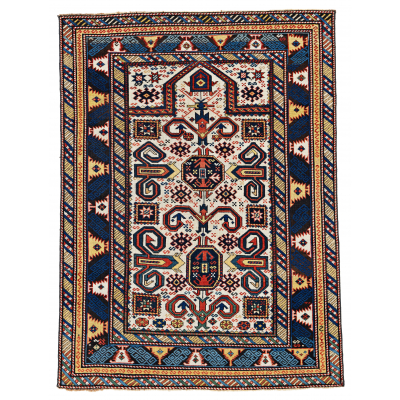
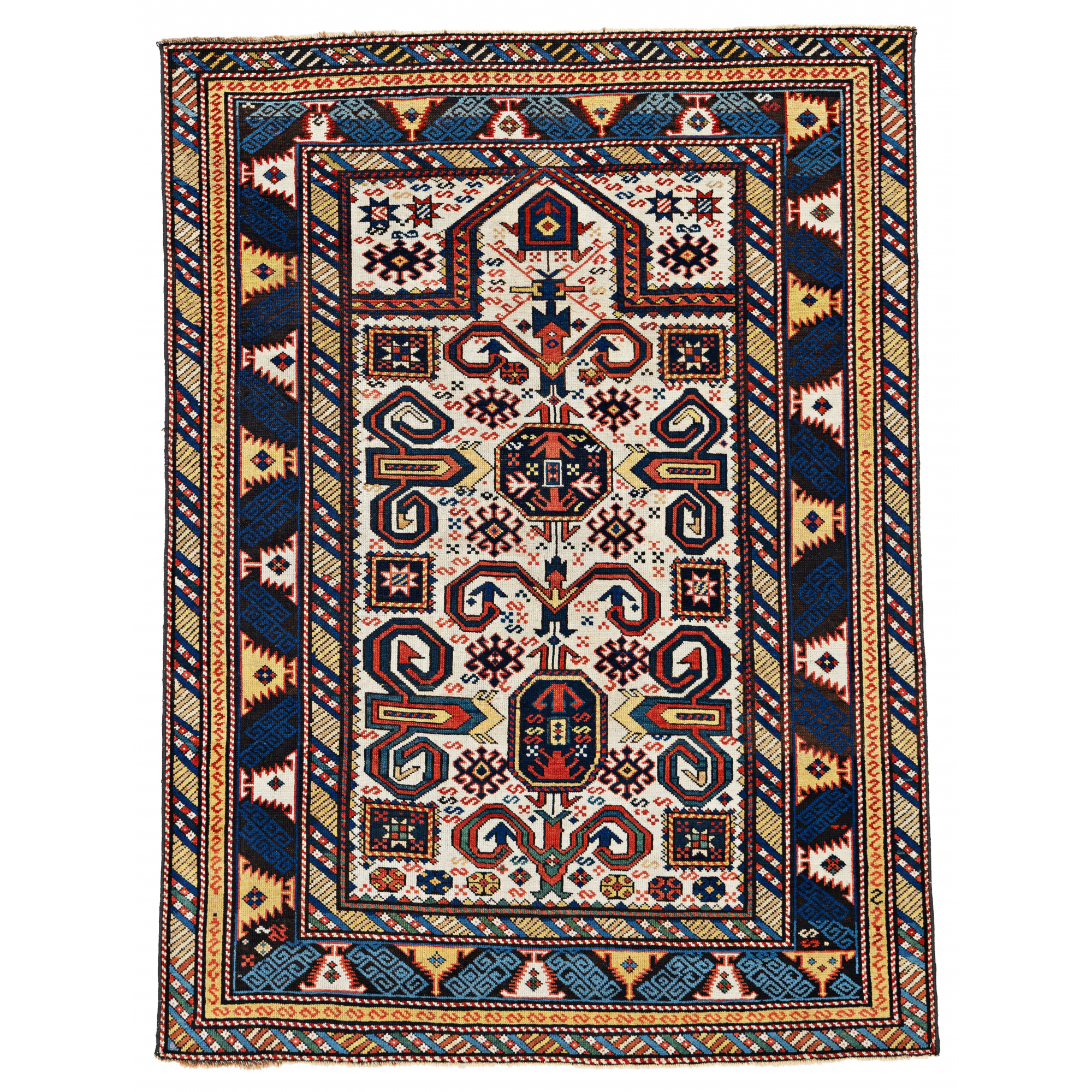
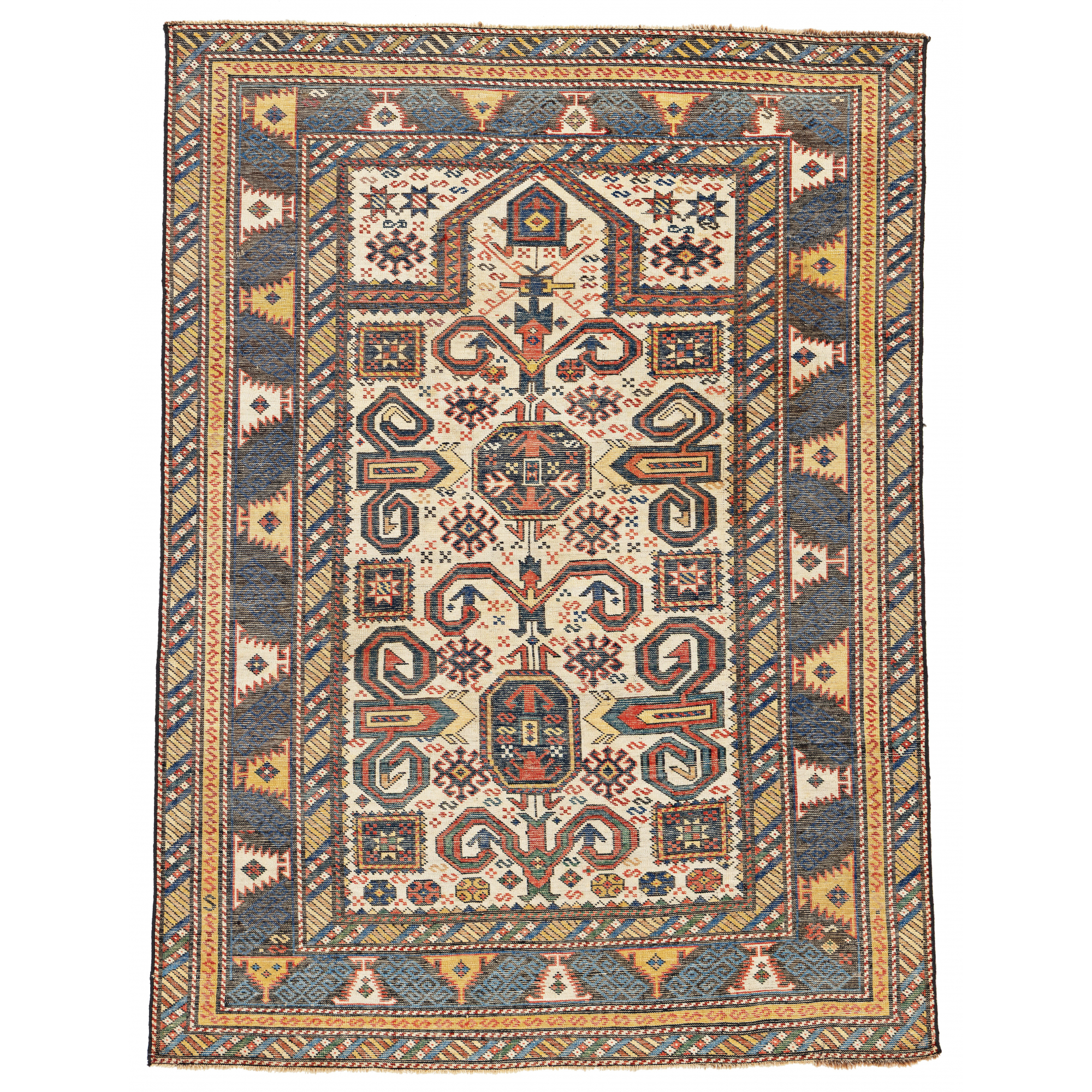
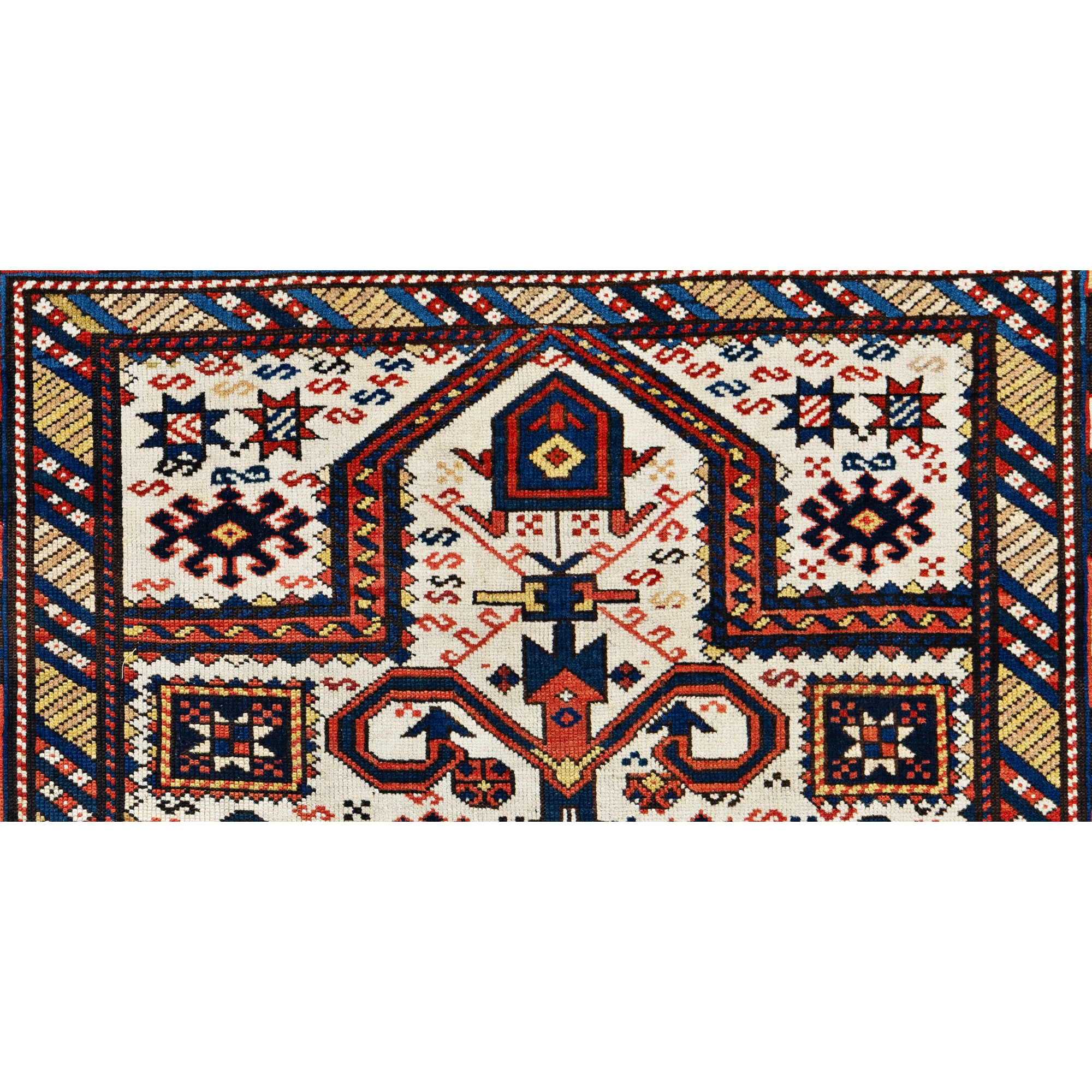
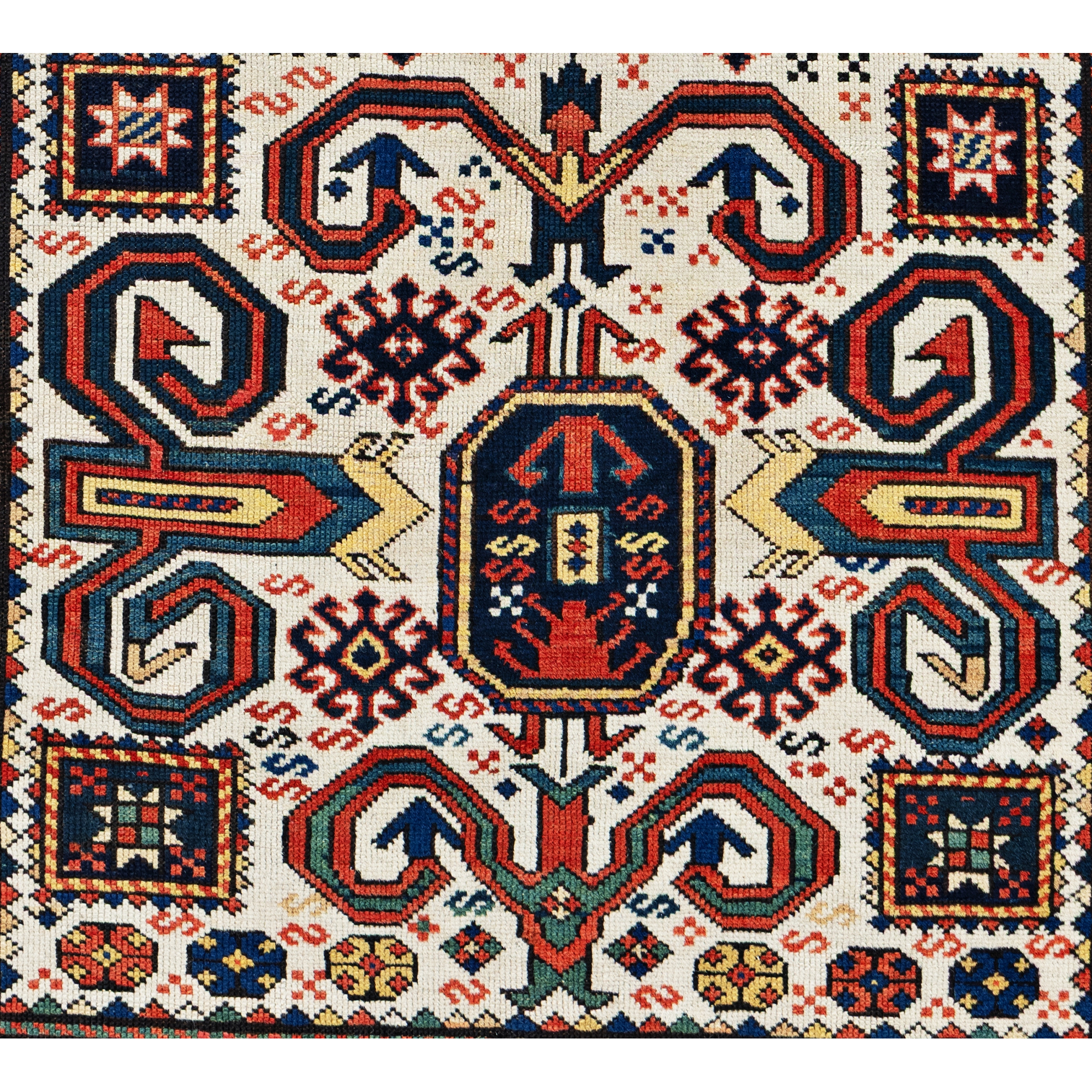
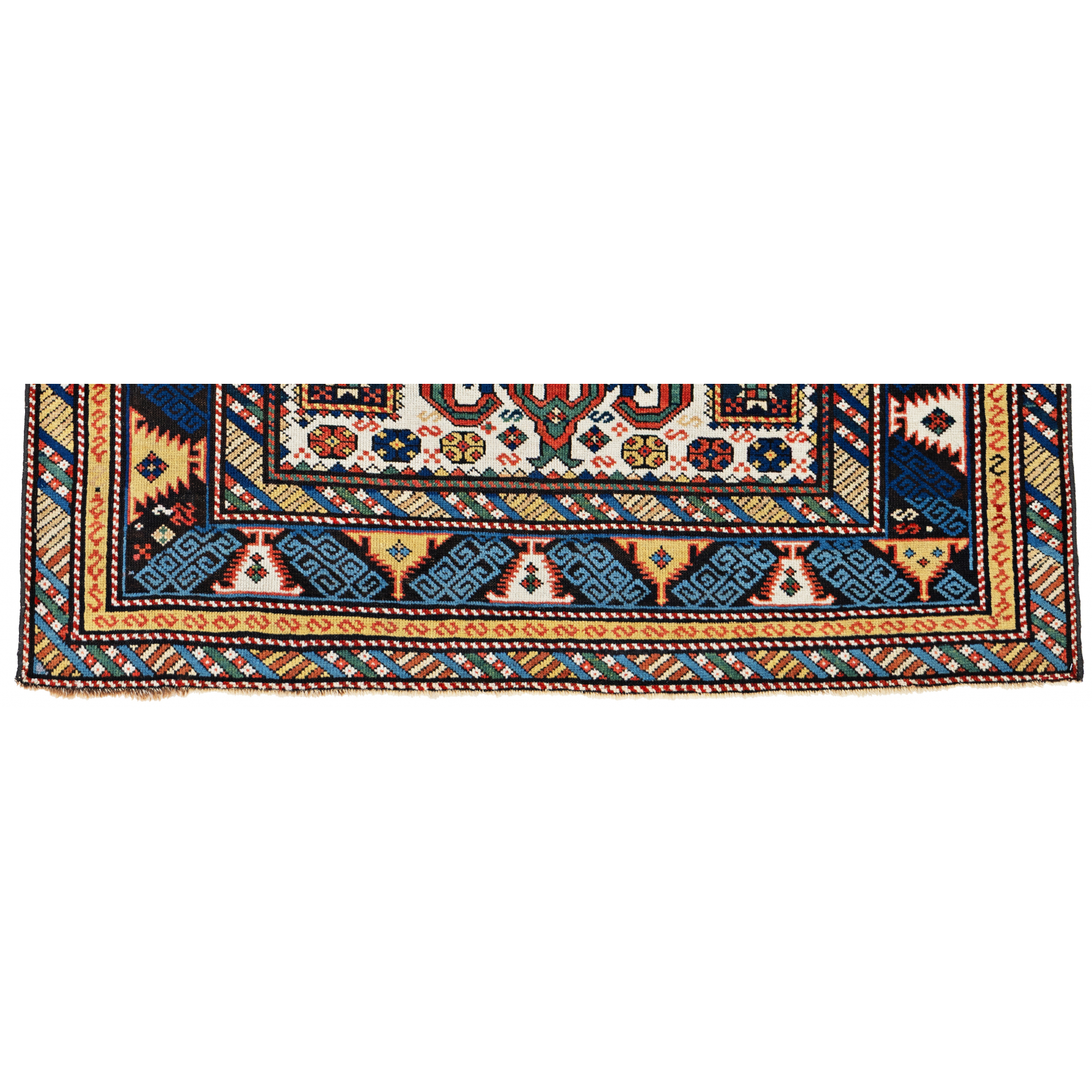
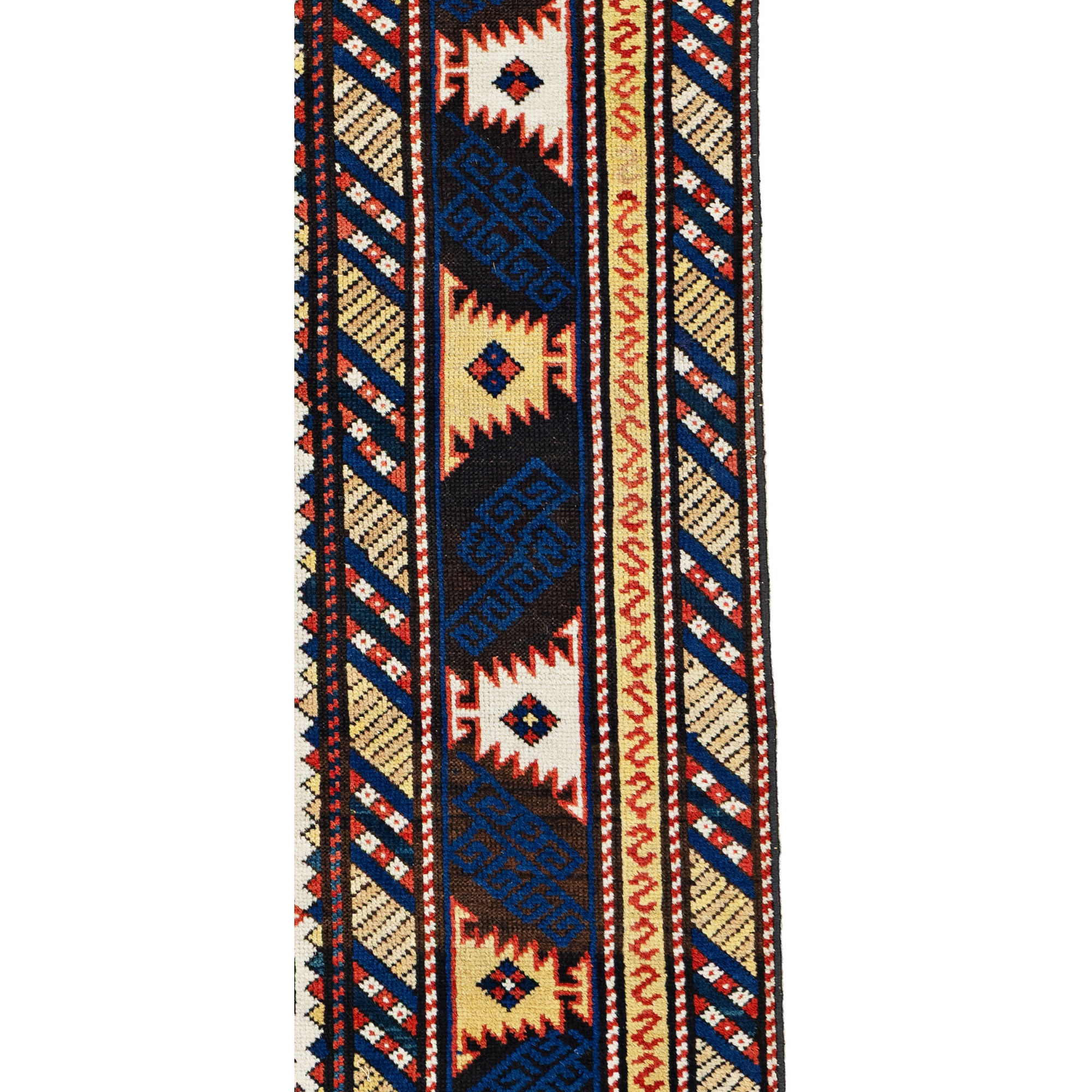
White-ground rugs are rather rare in the Orient, but are more commonly found among prayer rugs from the northeastern Caucasus. In Ralph Kaffel's seminal work, "Caucasian Prayer Rugs", No. 47 features a piece from the Raoul Tschebull collection that is closely related to ours. A pretty little yellow secondary border with S-shaped motifs provides our rug with an additional frame; however, this feature is absent from the Kaffel piece.
In the text, Kaffel writes that there are two explanatory models for the design. One refers to ram's horns and dragons, while the other refers to Christine Klose's theory, which is based on Azerbaijani embroidery; see "The Perepedil Enigma," HALI 55, pp. 110-117. Kaffel notes, however, that Klose's approach offers far more verifiable evidence than any other.
This small group of rugs is quite uniform in design and generally features this unusual border. Kaffel sees it as a variation of the well-known "wine glass and leaf" border. His piece is "reliably dated to 1864," and our very well-preserved rug should not be far off from that date.
Our rug is 20 cm longer, which is also reflected in its appearance: it appears lighter and more spacious, as the main motifs have more room to unfold. A Perepedil prayer rug with the same pattern on a white ground was sold on January 15 of this year at Grogan & Company as Lot 3 for $9,375.
Estimate: € 6000 - 8000
Caucasus, second half 19th century
Condition: very good, corroded dark brown, scattered low pile but not worn, minor small repairs
Warp: wool, weft: cotton, pile: wool
White-ground rugs are rather rare in the Orient, but are more commonly found among prayer rugs from the northeastern Caucasus. In Ralph Kaffel's seminal work, "Caucasian Prayer Rugs", No. 47 features a piece from the Raoul Tschebull collection that is closely related to ours. A pretty little yellow secondary border with S-shaped motifs provides our rug with an additional frame; however, this feature is absent from the Kaffel piece.
In the text, Kaffel writes that there are two explanatory models for the design. One refers to ram's horns and dragons, while the other refers to Christine Klose's theory, which is based on Azerbaijani embroidery; see "The Perepedil Enigma," HALI 55, pp. 110-117. Kaffel notes, however, that Klose's approach offers far more verifiable evidence than any other.
This small group of rugs is quite uniform in design and generally features this unusual border. Kaffel sees it as a variation of the well-known "wine glass and leaf" border. His piece is "reliably dated to 1864," and our very well-preserved rug should not be far off from that date.
Our rug is 20 cm longer, which is also reflected in its appearance: it appears lighter and more spacious, as the main motifs have more room to unfold. A Perepedil prayer rug with the same pattern on a white ground was sold on January 15 of this year at Grogan & Company as Lot 3 for $9,375.
Estimate: € 6000 - 8000