
No products
Product successfully added to your shopping cart
There are 0 items in your cart. There is 1 item in your cart.
33
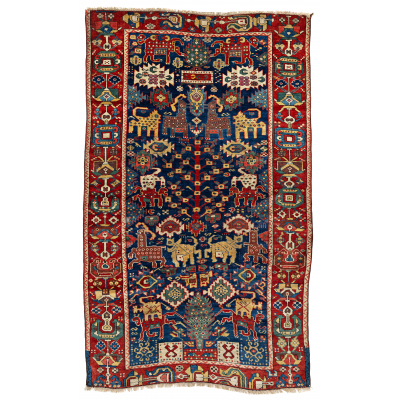
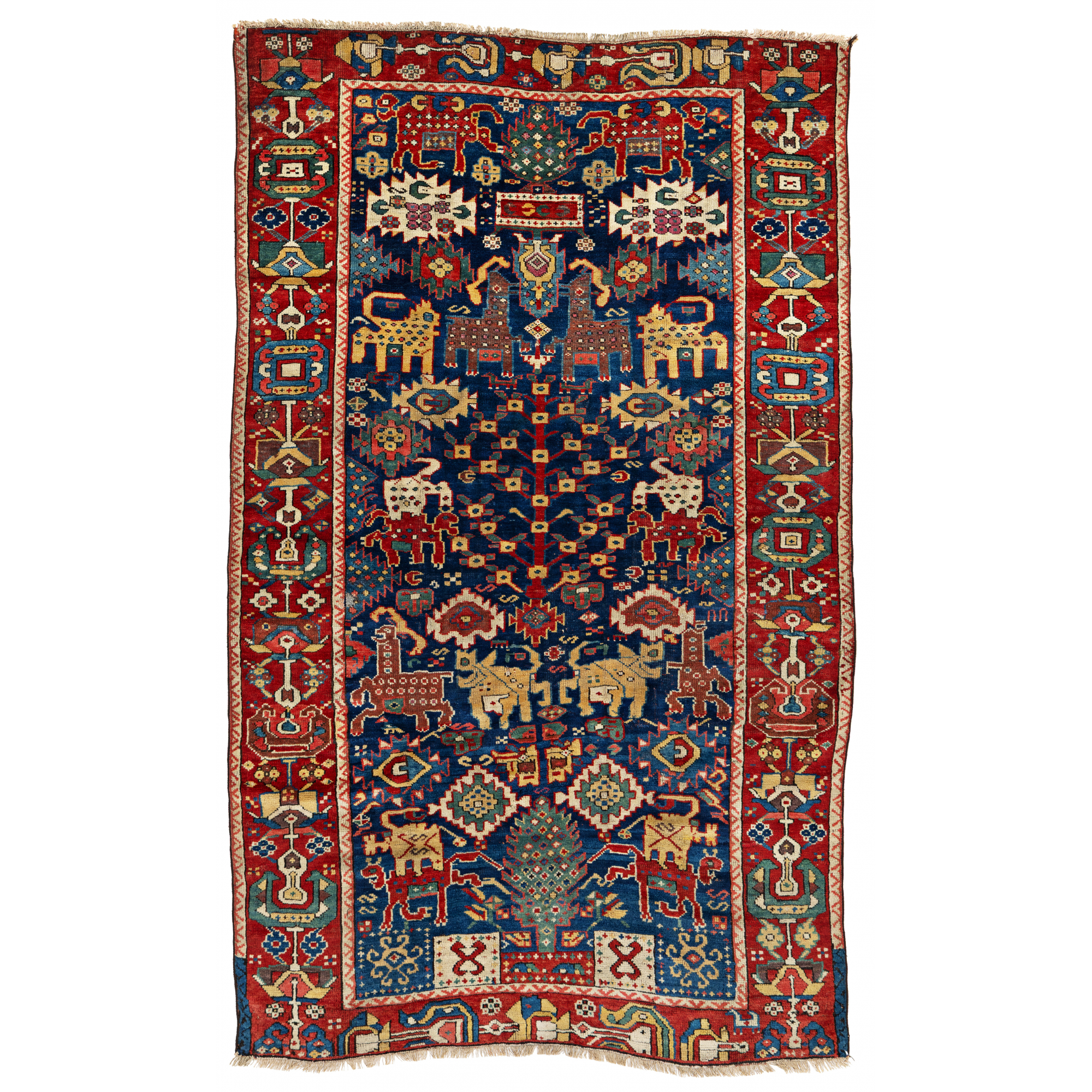
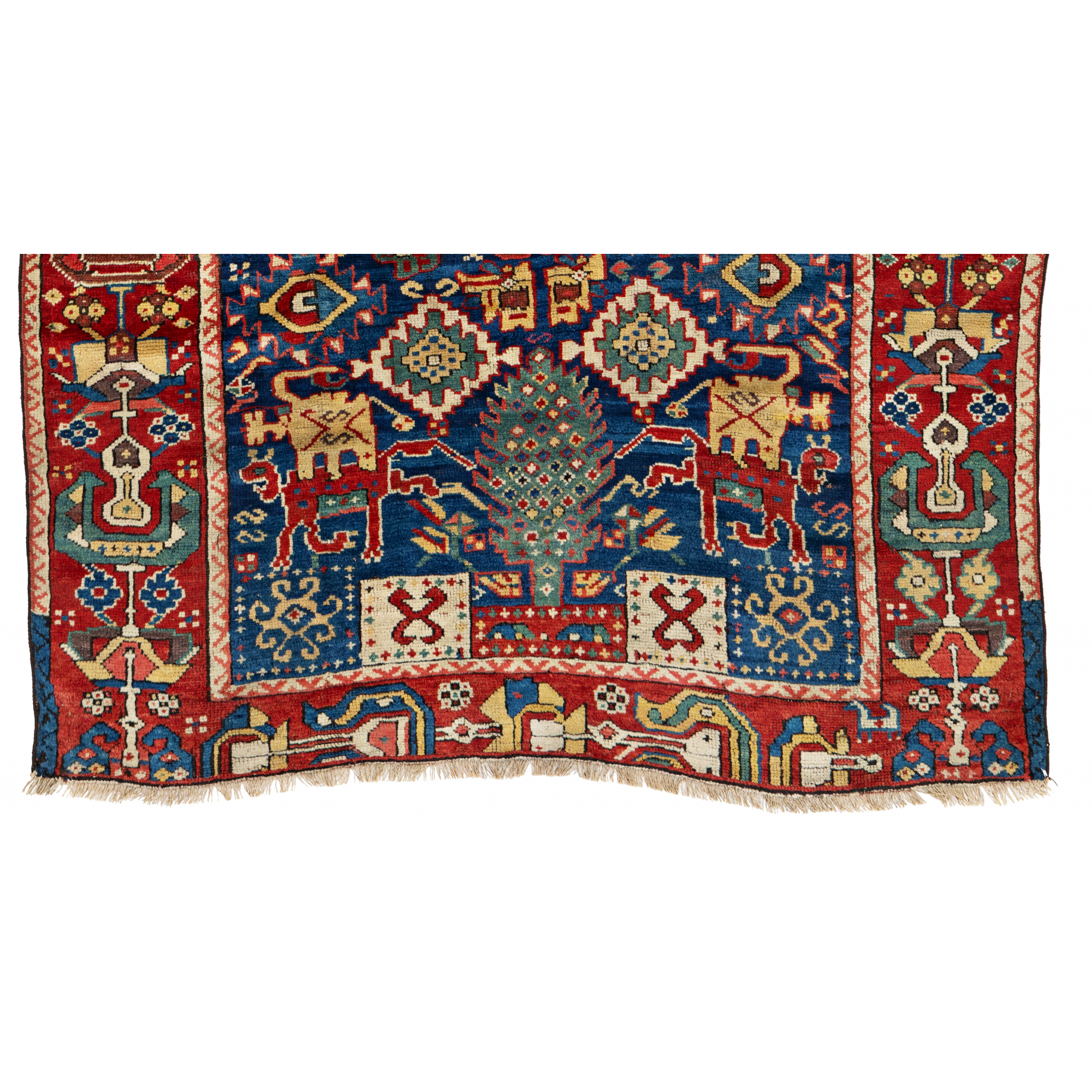
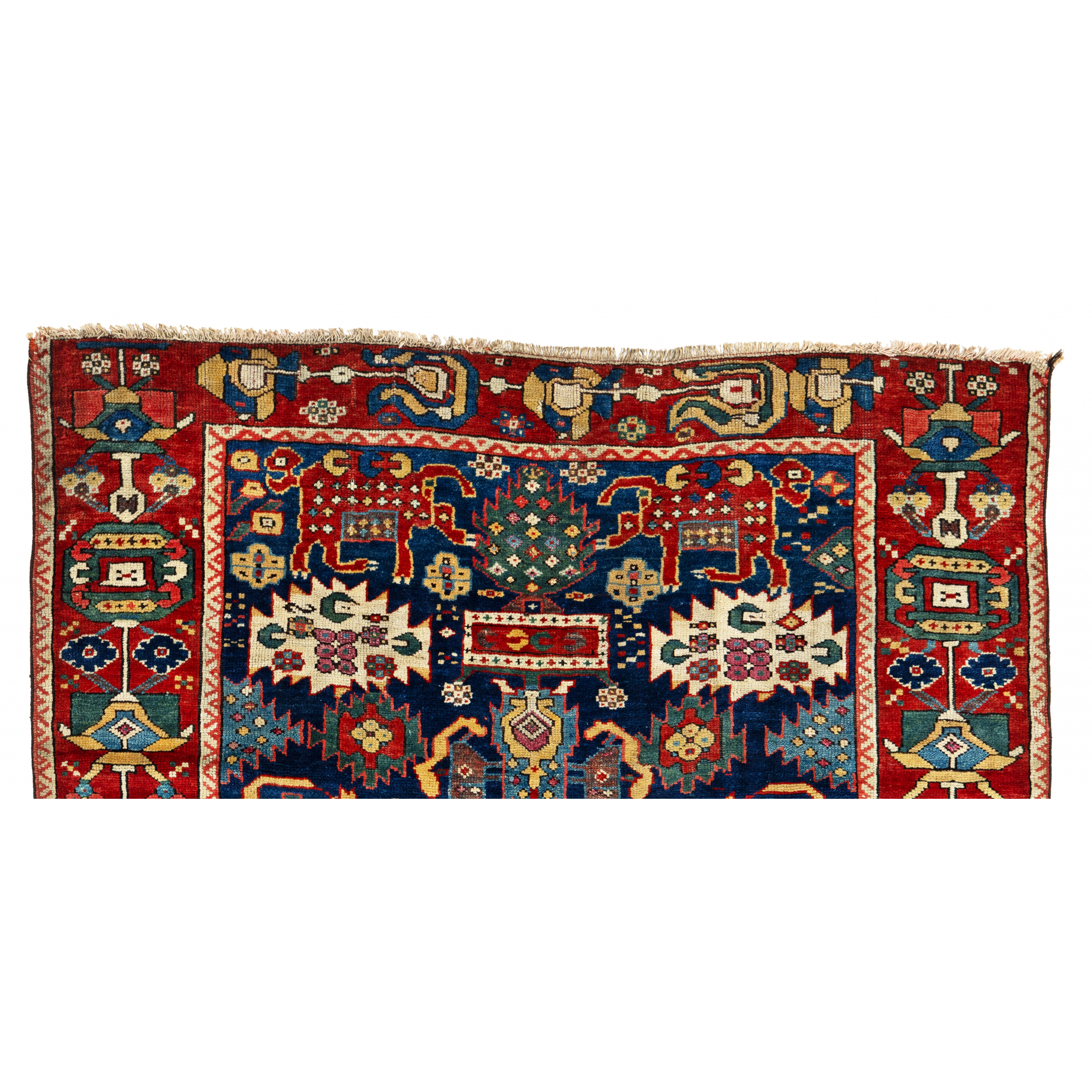
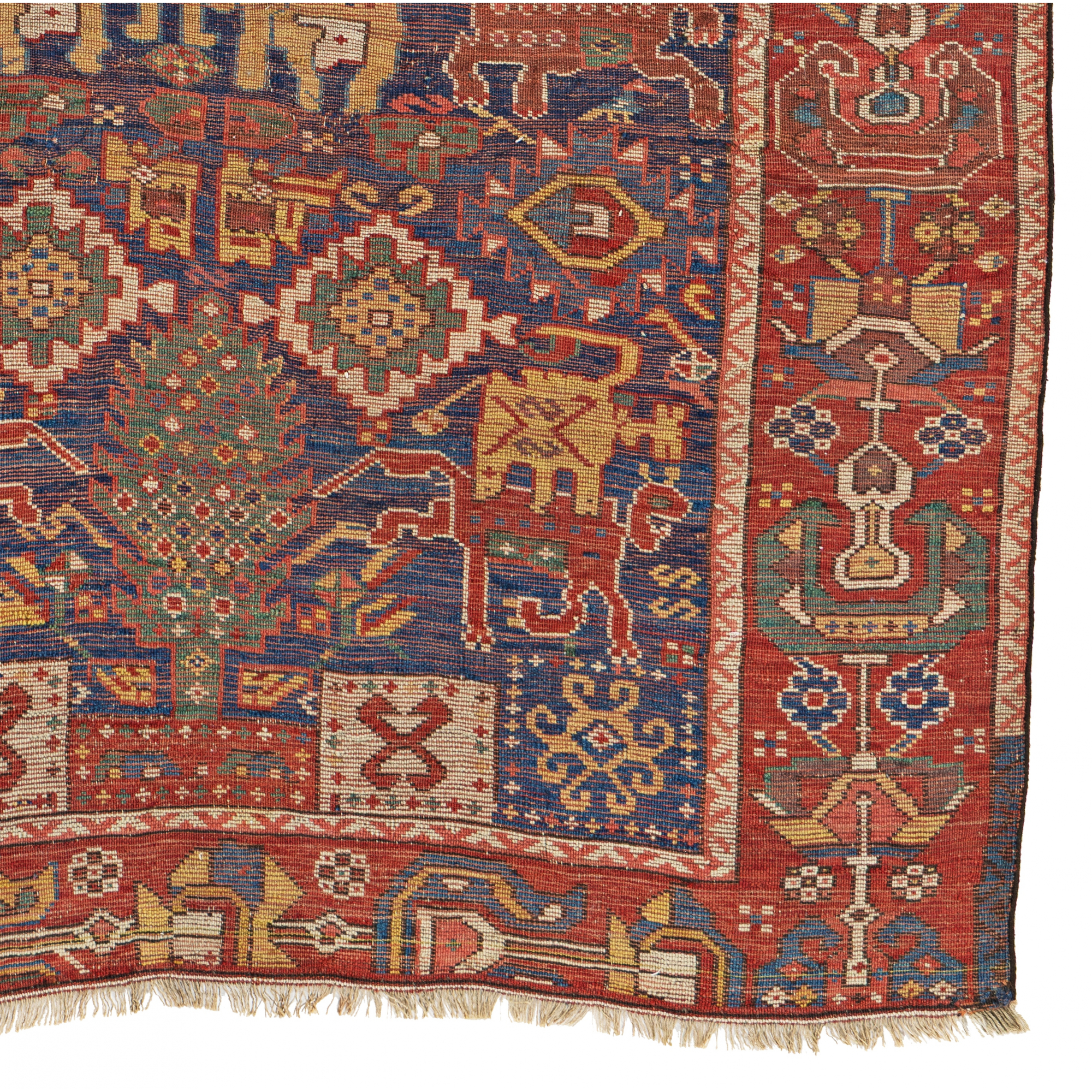
Exceptional South Caucasian Rug
New
198 x 120 cm (6' 6" x 3' 11")
Caucasus, early 19th century
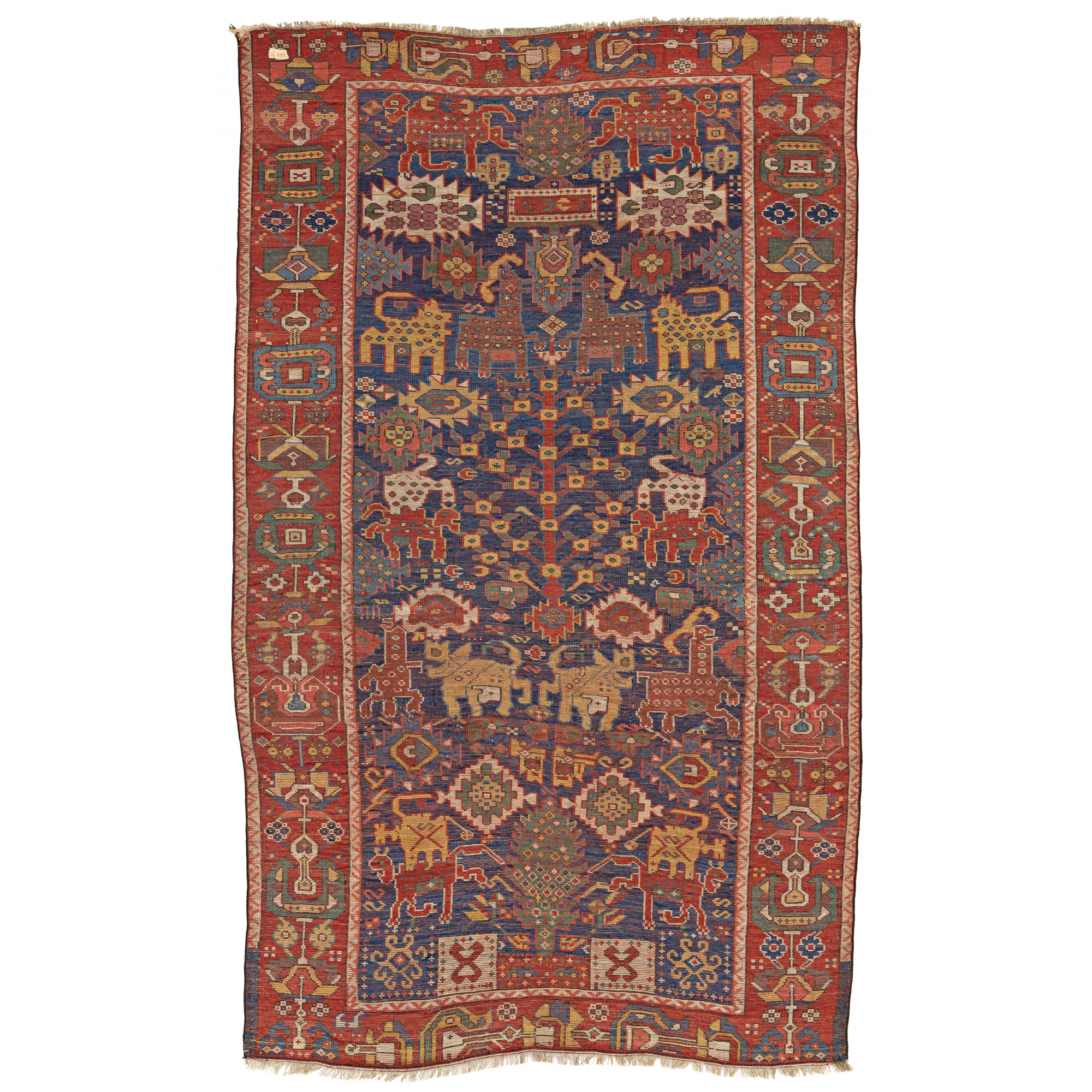
Condition: good for its age, mostly good pile, both ends incomplete, scattered small repairs, selvedges rebound
Warp: wool, weft: wool, pile: wool with silk highlights
This incredibly captivating animal rug, characterized by a wonderful play of colors, belongs to a small group that Michael Franses and Ian Bennett named "Animal Tree Carpets." See "Orient Stars," 1993, pp. 115-119, and HALI 73, pp. 90-99. At that time, the group comprised 19 pieces. They were produced across a vast region stretching from Eastern Anatolia to Azerbaijan, an area we now refer to as the "Golden Triangle." Some are structurally related, while others exhibit distinctly different weaving patterns; however, all are knotted symmetrically. What unites them is a shared formal language that interprets Safavid models in a wholly unique artistic style.
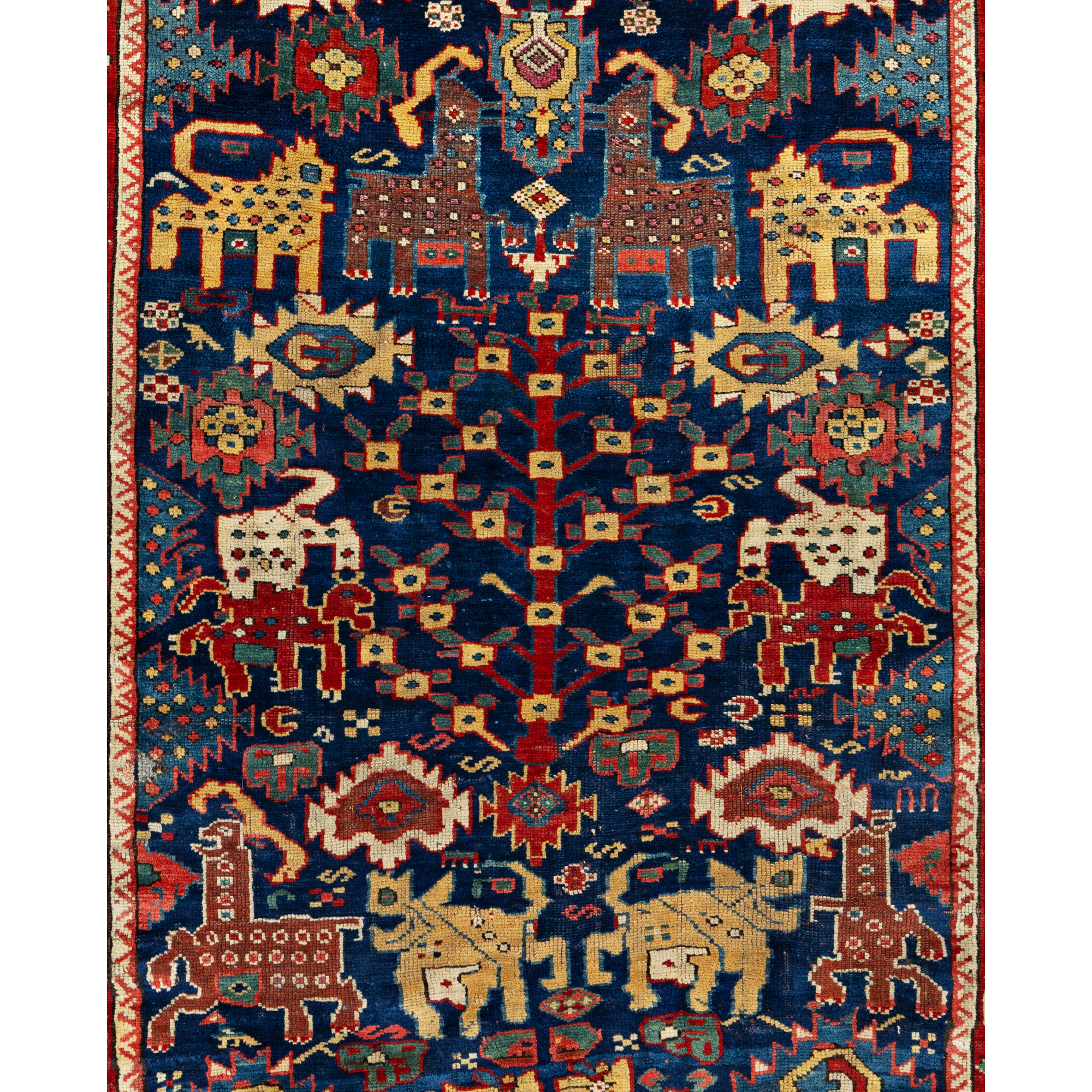
Our rug is dominated by a tree or shrub, accompanied by smaller green trees at the top and bottom. Beside and between them appear pairs of animals in combat. At the bottom, we see a yellow big cat attacking a red four-legged animal. Above that is a beast chasing a brown antelope, followed by a white animal - perhaps a leopard - pursuing another four-legged creature. After that, we likely see lions chasing antelopes, and finally, only fleeing four-legged animals. These are adorned with C-shaped motifs, as we know them from dragon carpets.
To be reasonably certain that these observations are accurate, one should consult several Safavid carpets for comparison. These include two small Kashan silk rugs - one at the Metropolitan Museum of Art in New York (Inv. 14.40.721) and another at the Musée des Arts Décoratifs - as well as the Rockefeller carpet described by Pope and Ackerman, no. 1182.
The carpet, which also belongs to this group and is illustrated as No. 2 in Schürmann's "Caucasian Carpets", apparently draws its inspiration from a piece in the Metropolitan Museum of Art (Inv. 14.40.710). Of particular importance to us, however, is that the somewhat difficult-to-interpret border of our rug finds its explanation in the Schürmann piece.
Estimate: € 14000 - 18000