
No products
Product successfully added to your shopping cart
There are 0 items in your cart. There is 1 item in your cart.
32
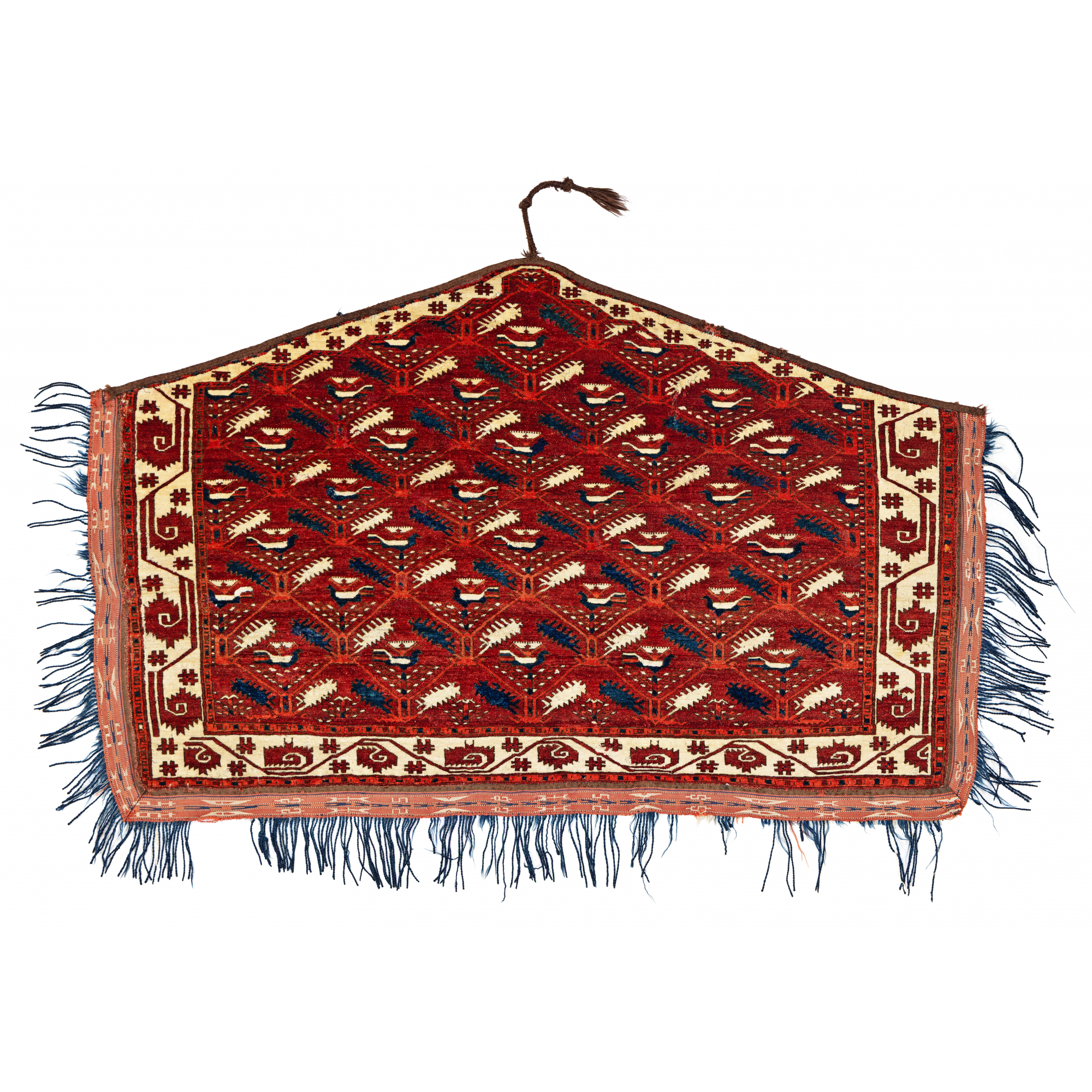
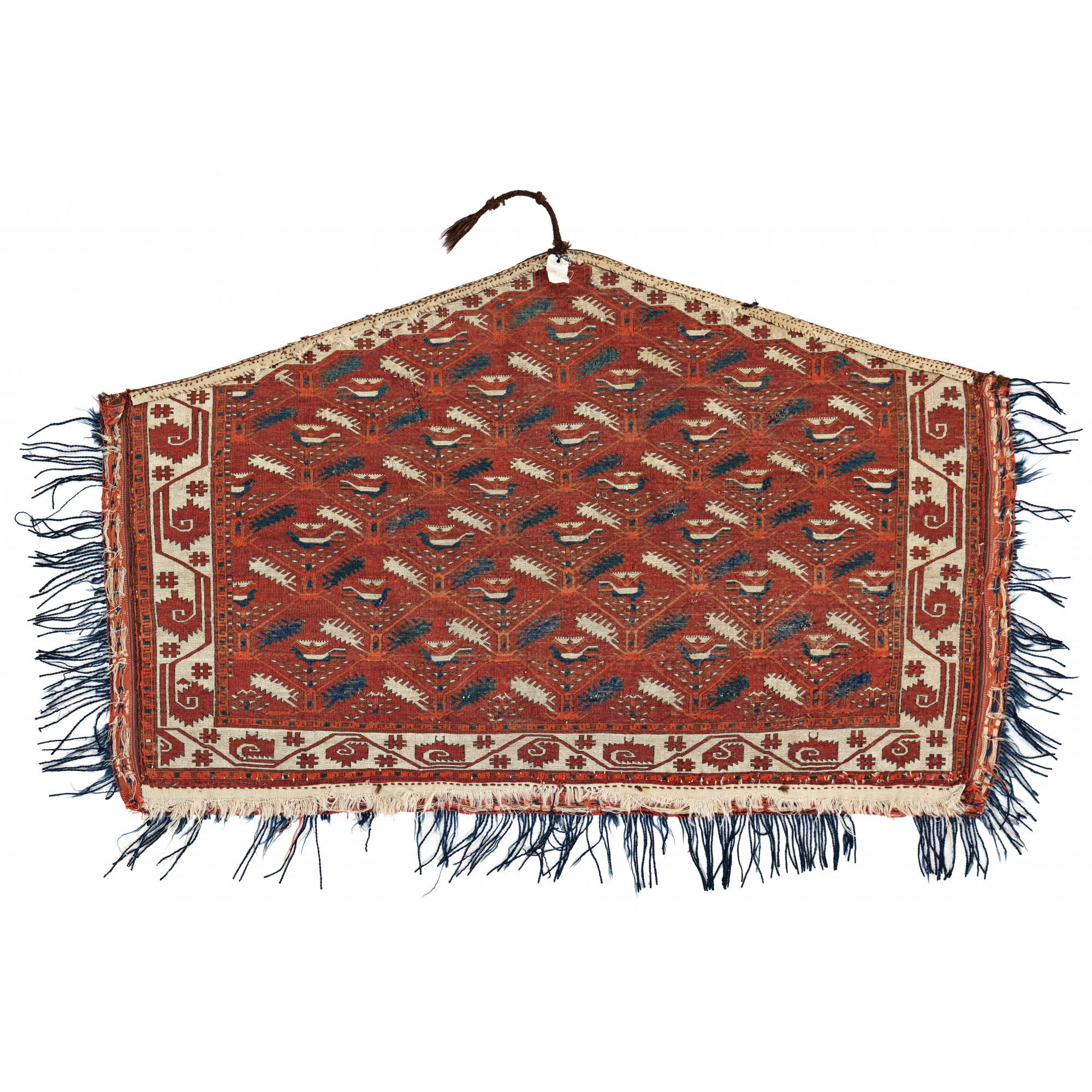
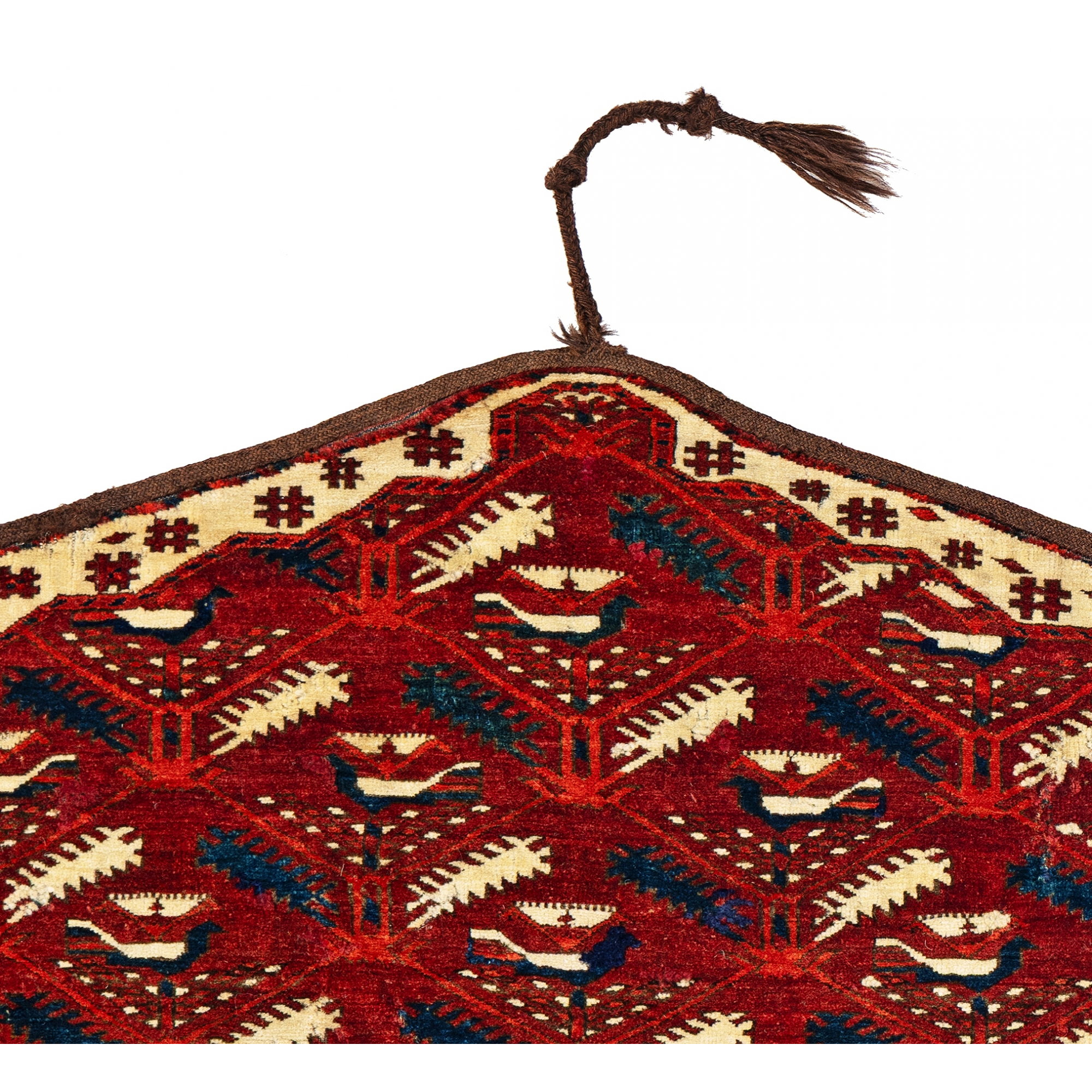
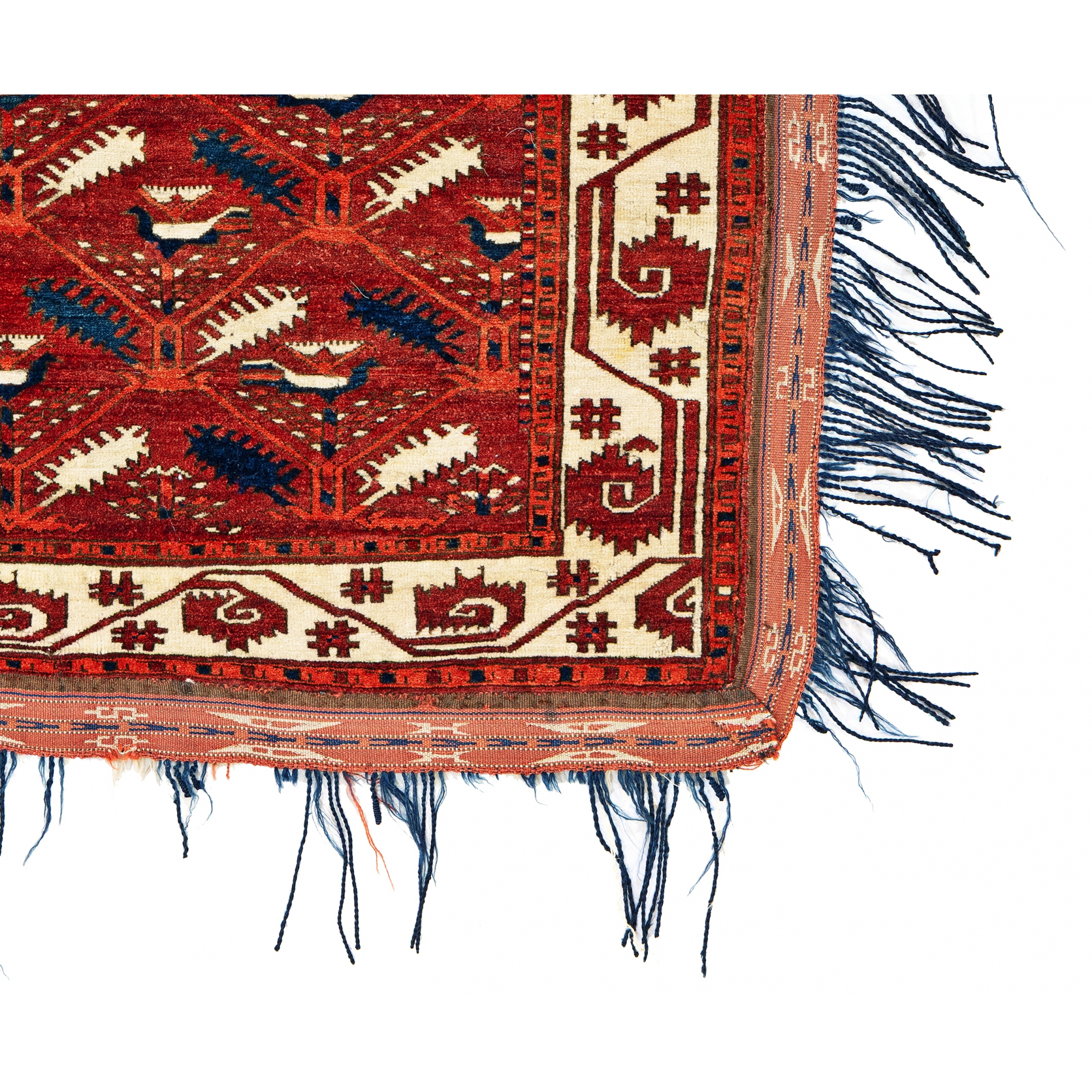
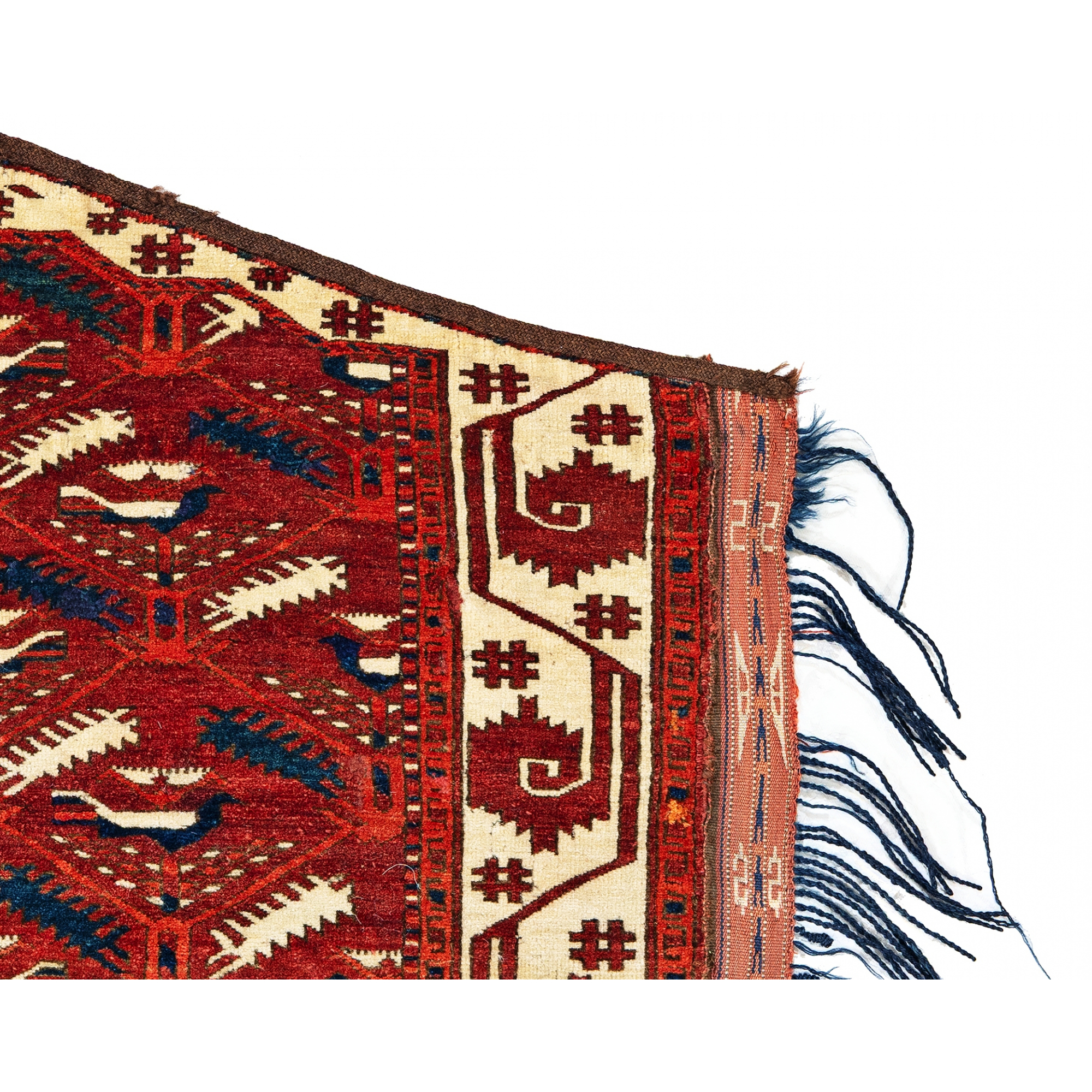
Tekke Bird Asmalyk
New
137 x 86 cm (4' 6" x 2' 10")
Turkmenistan, ca. 1800
Condition: very good, good pile, scattered small repairs, minor small moth damage
Warp: wool, weft: wool, pile: wool
Published:
- "Asiatische Teppich- und Textilkunst 2", Eberhart Herrmann, 1990, plate 57
- Sotheby's New York, January 20 1990, Lot 65
- HALI 50, 1990, p. 169
- HALI 51, 1990, p. 99
- Grogan & Company Boston, "The Kaffel Collection", January 21 2024, Lot 168
Asmalyks were made in pairs to adorn the flanks of the bride's camel and feature their characteristic pentagonal shape. The small group of only about twenty known examples worldwide featuring depictions of birds ranks among the most sought-after Turkmen knotted textiles of all and fetches correspondingly high prices.
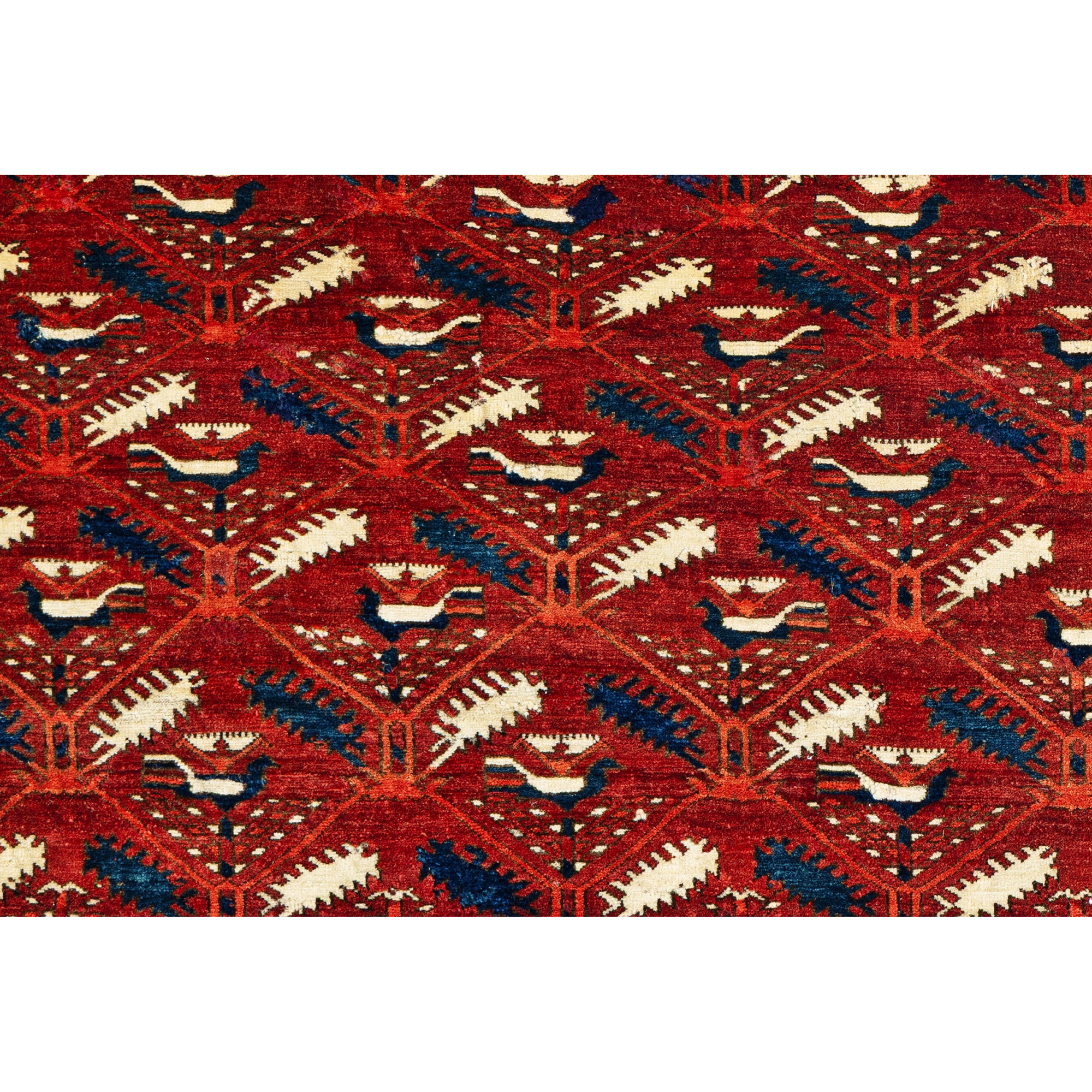
Our piece was sold on January 20, 1990, at Sotheby's New York as Lot 65 for $115,500; see HALI 50, p. 169, where it is, however, depicted in mirror image. HALI reported at the time on "rampant excitement in the Turkophile ranks," emphasizing in particular that the birds are oriented in different directions. Visually, this is certainly the most satisfying solution. Our asmalyk was, at that time, the fourteenth known example of this group, whose pieces are now scattered among museums and private collections.
The first known asmalyks of this type were acquired by the Russian ethnographer Samuil Dudin during two expeditions in 1900 and 1901 and are now housed in the Ethnographic Museum in St. Petersburg. The first detailed study of the twelve bird-motif Asmalyks known at the time can be found in Franses/Pinner, "Turkoman Studies I," 1980, pp. 114-121.
The little birds are perched on flowers depicted with varying degrees of detail. In addition, there is a subgroup - which includes the Dudin pieces - in which the birds stand on diamond shapes. An orange-red diamond-shaped grid covers the white, blue, and stone-green versions, enclosing the birds along with the "false" leaves. In other examples, these lines do not form a closed grid, making the flower and the bird perched on it much more clearly recognizable.
A rare opportunity to acquire one of these exceptionally rare and precious Turkmen works of art.
Estimate: € 50000 - 70000