
Cart
0
Product
Products
(empty)
No products
Free shipping!
Shipping
0 €
Total
Product successfully added to your shopping cart
Quantity
Total
There are 0 items in your cart. There is 1 item in your cart.
Total products
(tax incl.)
Total shipping (tax incl.)
Free shipping!
Total
(tax incl.)
29
Large Early South American Tunic
New
212 x 133 cm (6' 11" x 4' 4")
South America, 2nd - 6th century A.D.
Condition: very good for its age, scattered small repairs, mounted on a frame
Provenance: Hilmar Kopper collection, Rothenbach
Alpaca or llama wool and cotton
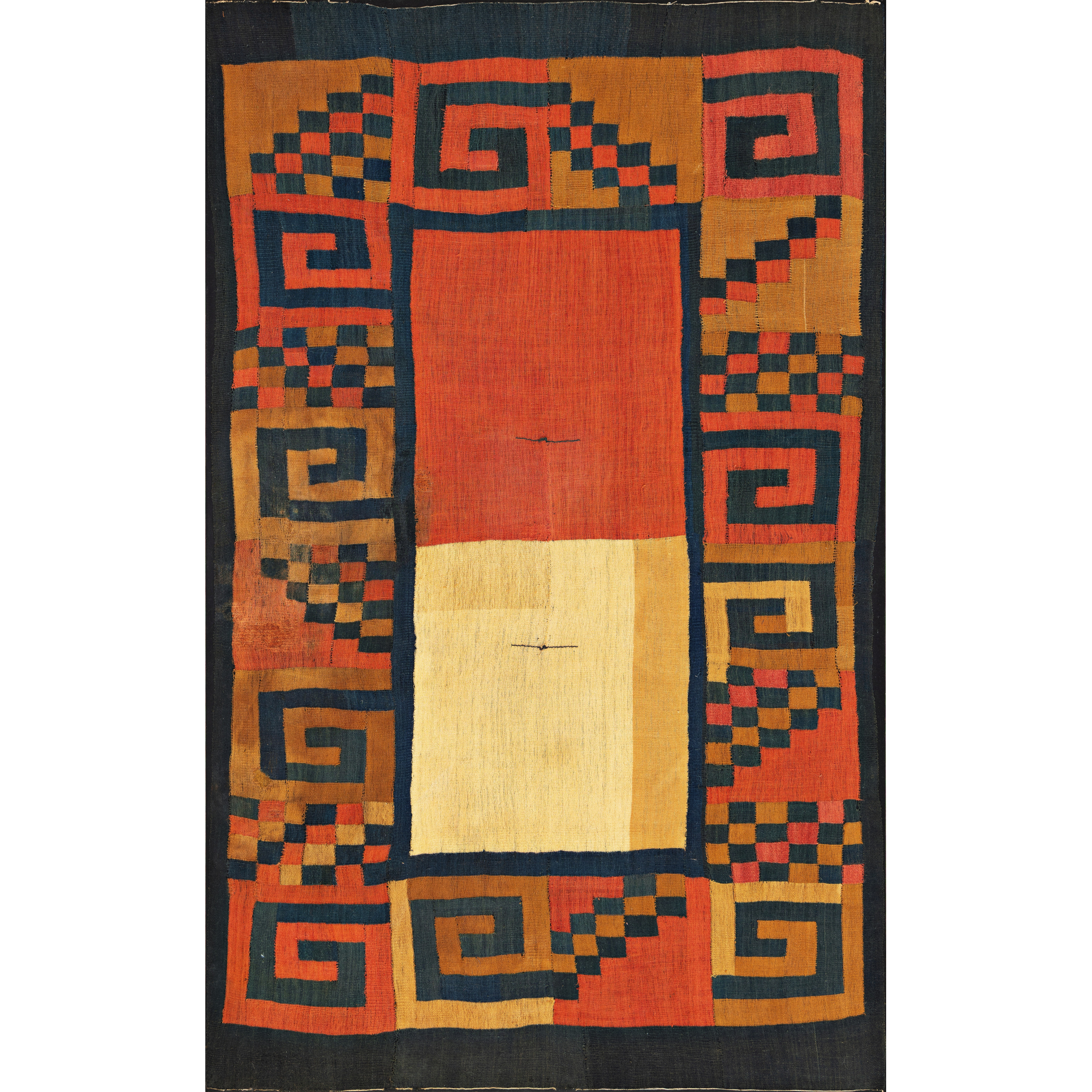
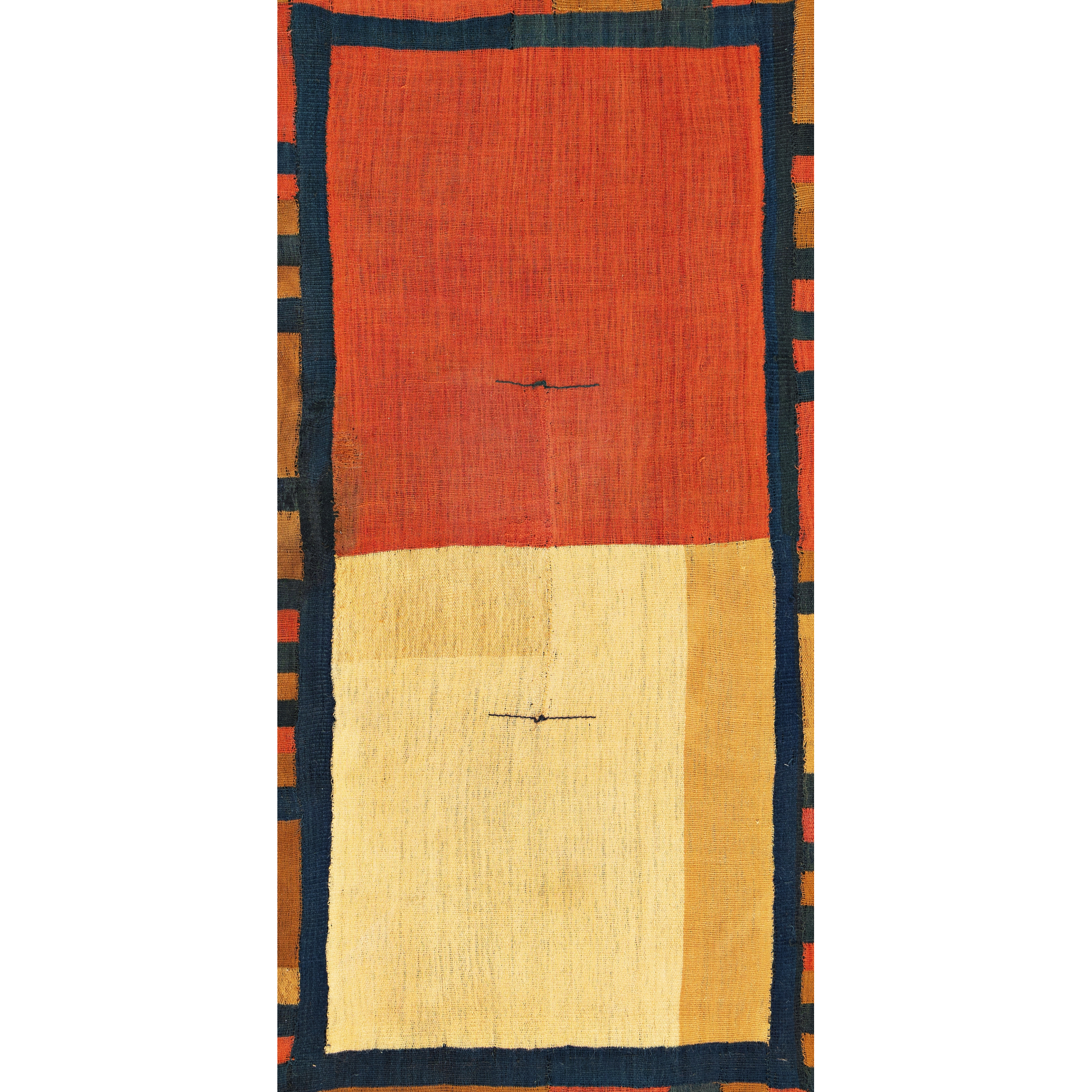
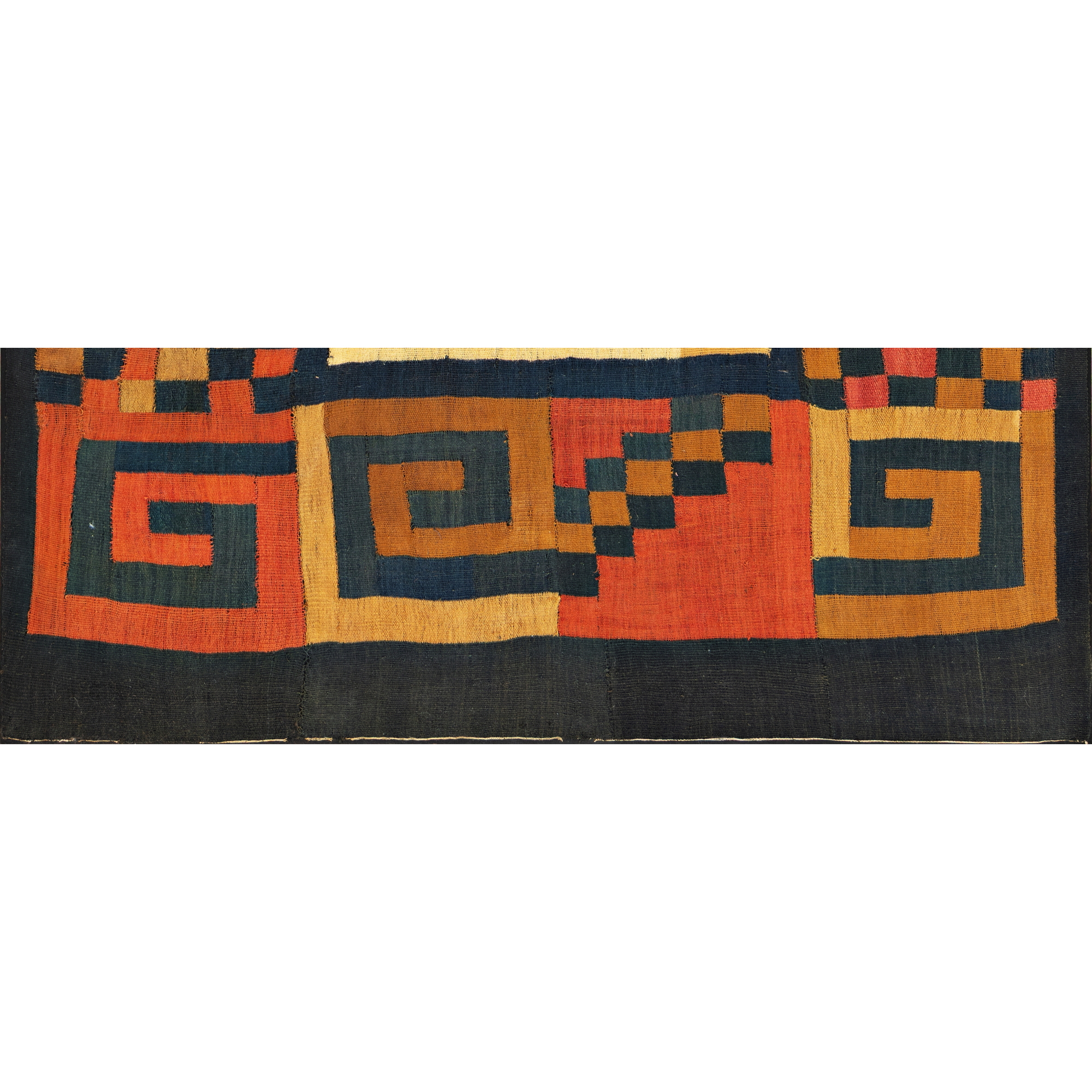
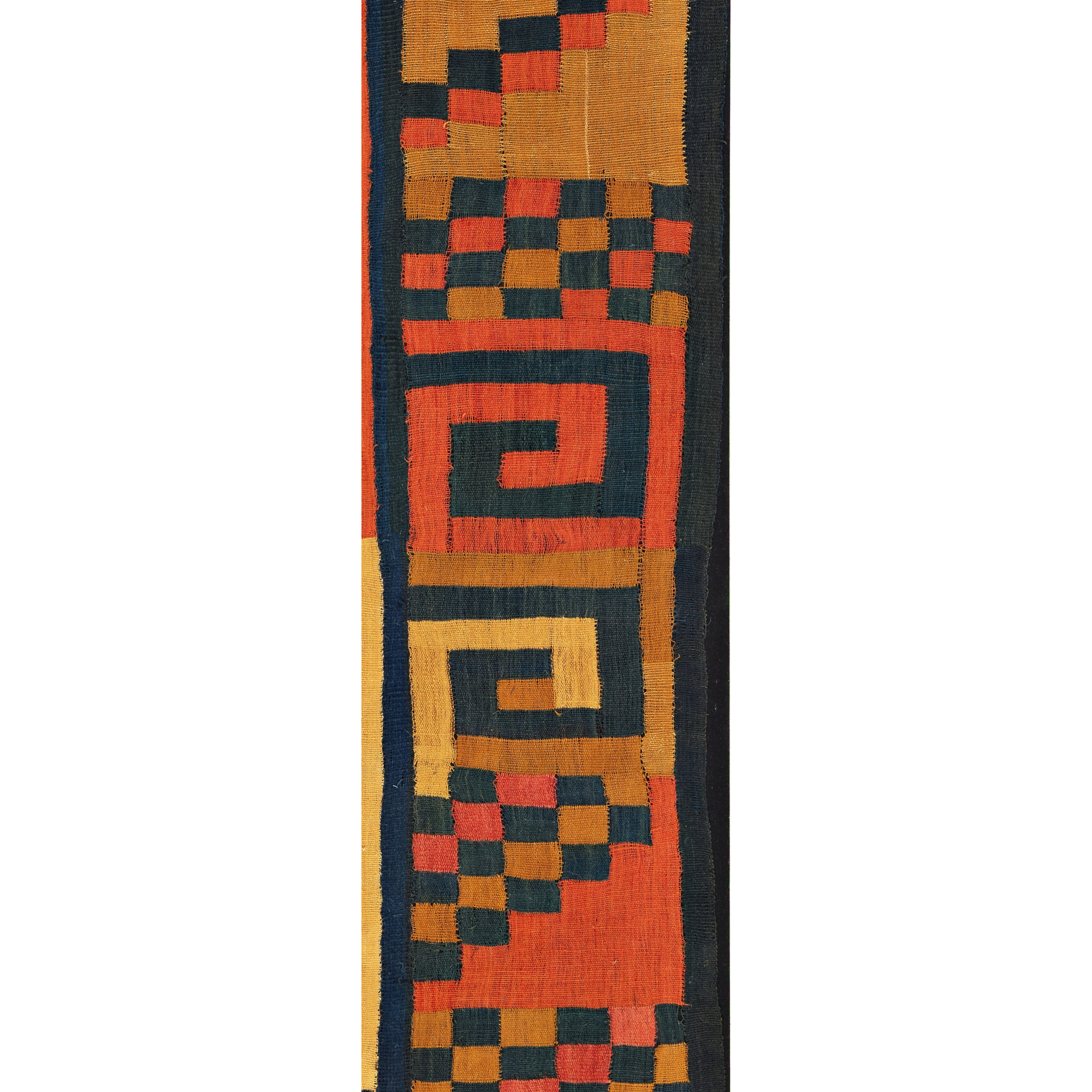
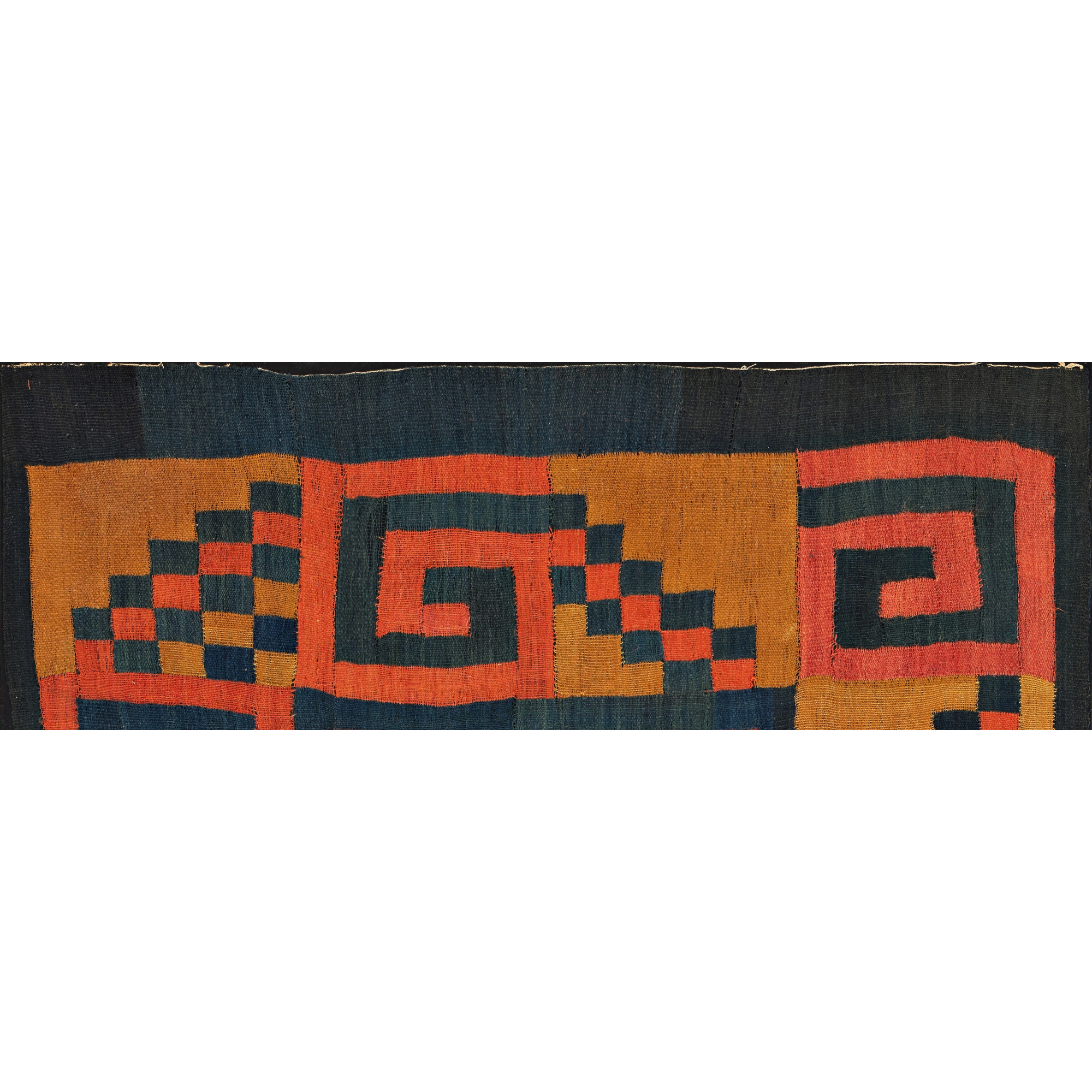
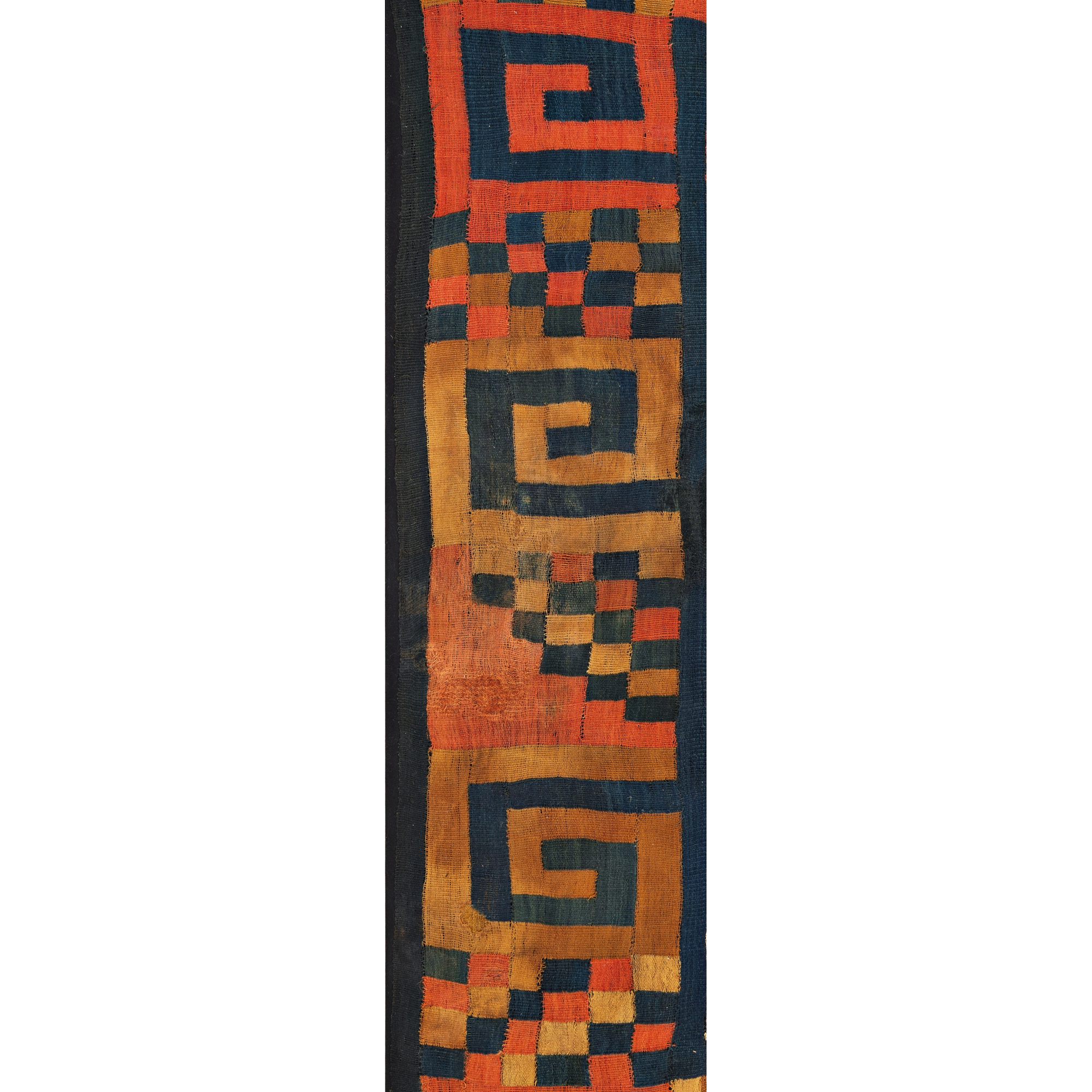
A textile that is incredibly striking from a visual standpoint. As with most pieces in this group, the color scheme of the main field is limited to orange-red and yellow. A distinctive feature of our piece, however, is the contrasting stripe within the yellow area. In the center of the cloak, the threads were left out to create a slit through which the head could be slipped. To secure this opening, an additional blue thread was woven in at both the top and bottom ends. The imposing border is dominated by large G-shaped hooks that alternate rhythmically with cube-shaped motifs. This precious fabric was created at a time when the Romans still ruled Austria. We owe it to the extremely arid desert regions along the west coast of South America that textiles of such extraordinary age have survived at all. But our textile has astonishing features to offer not only graphically but also technically. When we referred to "weft threads" above, this is, strictly speaking, not entirely correct. Normally, the weft is defined as the system of threads running transversely that crosses a continuous warp. However, there is no such continuous warp here. Rather, both the warp and the weft are interrupted and connected to one another by single or double interlacing.
This elaborate technique makes production extremely labor-intensive, but at the same time results in a surprisingly light and airy fabric - ideal for a cloak worn in a hot and dry climate. Hilmar Kopper served, among other roles, as chairman of the supervisory board of Deutsche Bank and became known to the general public for his remark that outstanding invoices from tradespeople totaling around 50 million Deutschmarks were "peanuts." He was undoubtedly more adept at collecting art than he was at dealing with the public. The first part of his collection was auctioned at Van Ham in 2022 for a total of approximately 8.3 million euros. It is easy to understand why a collector of modern and abstract art would be fascinated by such a textile artwork. With its radical reduction of colors, monumental graphic design, and the almost abstract interplay of geometric shapes, this fabric - which is more than a thousand years old - appears astonishingly modern.
Estimate: € 40000 - 60000
South America, 2nd - 6th century A.D.
Condition: very good for its age, scattered small repairs, mounted on a frame
Provenance: Hilmar Kopper collection, Rothenbach
Alpaca or llama wool and cotton
A textile that is incredibly striking from a visual standpoint. As with most pieces in this group, the color scheme of the main field is limited to orange-red and yellow. A distinctive feature of our piece, however, is the contrasting stripe within the yellow area. In the center of the cloak, the threads were left out to create a slit through which the head could be slipped. To secure this opening, an additional blue thread was woven in at both the top and bottom ends. The imposing border is dominated by large G-shaped hooks that alternate rhythmically with cube-shaped motifs. This precious fabric was created at a time when the Romans still ruled Austria. We owe it to the extremely arid desert regions along the west coast of South America that textiles of such extraordinary age have survived at all. But our textile has astonishing features to offer not only graphically but also technically. When we referred to "weft threads" above, this is, strictly speaking, not entirely correct. Normally, the weft is defined as the system of threads running transversely that crosses a continuous warp. However, there is no such continuous warp here. Rather, both the warp and the weft are interrupted and connected to one another by single or double interlacing.
This elaborate technique makes production extremely labor-intensive, but at the same time results in a surprisingly light and airy fabric - ideal for a cloak worn in a hot and dry climate. Hilmar Kopper served, among other roles, as chairman of the supervisory board of Deutsche Bank and became known to the general public for his remark that outstanding invoices from tradespeople totaling around 50 million Deutschmarks were "peanuts." He was undoubtedly more adept at collecting art than he was at dealing with the public. The first part of his collection was auctioned at Van Ham in 2022 for a total of approximately 8.3 million euros. It is easy to understand why a collector of modern and abstract art would be fascinated by such a textile artwork. With its radical reduction of colors, monumental graphic design, and the almost abstract interplay of geometric shapes, this fabric - which is more than a thousand years old - appears astonishingly modern.
Estimate: € 40000 - 60000