
Cart
0
Product
Products
(empty)
No products
Free shipping!
Shipping
0 €
Total
Product successfully added to your shopping cart
Quantity
Total
There are 0 items in your cart. There is 1 item in your cart.
Total products
(tax incl.)
Total shipping (tax incl.)
Free shipping!
Total
(tax incl.)
27
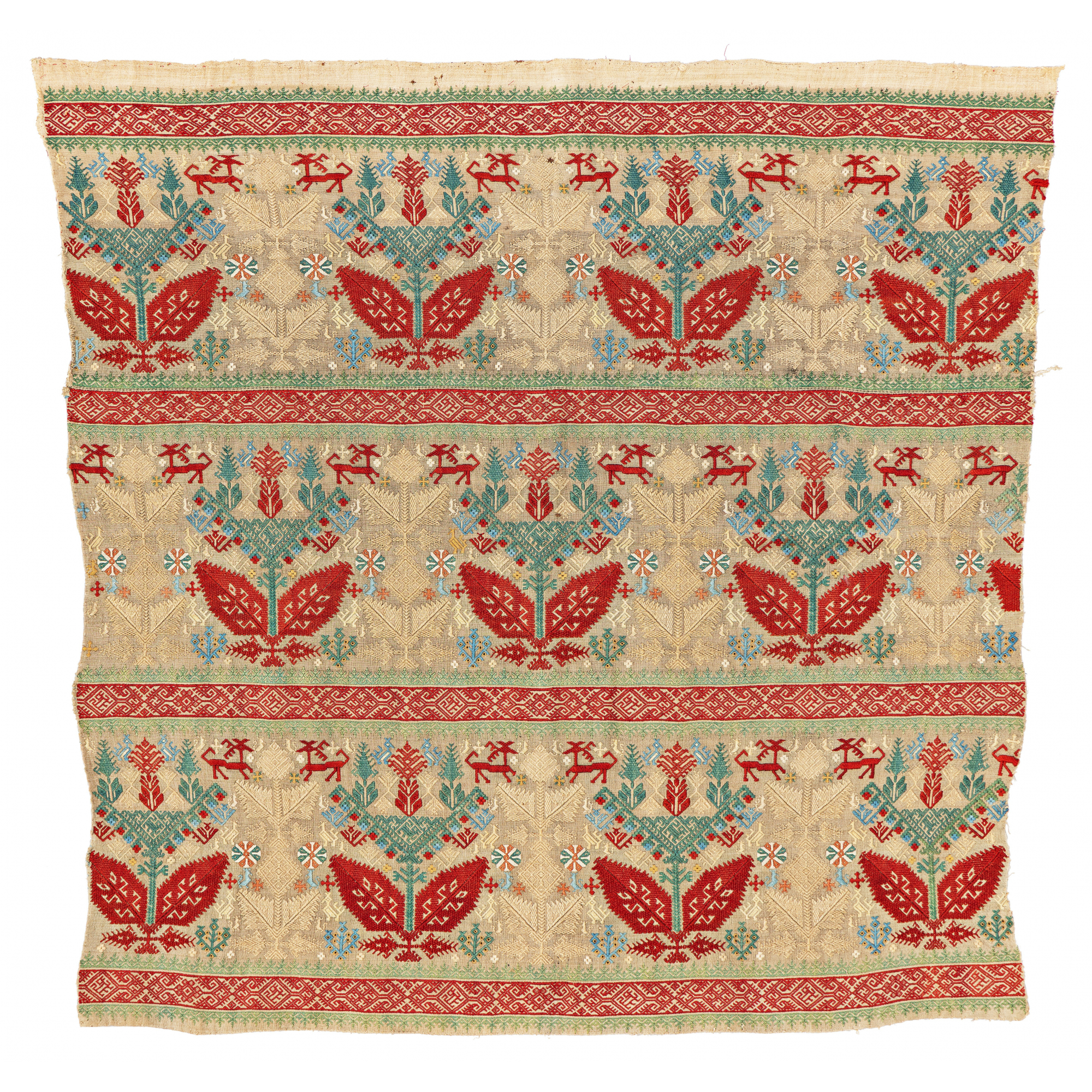
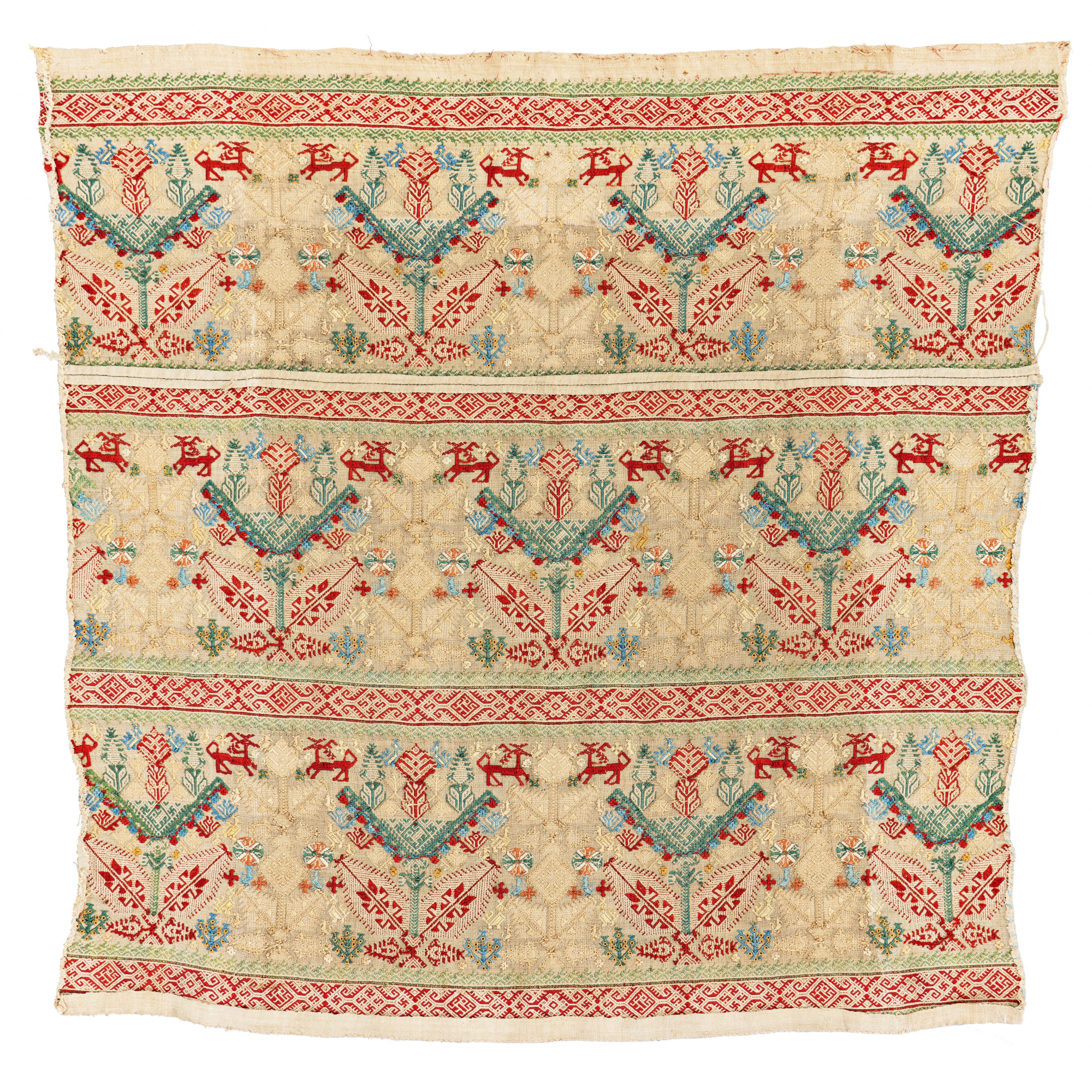
Greek Embroidery Fragment
New
77 x 76 cm (2' 6" x 2' 6")
Greece (Patmos), 17th century
Condition: fragment, slight signs of wear on the sides, overall in good condition
Silk on linen
Ancient Greek embroideries have survived in significantly smaller numbers on the European mainland than in English collections. This may be due, among other things, to the British interest in Greece, which has been particularly pronounced since the time of Lord Byron. English researchers, travelers, and collectors were on the ground from an early stage and began collecting historical embroideries.
One of the best known among them was Alan John Bayard Wace, who served as director of the British School at Athens from 1914 to 1923 and later worked at the Victoria & Albert Museum. In 1935, he published Mrs. F. H. Cook's collection in the two-volume work Mediterranean & Near Eastern Embroideries.
Plate LXVII depicts a bed curtain from Patmos, which features an embroidered band consisting of three panels repeated twice in the lower section and is also dated to the 17th century. A small but striking difference from our piece is that the animals depicted there have two horns rather than antlers.
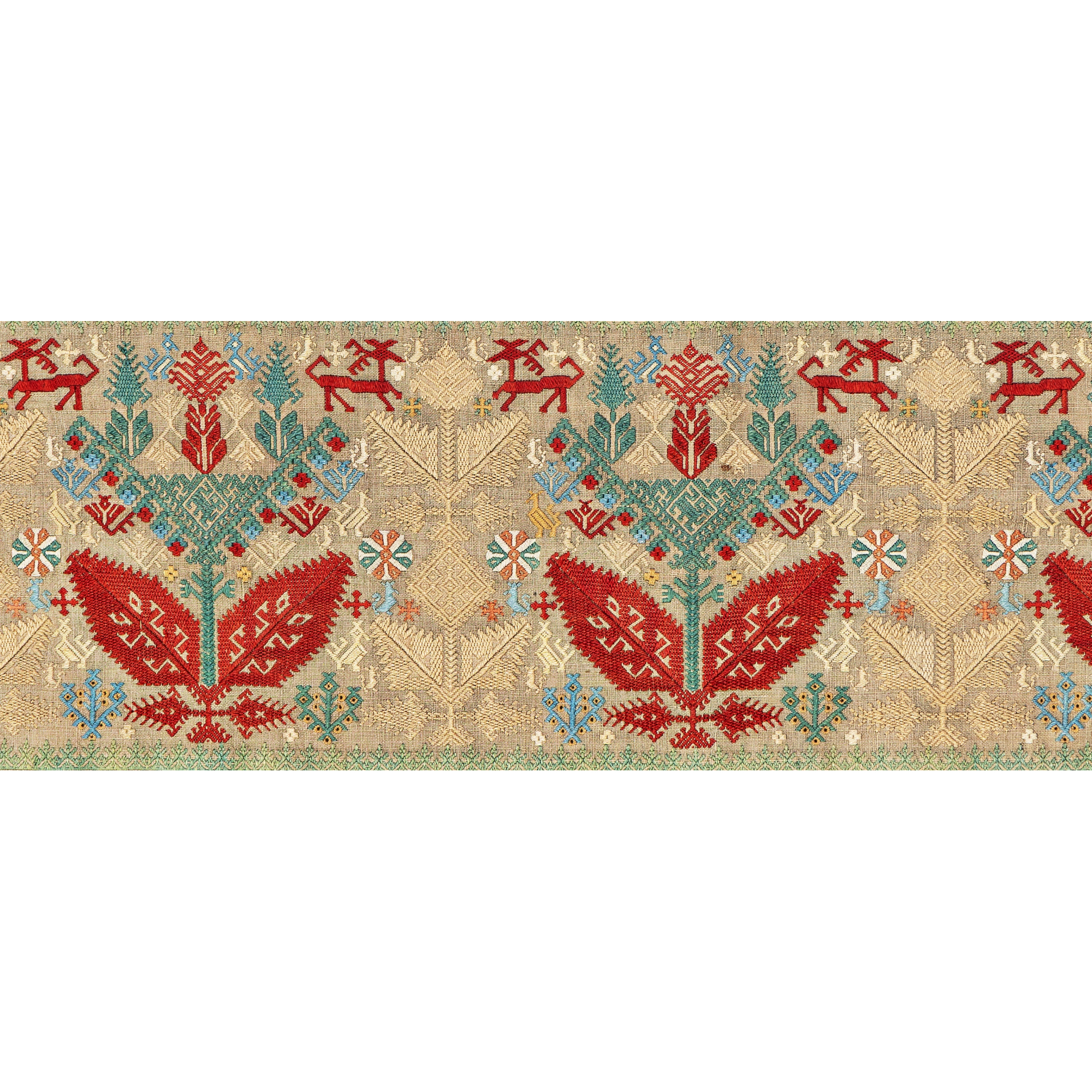
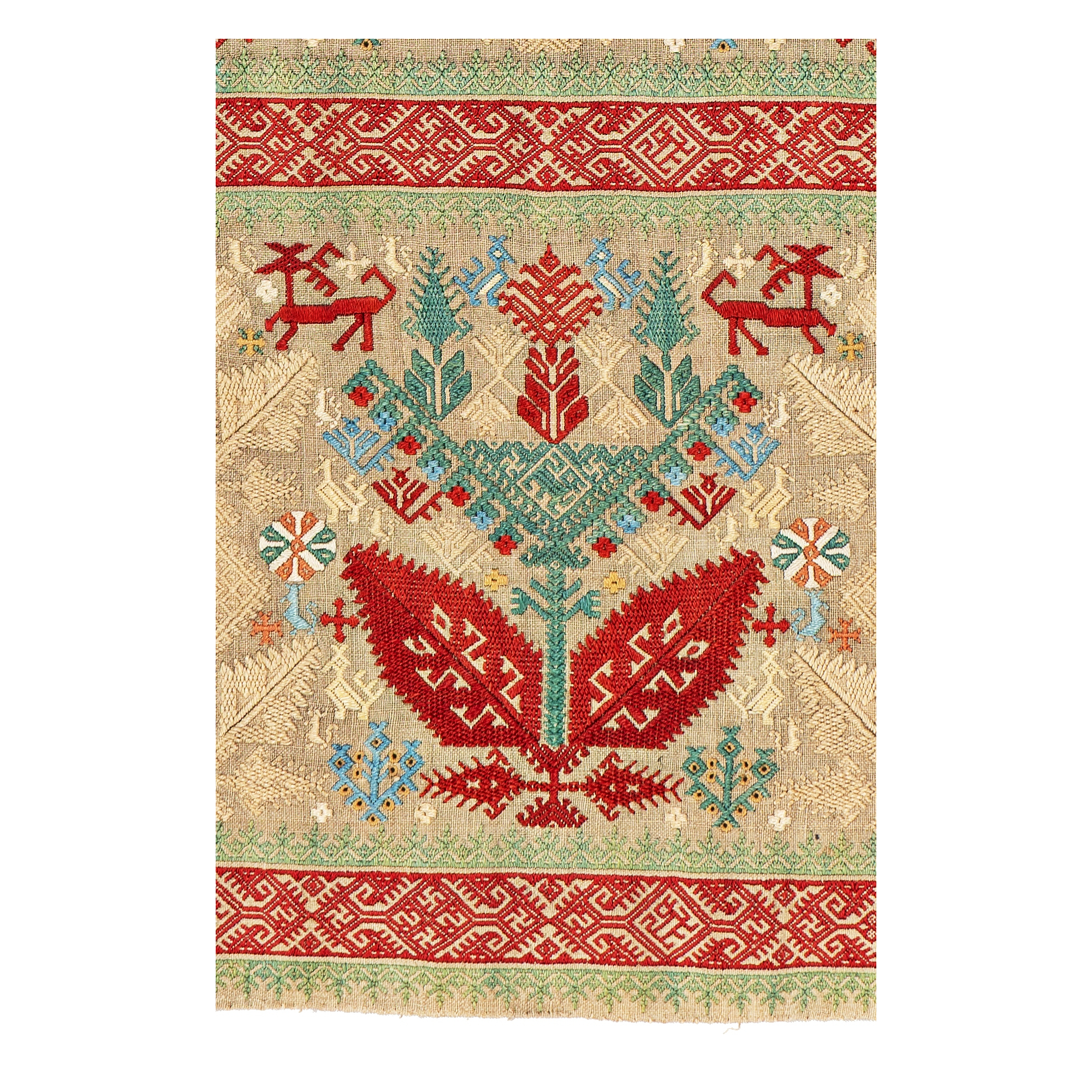
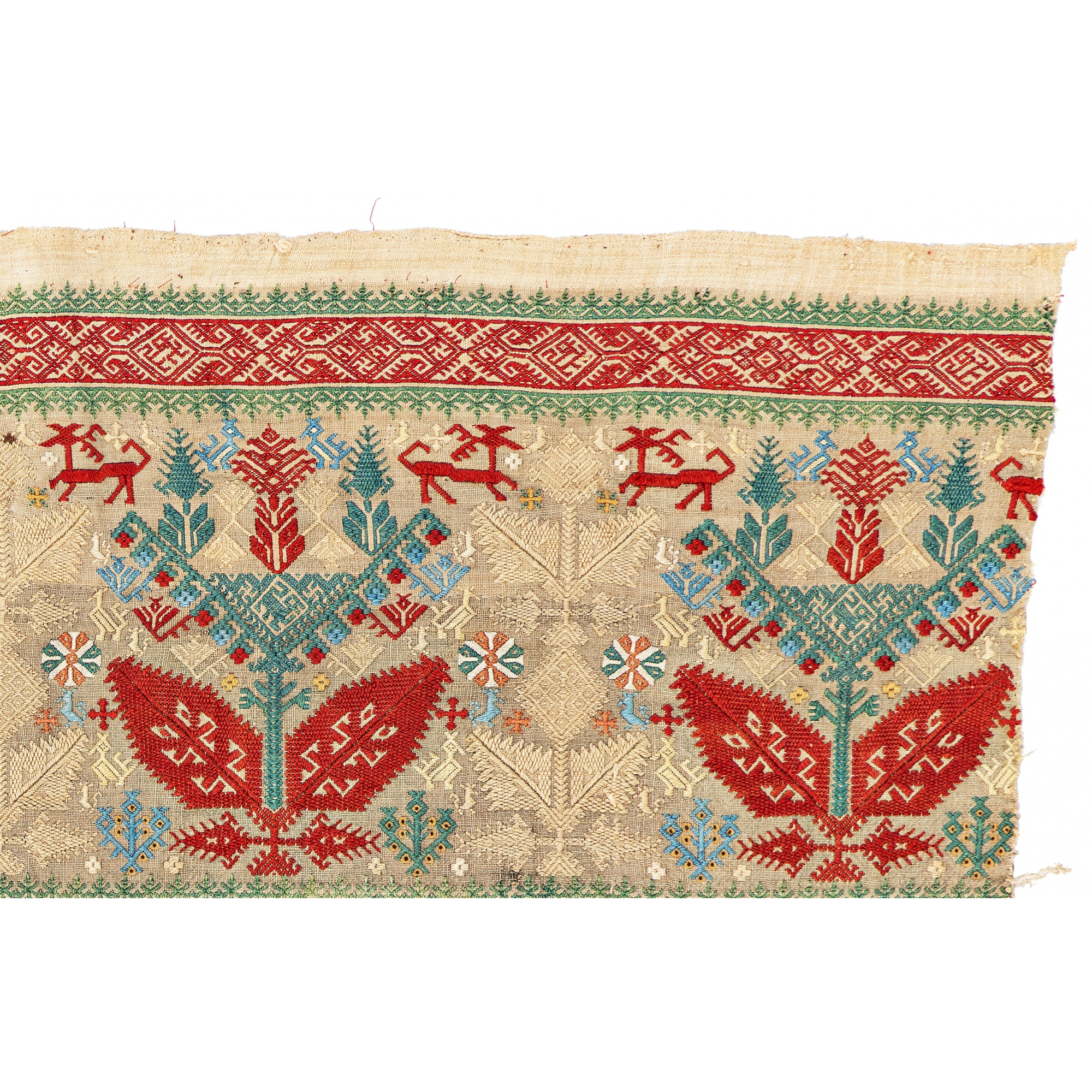
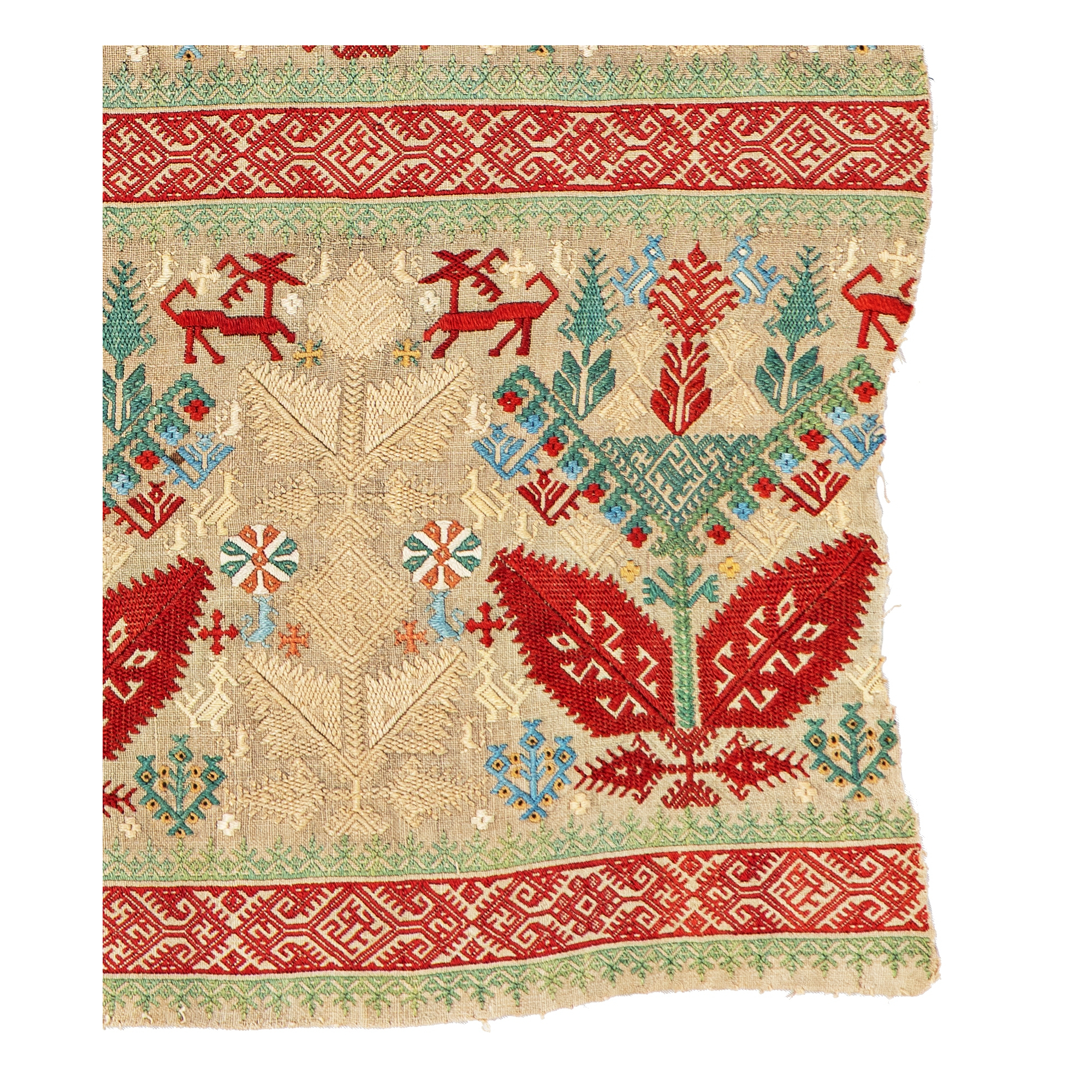
These fine silk-embroidered textiles are rare and, as a result, highly sought after. Two differently designed and differently colored small flowering trees alternate with one another, and only upon closer inspection does the astonishing variety of animals depicted between them become apparent.
Particularly charming is the medieval-style red border. Within the diamonds appears an animal with a heraldic appearance, which is also found in the calyx of the green flower. Hidden within the spherical shapes below the deer are cross-shaped motifs reminiscent of Crusader crosses.
Two other comparable examples are published in "Greek Embroideries," Benaki Museum, 1980, no. 53, and in Margaret Gentles, "Turkish and Greek Island Embroideries," Art Institute of Chicago, 1964, no. 53.
Estimate: € 6000 - 8000
Greece (Patmos), 17th century
Condition: fragment, slight signs of wear on the sides, overall in good condition
Silk on linen
Ancient Greek embroideries have survived in significantly smaller numbers on the European mainland than in English collections. This may be due, among other things, to the British interest in Greece, which has been particularly pronounced since the time of Lord Byron. English researchers, travelers, and collectors were on the ground from an early stage and began collecting historical embroideries.
One of the best known among them was Alan John Bayard Wace, who served as director of the British School at Athens from 1914 to 1923 and later worked at the Victoria & Albert Museum. In 1935, he published Mrs. F. H. Cook's collection in the two-volume work Mediterranean & Near Eastern Embroideries.
Plate LXVII depicts a bed curtain from Patmos, which features an embroidered band consisting of three panels repeated twice in the lower section and is also dated to the 17th century. A small but striking difference from our piece is that the animals depicted there have two horns rather than antlers.
These fine silk-embroidered textiles are rare and, as a result, highly sought after. Two differently designed and differently colored small flowering trees alternate with one another, and only upon closer inspection does the astonishing variety of animals depicted between them become apparent.
Particularly charming is the medieval-style red border. Within the diamonds appears an animal with a heraldic appearance, which is also found in the calyx of the green flower. Hidden within the spherical shapes below the deer are cross-shaped motifs reminiscent of Crusader crosses.
Two other comparable examples are published in "Greek Embroideries," Benaki Museum, 1980, no. 53, and in Margaret Gentles, "Turkish and Greek Island Embroideries," Art Institute of Chicago, 1964, no. 53.
Estimate: € 6000 - 8000