
No products
Product successfully added to your shopping cart
There are 0 items in your cart. There is 1 item in your cart.
23
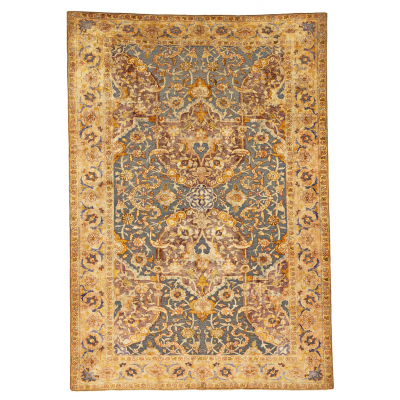
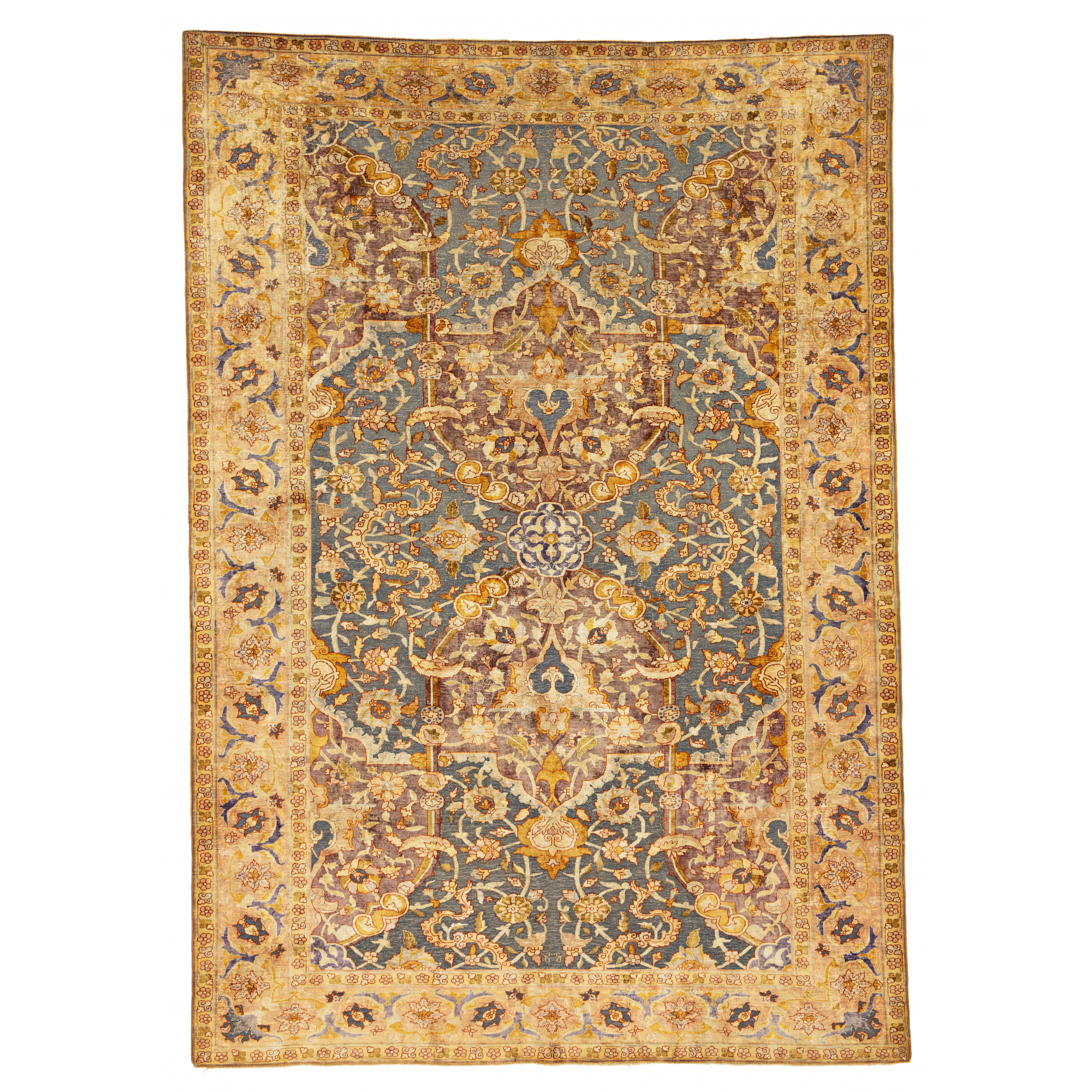
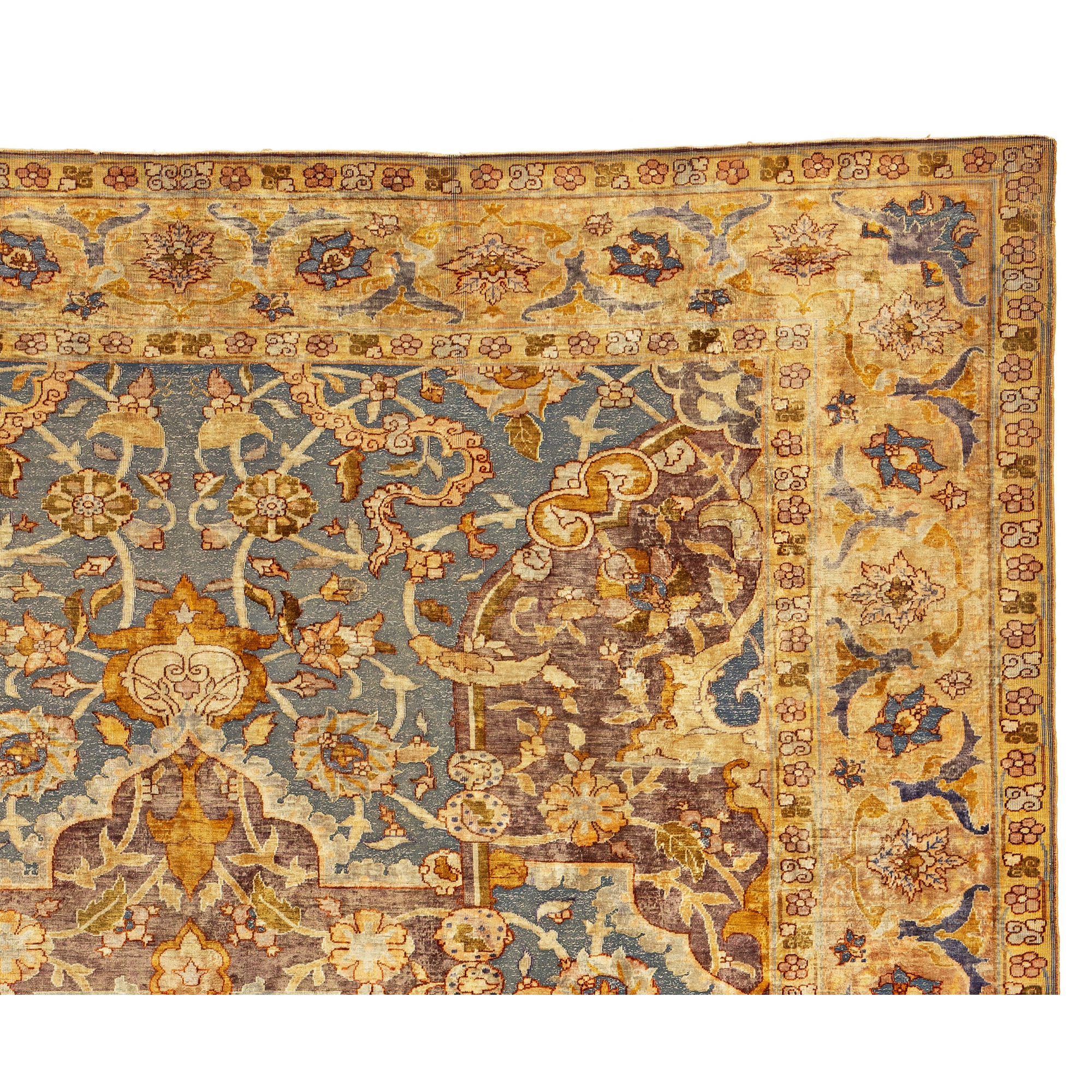
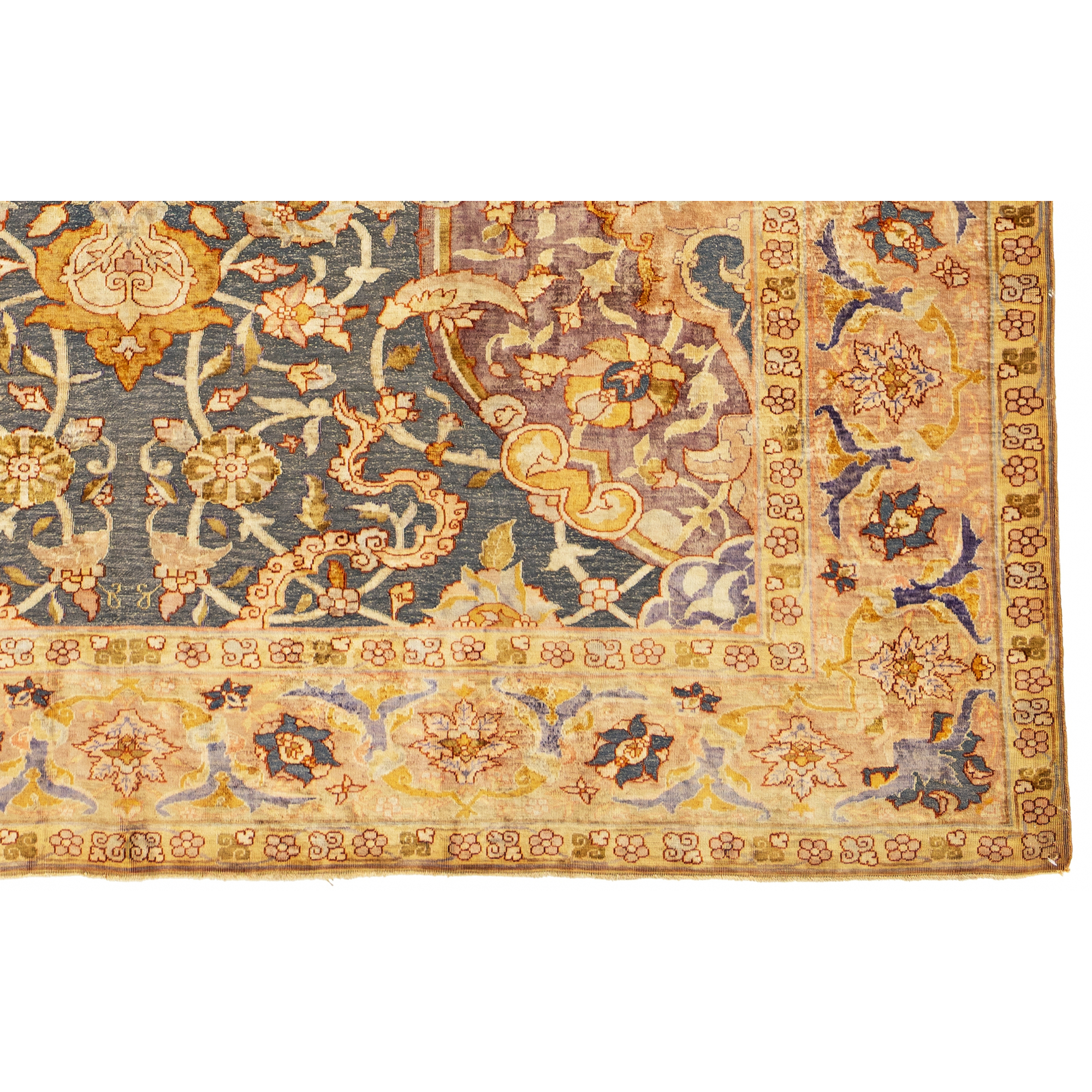
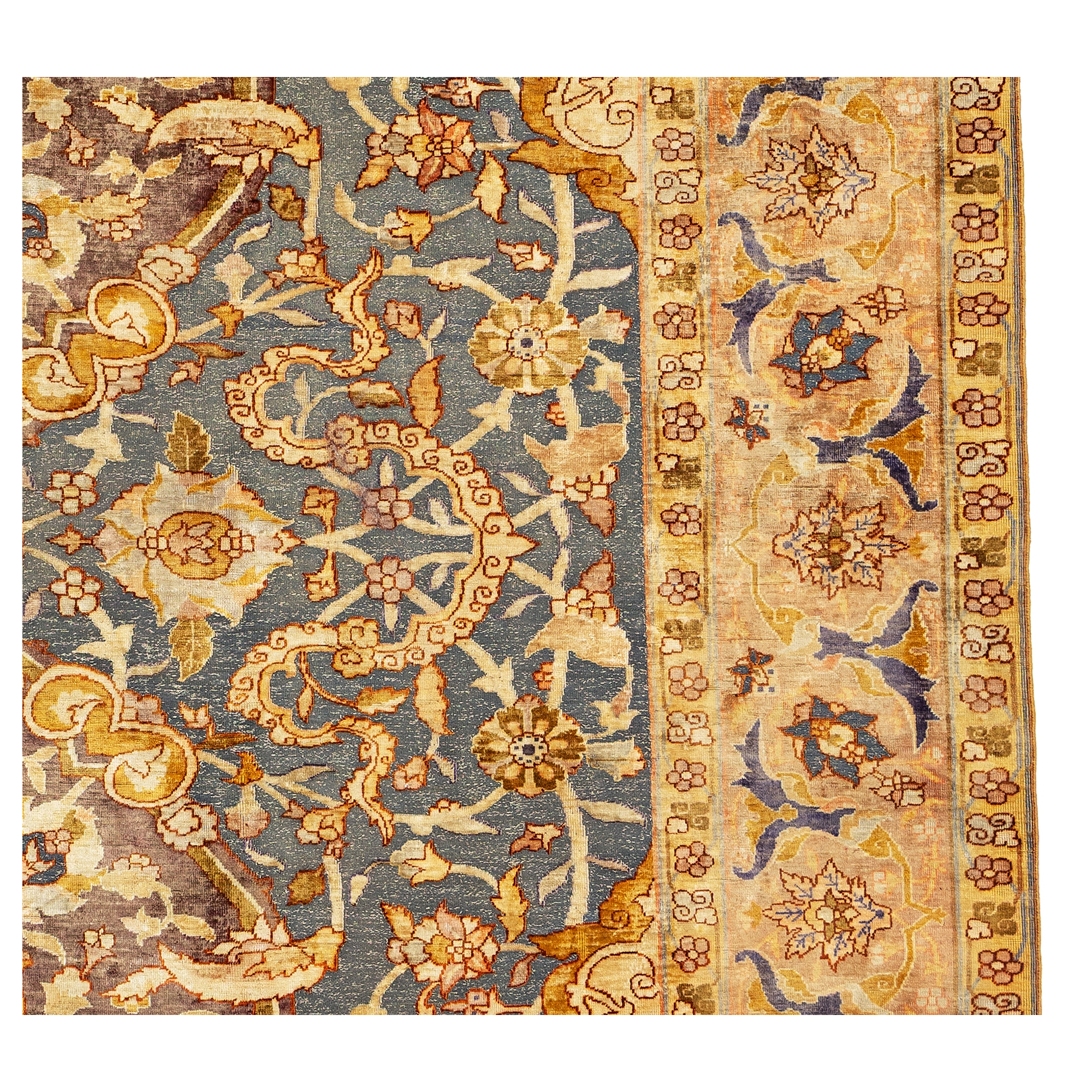
Silk Kum Kapi with metal brocade
New
258 x 179 cm (8' 6" x 5' 10")
Turkey, ca. 1920
Condition: good, scattered low pile, scattered small repairs at the upper end, lower left corner slightly damaged
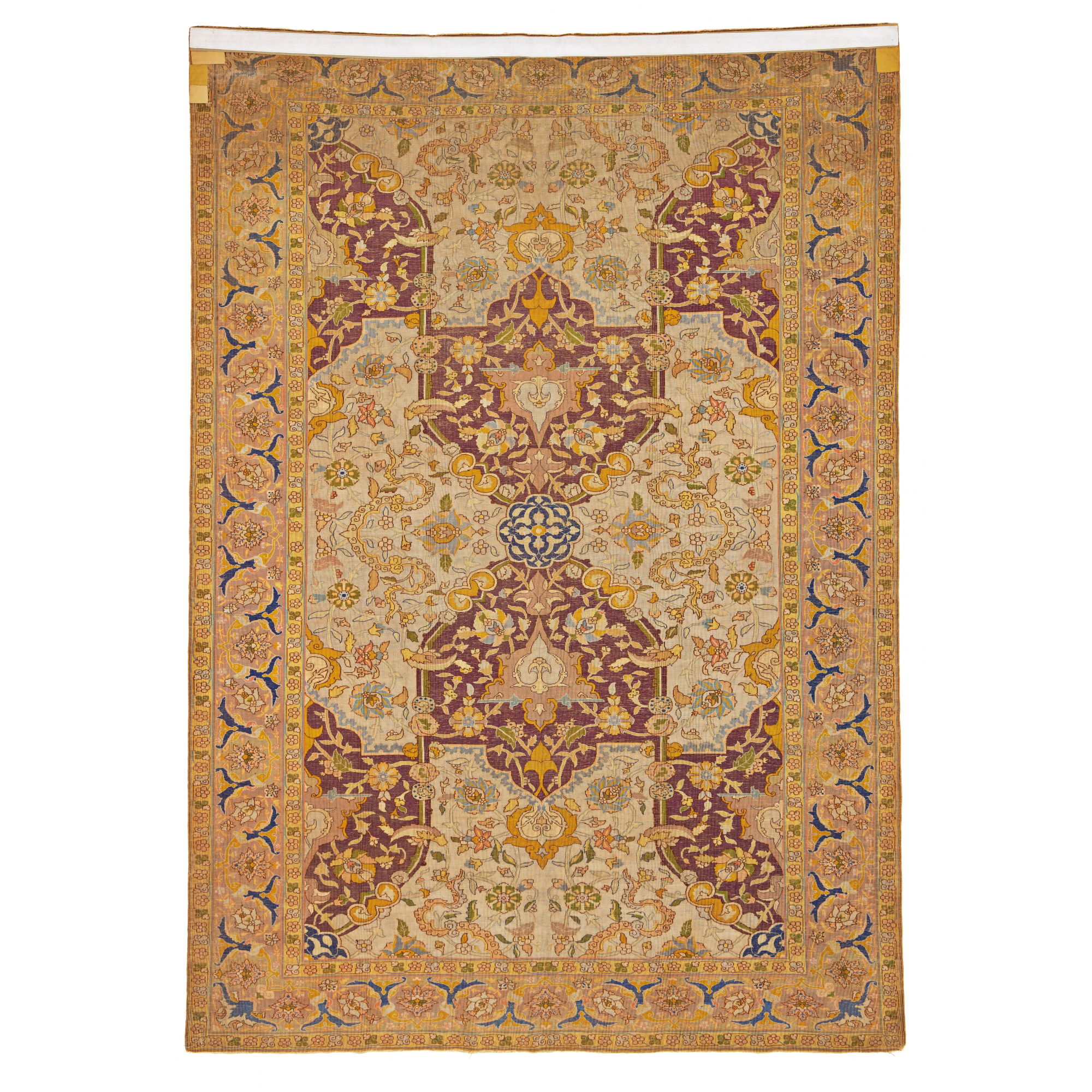
Warp: silk, weft: silk, pile: silk with metal brocade
This finely woven Kum Kapi carpet belongs to a group of luxurious silk carpets produced in the Armenian workshops of Istanbul's Kum Kapi district during the final decades of the Ottoman Empire. Technically, these works rank among the most sophisticated woven carpets of their era. Among the most famous masters were Hagop Kapoudjian and Zareh Penyamin.
In muted colors, our piece continues the tradition of the so-called "Polonaise" carpets. The Thyssen-Bornemisza Collection includes such a carpet from the second quarter of the 17th century, which displays nearly the same pattern as our carpet.
See Friedrich Spuhler, "Carpets and Textiles. The Thyssen-Bornemisza Collection," 1998, no. 28.
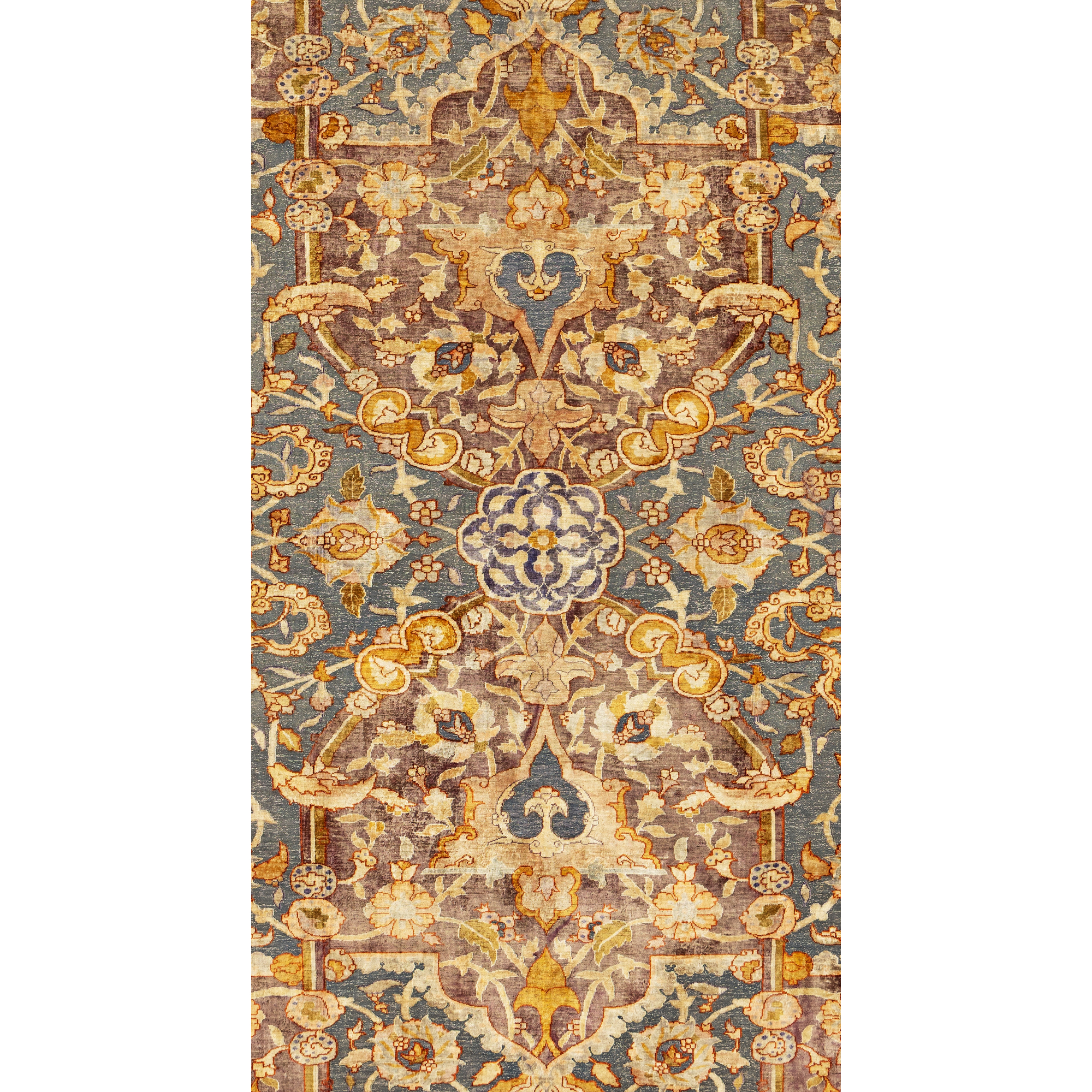
The medallions, arranged in a mirror pattern around the small central rosette, are connected along an axis to other medallions that are also mirrored and cut off at the edges. This exceptionally sophisticated design can be traced back even further to the famous Clam-Gallas carpet from the late 16th century.
Although the border of the Thyssen carpet is similar to that of our piece, it appears more subtle as it is not divided into two colors. In addition to the design, the materials used and the color scheme of these elegant pieces also show clear parallels. The sections flat-woven with metal threads and the precious silk underscore the luxurious character and extraordinary elegance of these exquisite works.
Estimate: € 30000 - 40000