
Cart
0
Product
Products
(empty)
No products
Free shipping!
Shipping
0 €
Total
Product successfully added to your shopping cart
Quantity
Total
There are 0 items in your cart. There is 1 item in your cart.
Total products
(tax incl.)
Total shipping (tax incl.)
Free shipping!
Total
(tax incl.)
20
Dazkir
New
196 x 130 cm (6' 5" x 4' 3")
Turkey, mid 19th century
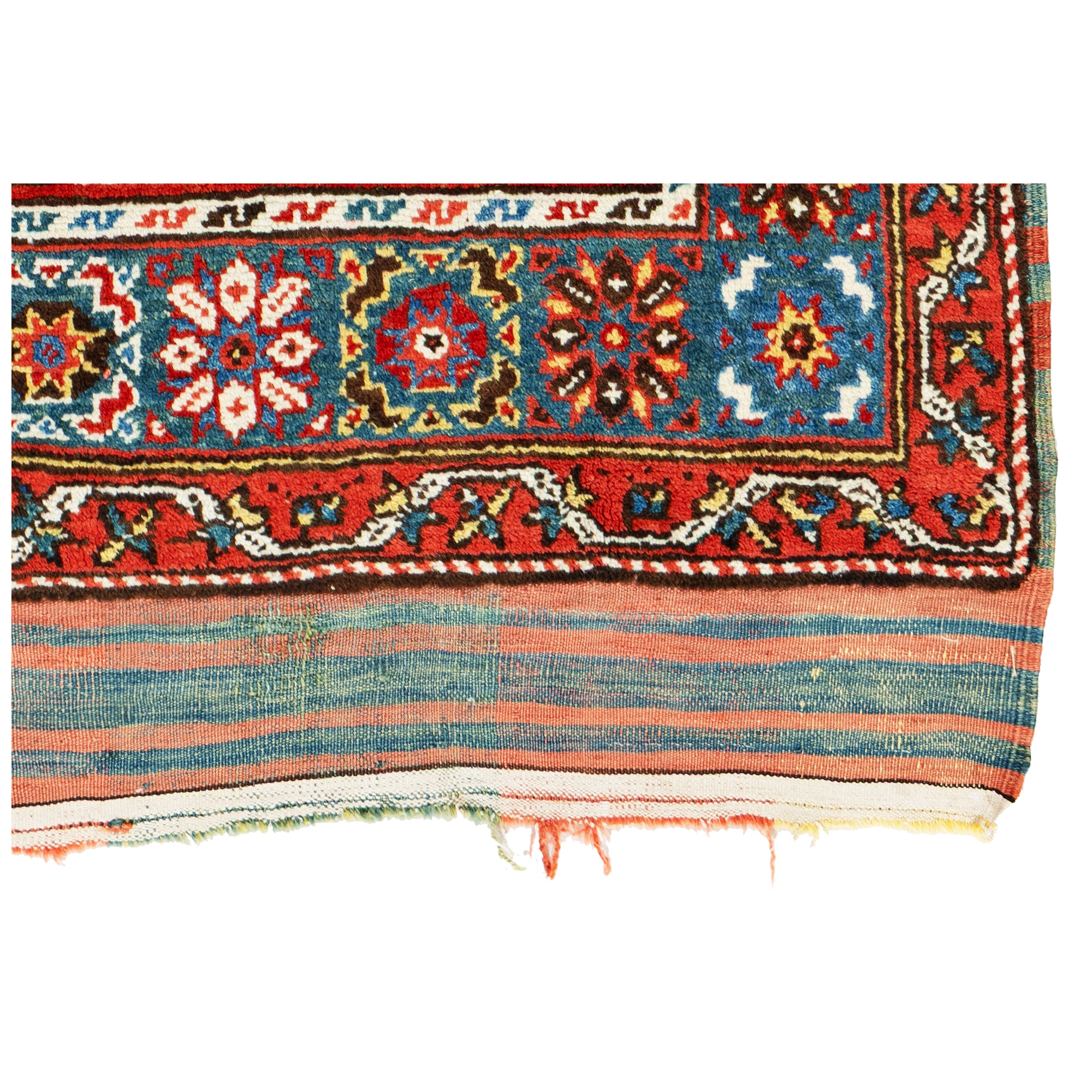
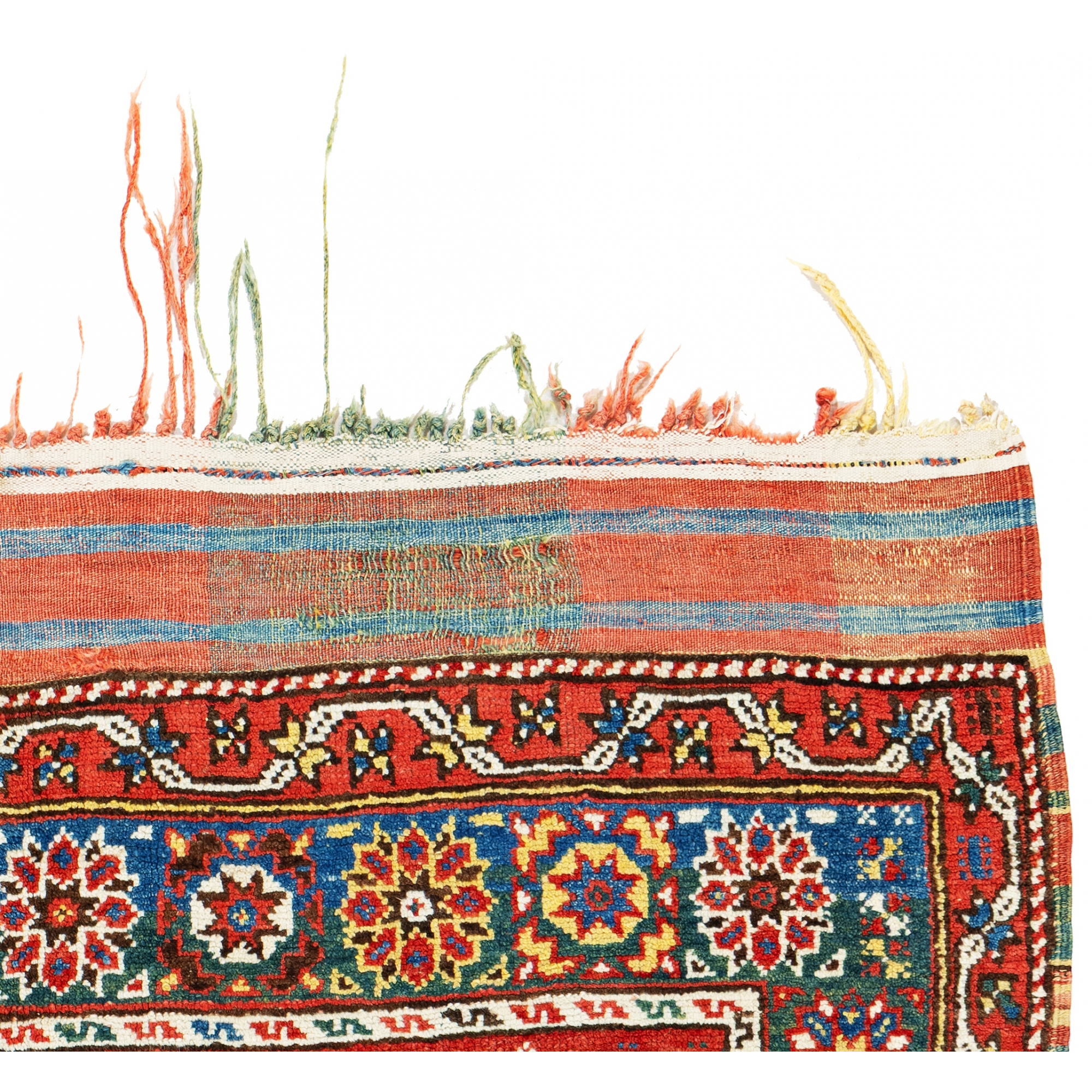
Condition: very good for its age, mostly good pile, signs of use at the kilim ends, minor small repairs
Warp: wool, weft: wool, pile: wool
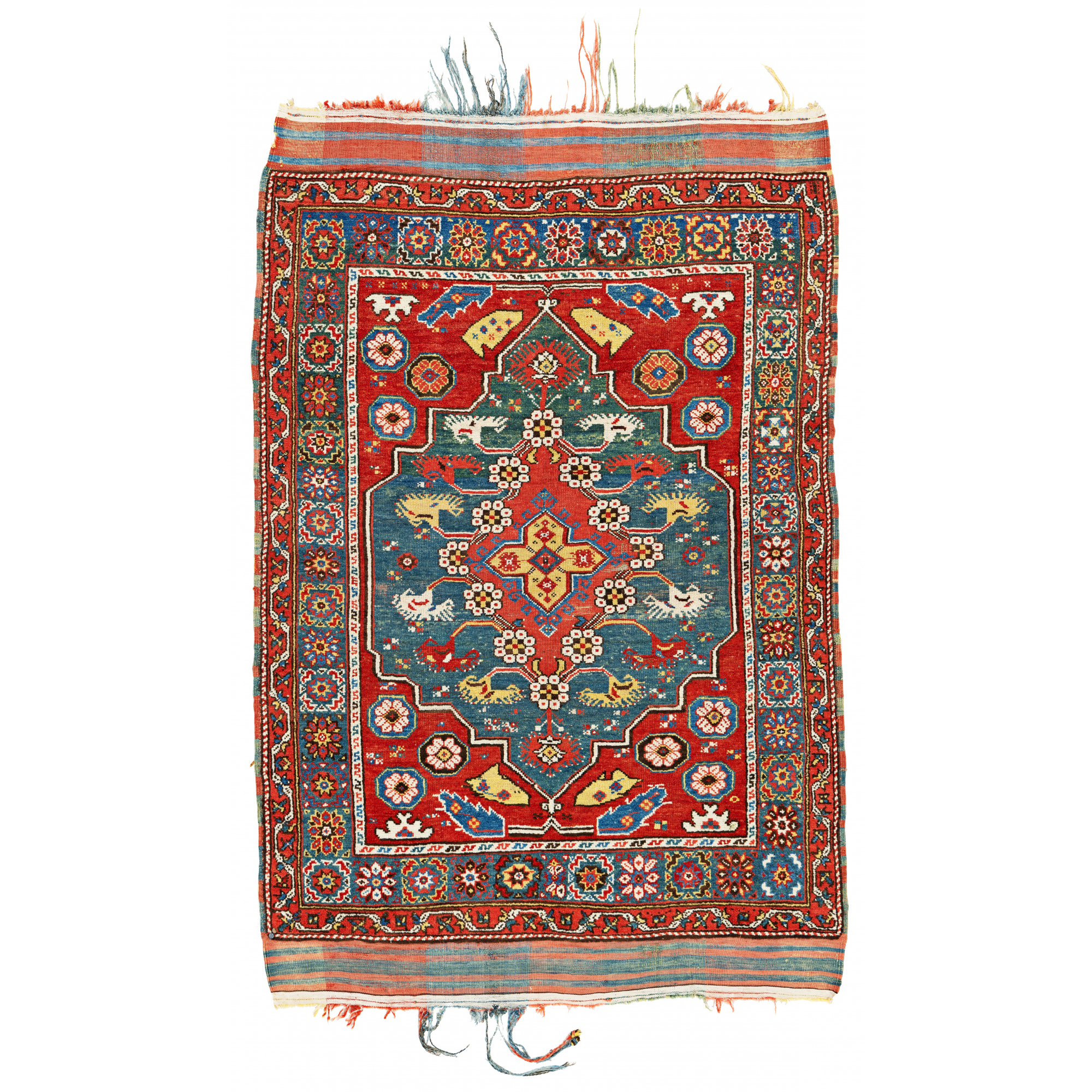
In this wonderful rug from southwestern Anatolia, we not only find fascinating traces of past centuries, but it also exhibits a technical peculiarity. The color palette is quite typical of the small town of Dazkiri and its surroundings.
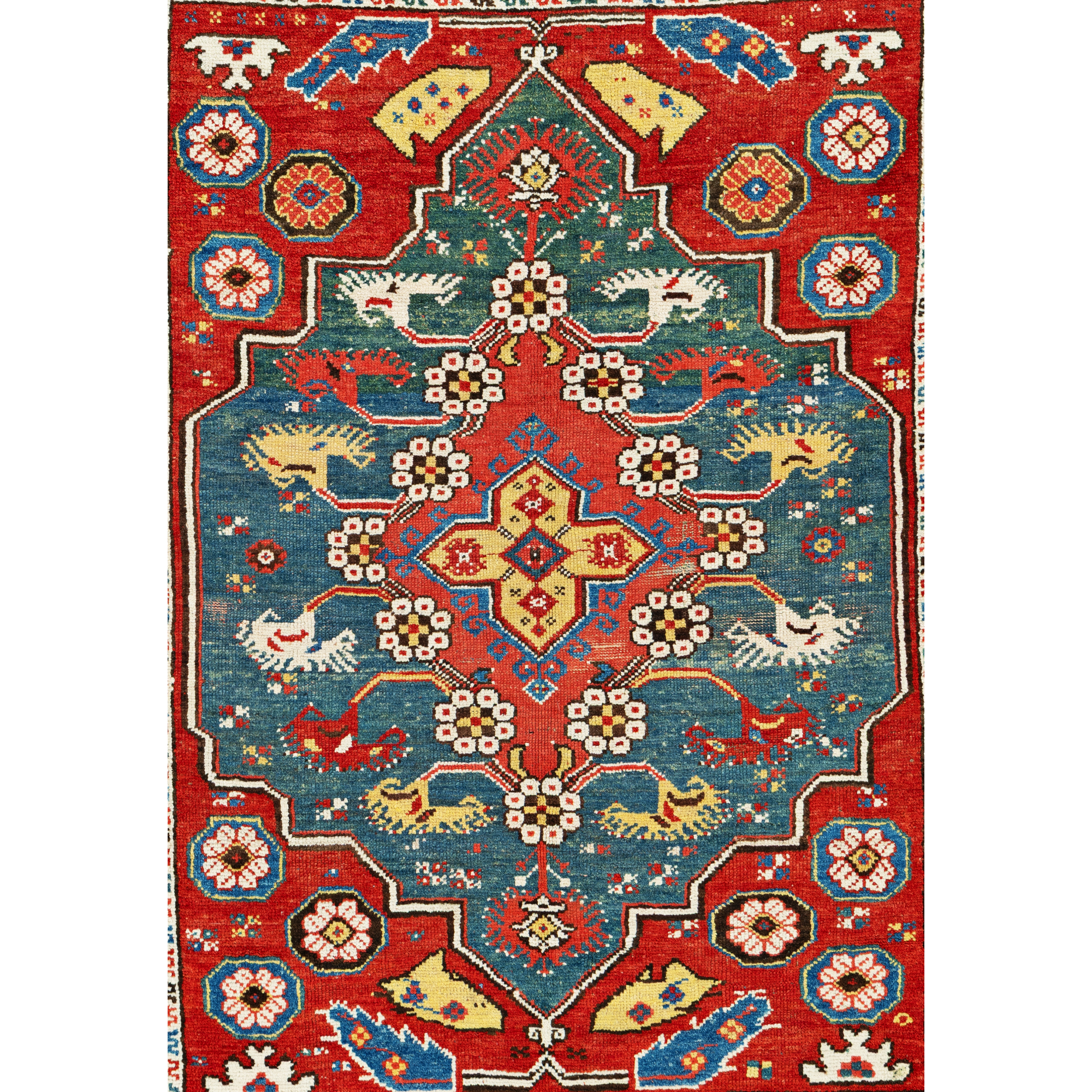
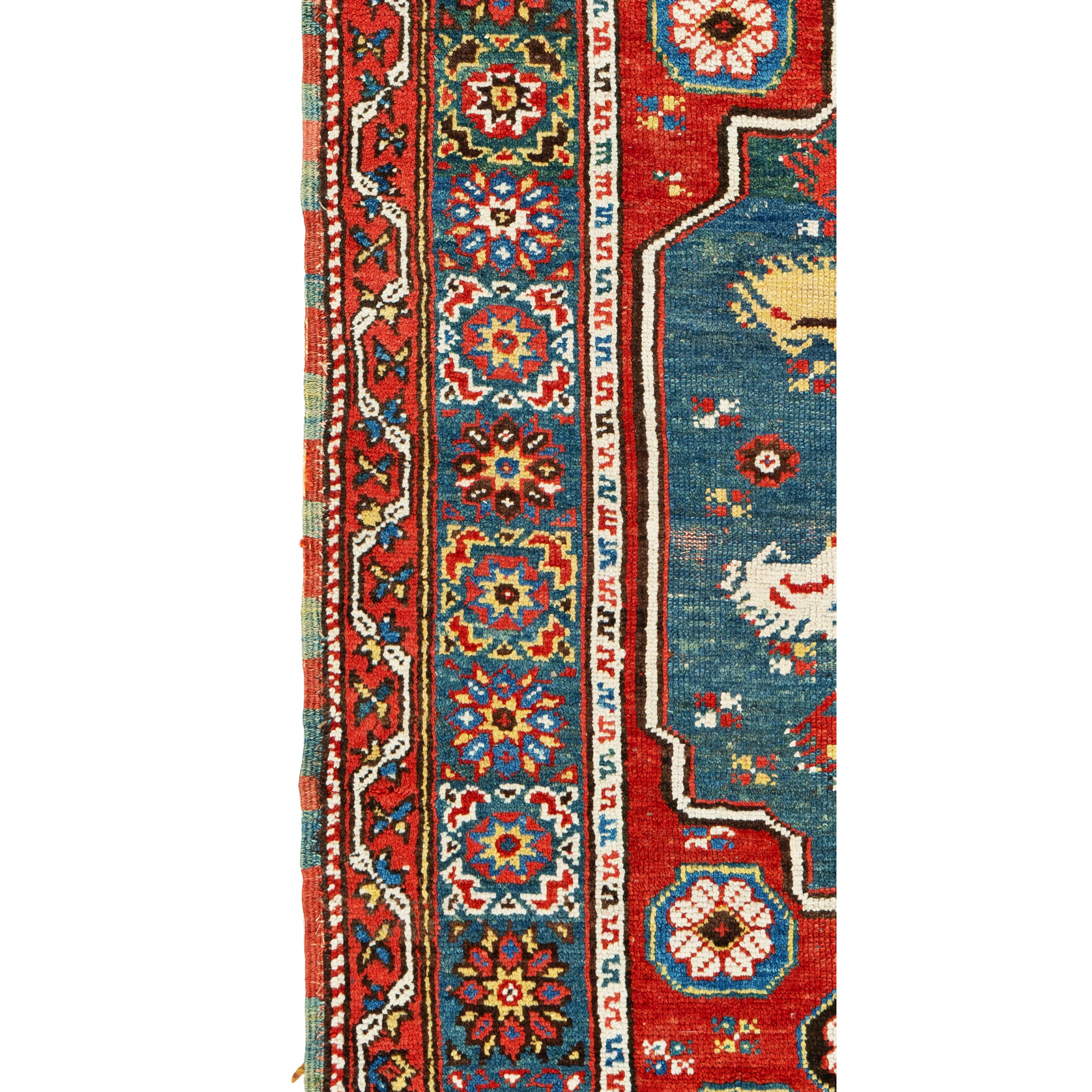
The rug's overall layout immediately brings to mind Transylvanian pieces with double niches. Perhaps the closest match is Cat. 247 on page 173 in Stefano Ionescu's "The Transylvanian Heritage". Transylvanian rugs usually feature a red medallion, sometimes a white or beige one, but almost never a blue or green one. Otherwise, the entire range of patterns can be found in the eight rugs shown on pages 172 and 173.
We have already discussed the quatrefoil medallion in the center in connection with the Karapinar rug in this catalog, and it is fascinating to see how different the artistic interpretations are across the various regions of Anatolia. Without knowledge of Transylvanian rugs, one might never have guessed that the blue-and-yellow pendants at the tips of the medallion represent a sickle-shaped leaf and a flower, respectively. On the other hand, the carnations protruding into the green field and the white rosette flowers are depicted in a manner very similar to that of the original models.
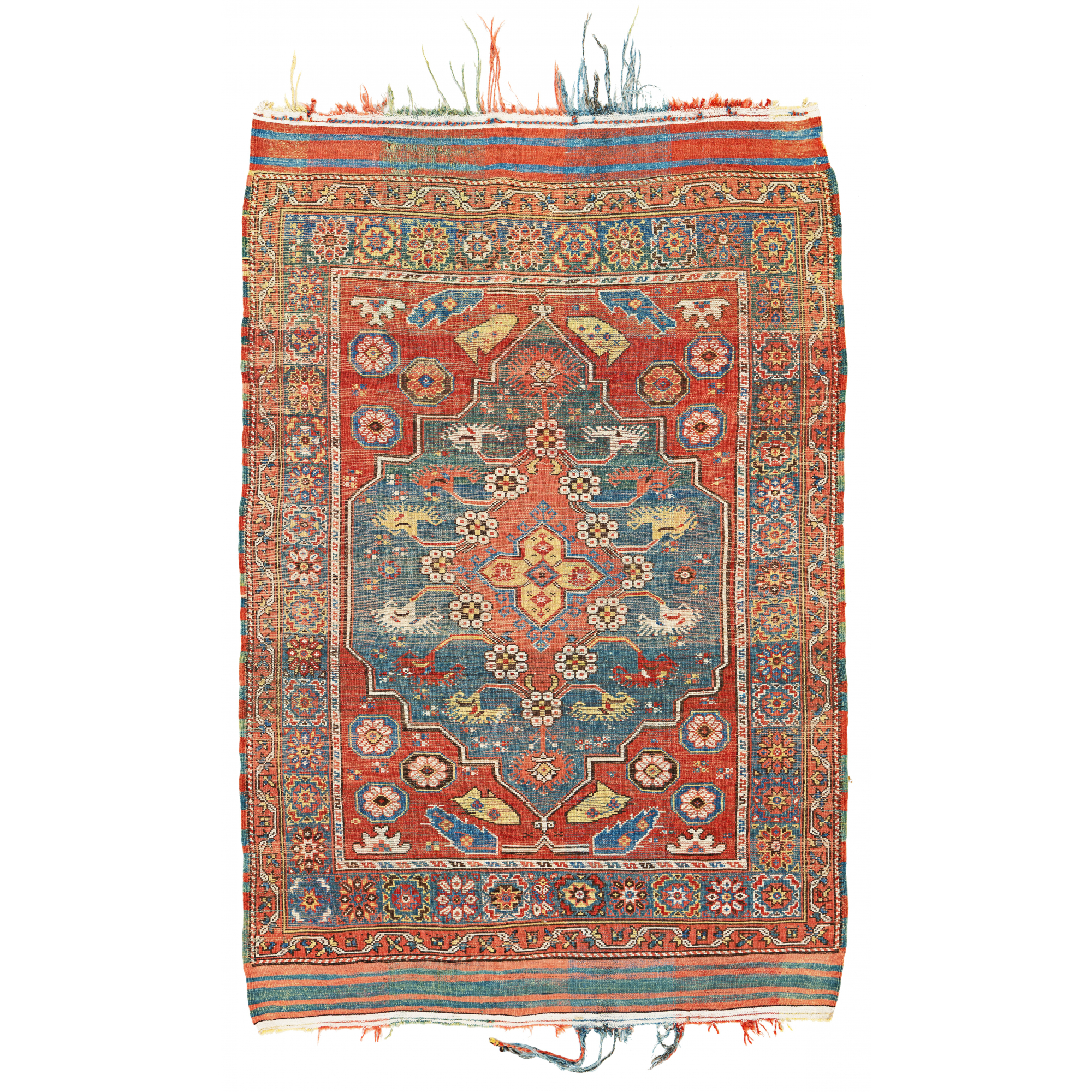
In the Orient, when one wished to commission a truly special carpet with traditional designs, special materials were also used for the base weave. Four different colors were used for the warp of our rug - an effort that can only be fully appreciated at the ends. Thankfully, these have been preserved in our exemplary piece.
A rug with an almost identical pattern was auctioned at Rippon Boswell on November 18, 2006, as Lot 123 for 24,000. It was dated 1262 AH, corresponding to 1846/47 AD, and also featured an inner secondary border.
Estimate: € 12000 - 16000
Turkey, mid 19th century
Condition: very good for its age, mostly good pile, signs of use at the kilim ends, minor small repairs
Warp: wool, weft: wool, pile: wool
In this wonderful rug from southwestern Anatolia, we not only find fascinating traces of past centuries, but it also exhibits a technical peculiarity. The color palette is quite typical of the small town of Dazkiri and its surroundings.
The rug's overall layout immediately brings to mind Transylvanian pieces with double niches. Perhaps the closest match is Cat. 247 on page 173 in Stefano Ionescu's "The Transylvanian Heritage". Transylvanian rugs usually feature a red medallion, sometimes a white or beige one, but almost never a blue or green one. Otherwise, the entire range of patterns can be found in the eight rugs shown on pages 172 and 173.
We have already discussed the quatrefoil medallion in the center in connection with the Karapinar rug in this catalog, and it is fascinating to see how different the artistic interpretations are across the various regions of Anatolia. Without knowledge of Transylvanian rugs, one might never have guessed that the blue-and-yellow pendants at the tips of the medallion represent a sickle-shaped leaf and a flower, respectively. On the other hand, the carnations protruding into the green field and the white rosette flowers are depicted in a manner very similar to that of the original models.
In the Orient, when one wished to commission a truly special carpet with traditional designs, special materials were also used for the base weave. Four different colors were used for the warp of our rug - an effort that can only be fully appreciated at the ends. Thankfully, these have been preserved in our exemplary piece.
A rug with an almost identical pattern was auctioned at Rippon Boswell on November 18, 2006, as Lot 123 for 24,000. It was dated 1262 AH, corresponding to 1846/47 AD, and also featured an inner secondary border.
Estimate: € 12000 - 16000