
No products
Product successfully added to your shopping cart
There are 0 items in your cart. There is 1 item in your cart.
19
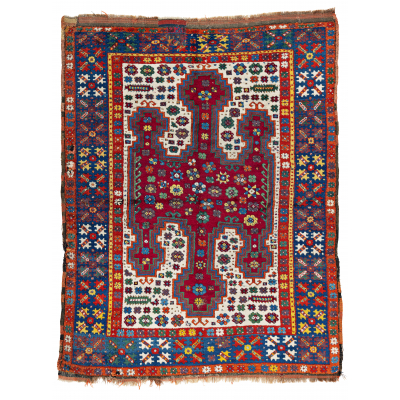
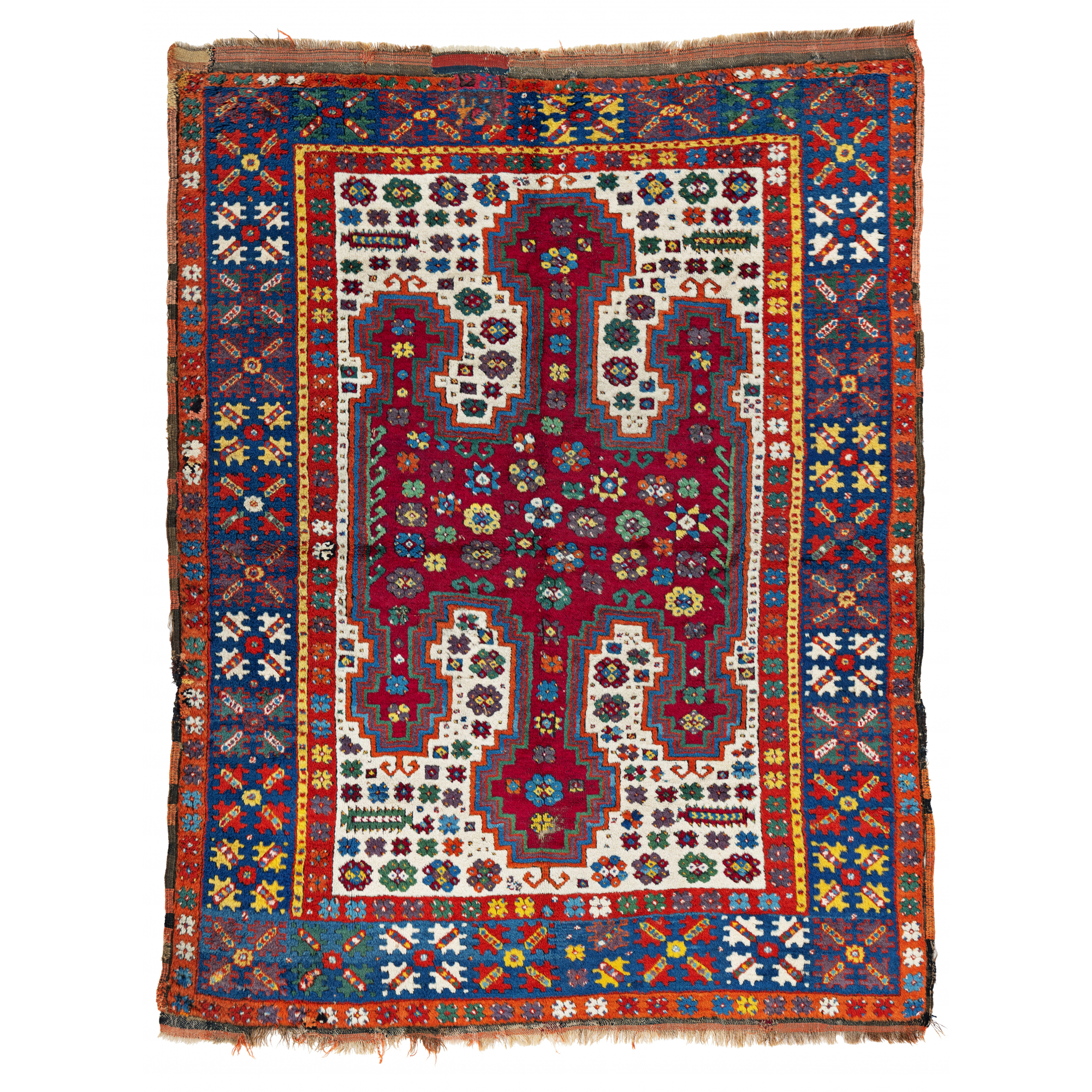
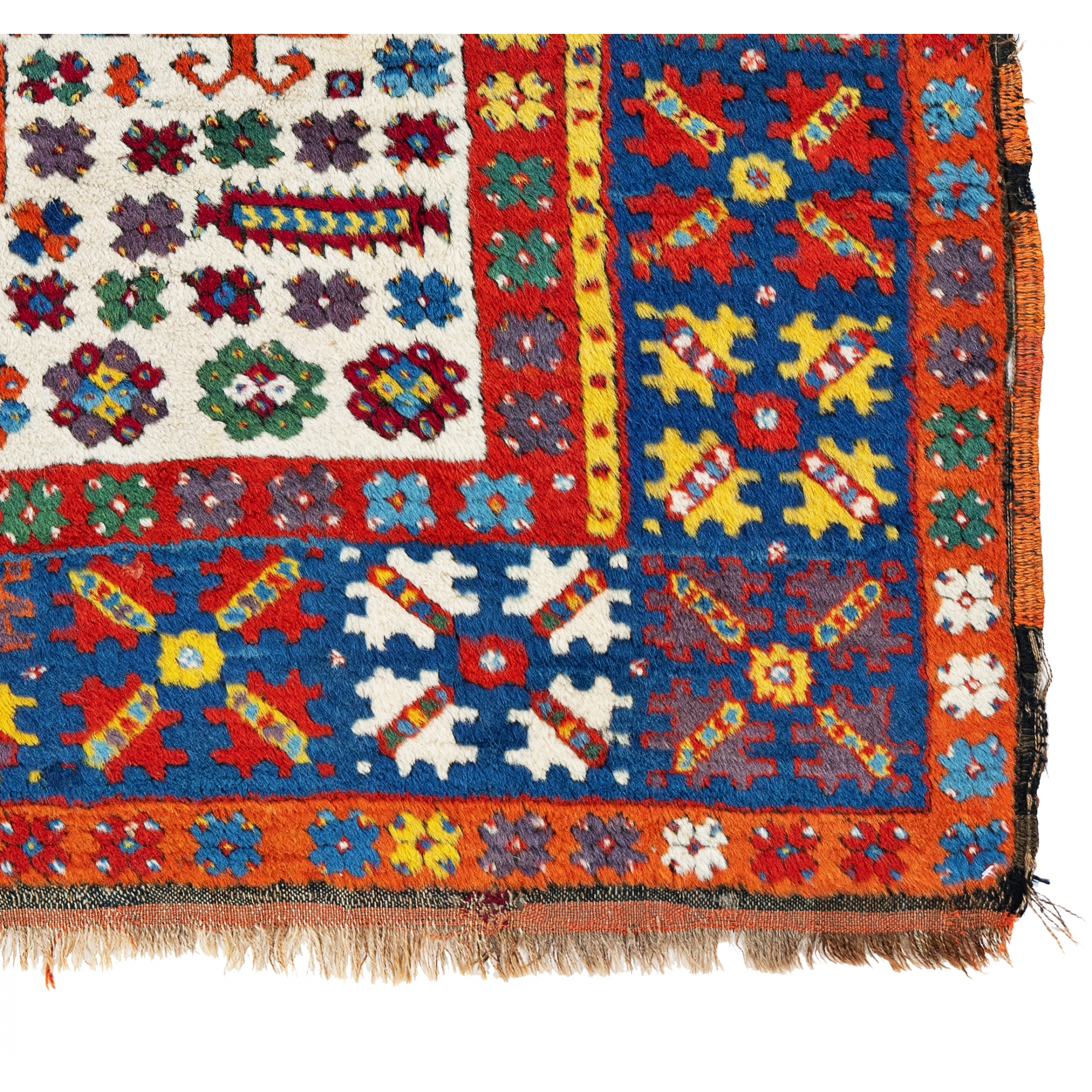
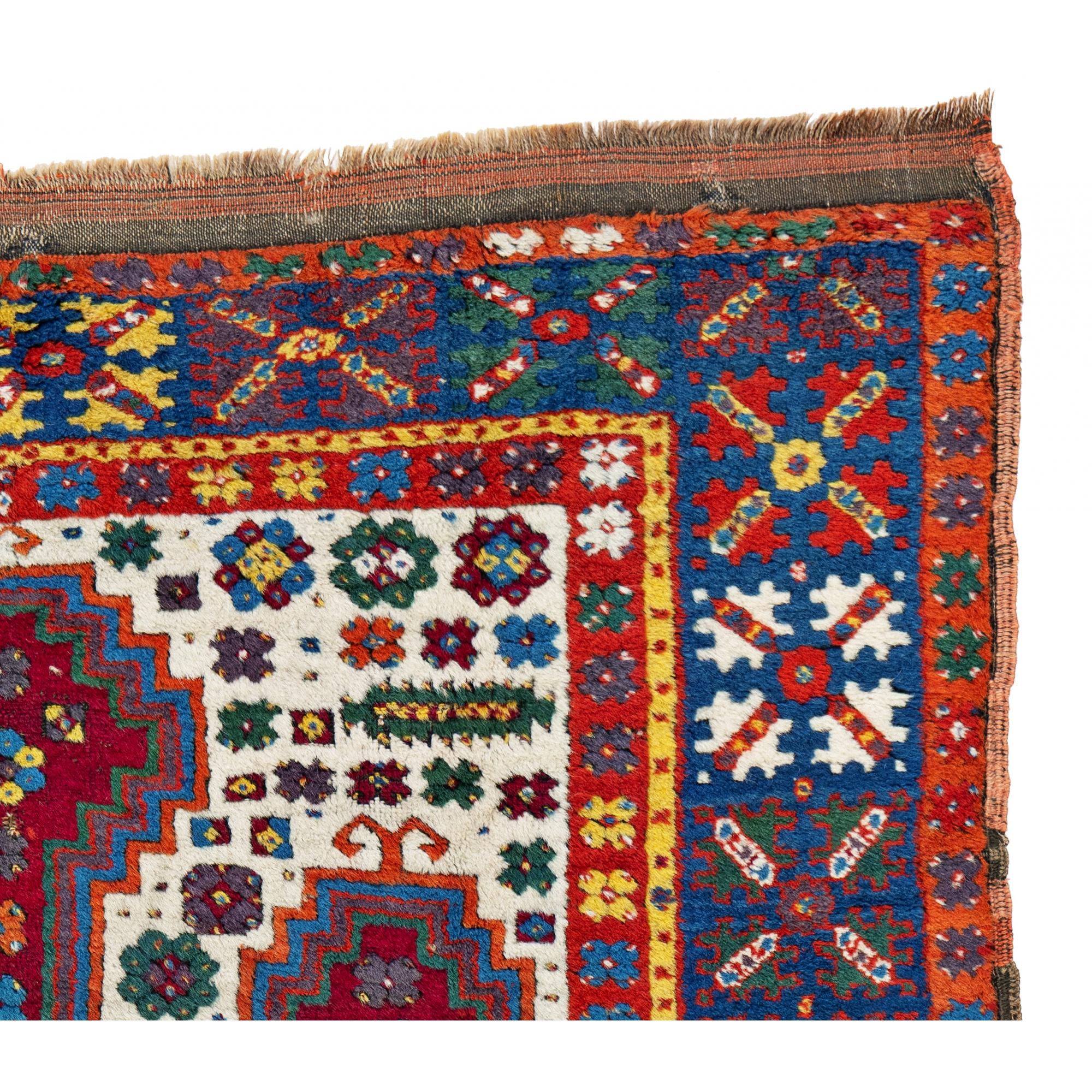
East Anatolian Kurdish Rug (Marash)
New
181 x 144 cm (5' 11" x 4' 9")
Turkey, first half 19th century
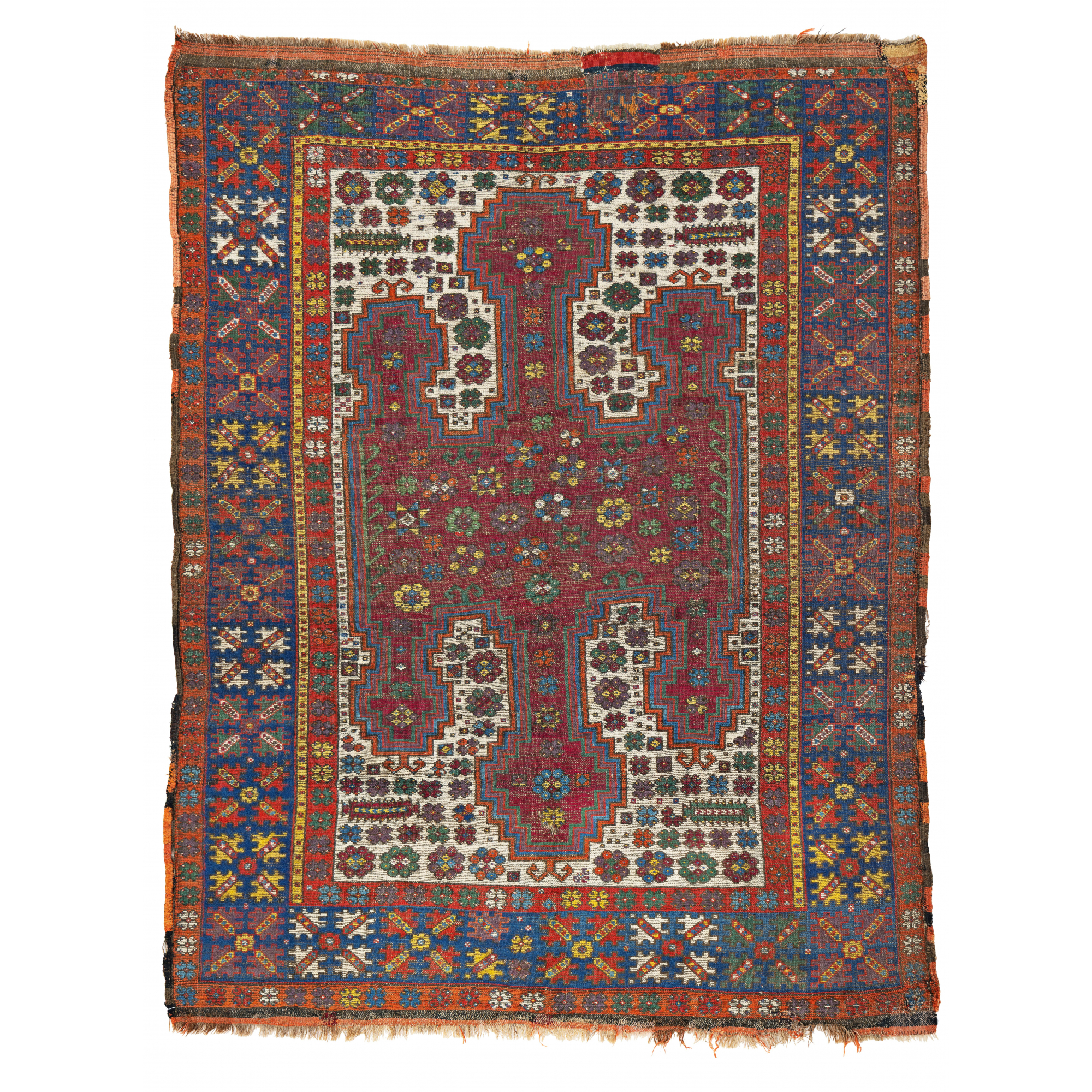
Condition: good for its age, mostly good pile, sides and ends slightly damaged, a small hole in the center, some old repairs
Warp: wool, weft: wool, pile: wool
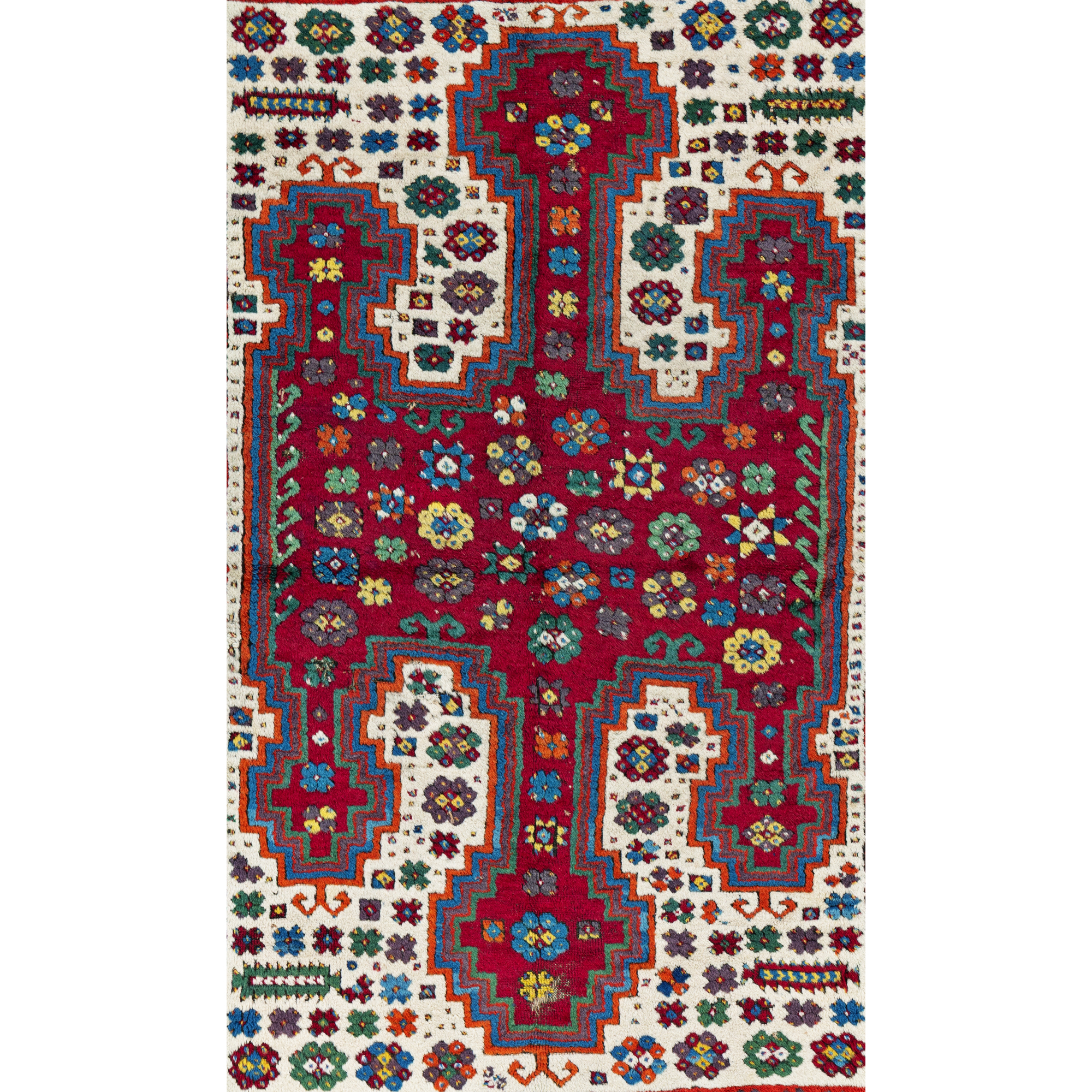
This wonderful rug exemplifies the synergy of rural and village rug-making in the most exquisite way. The imposing central motif points, on the one hand, toward its eastern neighbors in the Caucasus - the Sevan Kazaks - and, on the other, westward toward prayer rugs, such as those of the Yörük, which feature a head-shaped mihrab. These, in turn, draw their inspiration from the so-called re-entrant or Bellini carpets. However, the examples mentioned so far have only one "head" on each side and are not tripartite. This tripartite structure leads us to Western Anatolia, where we also find it, often in red on a white ground. Perhaps the most beautiful example is the one illustrated by McMullan on Plate 92.
For our Eastern Anatolian specimen, the weaver evidently had a very clear idea of what she wanted to depict. It is rare to see fill motifs arranged so strictly, almost like lines of writing. Much less varied, though equally strictly ordered, rows of motifs can also be found on the McMullan piece.
These rugs with mirrored gable niches can be traced back further to the Transylvanian niche rugs and their predecessors. For comparison, see also two rugs in Walter Denny's "Anatolian Carpets", nos. 51 and 52, as well as a niche rug attributed to Ladik in Schürmann's "Teppiche aus dem Orient", page 75.
Things get really exciting now when we turn our attention southward from Eastern Anatolia to Lebanon. In the "Exhibition of Oriental Carpets," which took place in May 1963 at the Nicolas Sursock Museum in Beirut, Plate 86 depicts a specimen that bears a striking resemblance to ours. The main border, the stepped, head-shaped mihrabs, and the comparable fill motifs show a clear kinship; however, the mihrabs there are not mirrored downward.
This rug, as well as a related example in "Prayer Rugs" from 1974, Plate XLIII, originate from the village of al-Fakiha in the Bekaa Valley in Lebanon. Unfortunately, both are depicted only in black and white.
Estimate: € 14000 - 18000