
Cart
0
Product
Products
(empty)
No products
Free shipping!
Shipping
0 €
Total
Product successfully added to your shopping cart
Quantity
Total
There are 0 items in your cart. There is 1 item in your cart.
Total products
(tax incl.)
Total shipping (tax incl.)
Free shipping!
Total
(tax incl.)
15
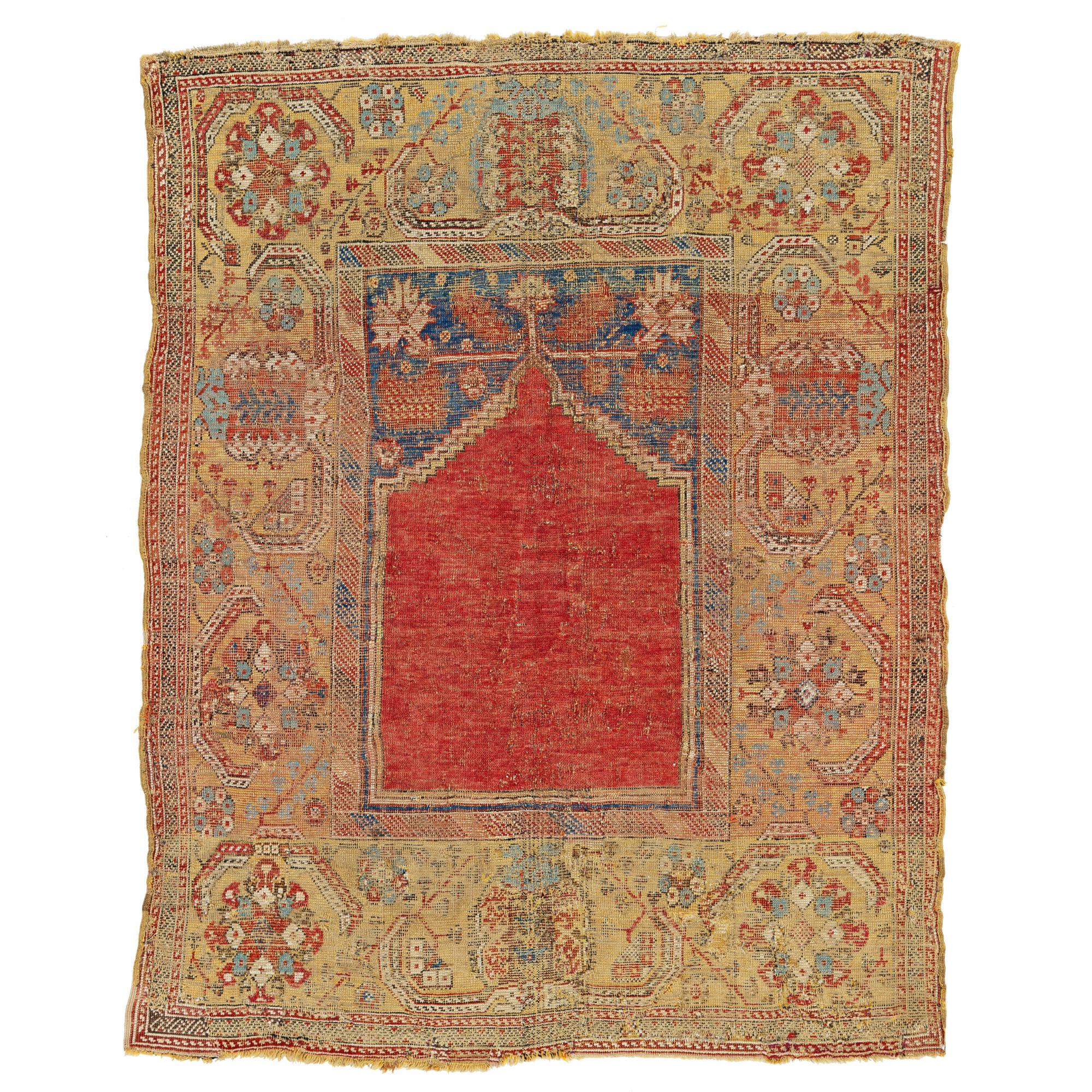
Transylvanian Prayer Rug
New
156 x 123 cm (5' 1" x 4')
Turkey, 17th century
Condition: used, low pile, several old repairs, sides and ends partially damaged
Warp: wool, weft: wool, pile: wool
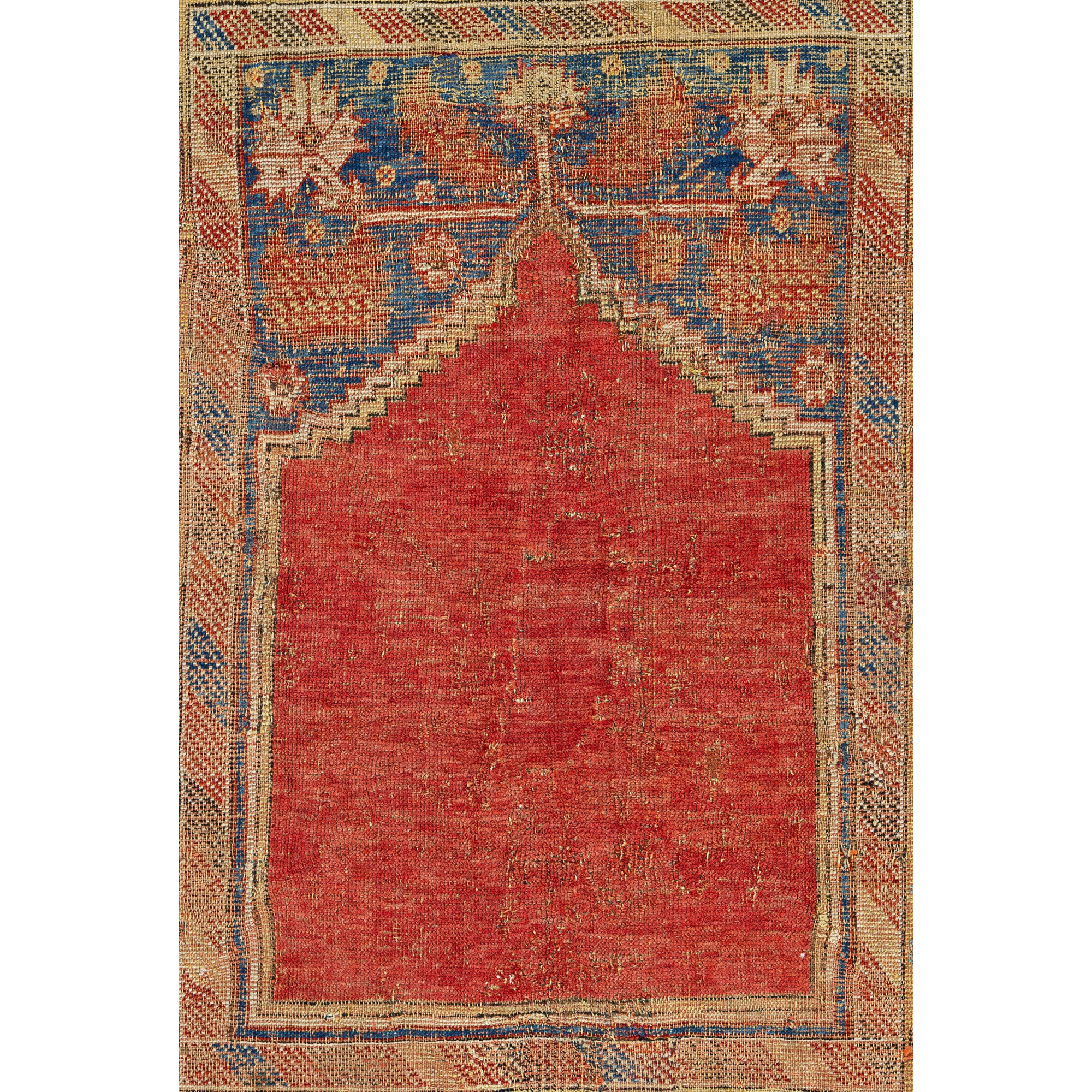
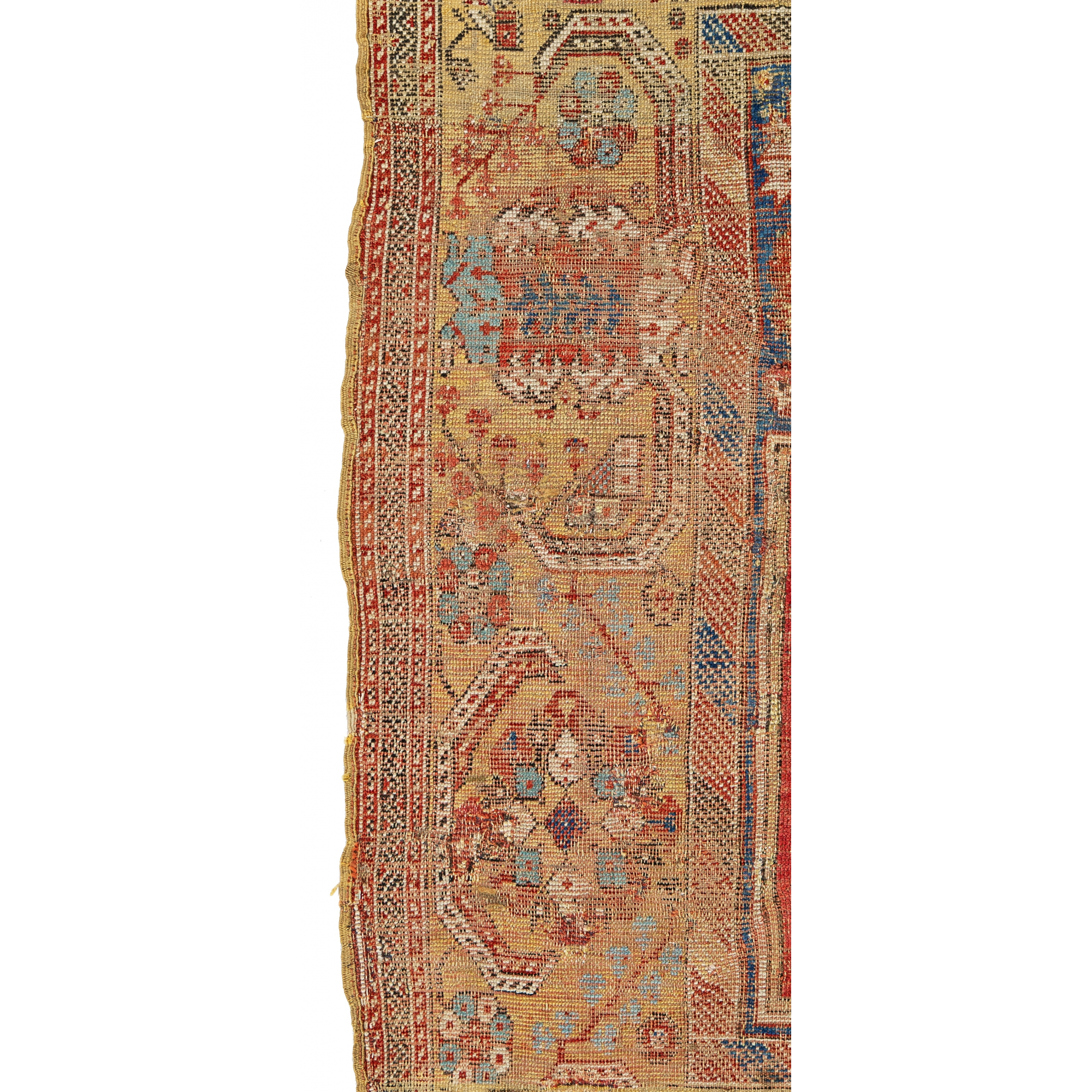
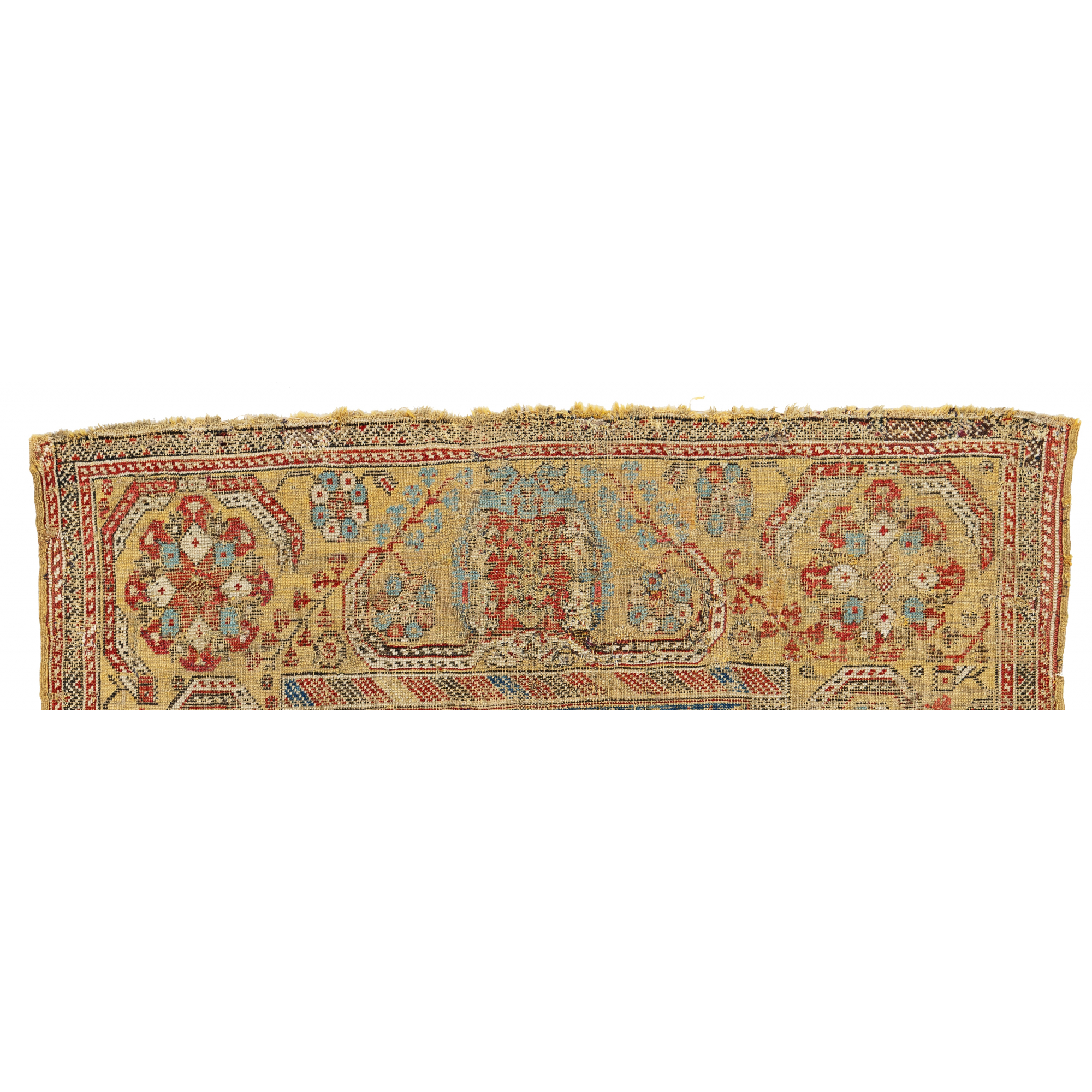
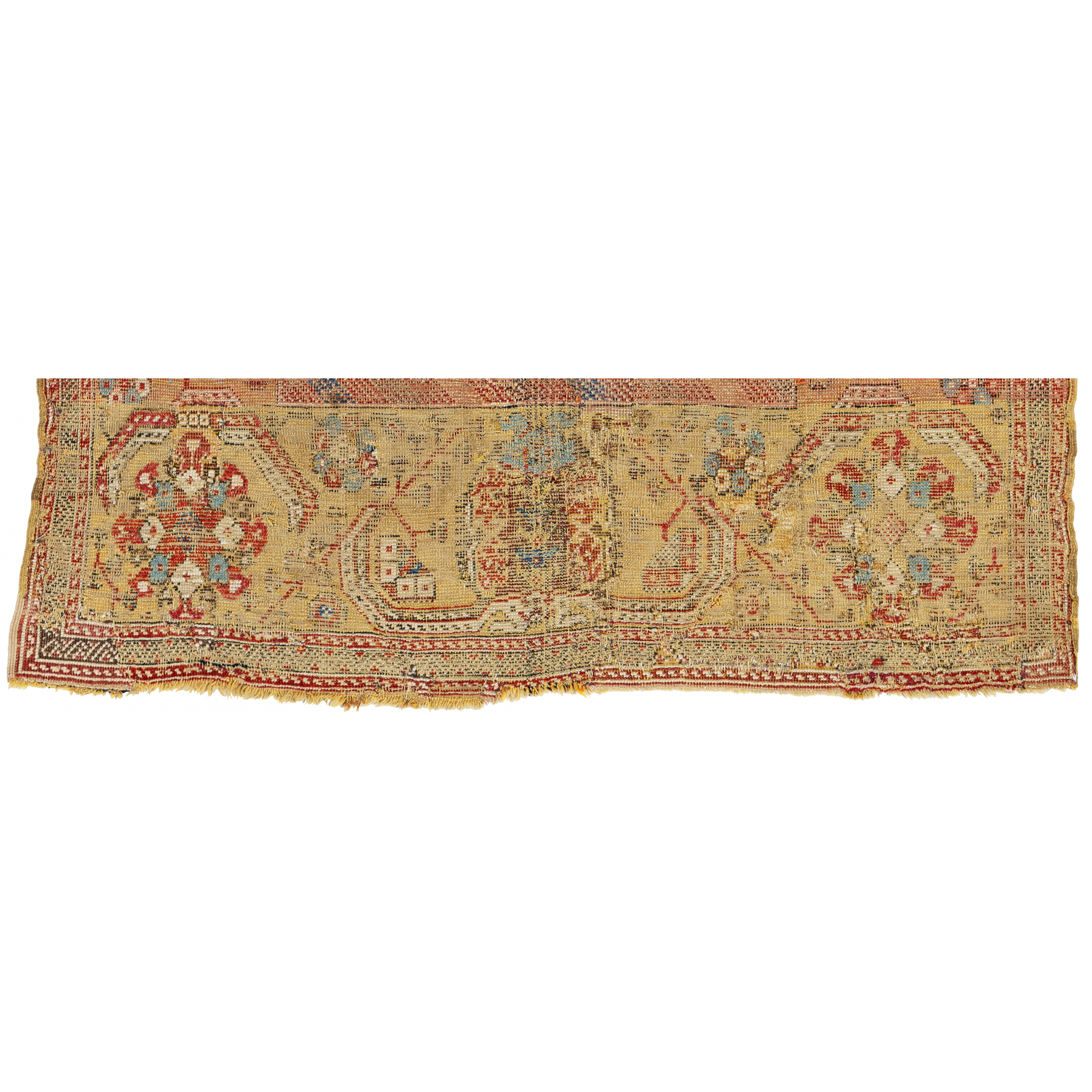
In Stefano Ionescu's seminal study, "The Transylvanian Heritage," Rome 2024, a similar piece with a finely detailed, stepped mihrab is published on page 204, bottom right. The unusual inner secondary border is also visible there. However, only one of the two spandrels above the niche is blue. In the majority of these prayer rugs, the spandrels are white, beige, or red.
A bold Ottoman border featuring palmettes, flowers, and lanceolate leaves encircles the field. The corner designs are well executed, which cannot be said of all Transylvanian rugs.
In Transylvania itself, where the world's largest collection of these rugs has been preserved in churches, there are ten prayer rugs featuring a finely detailed stepped mihrab and this type of Ottoman border; see Ionescu, p. 322.
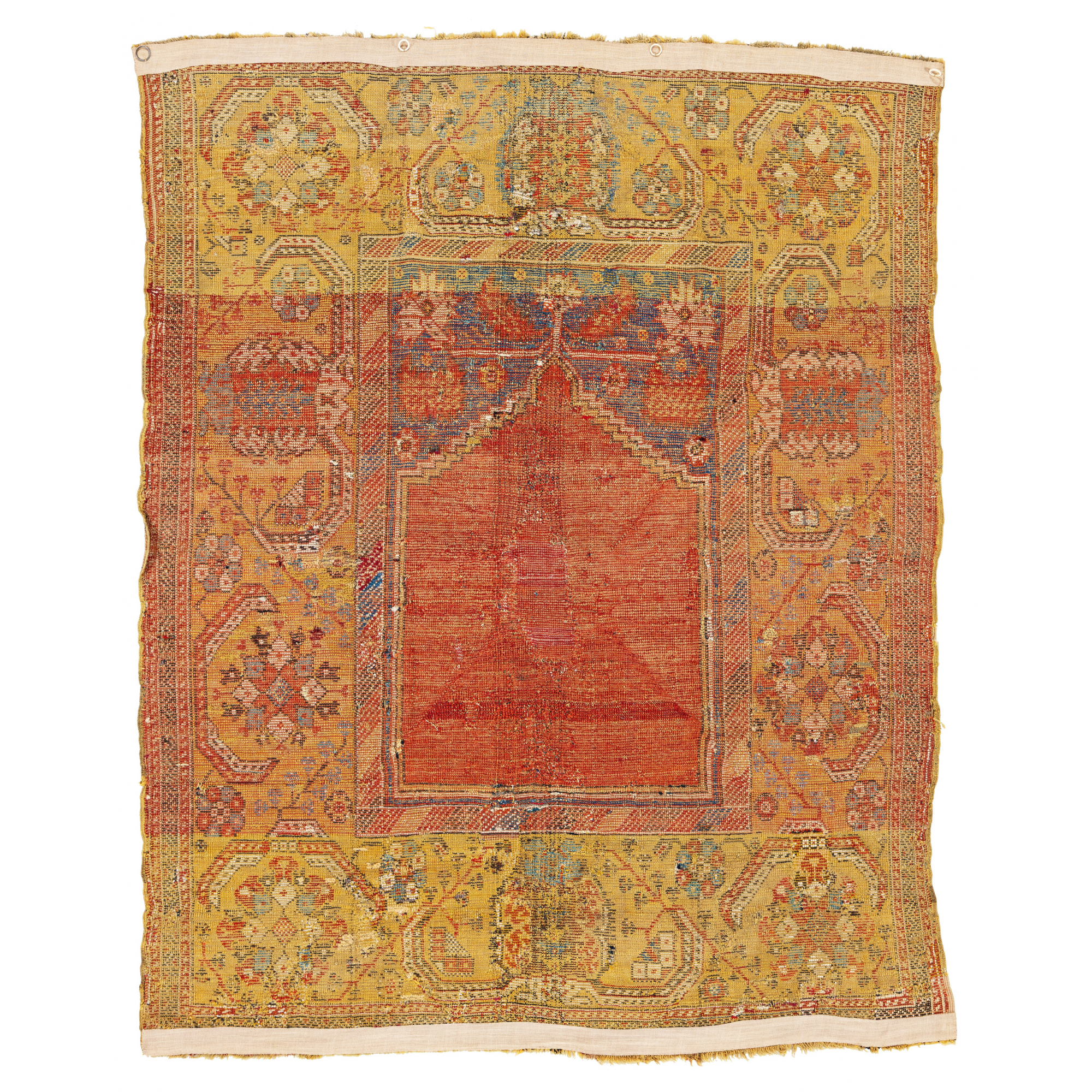
On the reverse side, the use of so-called "lazy lines" can be observed. These occur when, during knotting, the weaver does not work row after row of knots across the entire width of the carpet, but instead works in sections, building up small "piles" of knots in front of her. In this piece, such a "pile" is clearly visible in the red mihrab. Red wefts were also used in the central field, presumably to enhance the color impression of the red ground.
At the legendary Bernheimer auction at Christie's London on February 14, 1996, Lot 176 - a carpet comparable even down to the secondary borders - was sold for £10,000.
Estimate: € 8000 - 12000
Turkey, 17th century
Condition: used, low pile, several old repairs, sides and ends partially damaged
Warp: wool, weft: wool, pile: wool
In Stefano Ionescu's seminal study, "The Transylvanian Heritage," Rome 2024, a similar piece with a finely detailed, stepped mihrab is published on page 204, bottom right. The unusual inner secondary border is also visible there. However, only one of the two spandrels above the niche is blue. In the majority of these prayer rugs, the spandrels are white, beige, or red.
A bold Ottoman border featuring palmettes, flowers, and lanceolate leaves encircles the field. The corner designs are well executed, which cannot be said of all Transylvanian rugs.
In Transylvania itself, where the world's largest collection of these rugs has been preserved in churches, there are ten prayer rugs featuring a finely detailed stepped mihrab and this type of Ottoman border; see Ionescu, p. 322.
On the reverse side, the use of so-called "lazy lines" can be observed. These occur when, during knotting, the weaver does not work row after row of knots across the entire width of the carpet, but instead works in sections, building up small "piles" of knots in front of her. In this piece, such a "pile" is clearly visible in the red mihrab. Red wefts were also used in the central field, presumably to enhance the color impression of the red ground.
At the legendary Bernheimer auction at Christie's London on February 14, 1996, Lot 176 - a carpet comparable even down to the secondary borders - was sold for £10,000.
Estimate: € 8000 - 12000