
Cart
0
Product
Products
(empty)
No products
Free shipping!
Shipping
0 €
Total
Product successfully added to your shopping cart
Quantity
Total
There are 0 items in your cart. There is 1 item in your cart.
Total products
(tax incl.)
Total shipping (tax incl.)
Free shipping!
Total
(tax incl.)
10
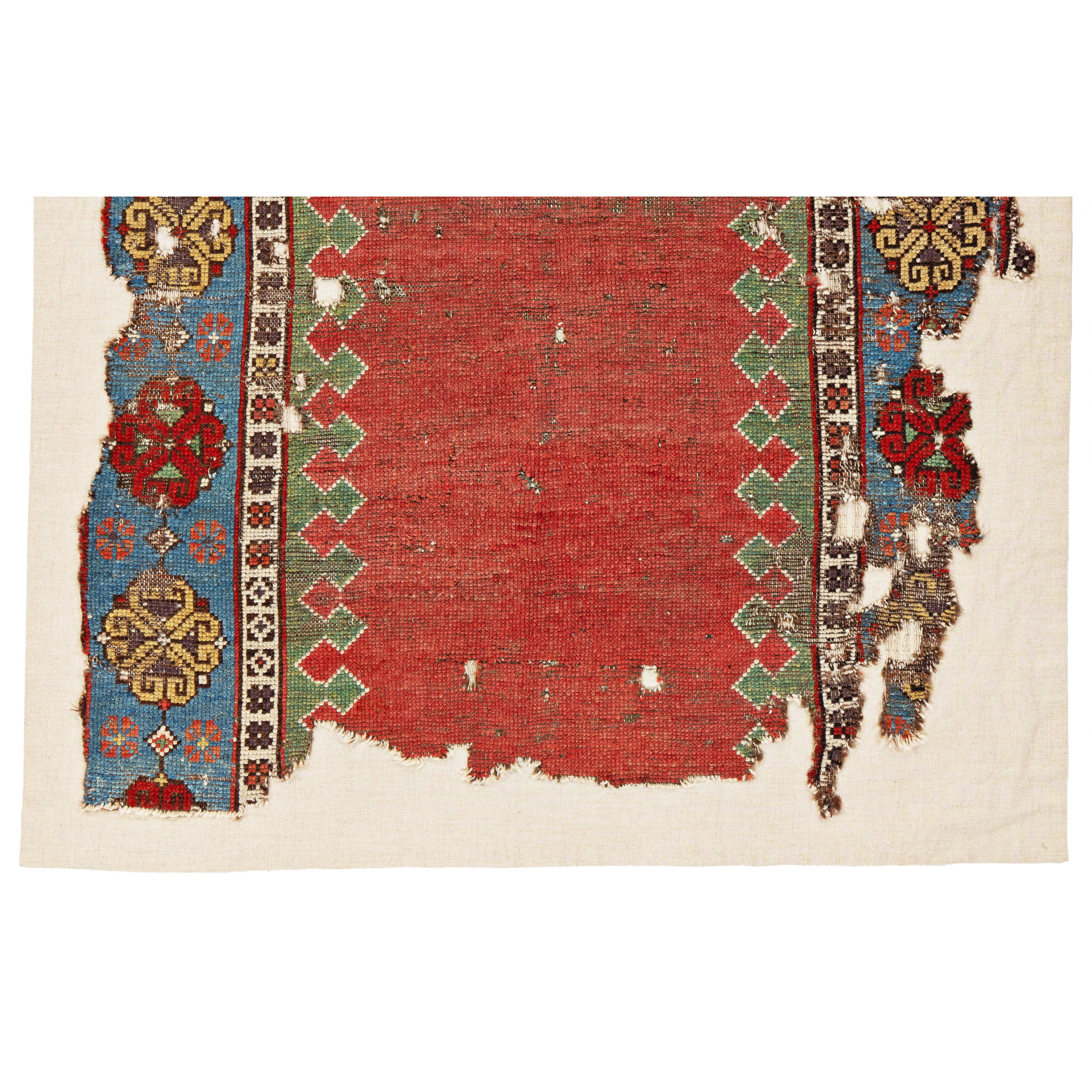
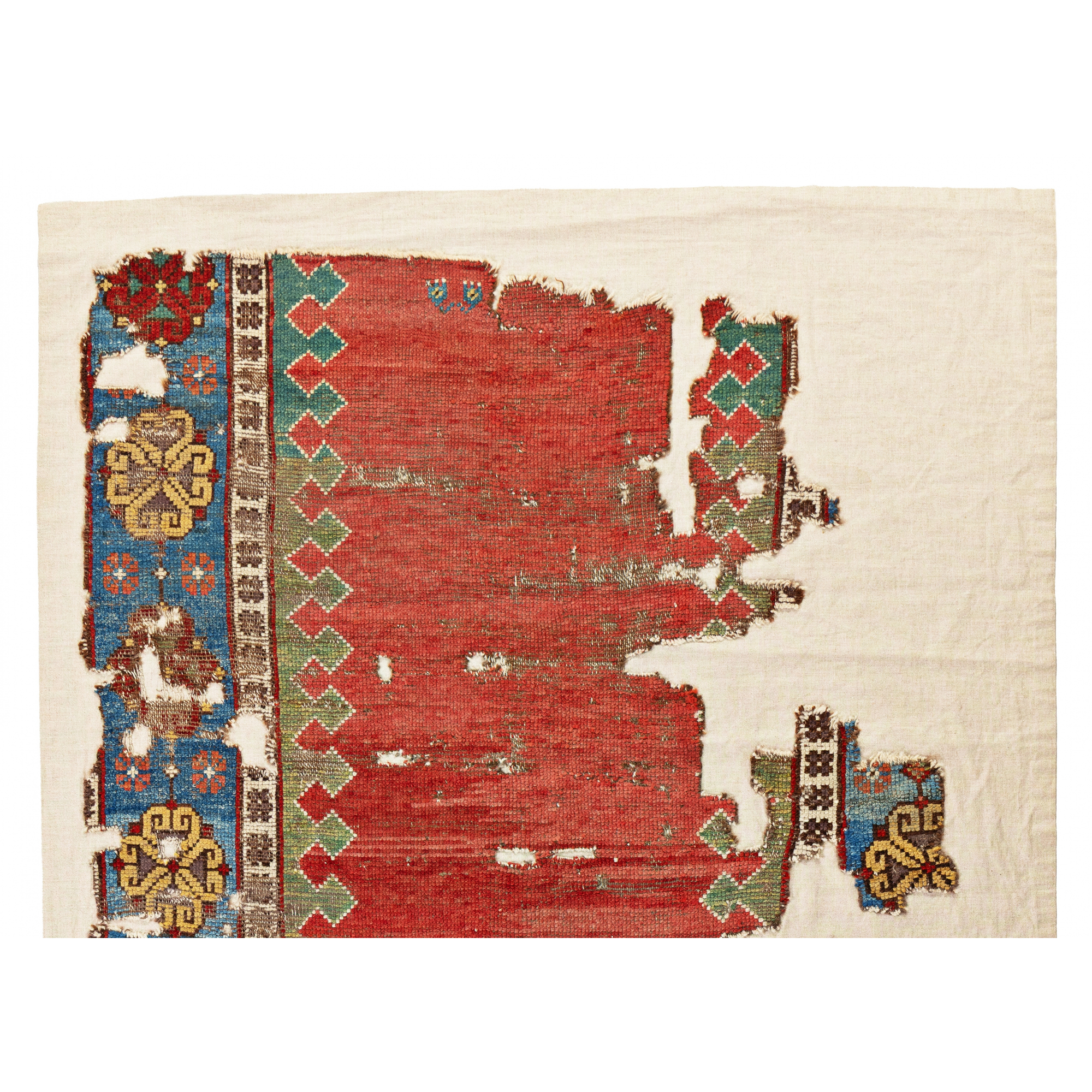
Early Caucasian Rug Fragment
New
233 x 110 cm (7' 8" x 3' 7")
Caucasus, dated 1178 (1764)
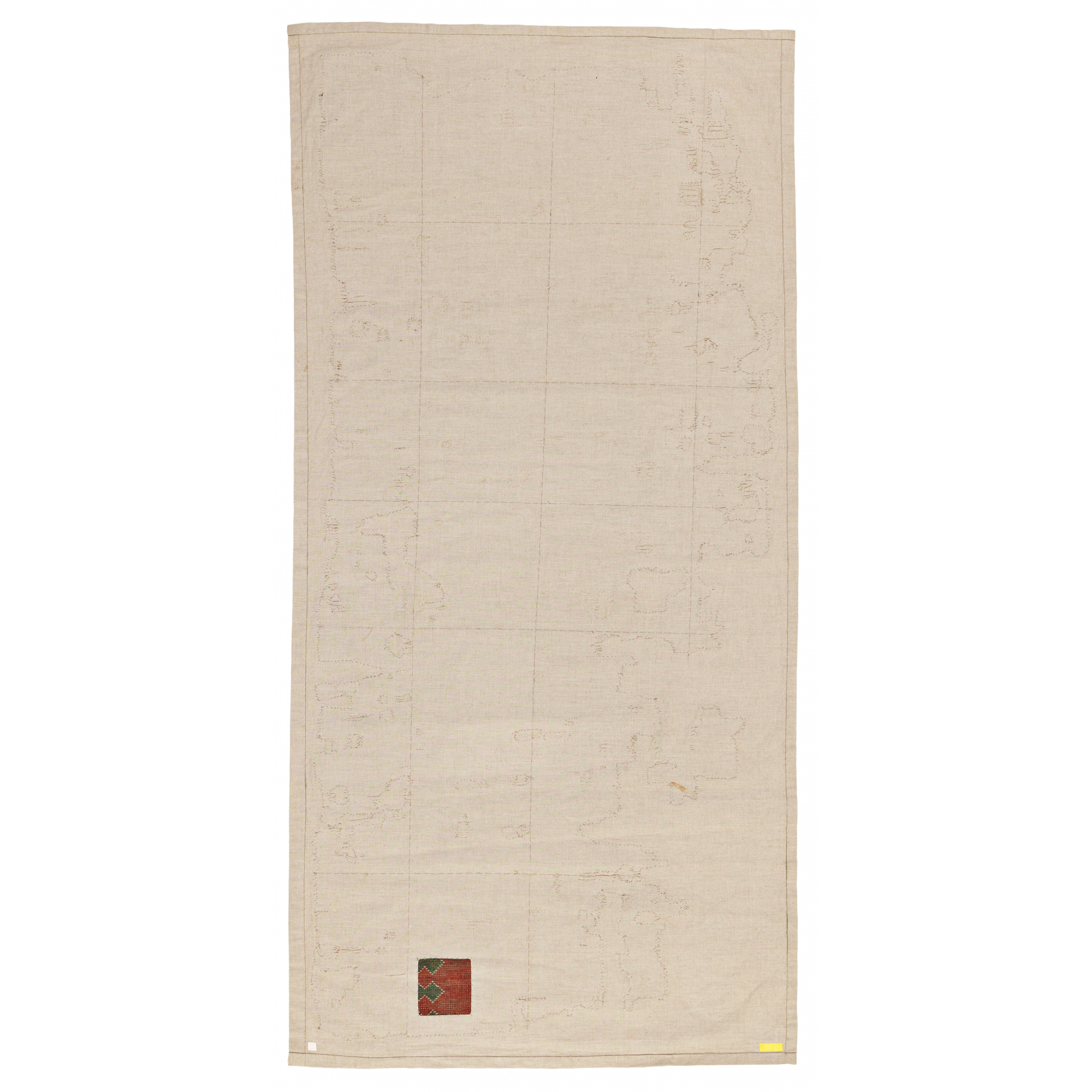
Condition: fragment, sewn onto fabric
Warp: wool, weft: wool, pile: wool
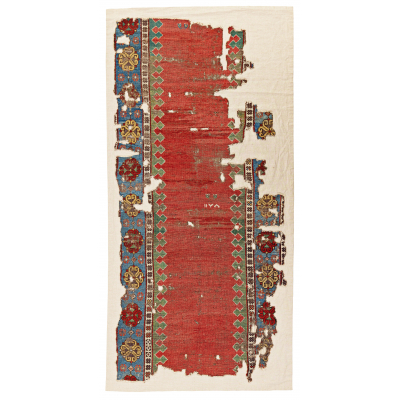
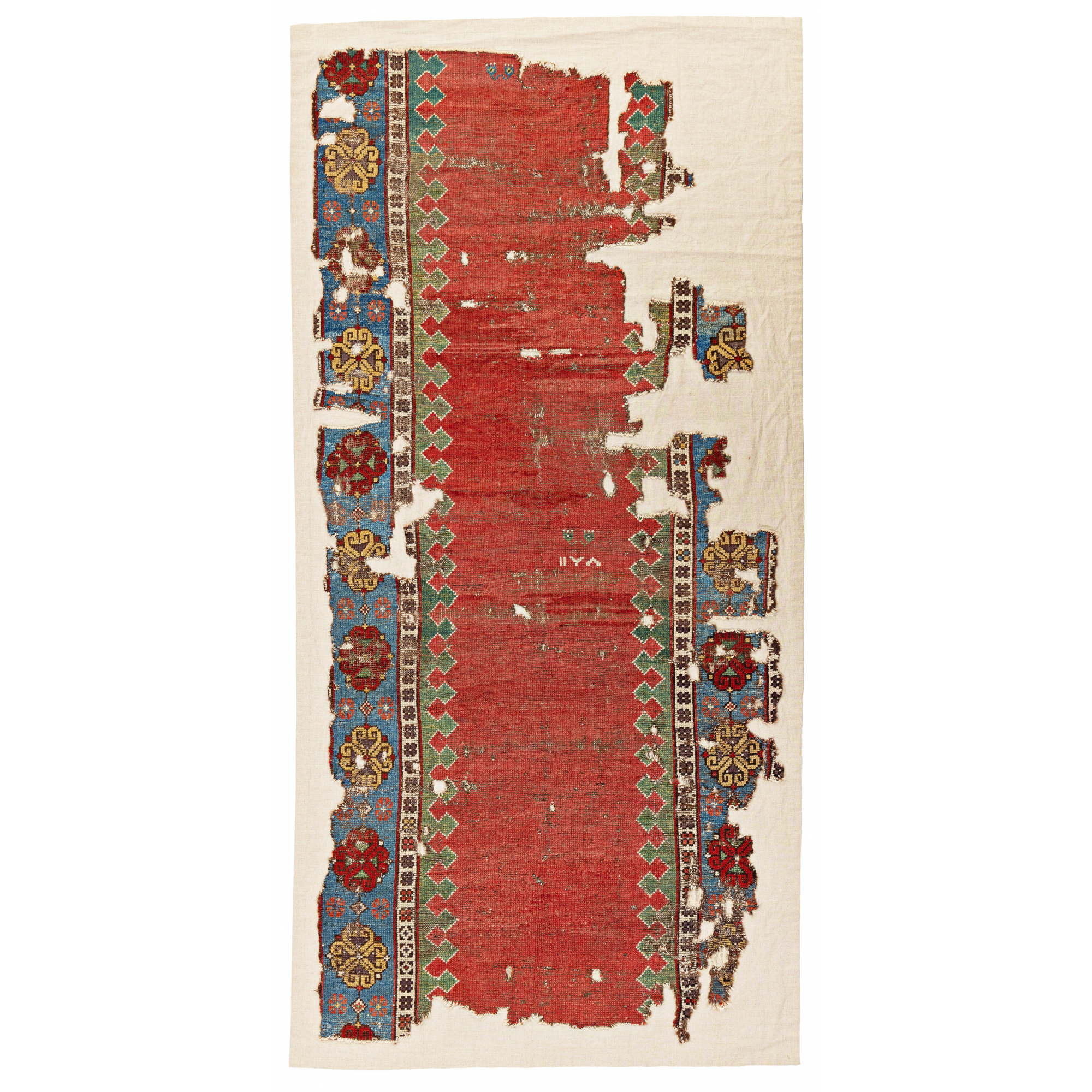
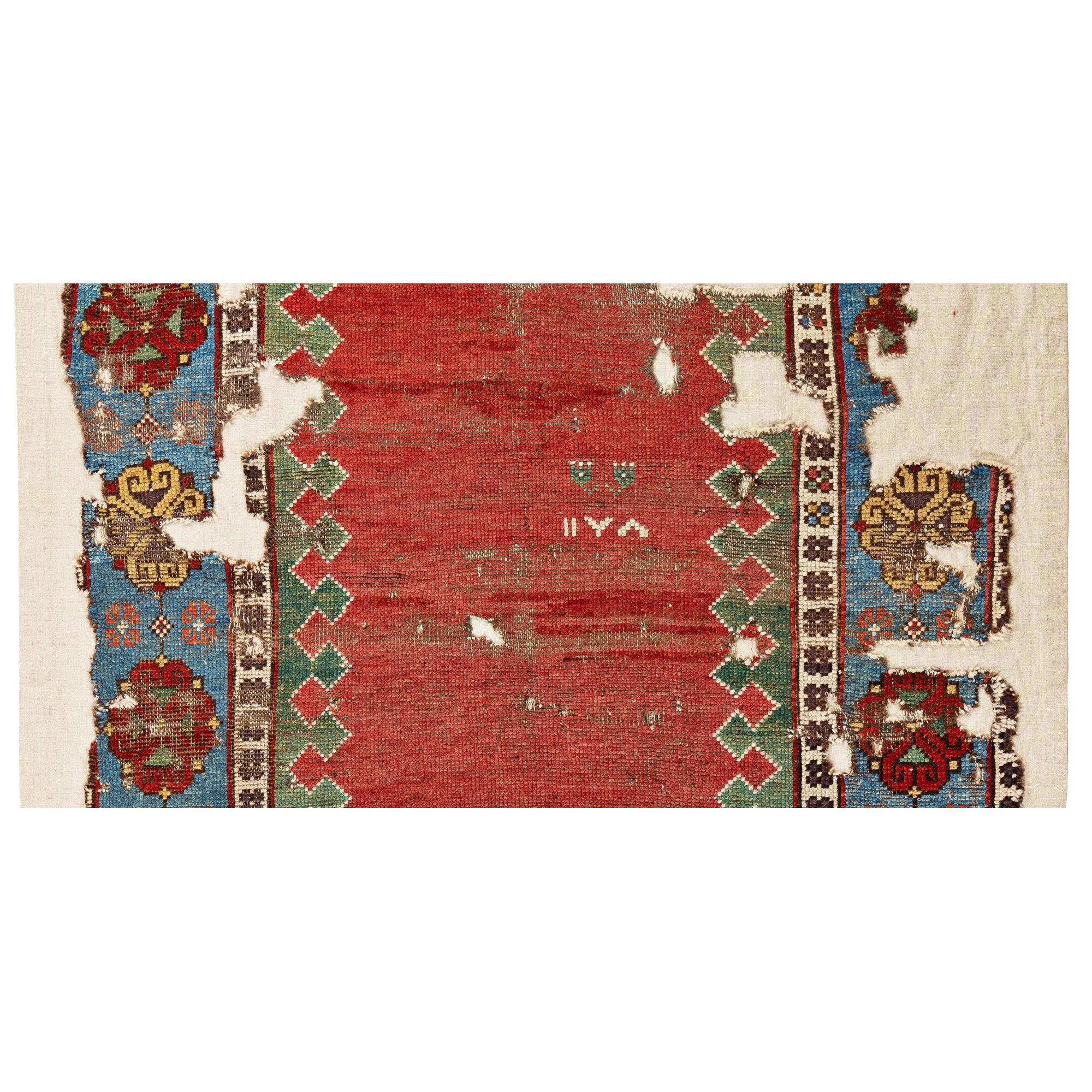
This very old Caucasian rug with a Talish design is a rarity among Oriental rugs due to its monochrome field. In fact, empty space is generally considered taboo in Islamic art and is more commonly found in nomadic rugs such as Gabbehs. Nevertheless, there is a small group of carpets in the Caucasus - typically oblong in shape - that usually feature a blue field and a border with rosettes. The well-known American collector Jim Burns included a red-ground Talish as No. 35 in his book "The Caucasus - Traditions in Weaving." He wrote: "The reluctance of weavers from the Talish region to fill their main field with ornamentation has always been a true delight for collectors of Caucasian woven art." In the blue-ground pieces, a yellow reciprocal arrowhead border typically extends into the central field, whereas in the red examples, this border is predominantly green. Our fragment, however, features a reciprocal crenellated border, which in other pieces of this group frames the carpet toward the outer edge. Whether this was originally the case with our rug as well can no longer be determined due to its fragmentary condition. In the rug from the Burns Collection, there is a single, solitary dot in the otherwise empty field. Our piece also features such deliberately placed individual motifs: above the date is an amulet pendant, and further up, a second one. The main border also shows an interesting variation. In almost all other Talish carpets, four cube-shaped motifs are found between each pair of rosettes on the mostly white border. Our carpet differs here as well: two flowers appear between each pair of rosettes, while a line of diamonds connects the rosettes to one another. Another red-ground Talish is illustrated in an advertisement by the Kailash Gallery in HALI 42, p. 45; another example can be found in Eberhart Herrmann's article in HALI 58, p. 68. The Talish carpet, which at 574 cm is likely the longest known, also has a red ground and is housed in the Glencairn Museum in Bryn Athyn, Pennsylvania. Interestingly, Böhmer/Brüggemann's "Teppiche der Bauern und Nomaden in Anatolien" lists, as No. 25, a rug attributed to Central Anatolia with a very similar design.
Estimate: € 6000 - 8000
Caucasus, dated 1178 (1764)
Condition: fragment, sewn onto fabric
Warp: wool, weft: wool, pile: wool
This very old Caucasian rug with a Talish design is a rarity among Oriental rugs due to its monochrome field. In fact, empty space is generally considered taboo in Islamic art and is more commonly found in nomadic rugs such as Gabbehs. Nevertheless, there is a small group of carpets in the Caucasus - typically oblong in shape - that usually feature a blue field and a border with rosettes. The well-known American collector Jim Burns included a red-ground Talish as No. 35 in his book "The Caucasus - Traditions in Weaving." He wrote: "The reluctance of weavers from the Talish region to fill their main field with ornamentation has always been a true delight for collectors of Caucasian woven art." In the blue-ground pieces, a yellow reciprocal arrowhead border typically extends into the central field, whereas in the red examples, this border is predominantly green. Our fragment, however, features a reciprocal crenellated border, which in other pieces of this group frames the carpet toward the outer edge. Whether this was originally the case with our rug as well can no longer be determined due to its fragmentary condition. In the rug from the Burns Collection, there is a single, solitary dot in the otherwise empty field. Our piece also features such deliberately placed individual motifs: above the date is an amulet pendant, and further up, a second one. The main border also shows an interesting variation. In almost all other Talish carpets, four cube-shaped motifs are found between each pair of rosettes on the mostly white border. Our carpet differs here as well: two flowers appear between each pair of rosettes, while a line of diamonds connects the rosettes to one another. Another red-ground Talish is illustrated in an advertisement by the Kailash Gallery in HALI 42, p. 45; another example can be found in Eberhart Herrmann's article in HALI 58, p. 68. The Talish carpet, which at 574 cm is likely the longest known, also has a red ground and is housed in the Glencairn Museum in Bryn Athyn, Pennsylvania. Interestingly, Böhmer/Brüggemann's "Teppiche der Bauern und Nomaden in Anatolien" lists, as No. 25, a rug attributed to Central Anatolia with a very similar design.
Estimate: € 6000 - 8000