
Cart
0
Product
Products
(empty)
No products
Free shipping!
Shipping
0 €
Total
Product successfully added to your shopping cart
Quantity
Total
There are 0 items in your cart. There is 1 item in your cart.
Total products
(tax incl.)
Total shipping (tax incl.)
Free shipping!
Total
(tax incl.)
32
Kirman Lavar Pictorial Rug with Inscriptions
New
245 x 147 cm (8' x 4' 10")
Persia, late 19th century
Condition: very good, scattered low pile, minimally stained, minor signs of use
Warp: cotton, weft: cotton, pile: wool
When Aqa Mohammad Khan, the founder of the Qajar dynasty, conquered Kirman in 1794, he took exceptionally cruel revenge on the city. As a result, carpet production came to a near standstill. In 1871, there were reportedly fewer than 30 looms. After that, however, the magnificent Kirman carpet workshops began to experience a renaissance, so that by 1882 there were already several hundred looms in operation.
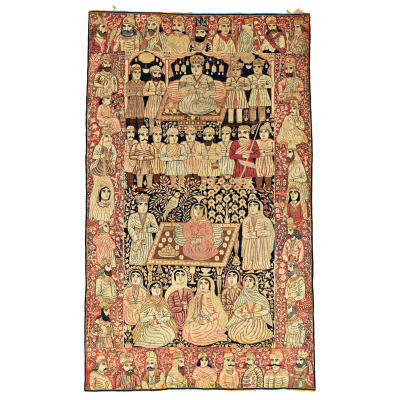
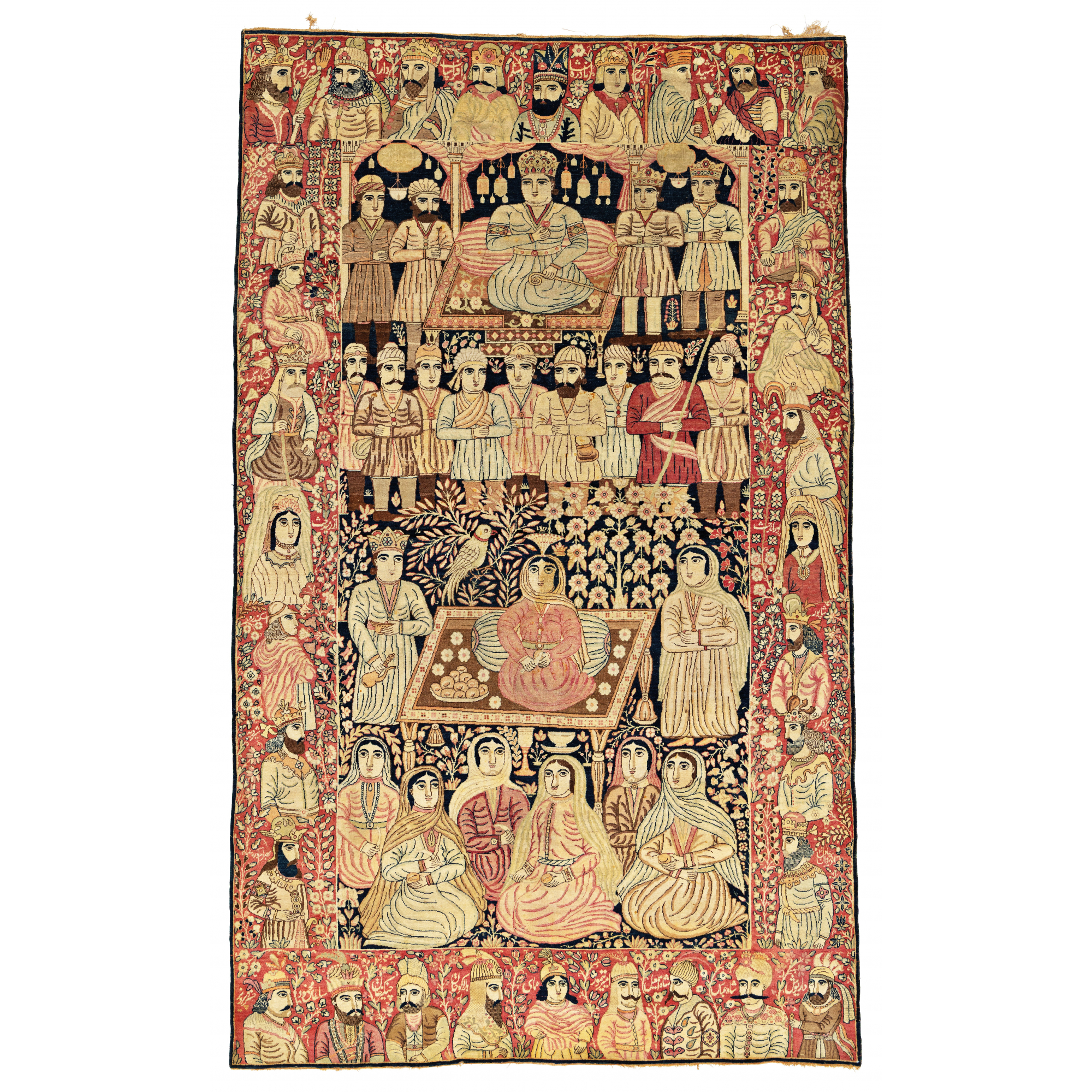
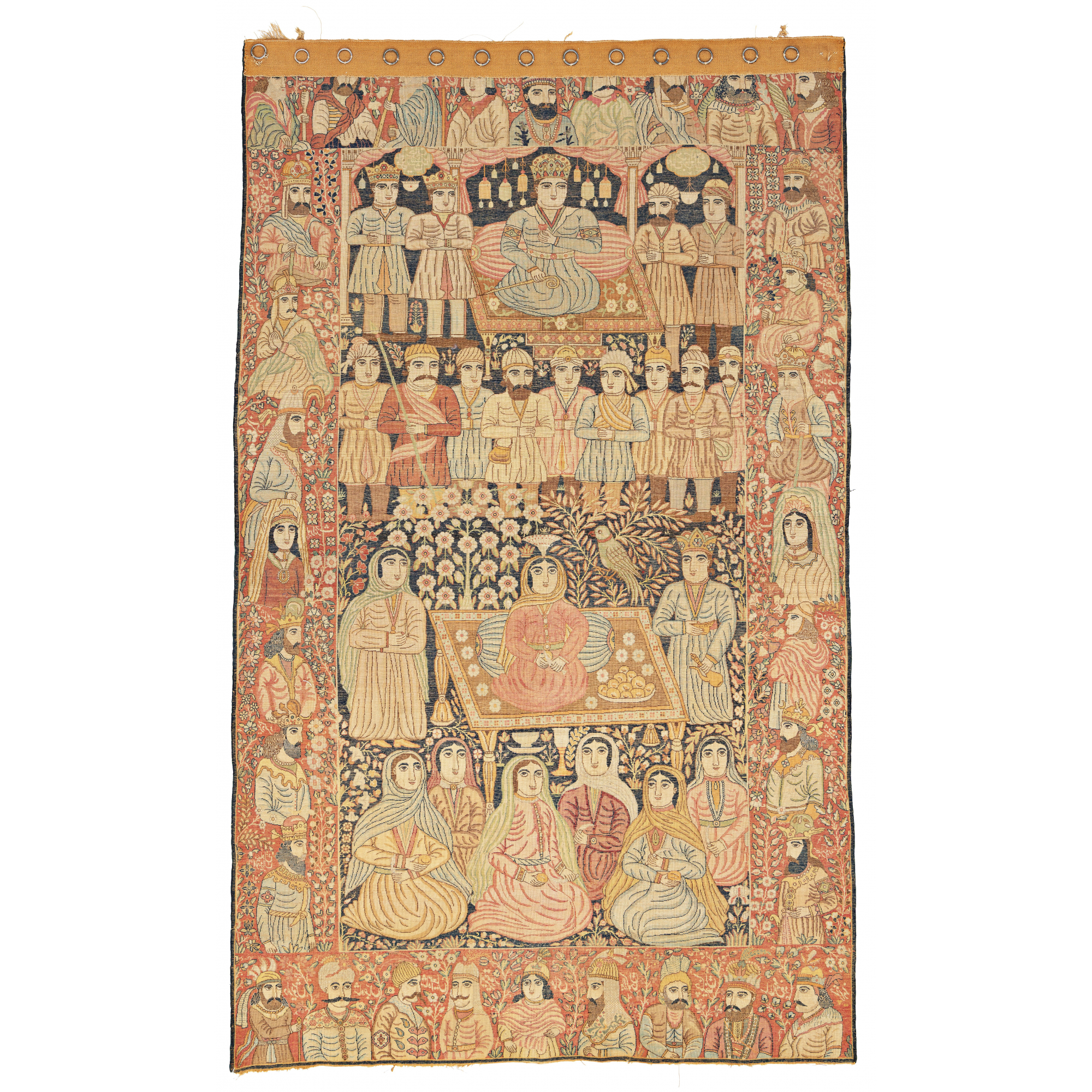
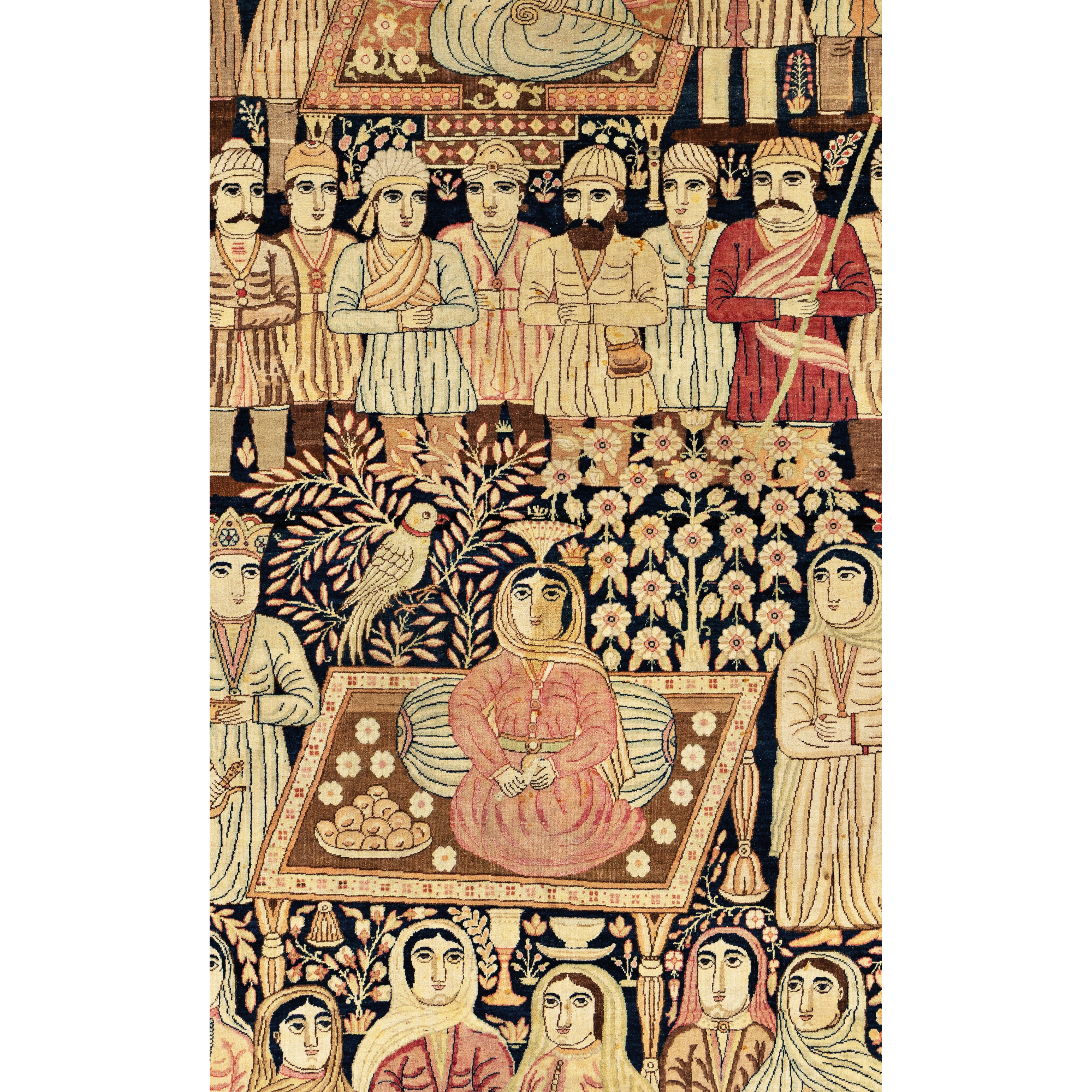
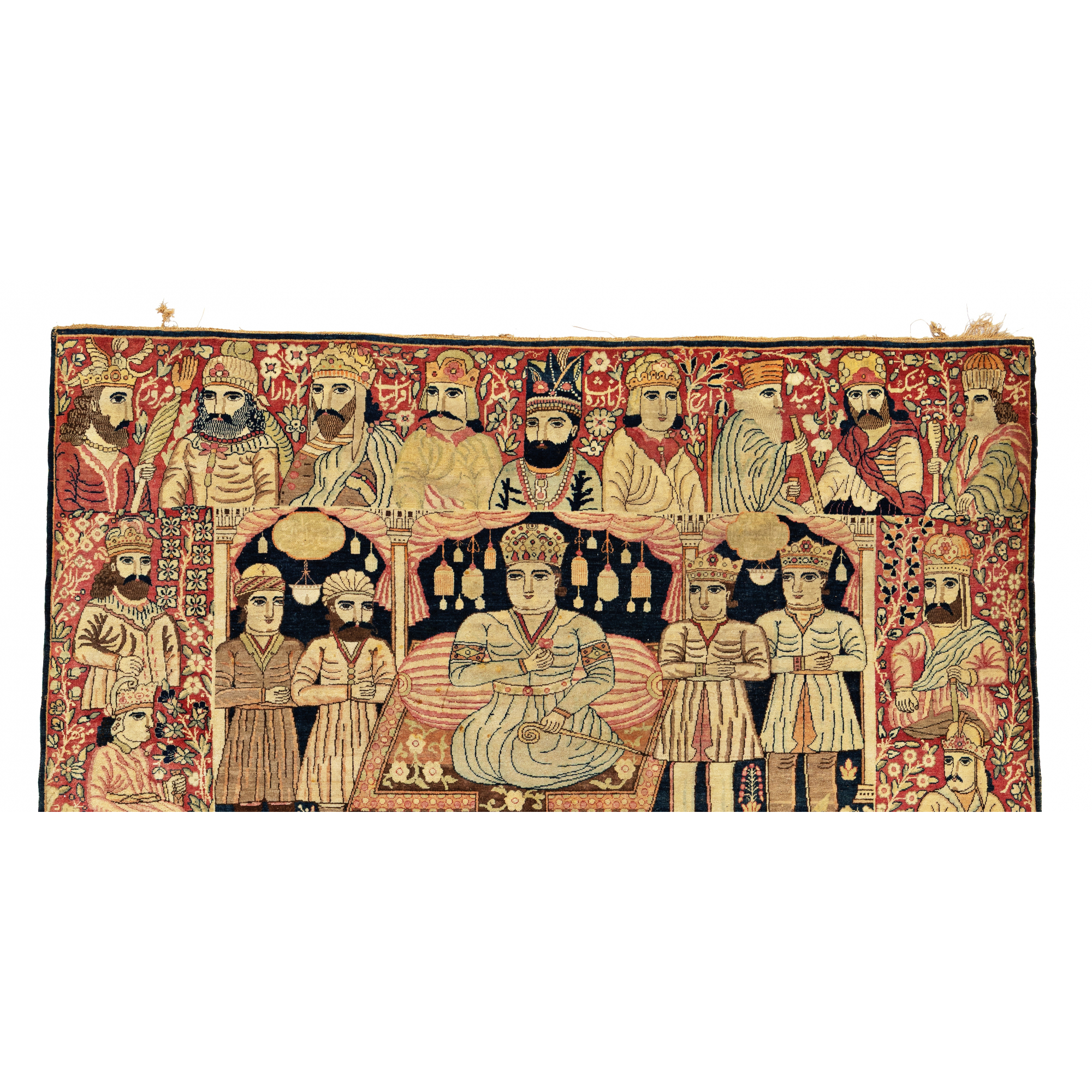
During this period, weavers also began producing pictorial rugs, some of which were modeled after European designs or drew on Persian traditions. In the depiction on our carpet, a prince and a princess are seated on two thrones. These could be Joseph and Zuleika. Zuleika is Potiphars wife, and the story of her passion for the strikingly handsome Joseph is already described in the Bible.
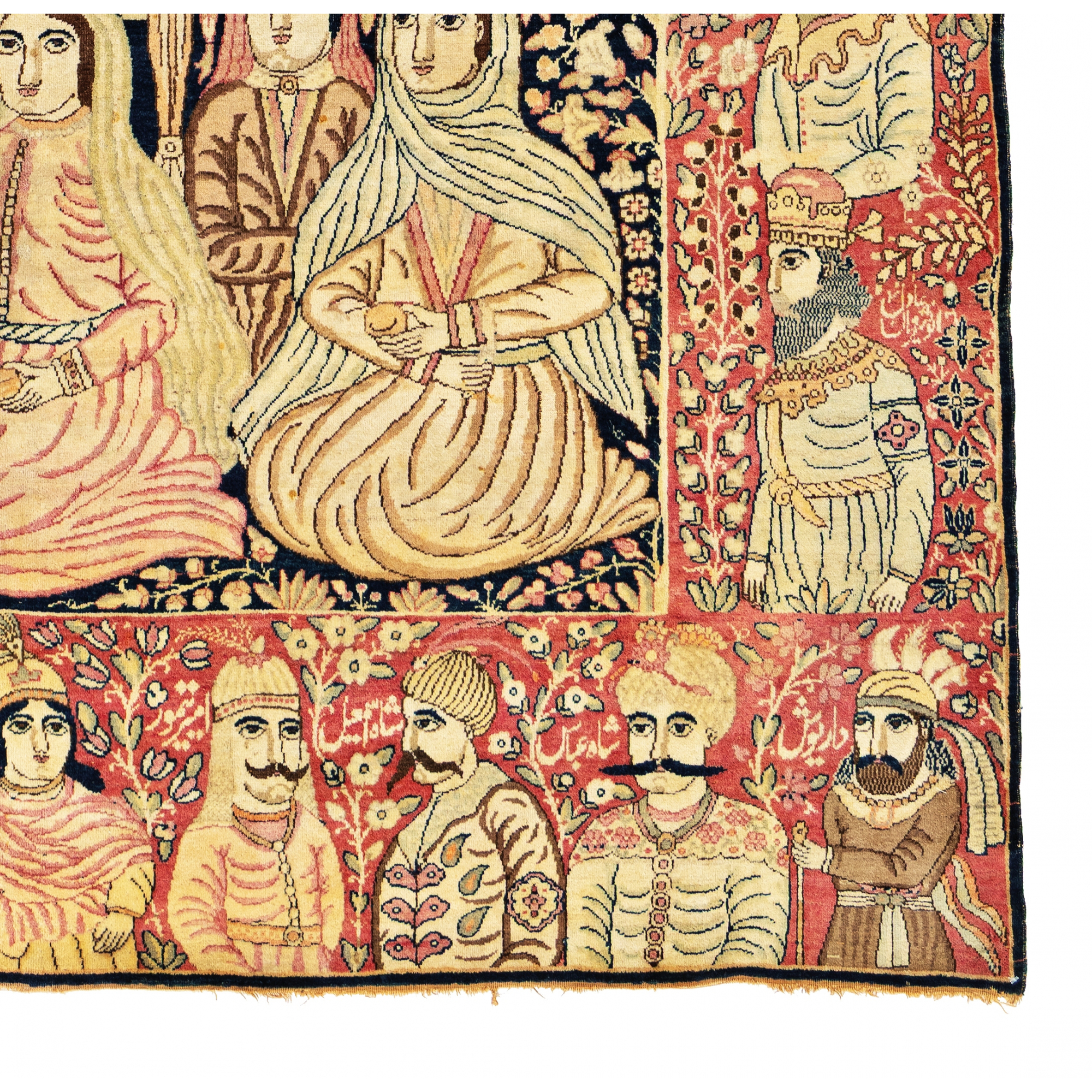
There are several versions of the story, but one key scene remains largely consistent: Zuleika wants to prove to her husband that any woman would fall for Joseph. She prepares a feast - in one version, oranges - and invites forty women. They are so captivated by his beauty that they cut their hands while slicing the fruit. At the bottom of the rug, the women can be seen holding oranges and knives.
In 1483, the mystic and poet Jami wrote a version of the story with a happy ending, in which the two lovers eventually marry.
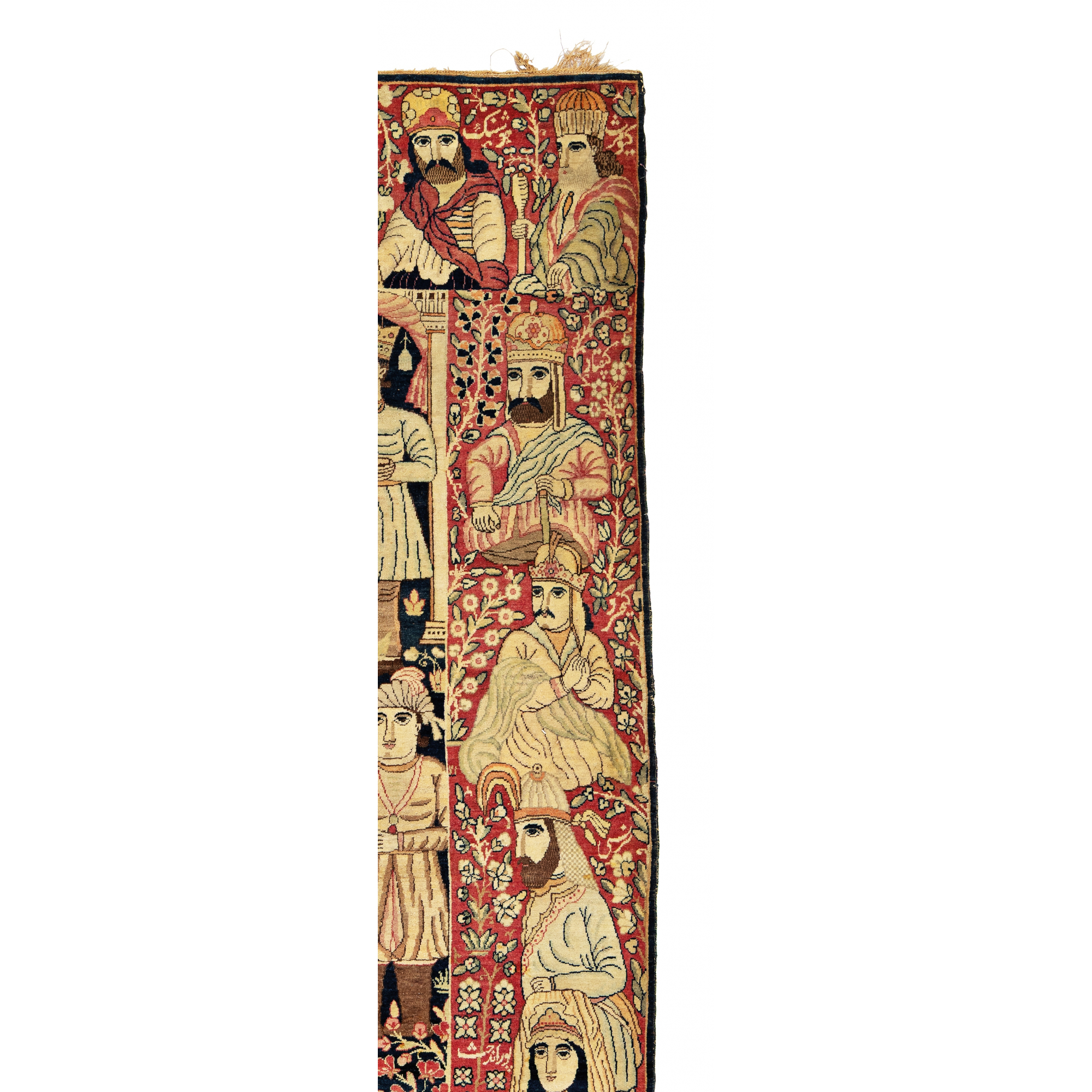
The border depicts historical figures from Persian history who are turned toward the scene. At the very top is presumably Mohammad Shah Qajar (1814 - 1866). A lovingly crafted rug with a wealth of detail - and the challenge of identifying all the figures in the border.
Estimate: € 8000 - 12000
Persia, late 19th century
Condition: very good, scattered low pile, minimally stained, minor signs of use
Warp: cotton, weft: cotton, pile: wool
When Aqa Mohammad Khan, the founder of the Qajar dynasty, conquered Kirman in 1794, he took exceptionally cruel revenge on the city. As a result, carpet production came to a near standstill. In 1871, there were reportedly fewer than 30 looms. After that, however, the magnificent Kirman carpet workshops began to experience a renaissance, so that by 1882 there were already several hundred looms in operation.
During this period, weavers also began producing pictorial rugs, some of which were modeled after European designs or drew on Persian traditions. In the depiction on our carpet, a prince and a princess are seated on two thrones. These could be Joseph and Zuleika. Zuleika is Potiphars wife, and the story of her passion for the strikingly handsome Joseph is already described in the Bible.
There are several versions of the story, but one key scene remains largely consistent: Zuleika wants to prove to her husband that any woman would fall for Joseph. She prepares a feast - in one version, oranges - and invites forty women. They are so captivated by his beauty that they cut their hands while slicing the fruit. At the bottom of the rug, the women can be seen holding oranges and knives.
In 1483, the mystic and poet Jami wrote a version of the story with a happy ending, in which the two lovers eventually marry.
The border depicts historical figures from Persian history who are turned toward the scene. At the very top is presumably Mohammad Shah Qajar (1814 - 1866). A lovingly crafted rug with a wealth of detail - and the challenge of identifying all the figures in the border.
Estimate: € 8000 - 12000