
Cart
0
Product
Products
(empty)
No products
Free shipping!
Shipping
0 €
Total
Product successfully added to your shopping cart
Quantity
Total
There are 0 items in your cart. There is 1 item in your cart.
Total products
(tax incl.)
Total shipping (tax incl.)
Free shipping!
Total
(tax incl.)
205
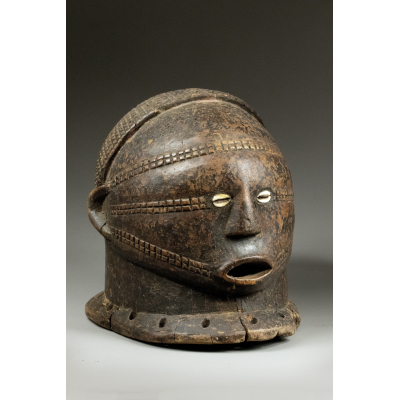
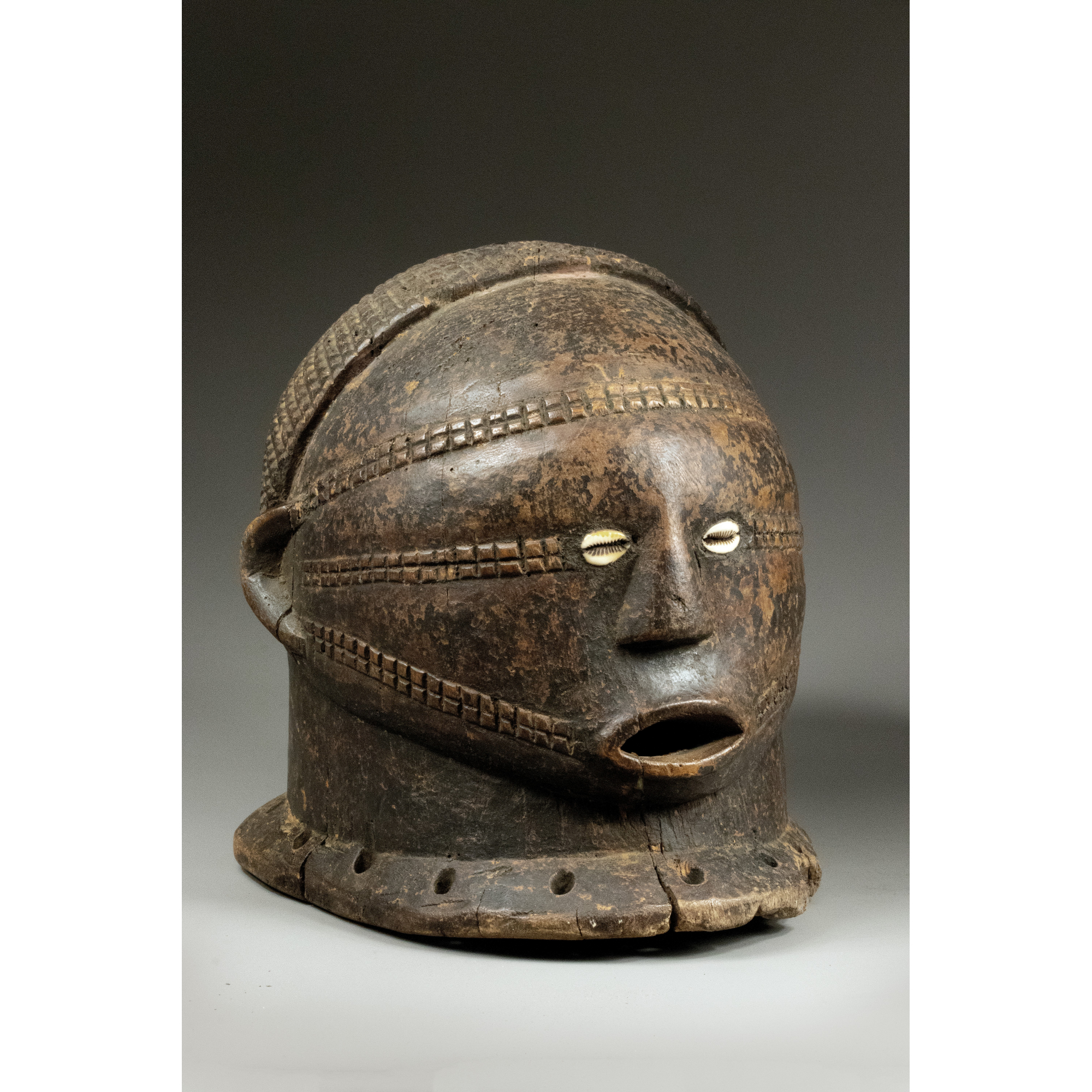
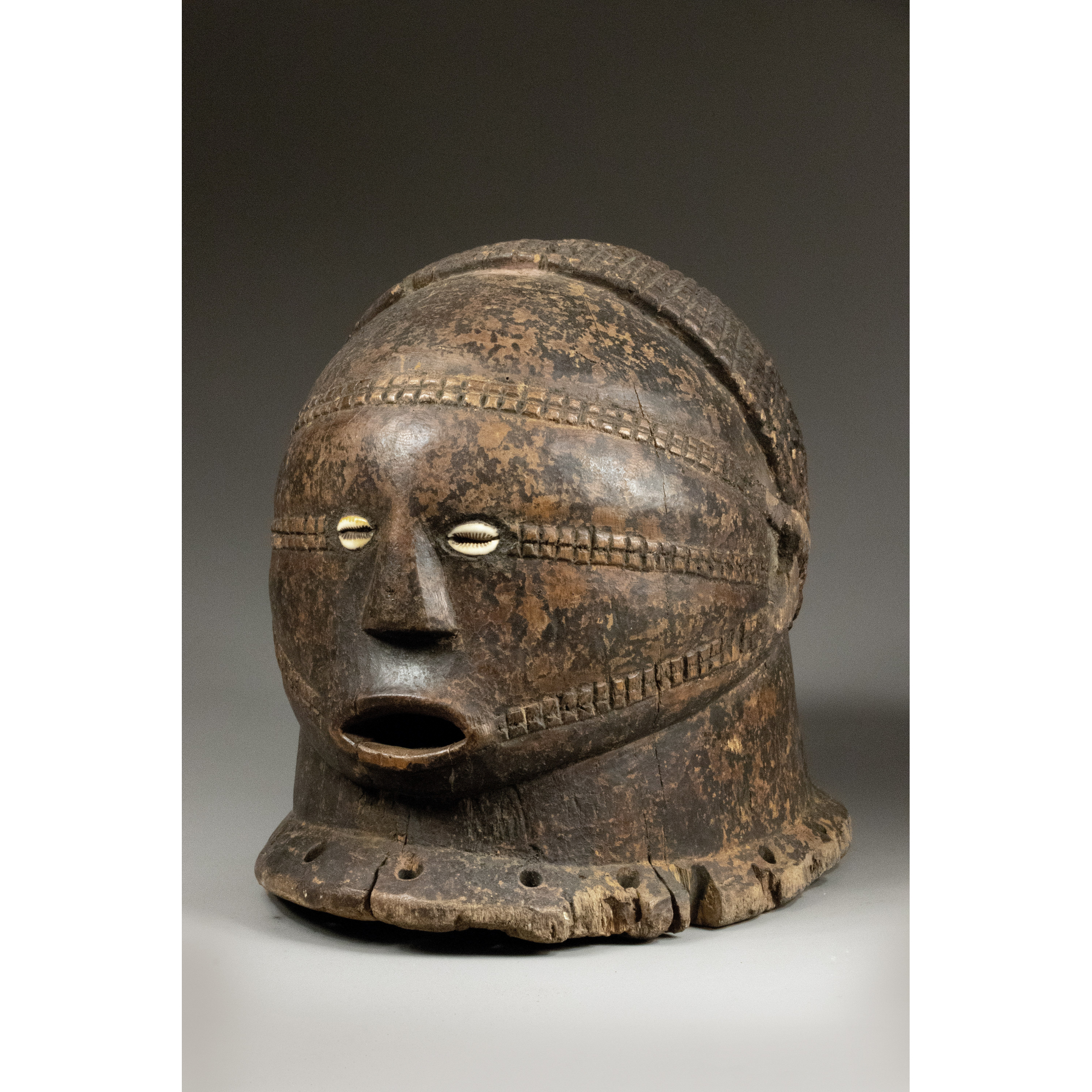
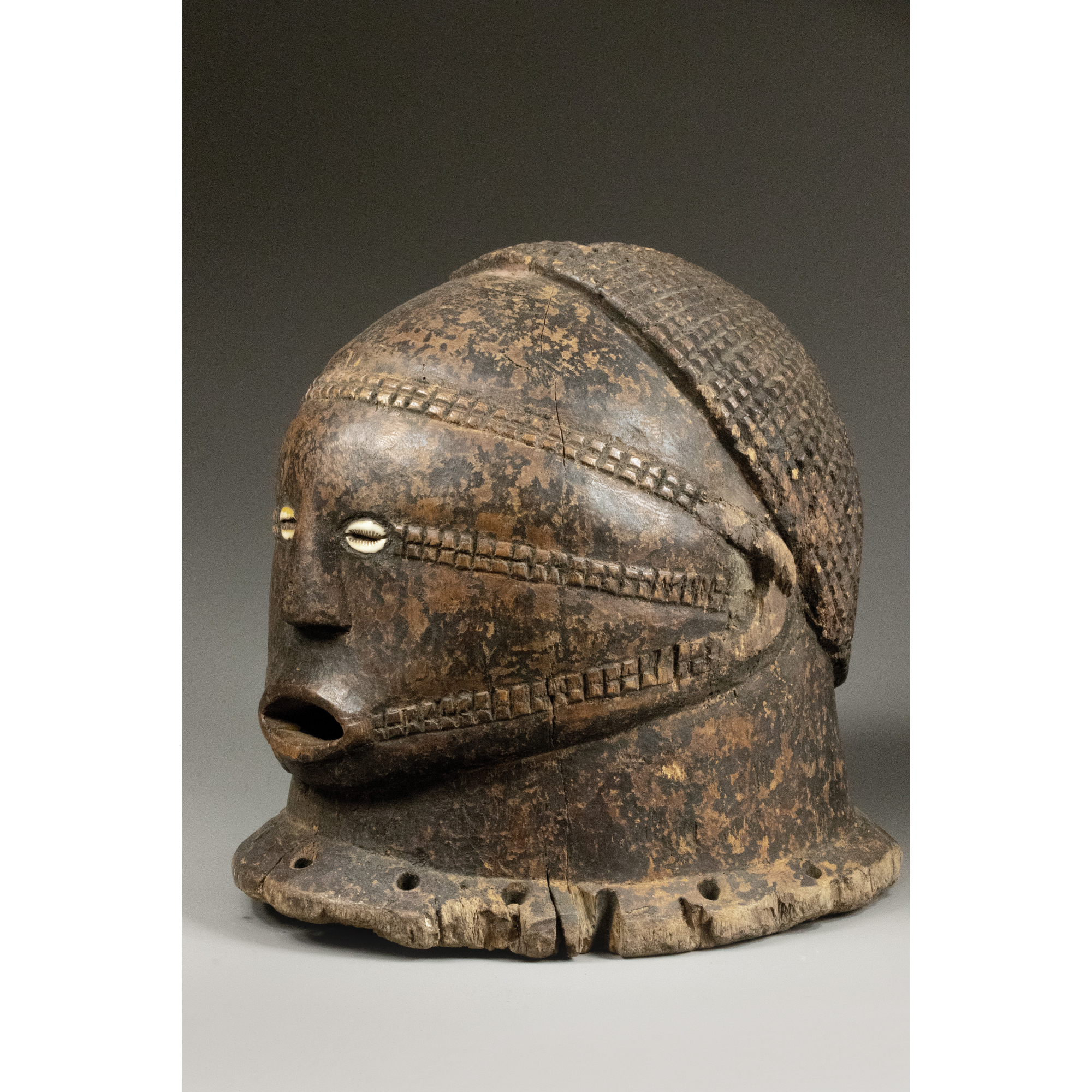
Helmet Mask of the Tabwa (Musangwe)
New
Democratic Republic of the Congo (formerly Zaire), Height 28 cm (11")
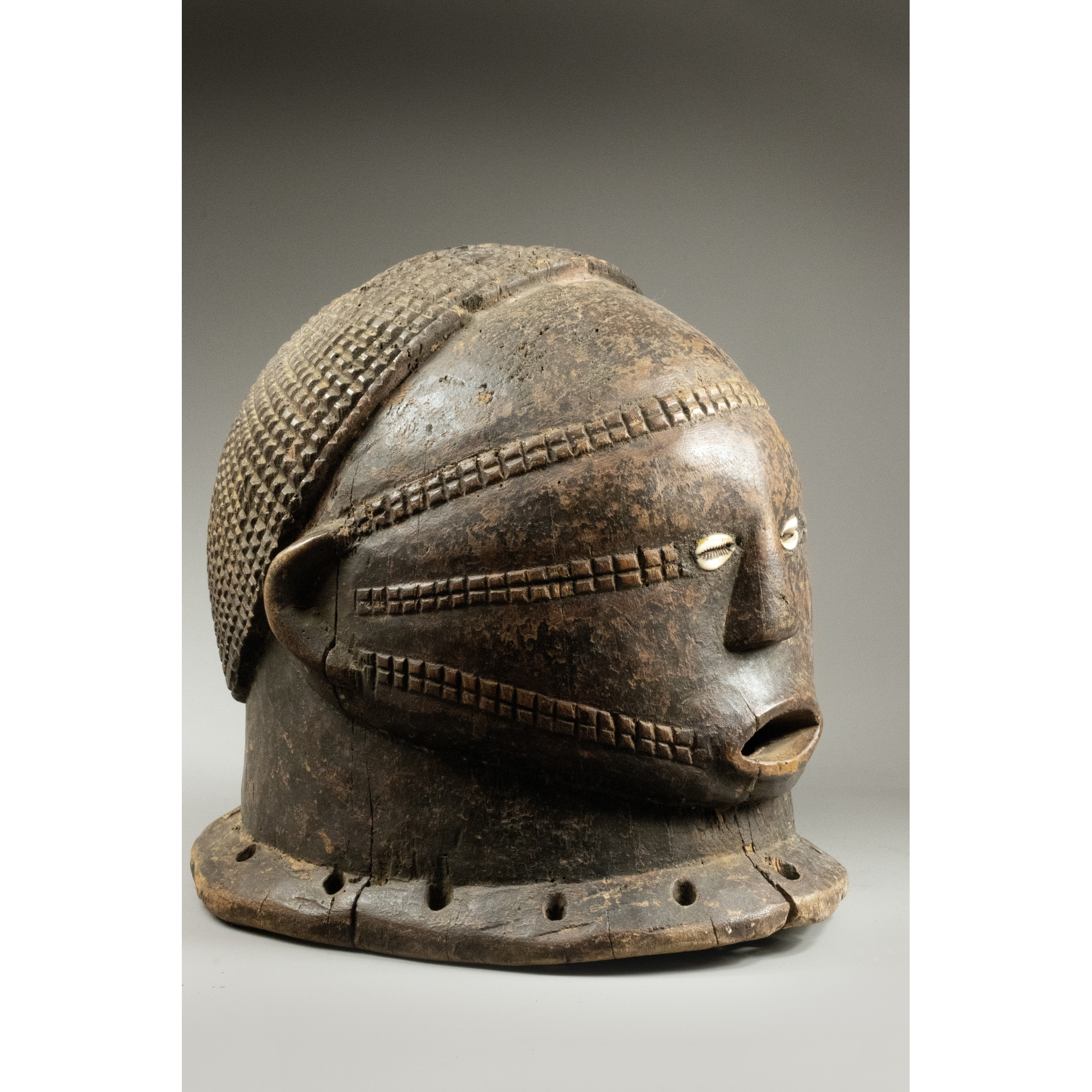
Masks of this type originate primarily from the Marungu region in the southeastern Democratic Republic of the Congo and represent female ancestors. They are used particularly in fertility rituals, during which the spiritual powers of the ancestors are invoked to overcome infertility in women. Tabwa art reveals distinct influences from neighbouring ethnic groups, especially the Luba, with whom the Tabwa share close cultural and artistic ties.
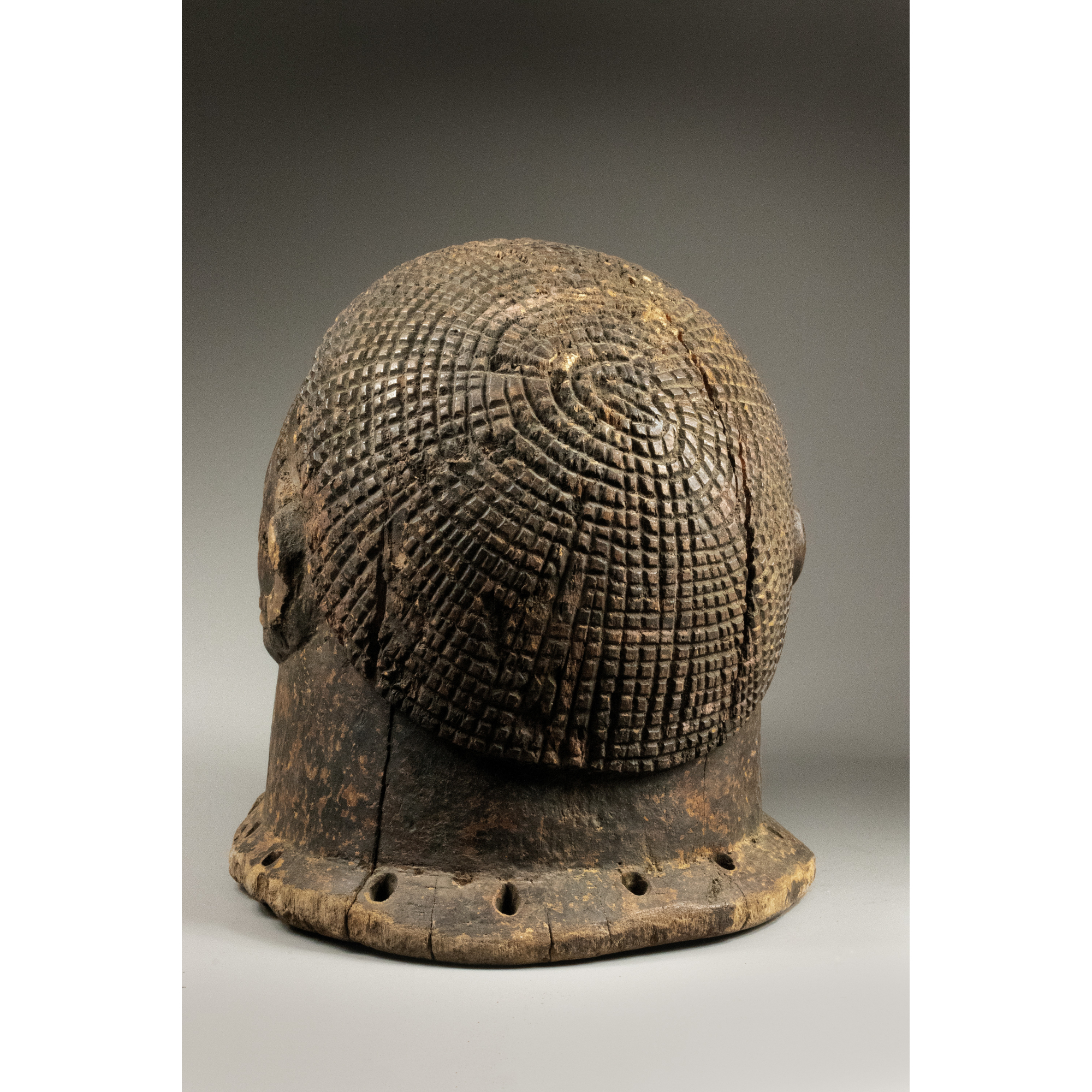
The present brown-coloured helmet mask is distinguished by its almost spherical head and strictly geometric design. Particularly striking are the eyes formed from cowrie shells, which lend the face an unusual and penetrating expression.
The forehead, as well as the areas on either side of the eyes and mouth, is decorated with carefully carved square ornaments arranged in double rows. The coiffure follows the same characteristic geometric pattern, blending harmoniously into the overall composition.
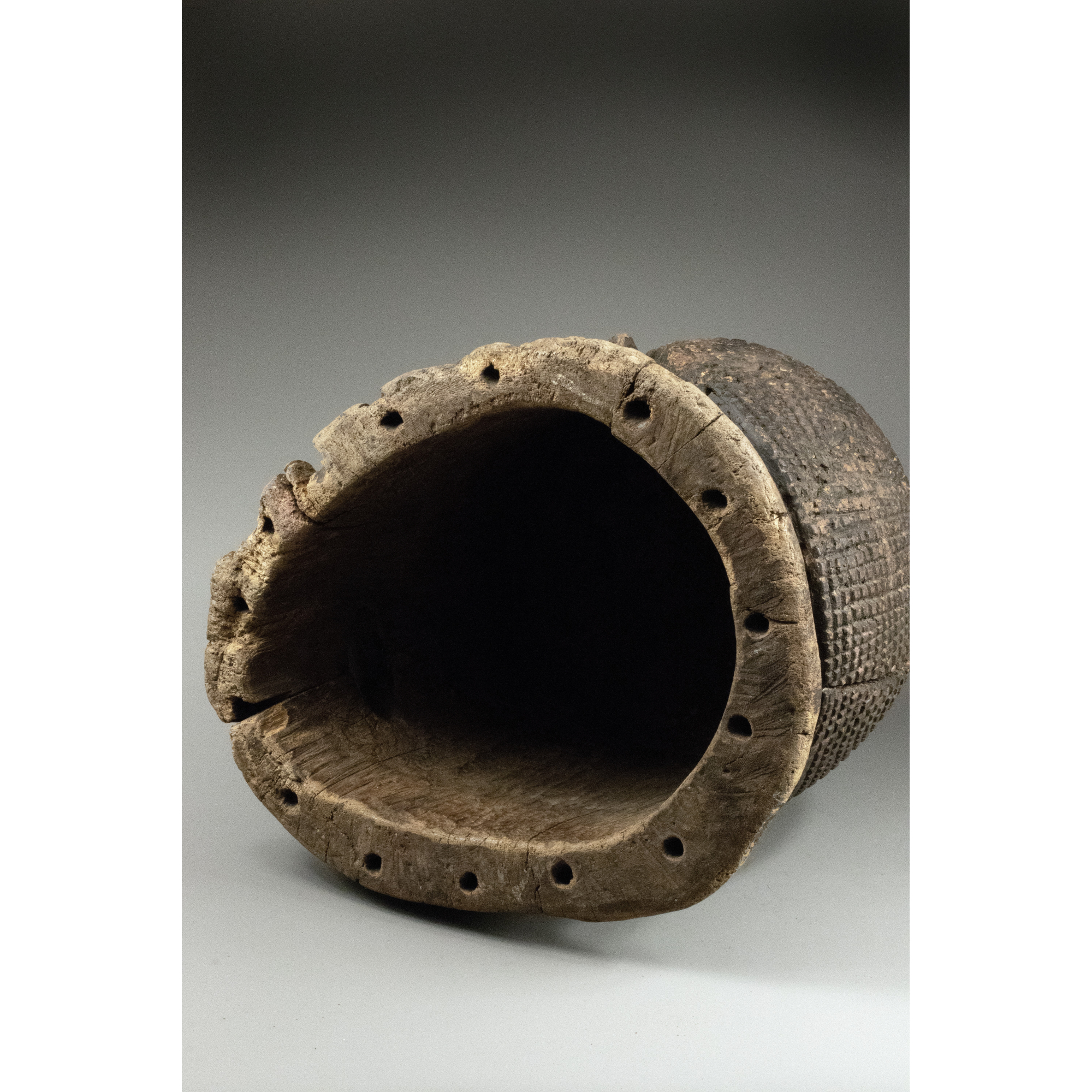
The lower rim of the mask curves outwards and features numerous attachment holes, to which a fringe of raffia fibres was originally secured. The interior displays distinct traces of wear, suggesting prolonged ritual use.
The extraordinary combination of its spherical form, precisely structured geometric ornamentation, and expressive cowrie-shell eyes lends this helmet mask a remarkable presence, making it an impressive example of traditional Tabwa mask-making artistry.
Provenance: Patrick Jodry, France; Gerhard F. Vesely, Austria.
Estimate: € 1400 - 1700