
Cart
0
Product
Products
(empty)
No products
Free shipping!
Shipping
0 €
Total
Product successfully added to your shopping cart
Quantity
Total
There are 0 items in your cart. There is 1 item in your cart.
Total products
(tax incl.)
Total shipping (tax incl.)
Free shipping!
Total
(tax incl.)
21
Kütahya Yatak
New
216 x 186 cm (7' 1" x 6' 1")
Turkey, 18th century
Condition: very good, mostly good pile, partially corroded dark brown, minor small repairs
Warp: wool, weft: wool, pile: wool
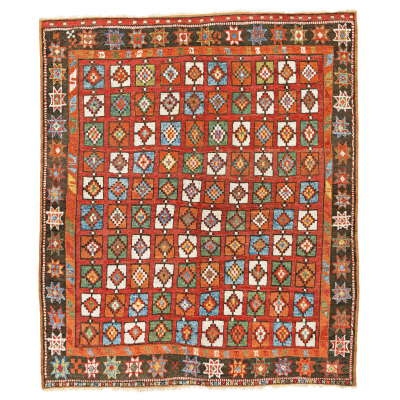
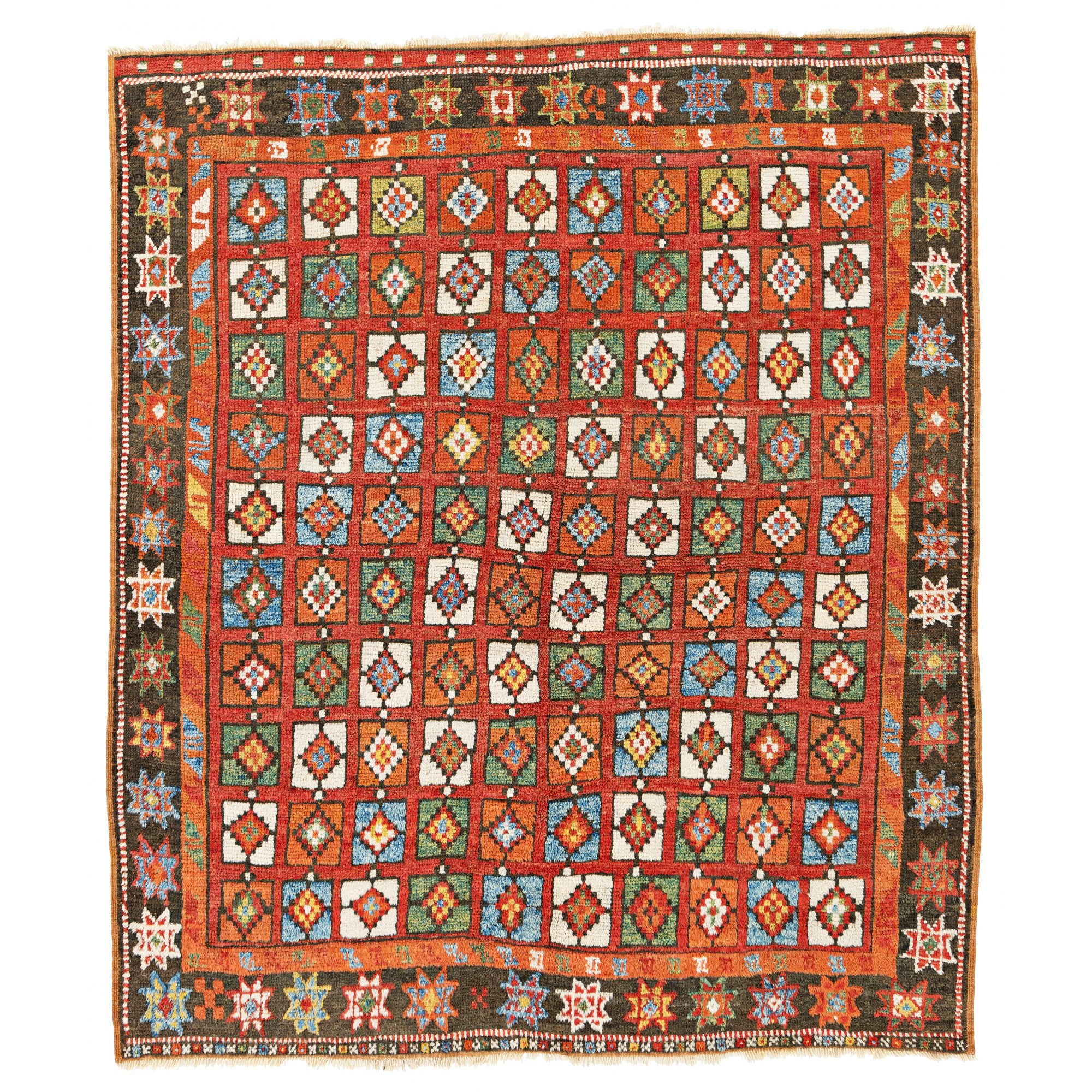
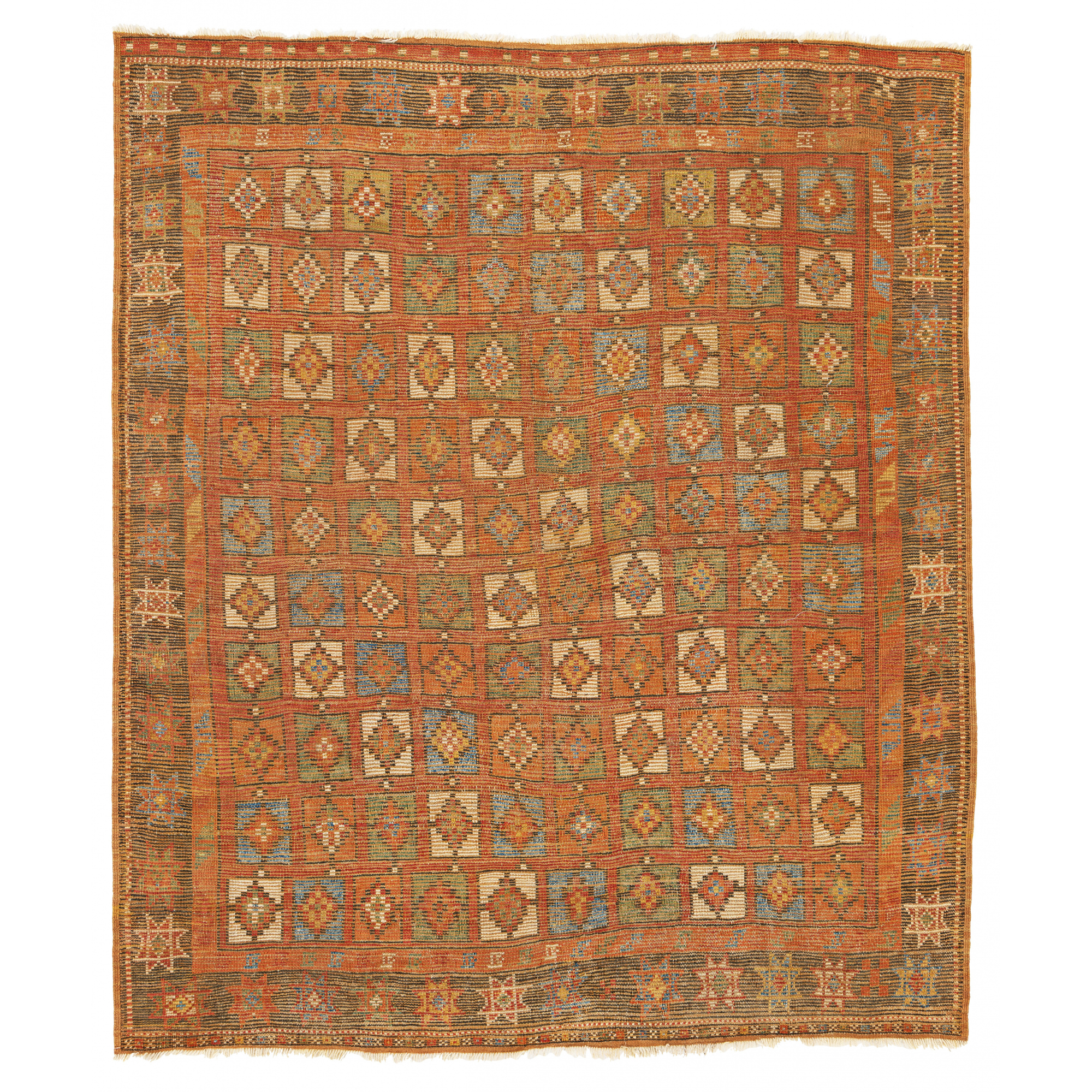
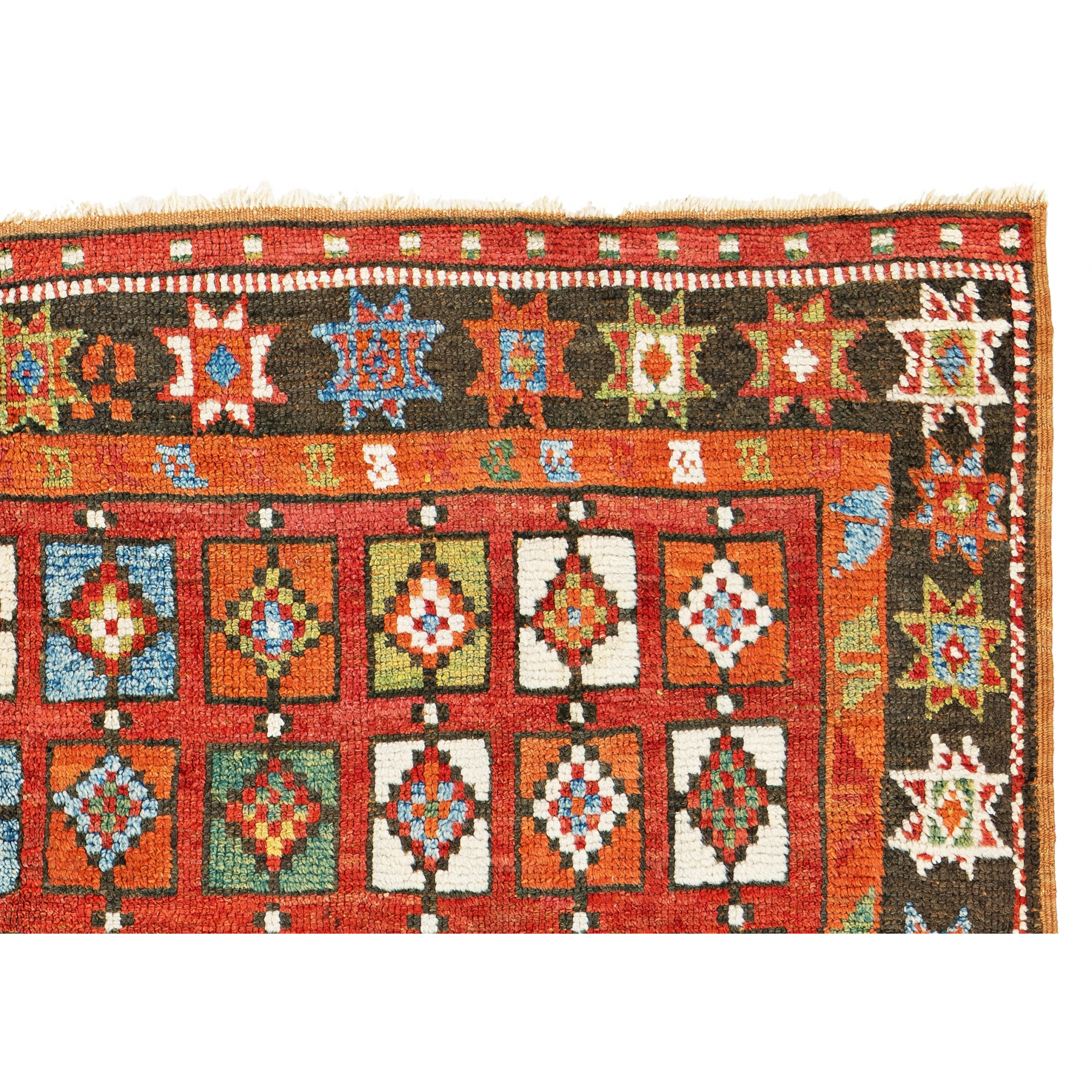
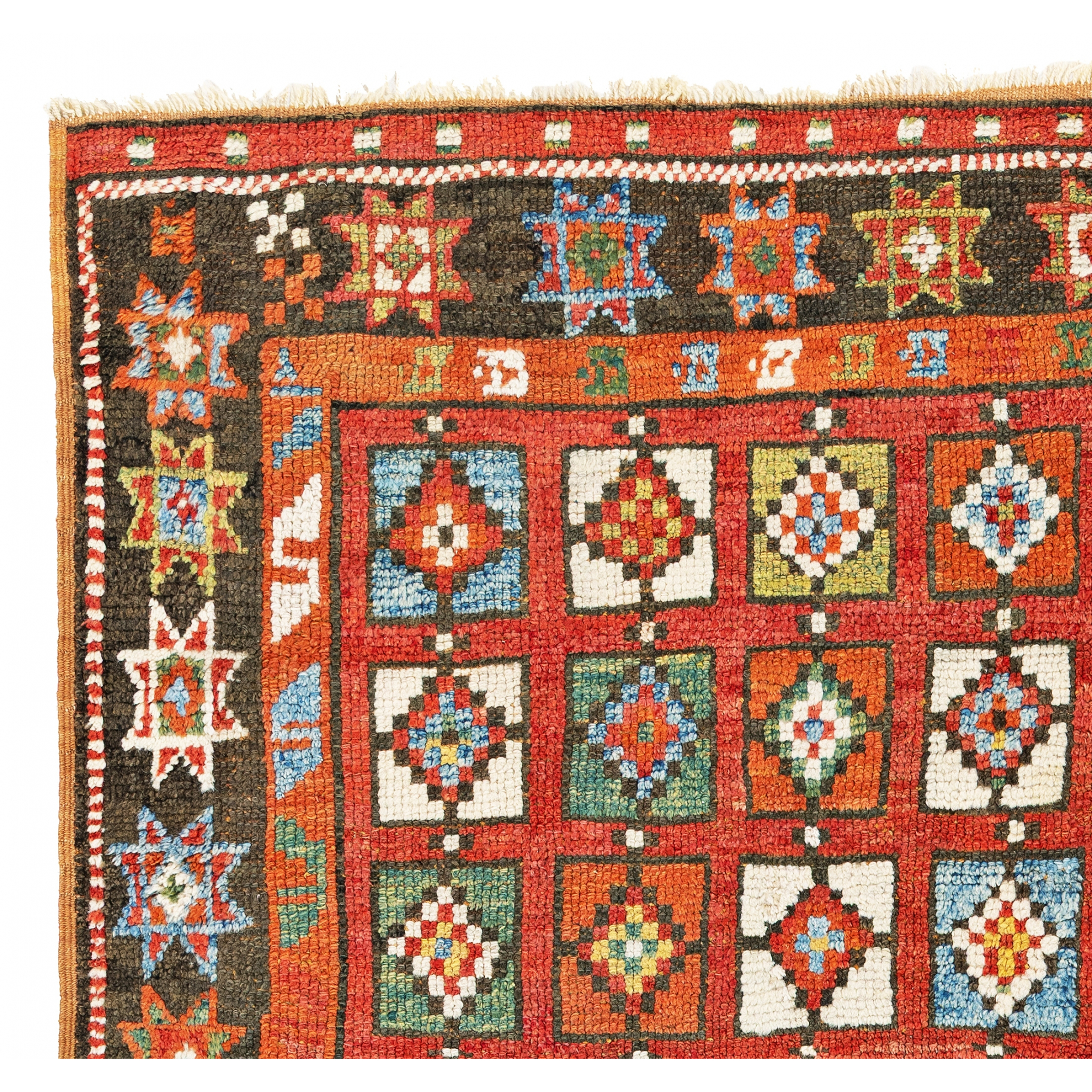
Heavy, mostly nearly square rugs with a high pile are called "yatak" and were used as sleeping rugs. In Böhmer and Brüggemann's standard work on the rugs of the farmers and nomads of Anatolia, such a rug is published under No. 51; it differs only slightly from our example. The main difference is that it lacks the inner S-shaped border found on our piece, which further frames the field and visually highlights it.
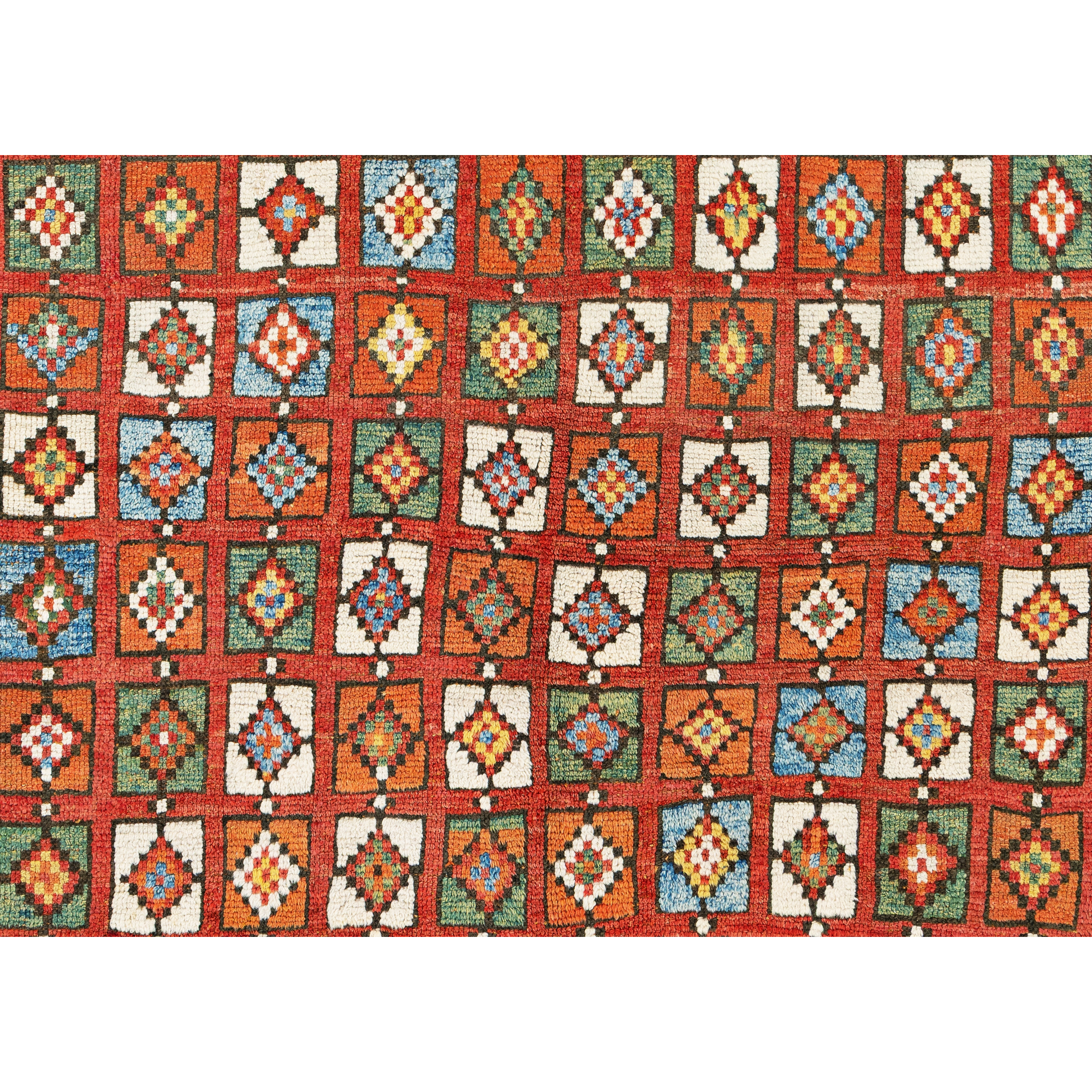
The Prammer Collection contains a fragment of a Kütahya rug with a comparable design, published in "2000 and One Night," Graz 2001, no. 171. However, the interior design of the squares differs from that of our piece. In this example, a cube-shaped motif is additionally placed between the squares. This visually extends the lines and creates a distinctly different overall impression.
A comparable piece was offered on December 5, 2009, at Rippon Boswell as Lot 75 for 38,000.
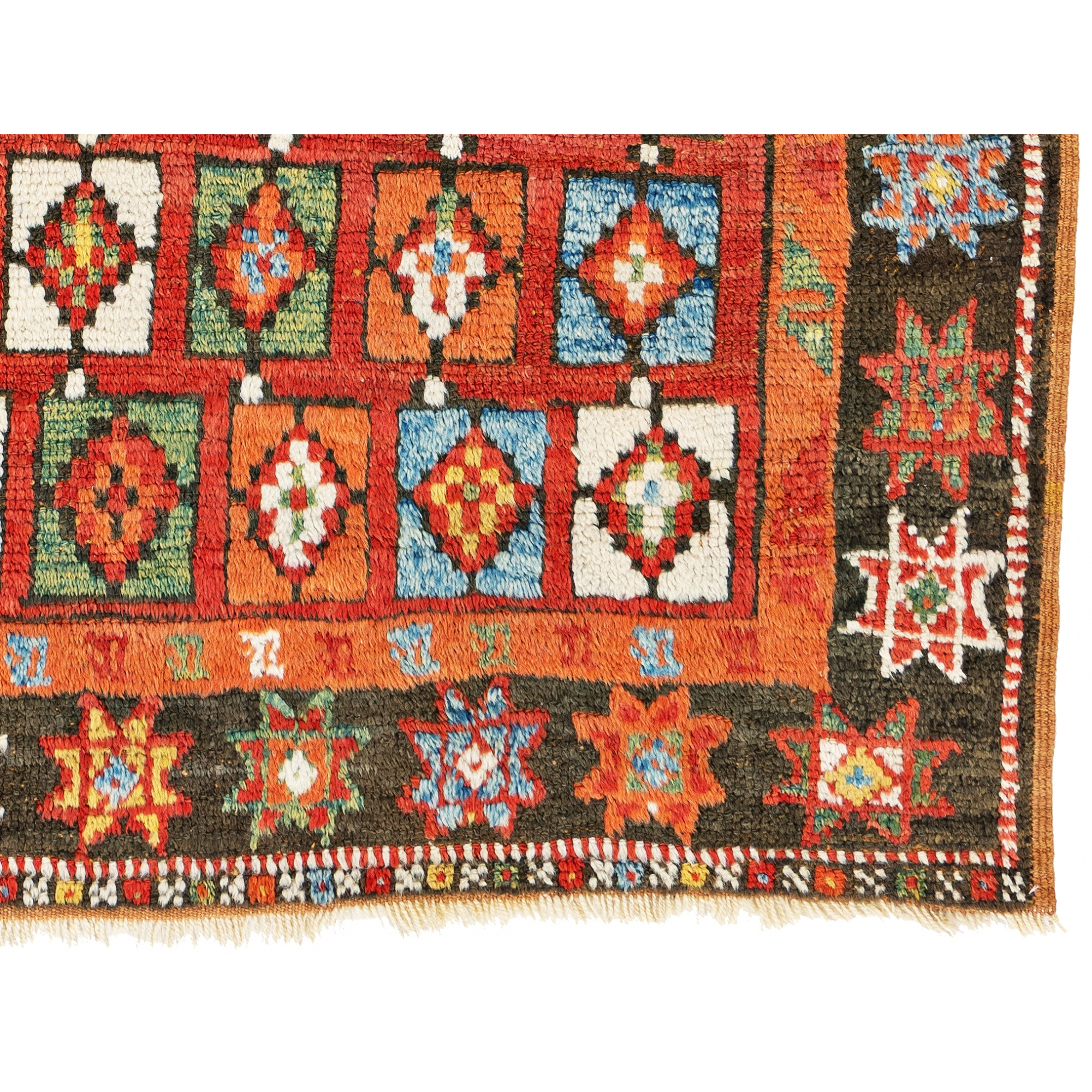
The star border on a dark background also deserves special attention. At the bottom and top left, additional cubes have been inserted between the stars, apparently in places where there was not enough space for another complete star.
It is particularly fascinating to observe how the weaver initially had to find her way into the pattern at the bottom end. It was not until the second row that she settled on a clear color sequence, creating a diagonal pattern; the individual squares also begin to align regularly one above the other only from this point on. It is precisely these small irregularities that make the rug's creation process immediately apparent and lend it a very special charm.
Estimate: € 30000 - 40000
Turkey, 18th century
Condition: very good, mostly good pile, partially corroded dark brown, minor small repairs
Warp: wool, weft: wool, pile: wool
Heavy, mostly nearly square rugs with a high pile are called "yatak" and were used as sleeping rugs. In Böhmer and Brüggemann's standard work on the rugs of the farmers and nomads of Anatolia, such a rug is published under No. 51; it differs only slightly from our example. The main difference is that it lacks the inner S-shaped border found on our piece, which further frames the field and visually highlights it.
The Prammer Collection contains a fragment of a Kütahya rug with a comparable design, published in "2000 and One Night," Graz 2001, no. 171. However, the interior design of the squares differs from that of our piece. In this example, a cube-shaped motif is additionally placed between the squares. This visually extends the lines and creates a distinctly different overall impression.
A comparable piece was offered on December 5, 2009, at Rippon Boswell as Lot 75 for 38,000.
The star border on a dark background also deserves special attention. At the bottom and top left, additional cubes have been inserted between the stars, apparently in places where there was not enough space for another complete star.
It is particularly fascinating to observe how the weaver initially had to find her way into the pattern at the bottom end. It was not until the second row that she settled on a clear color sequence, creating a diagonal pattern; the individual squares also begin to align regularly one above the other only from this point on. It is precisely these small irregularities that make the rug's creation process immediately apparent and lend it a very special charm.
Estimate: € 30000 - 40000