
No products
Product successfully added to your shopping cart
There are 0 items in your cart. There is 1 item in your cart.
14
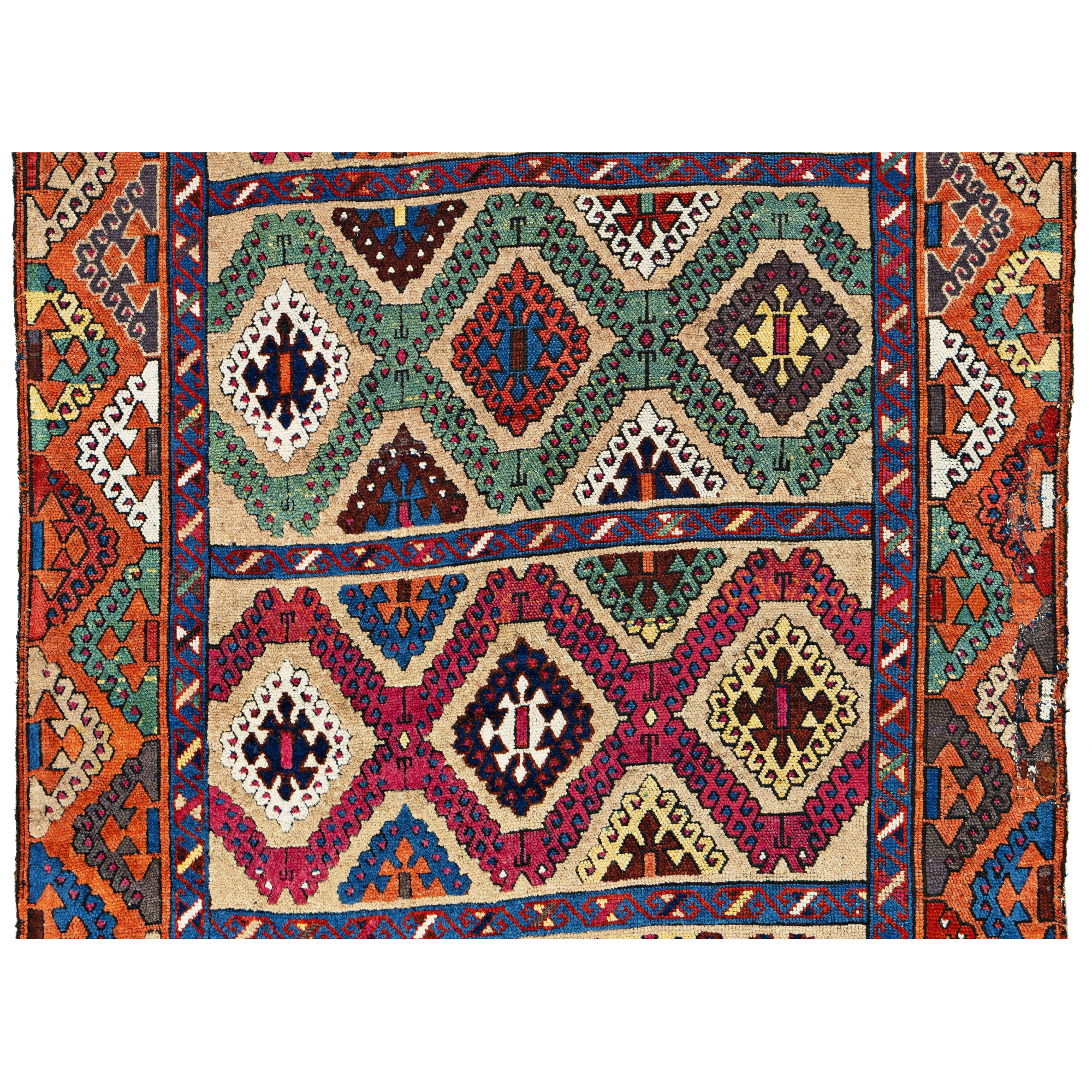
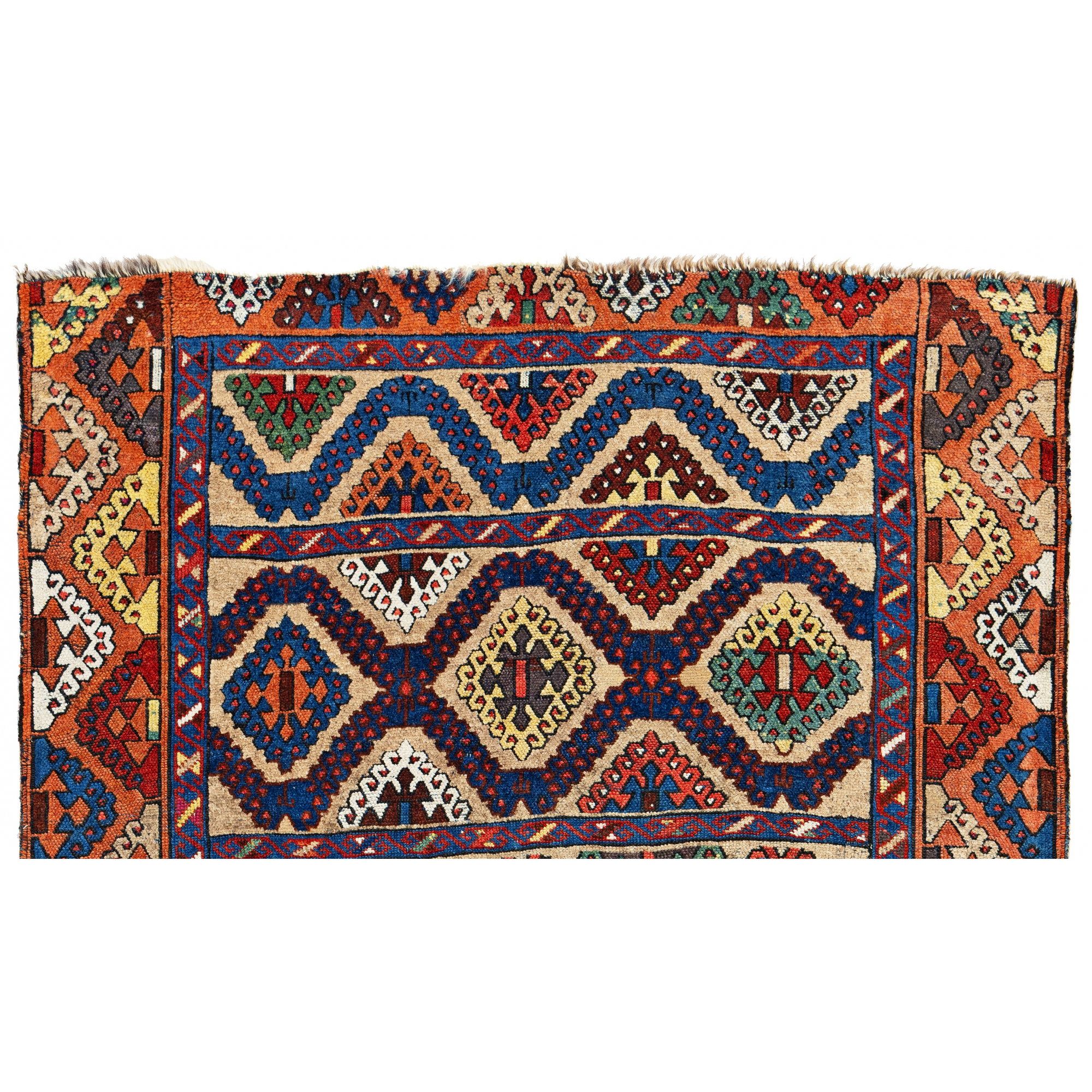
Sarkisla
New
261 x 121 cm (8' 7" x 4')
Turkey, mid 19th century
Condition: good, scattered low pile, sides and ends incomplete, several old repairs
Warp: wool, weft: wool, pile: wool
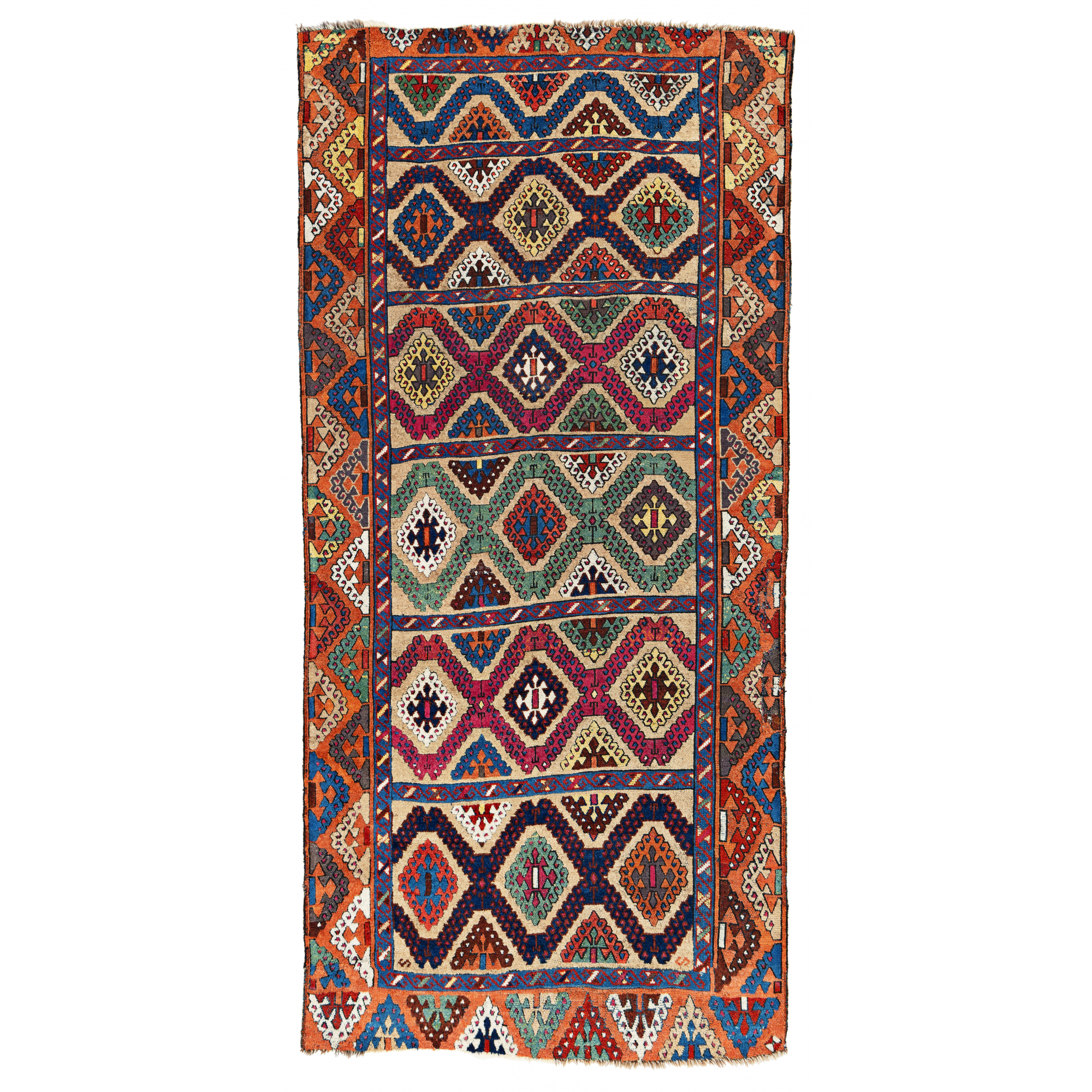
The earliest known published rug related to our piece was published by Grote-Hasenbalg in 1922, in Volume 2, Plate 23. However, it differs from our example in that its field is not divided into individual panels.
In "Teppiche der Bauern und Nomaden in Anatolien" by Brüggemann/Böhmer (1980), Plate 90 depicts a rug with a comparable field division. It differs, however, in that the individual fields have different ground colors, whereas our rug has a uniform beige ground. Regarding a rug with an all-over pattern shown on Plate 89, Brüggemann notes that this color is extremely rare in rugs of this group. On Plate 91, he shows another version of the pattern in a staggered arrangement, of which several examples are known.
Our version, with or without a paneled division, also shows connections to kilims from Eastern Anatolia and Southern Persia. The border of our rug skillfully echoes the hook medallion of the field in a halved form, thereby achieving a completely different ornamental effect.
Surprisingly, two of these rather rare pieces with a coffered pattern can be found in the small catalog of the Rachel B. Stevens Memorial Collection, "Turkish Rugs," Textile Museum, Washington 1972, plates 5 and 6. No. 6 also uses the same border, but differs in that the individual fields are colored in different hues.
The wonderful colorfulness so characteristic of Eastern Anatolian rugs clearly sets this group apart from the products of other weaving regions. An interesting article by Brian Morehouse on Sarkisla and the patterns found there can be found in HALI 223, pp. 108 ff.
Estimate: € 6000 - 9000