
Cart
0
Product
Products
(empty)
No products
Free shipping!
Shipping
0 €
Total
Product successfully added to your shopping cart
Quantity
Total
There are 0 items in your cart. There is 1 item in your cart.
Total products
(tax incl.)
Total shipping (tax incl.)
Free shipping!
Total
(tax incl.)
5
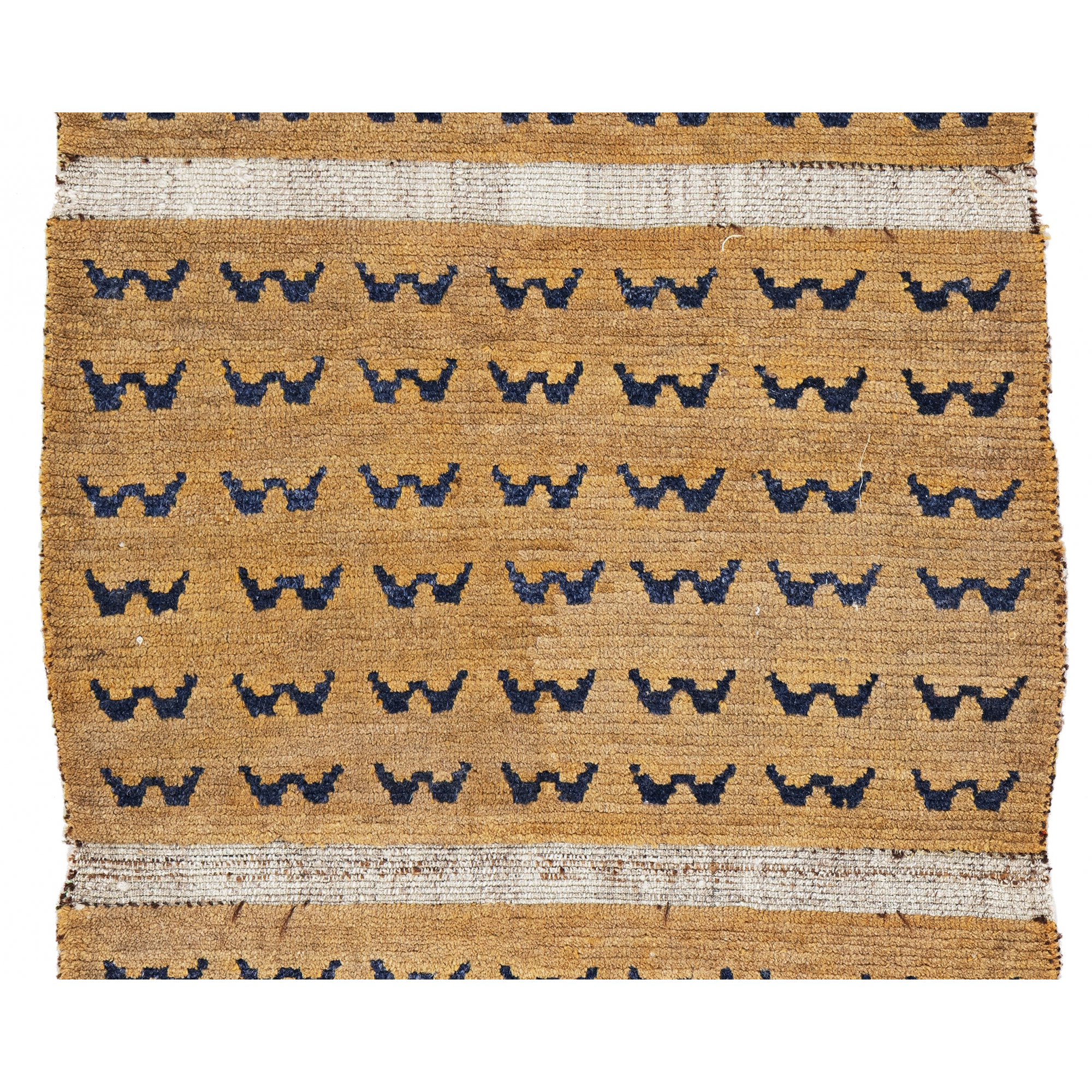
Unusual Tibet Tiger Rug
New
147 x 54 cm (4' 10" x 1' 9")
Tibet, ca. 1900
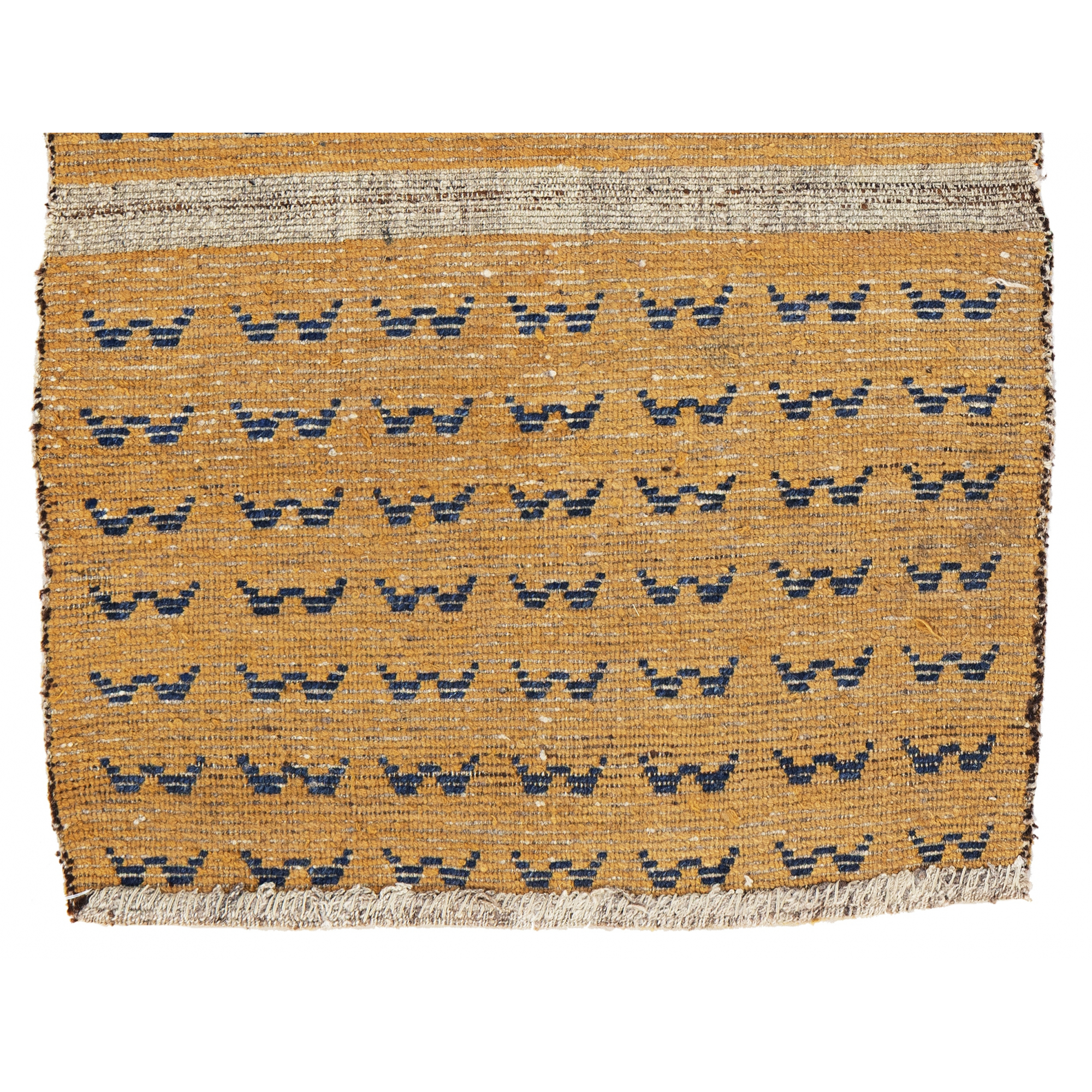
Condition: very good, good pile, minor signs of use on sides and ends
Warp: wool, weft: wool, pile: wool
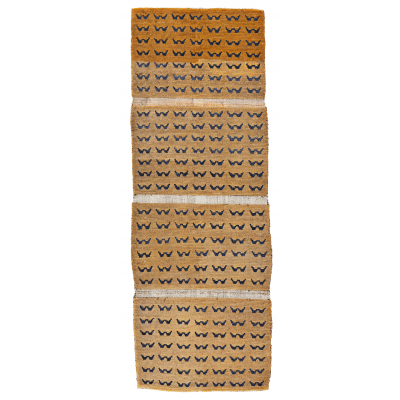
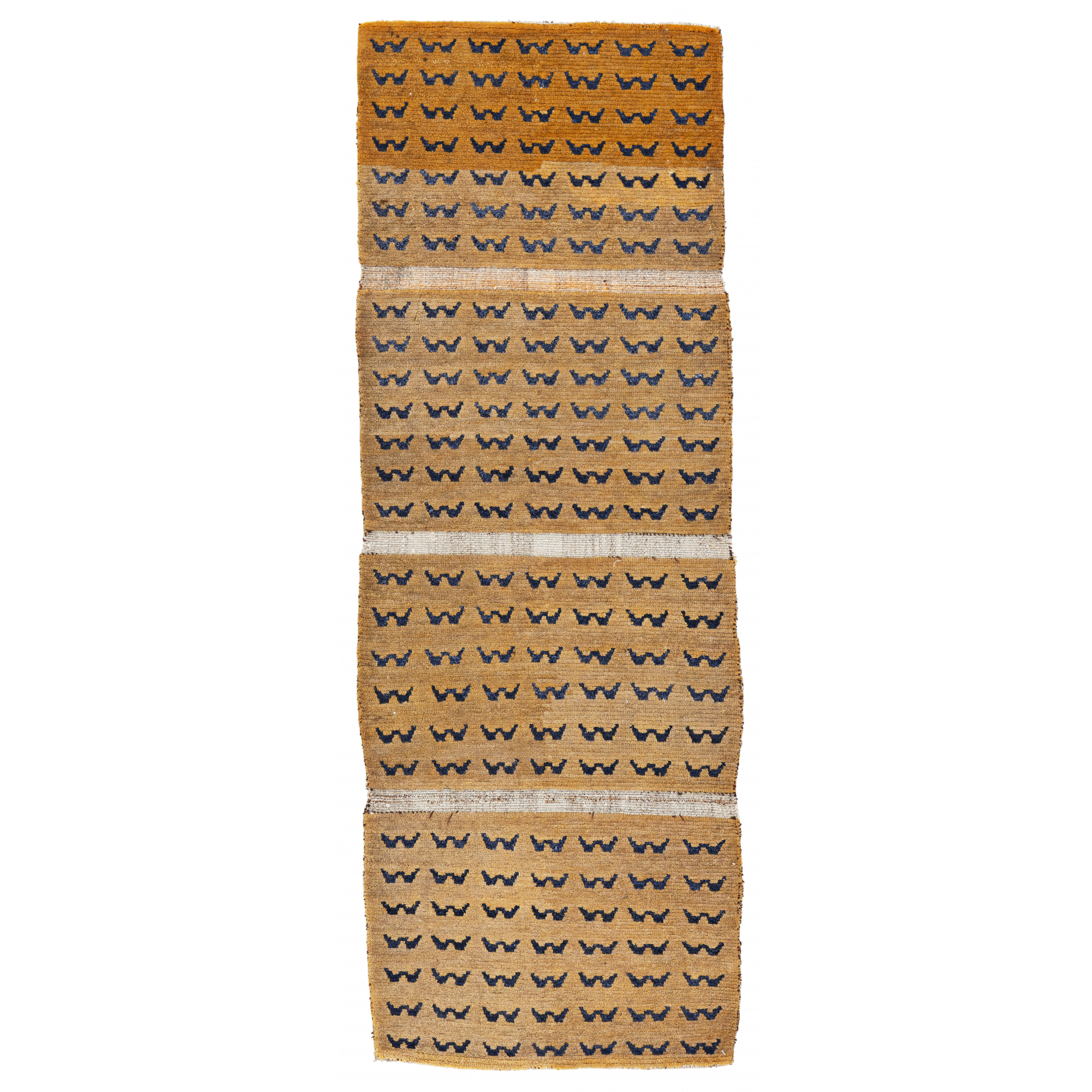
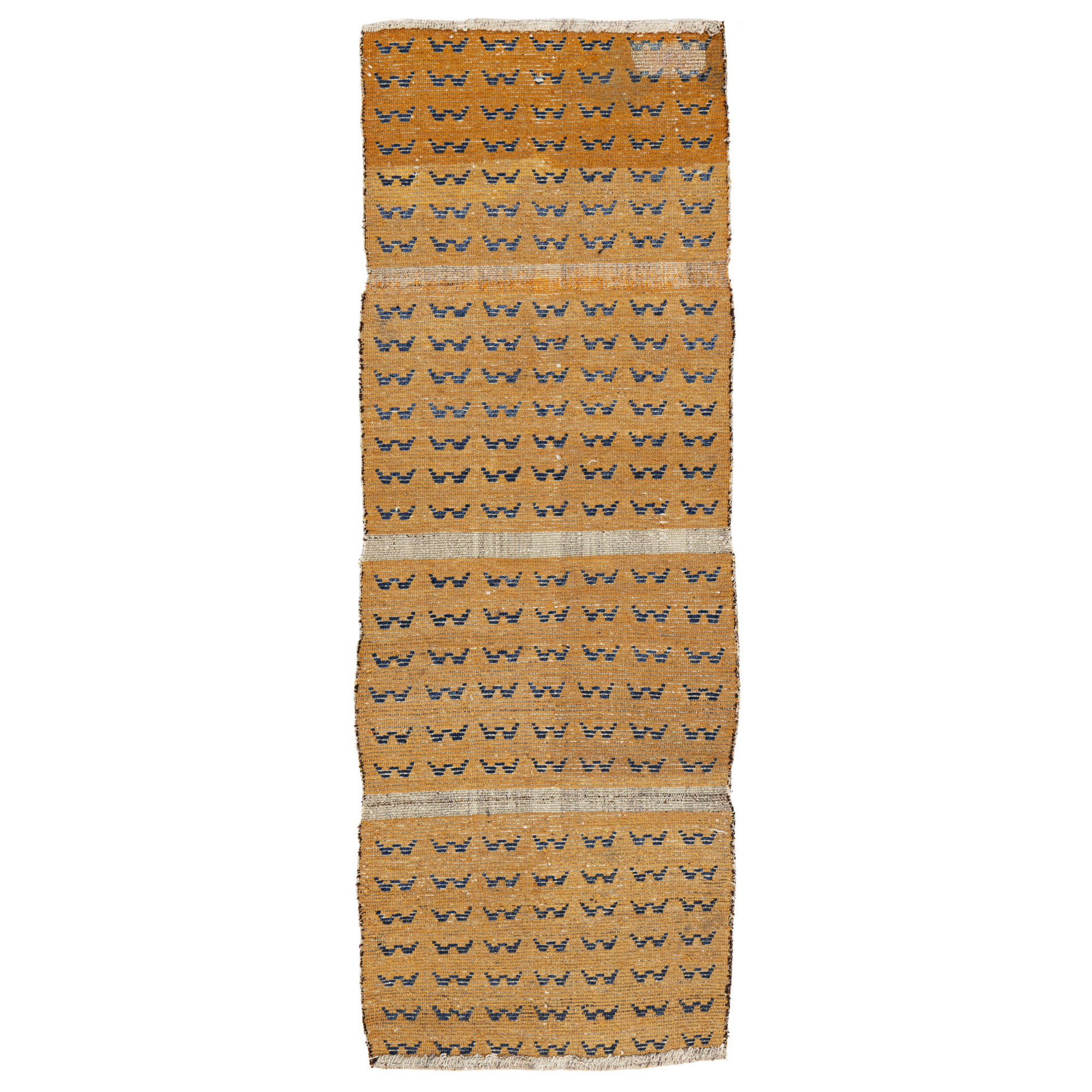
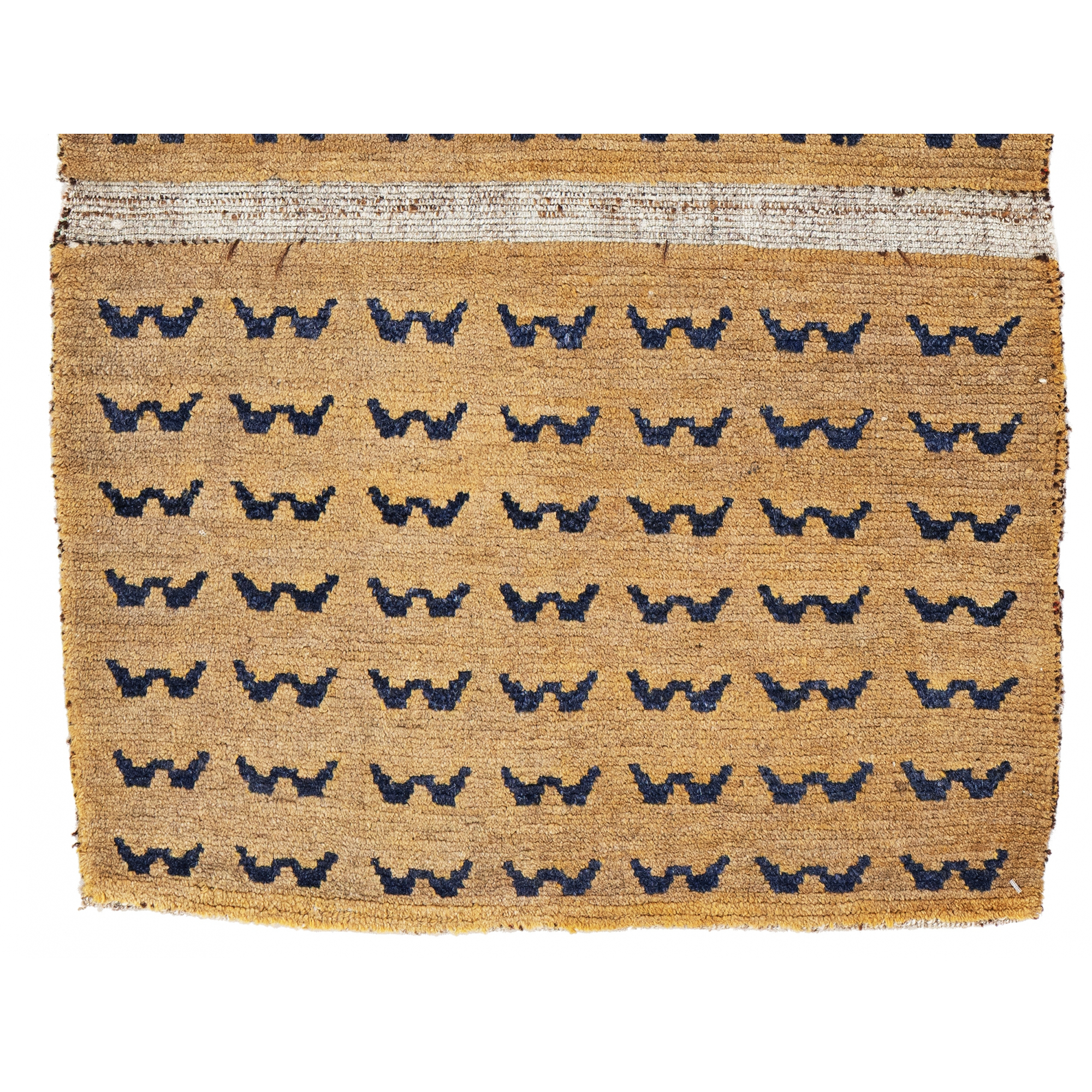
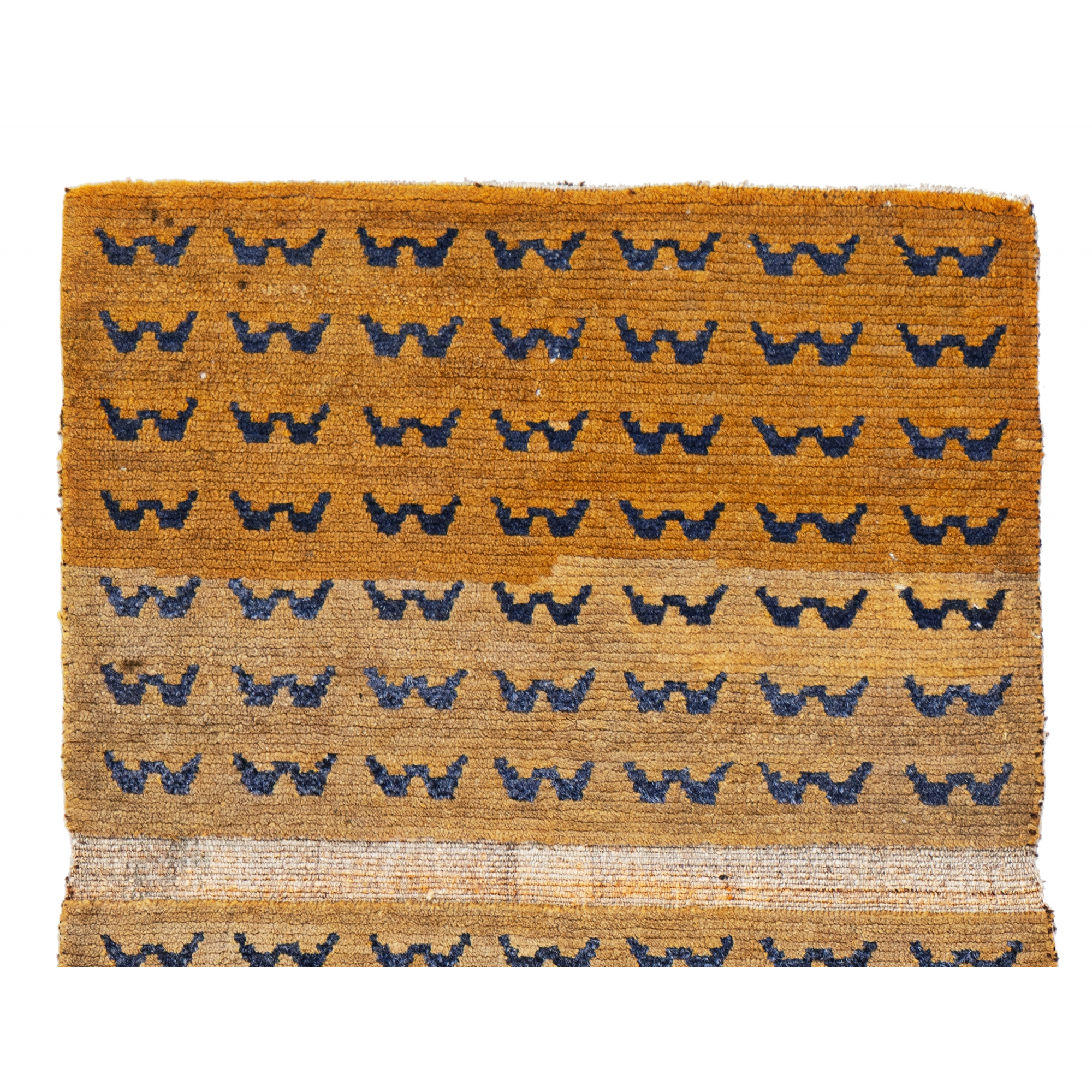
This extraordinary knotted rug, for which we know of no comparable example, features a highly abstracted tiger design. Without knowing the connection to the large Tibetan tiger rugs, the motif depicted would likely not be readily recognizable as a tiger skin.In Tibet, tiger skins and their textile representations were reserved for high-ranking persons, particularly princes and prominent abbots. See Mimi Lipton, "Tiger Rugs from Tibet," figs. 5 and 6. Also of interest in this context is a photograph in HALI 181, p. 66, showing a tiger pattern similar to that of the seat mat in our auction.
The flat-woven white stripes on our piece may make sense if one considers the rug as a kind of blank canvas. If one examines each of the four panels individually, this might provide a clue to its originally intended function.
Hanging, stuffed rugs or textile scrolls are frequently found at the entrances to Tibetan temples and monasteries.
An impressive example can be seen at the entrance to the White Palace of the Potala in Lhasa, where textile scrolls adorned with tiger patterns hang; see Mimi Lipton, fig. 9. A pair of comparable pieces is published in "Woven Jewels: Tibetan Rugs from the Rutherford Collection," no. 38. Another pair can be found in HALI 194, p. 75, in an article by Sandra Whitman, who describes these objects as scent pouches. However, such an interpretation poses a problem for our rug: if the individual panels were used for that purpose, the tiger patterns would be oriented vertically. It therefore seems equally plausible that the four panels were originally intended for the production of neck rolls. Although such Tibetan neck rolls are rare, their use is well documented. The definitive classification of this unusual piece must remain open. However, it is precisely the combination of a highly abstract tiger pattern, an unusual technical design, and a division into four panels - which was apparently intended from the outset - that makes this rug an extraordinary and possibly unique piece of woven art.
Estimate: € 4000 - 6000
Tibet, ca. 1900
Condition: very good, good pile, minor signs of use on sides and ends
Warp: wool, weft: wool, pile: wool
This extraordinary knotted rug, for which we know of no comparable example, features a highly abstracted tiger design. Without knowing the connection to the large Tibetan tiger rugs, the motif depicted would likely not be readily recognizable as a tiger skin.In Tibet, tiger skins and their textile representations were reserved for high-ranking persons, particularly princes and prominent abbots. See Mimi Lipton, "Tiger Rugs from Tibet," figs. 5 and 6. Also of interest in this context is a photograph in HALI 181, p. 66, showing a tiger pattern similar to that of the seat mat in our auction.
The flat-woven white stripes on our piece may make sense if one considers the rug as a kind of blank canvas. If one examines each of the four panels individually, this might provide a clue to its originally intended function.
Hanging, stuffed rugs or textile scrolls are frequently found at the entrances to Tibetan temples and monasteries.
An impressive example can be seen at the entrance to the White Palace of the Potala in Lhasa, where textile scrolls adorned with tiger patterns hang; see Mimi Lipton, fig. 9. A pair of comparable pieces is published in "Woven Jewels: Tibetan Rugs from the Rutherford Collection," no. 38. Another pair can be found in HALI 194, p. 75, in an article by Sandra Whitman, who describes these objects as scent pouches. However, such an interpretation poses a problem for our rug: if the individual panels were used for that purpose, the tiger patterns would be oriented vertically. It therefore seems equally plausible that the four panels were originally intended for the production of neck rolls. Although such Tibetan neck rolls are rare, their use is well documented. The definitive classification of this unusual piece must remain open. However, it is precisely the combination of a highly abstract tiger pattern, an unusual technical design, and a division into four panels - which was apparently intended from the outset - that makes this rug an extraordinary and possibly unique piece of woven art.
Estimate: € 4000 - 6000