
Cart
0
Product
Products
(empty)
No products
Free shipping!
Shipping
0 €
Total
Product successfully added to your shopping cart
Quantity
Total
There are 0 items in your cart. There is 1 item in your cart.
Total products
(tax incl.)
Total shipping (tax incl.)
Free shipping!
Total
(tax incl.)
4
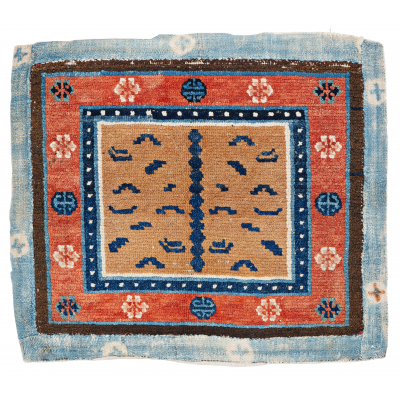
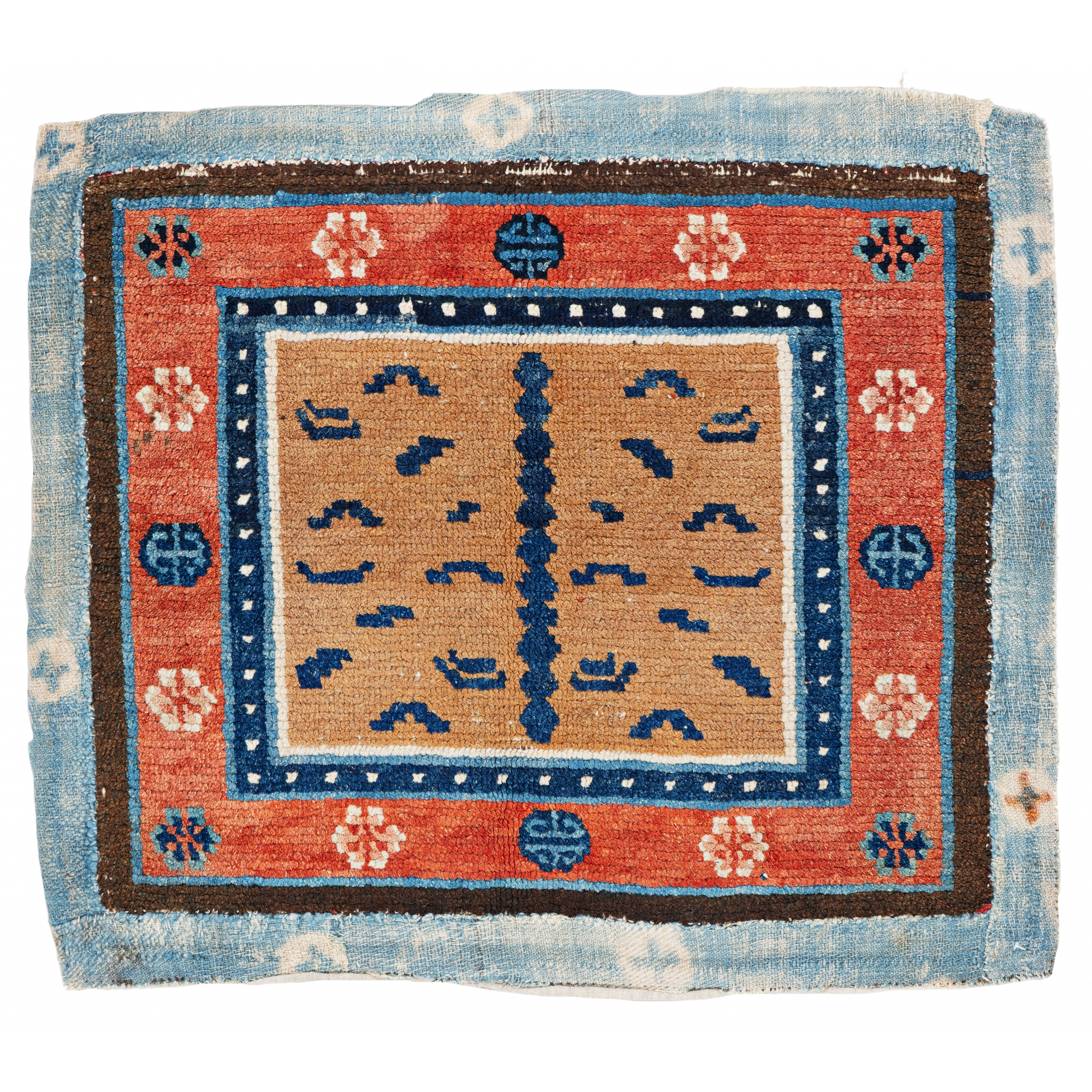
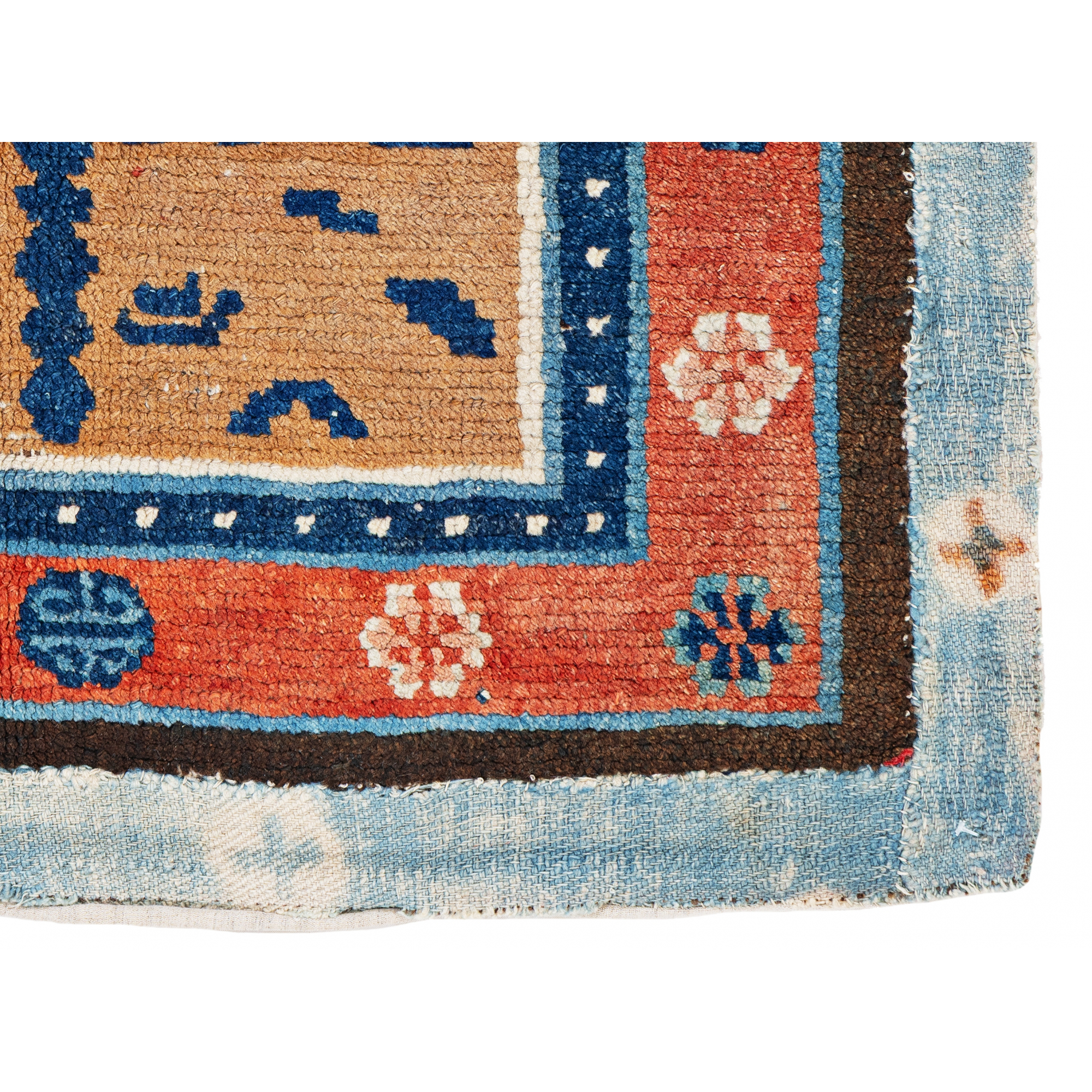
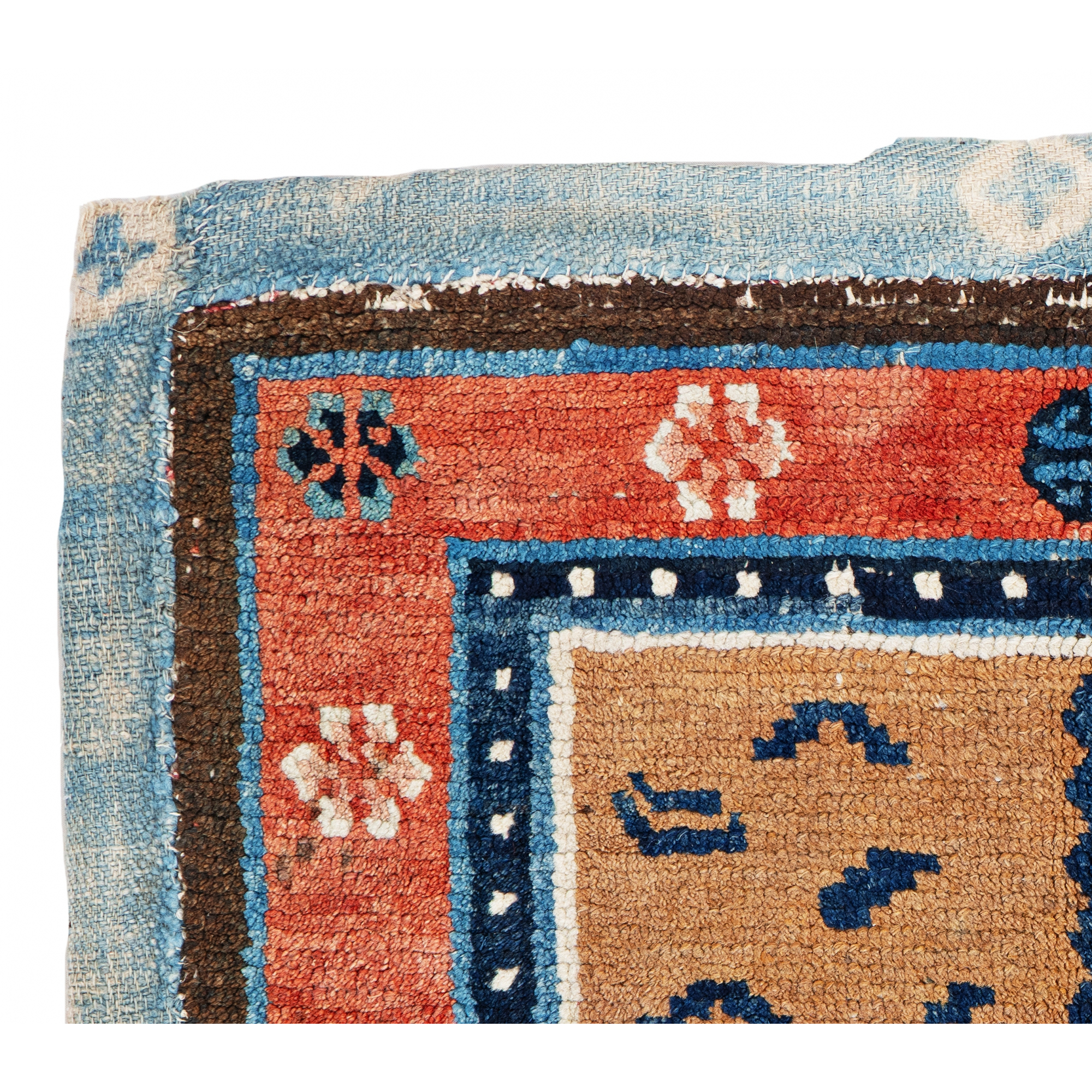
Tibet Tiger Sitting Rug
New
61 x 73 cm (2' x 2' 5")
Tibet, ca. 1900
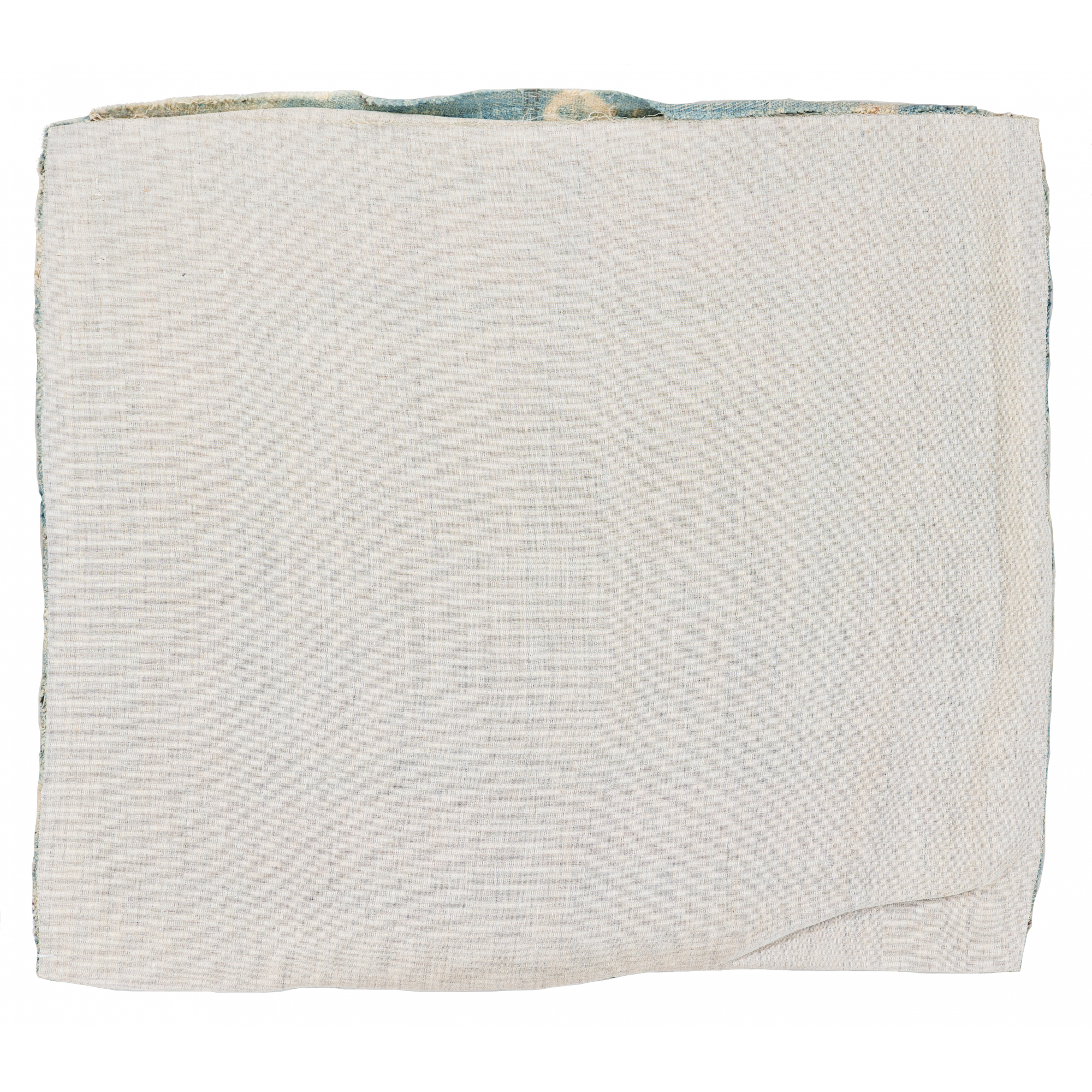
Condition: good, mostly good pile, fabric edging partially damaged, backed with fabric
Warp: wool, weft: wool, pile: wool
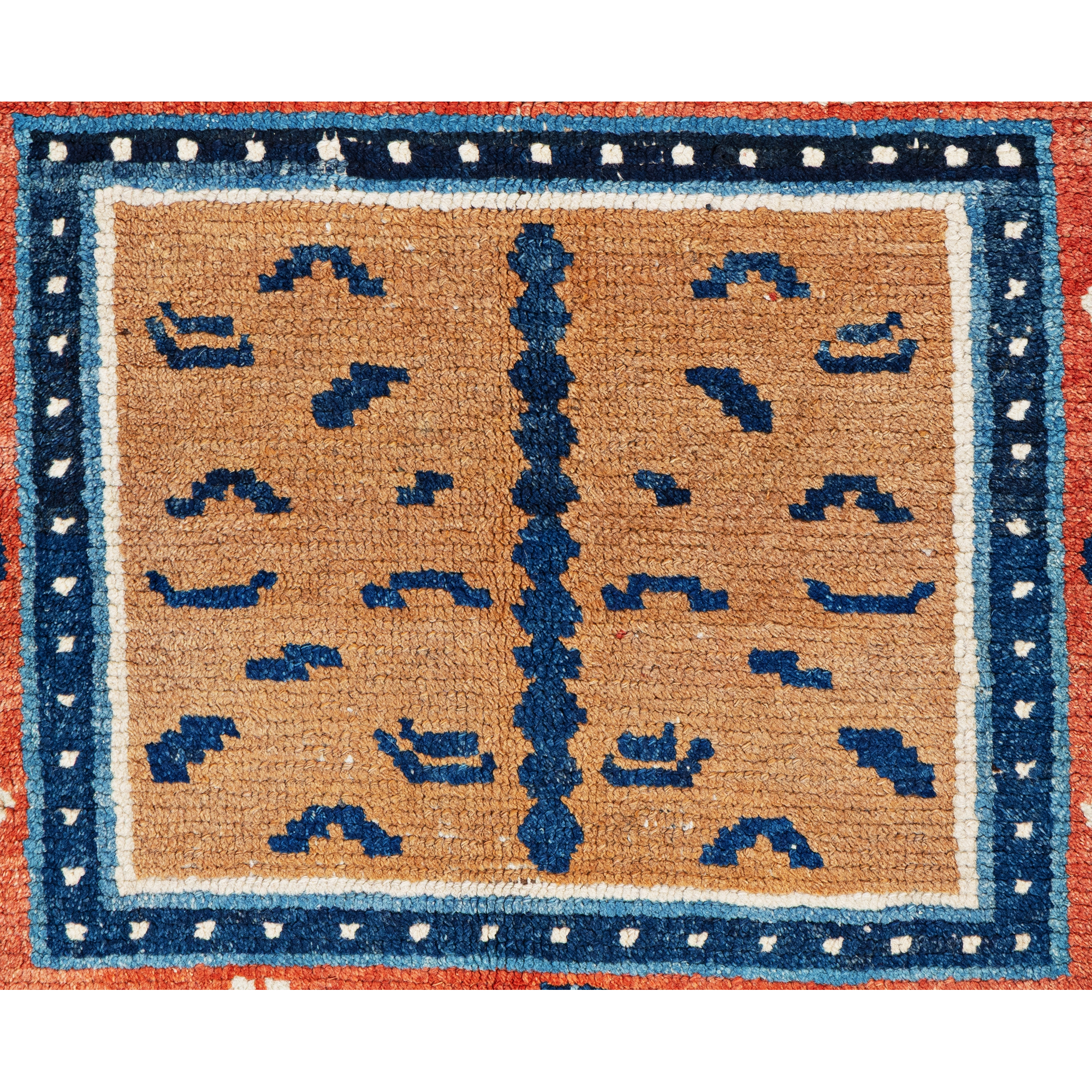
Tiger rugs are among the most sought-after rugs from Tibet and China. Their depictions range from highly naturalistic representations of the animal to complete abstraction, in which little more than individual stripes remain of the original tiger pattern. The oldest known tiger textile dates back to the 1st century B.C. and was found in Noin Ula.
Depictions of tigers can also be found on small sitting rugs. Probably the oldest known example is a highly naturalistic depiction from the second half of the 17th century, published by Eberhart Herrmann in "Asiatische Teppich- und
Textilkunst 2", no. 82. Another Chinese sitting rug featuring a highly abstracted tiger design is illustrated in HALI 49, p. 23, and was also in Herrmann's collection.
A Tibetan piece very similar to our rug can be seen in HALI 75, p. 122, in an advertisement by Spink. However, it lacks the Shou symbols for long life, which are arranged in the four cardinal directions on our specimen.
Two additional Tibetan seat mats, which may originally have formed a pair, are published in Franz Xaver Erhard and Thomas Wild, "Drumze," plate 16, as well as in "Woven Jewels: Tibetan Rugs from the Rutherford Collection," no. 102. Another pair featuring the tantric-inspired spine motif can be found in Rupert Smith's "Antique Tibetan Carpets," no. 26. These sitting rugs differ from our piece, among other things, in their T-shaped meander border.
We have also previously offered a sitting rug from this small group. It was sold in our Auction 26 as Lot 69 for 4,000.
Furthermore, this beautiful piece has retained its original Tibetan border made using the thigma technique - a particularly charming detail in a piece from this rare group.
Estimate: € 2000 - 3000
Tibet, ca. 1900
Condition: good, mostly good pile, fabric edging partially damaged, backed with fabric
Warp: wool, weft: wool, pile: wool
Tiger rugs are among the most sought-after rugs from Tibet and China. Their depictions range from highly naturalistic representations of the animal to complete abstraction, in which little more than individual stripes remain of the original tiger pattern. The oldest known tiger textile dates back to the 1st century B.C. and was found in Noin Ula.
Depictions of tigers can also be found on small sitting rugs. Probably the oldest known example is a highly naturalistic depiction from the second half of the 17th century, published by Eberhart Herrmann in "Asiatische Teppich- und
Textilkunst 2", no. 82. Another Chinese sitting rug featuring a highly abstracted tiger design is illustrated in HALI 49, p. 23, and was also in Herrmann's collection.
A Tibetan piece very similar to our rug can be seen in HALI 75, p. 122, in an advertisement by Spink. However, it lacks the Shou symbols for long life, which are arranged in the four cardinal directions on our specimen.
Two additional Tibetan seat mats, which may originally have formed a pair, are published in Franz Xaver Erhard and Thomas Wild, "Drumze," plate 16, as well as in "Woven Jewels: Tibetan Rugs from the Rutherford Collection," no. 102. Another pair featuring the tantric-inspired spine motif can be found in Rupert Smith's "Antique Tibetan Carpets," no. 26. These sitting rugs differ from our piece, among other things, in their T-shaped meander border.
We have also previously offered a sitting rug from this small group. It was sold in our Auction 26 as Lot 69 for 4,000.
Furthermore, this beautiful piece has retained its original Tibetan border made using the thigma technique - a particularly charming detail in a piece from this rare group.
Estimate: € 2000 - 3000