
Cart
0
Product
Products
(empty)
No products
Free shipping!
Shipping
0 €
Total
Product successfully added to your shopping cart
Quantity
Total
There are 0 items in your cart. There is 1 item in your cart.
Total products
(tax incl.)
Total shipping (tax incl.)
Free shipping!
Total
(tax incl.)
2
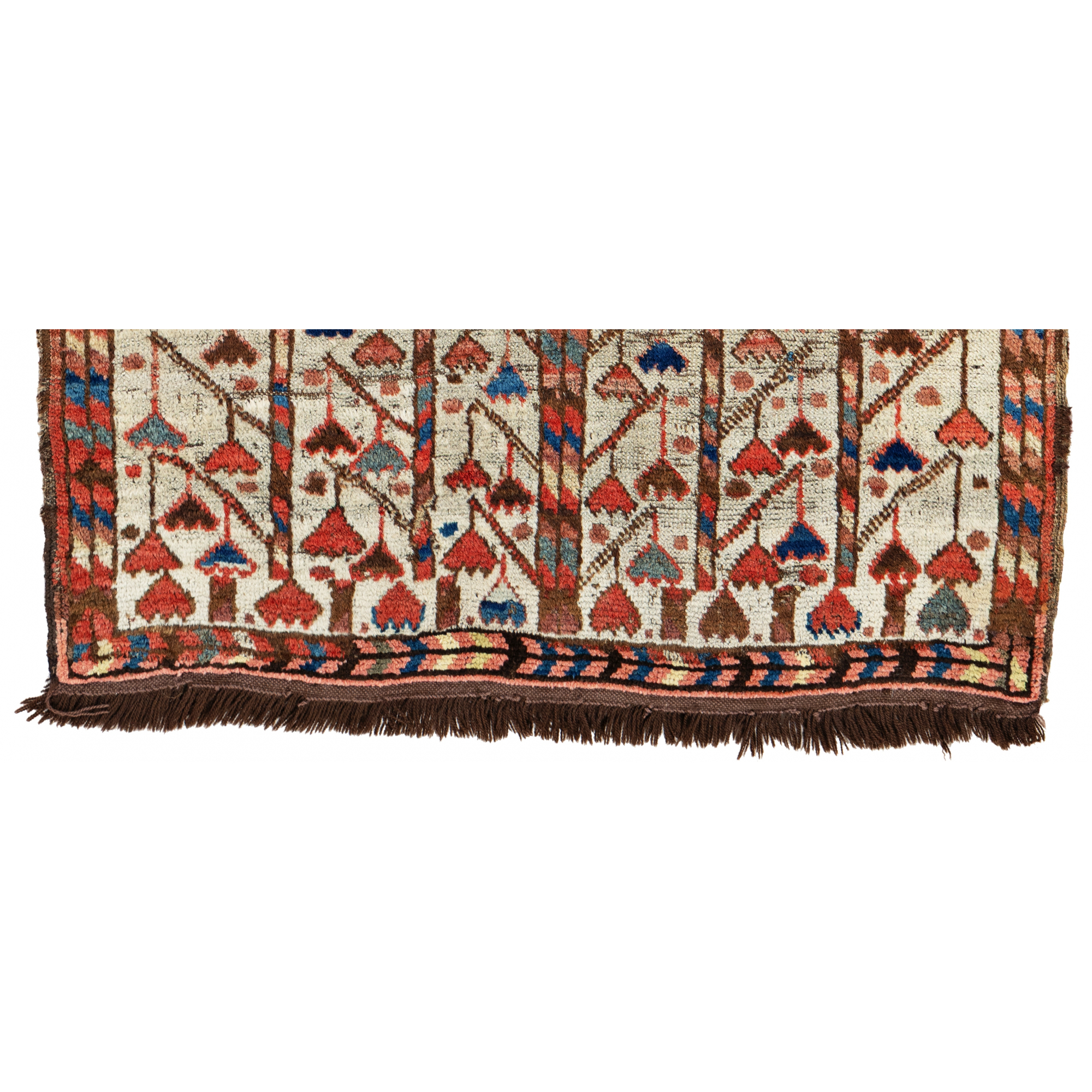
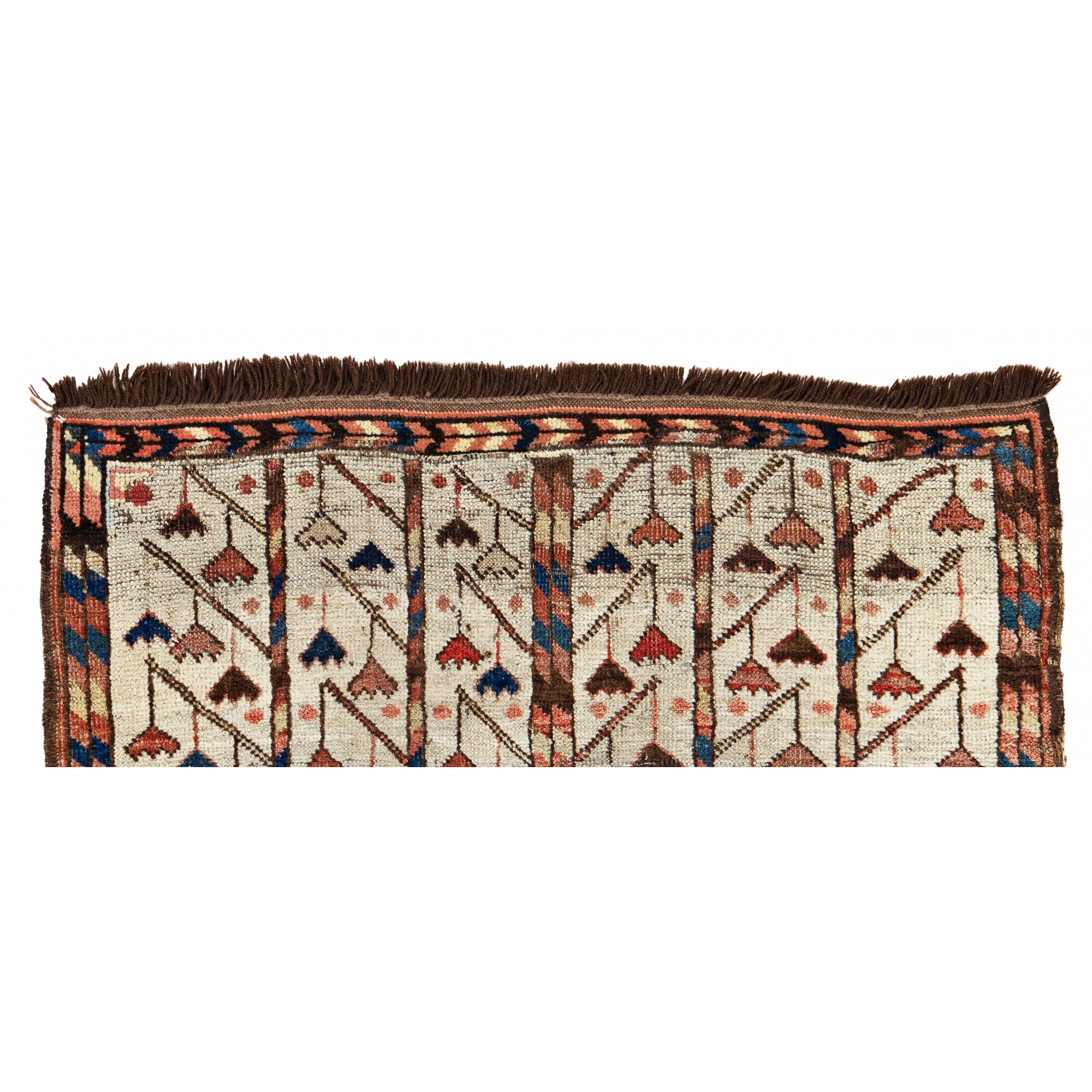
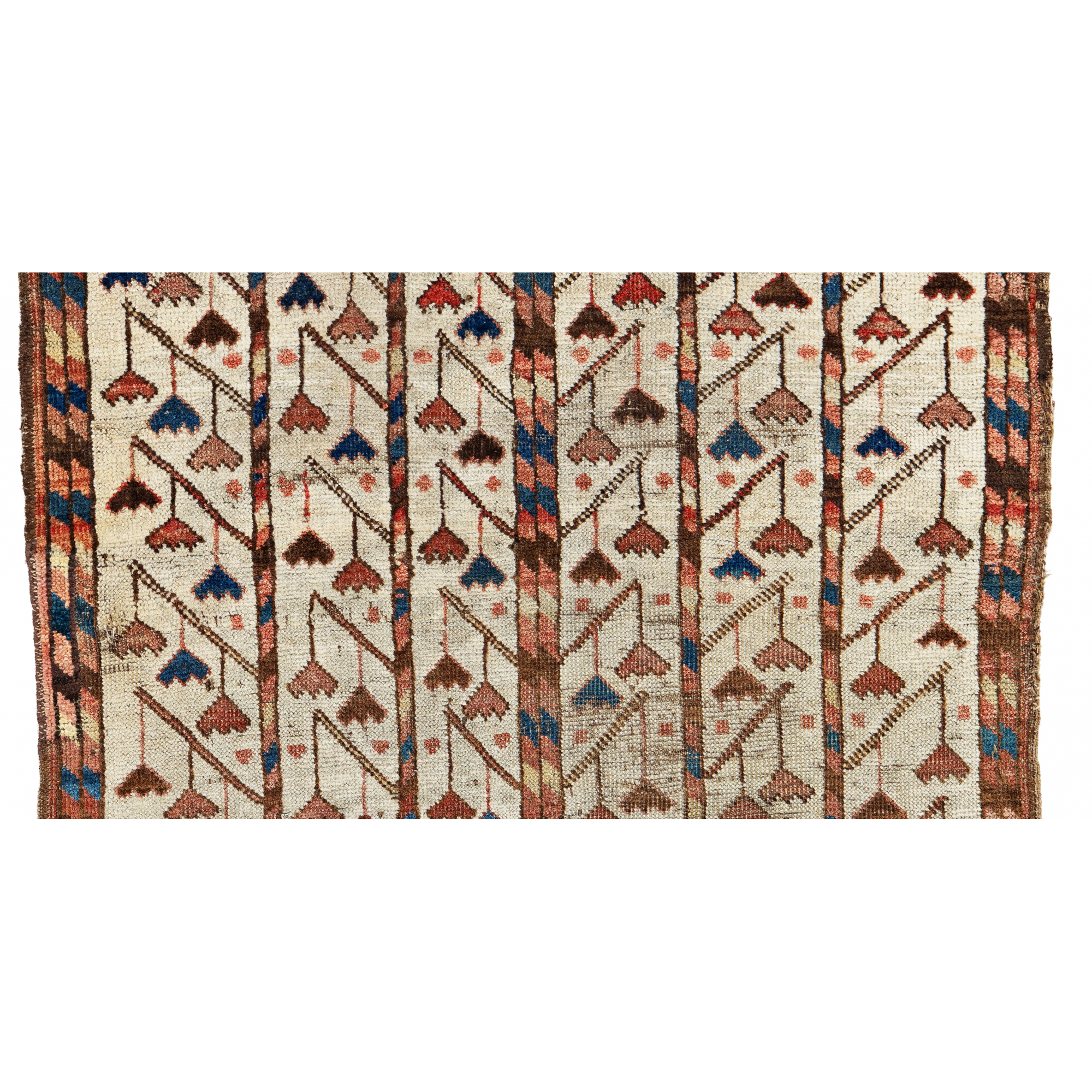
Small White-Ground Ersari
New
166 x 84 cm (5' 5" x 2' 9")
Turkmenistan, mid 19th century
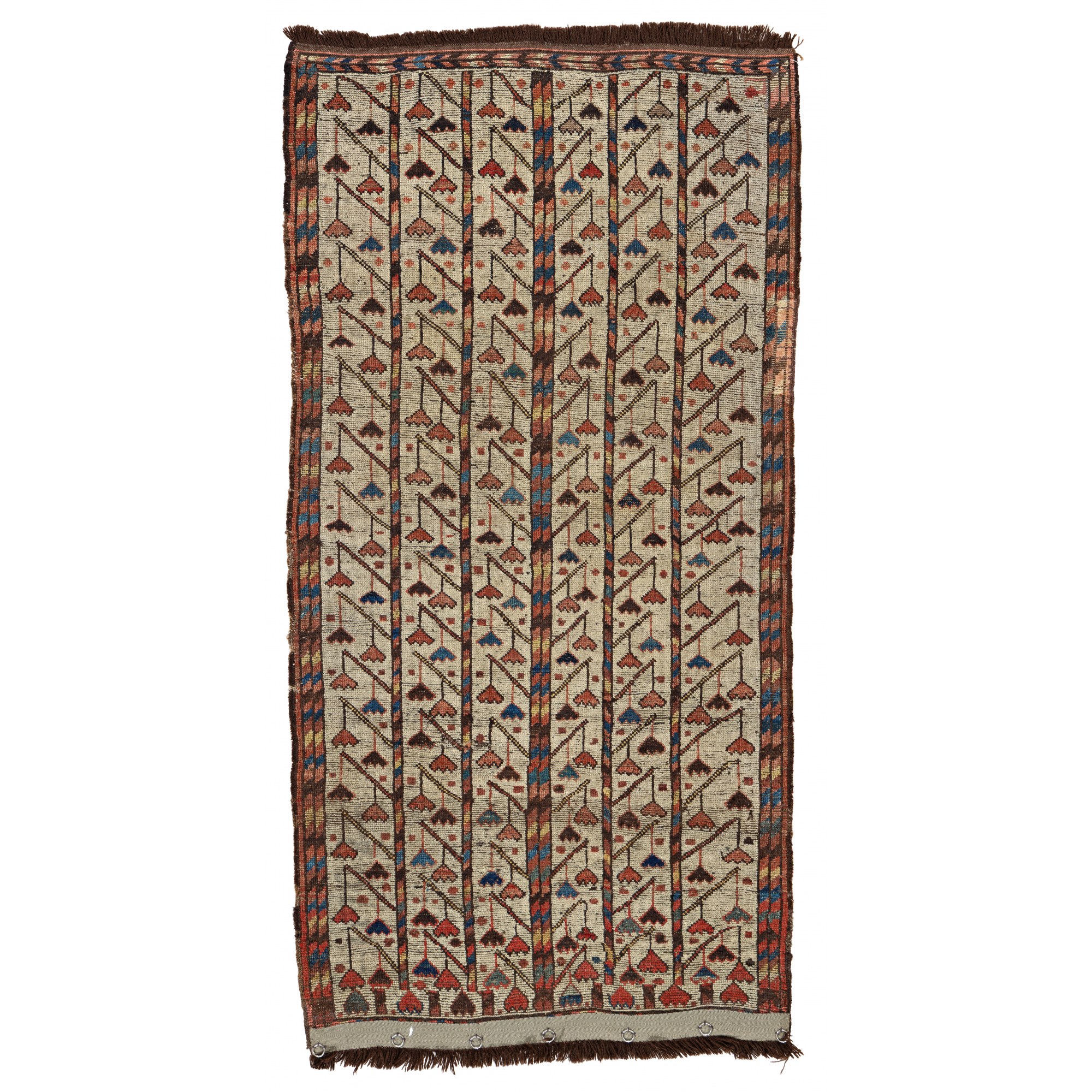
Condition: good, low pile in places, both ends restored, scattered small repairs
Warp: wool, weft: wool, pile: wool
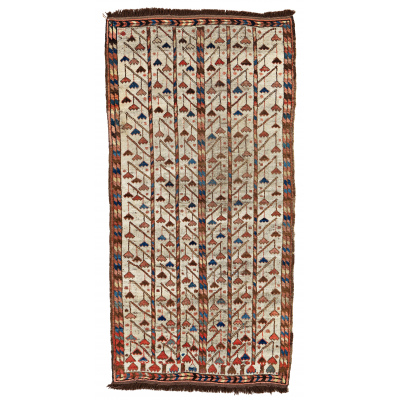
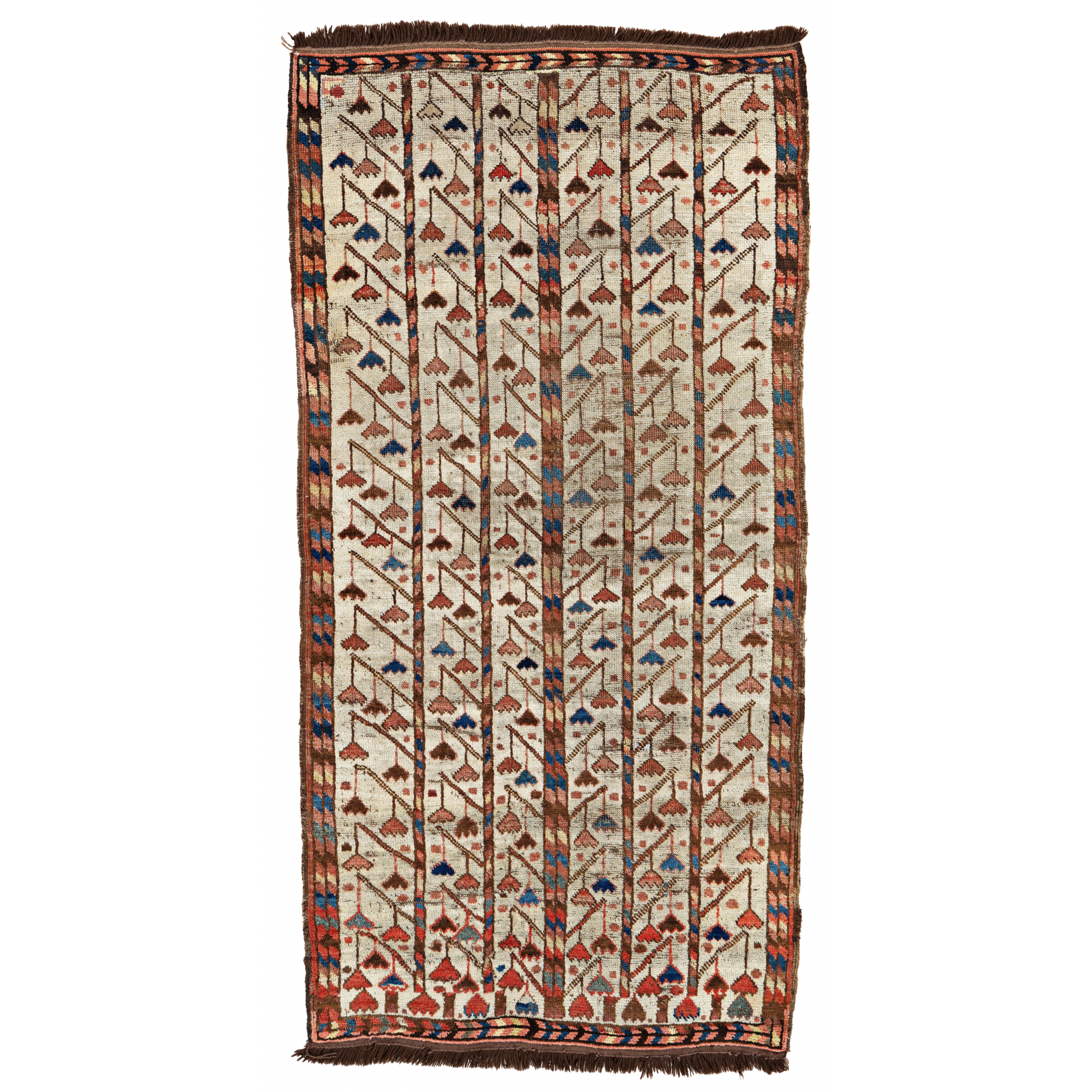
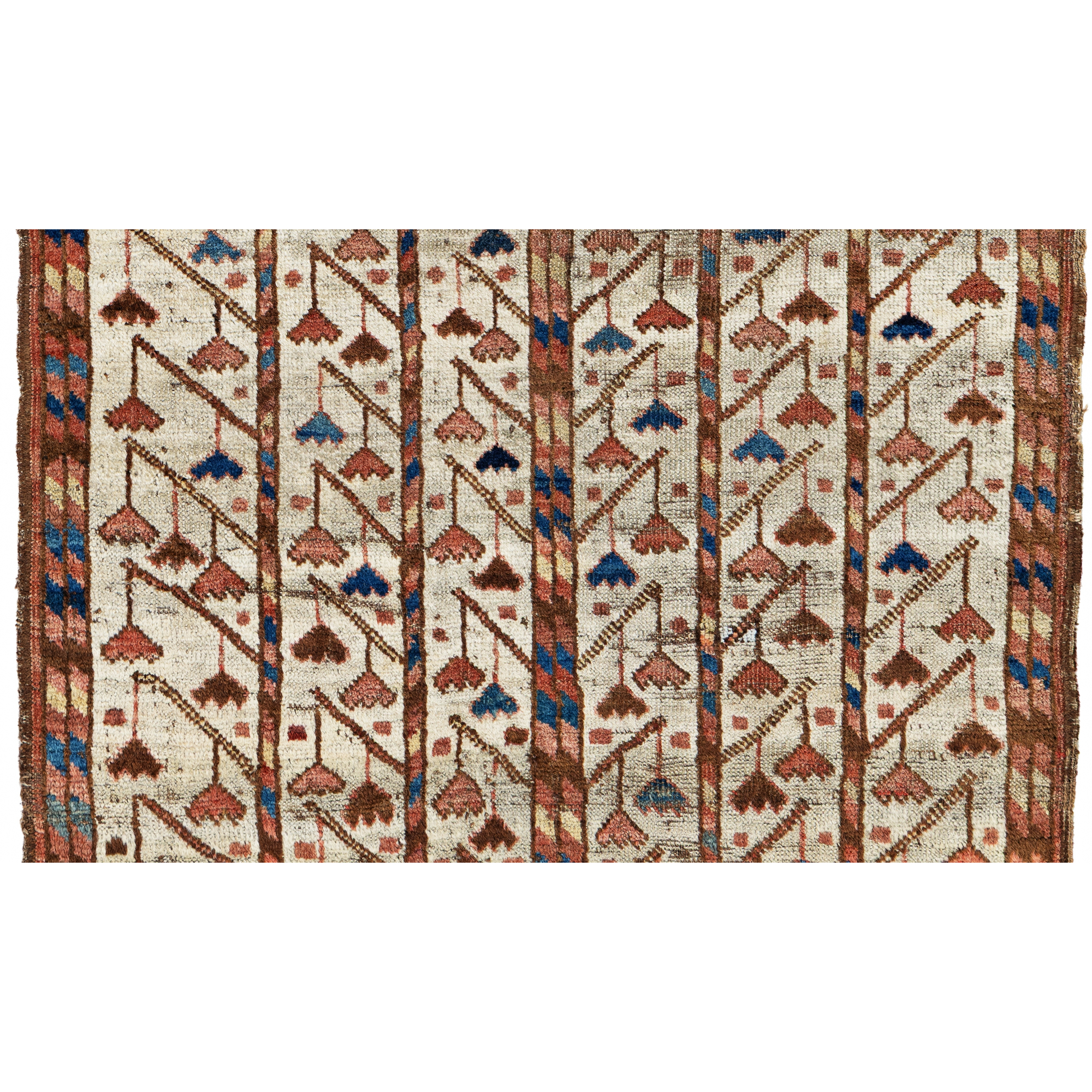
White-ground rugs always have something special about them. From the central axis and the vertical bars on either side, small branches extend, from which heart-shaped flowers or leaves hang like lanterns. This gives the entire composition a distinct tree-like character. Only at the bottom does it seem that the weaver may have had something else in mind at the beginning. Immediately afterward, she finalizes her design, making the tree denser at the bottom but increasingly open toward the top.
Our rug is published in HALI 32, p. 51, on the occasion of an exhibition in Oakville, Ontario, Canada - though it is shown upside down. The exhibition took place in a private museum founded in 1980. The article expressed the hope that the collection would one day be housed in an official museum. This wish does not appear to have been fulfilled.
An Ersari prayer rug with similar branches and leaves was offered at Sotheby's; see HALI 151, p. 75. Other related examples can be found in HALI 2/2, p. 133, and HALI 2/4, p. 282, as well as a Beshir in HALI 181, p. 114. The latter is illustrated in an article by Ralph Kaffel, in which he analyzes price trends for prayer rugs from the Middle Amu Darya region.
However, the comparative pieces mentioned are all prayer rugs. Even an example in Bausback, 1987/88, p. 191, whose composition is already almost entirely tree-like, still bears so-called "ram's horns" at the very top, which mark its function as a prayer rug and, at the same time, the direction of prayer.
Ralph Kaffel had cataloged nearly one hundred of these prayer rugs in his archive. For our rug, however - which lacks a distinct prayer niche and in which the motif evolves into a free-form tree composition - one would be hard-pressed to find even ten comparable examples.
Estimate: € 6000 - 8000
Turkmenistan, mid 19th century
Condition: good, low pile in places, both ends restored, scattered small repairs
Warp: wool, weft: wool, pile: wool
White-ground rugs always have something special about them. From the central axis and the vertical bars on either side, small branches extend, from which heart-shaped flowers or leaves hang like lanterns. This gives the entire composition a distinct tree-like character. Only at the bottom does it seem that the weaver may have had something else in mind at the beginning. Immediately afterward, she finalizes her design, making the tree denser at the bottom but increasingly open toward the top.
Our rug is published in HALI 32, p. 51, on the occasion of an exhibition in Oakville, Ontario, Canada - though it is shown upside down. The exhibition took place in a private museum founded in 1980. The article expressed the hope that the collection would one day be housed in an official museum. This wish does not appear to have been fulfilled.
An Ersari prayer rug with similar branches and leaves was offered at Sotheby's; see HALI 151, p. 75. Other related examples can be found in HALI 2/2, p. 133, and HALI 2/4, p. 282, as well as a Beshir in HALI 181, p. 114. The latter is illustrated in an article by Ralph Kaffel, in which he analyzes price trends for prayer rugs from the Middle Amu Darya region.
However, the comparative pieces mentioned are all prayer rugs. Even an example in Bausback, 1987/88, p. 191, whose composition is already almost entirely tree-like, still bears so-called "ram's horns" at the very top, which mark its function as a prayer rug and, at the same time, the direction of prayer.
Ralph Kaffel had cataloged nearly one hundred of these prayer rugs in his archive. For our rug, however - which lacks a distinct prayer niche and in which the motif evolves into a free-form tree composition - one would be hard-pressed to find even ten comparable examples.
Estimate: € 6000 - 8000