Cart
0
Product
Products
(empty)
No products
Free shipping!
Shipping
0 €
Total
Product successfully added to your shopping cart
Quantity
Total
There are 0 items in your cart. There is 1 item in your cart.
Total products
(tax incl.)
Total shipping (tax incl.)
Free shipping!
Total
(tax incl.)
213
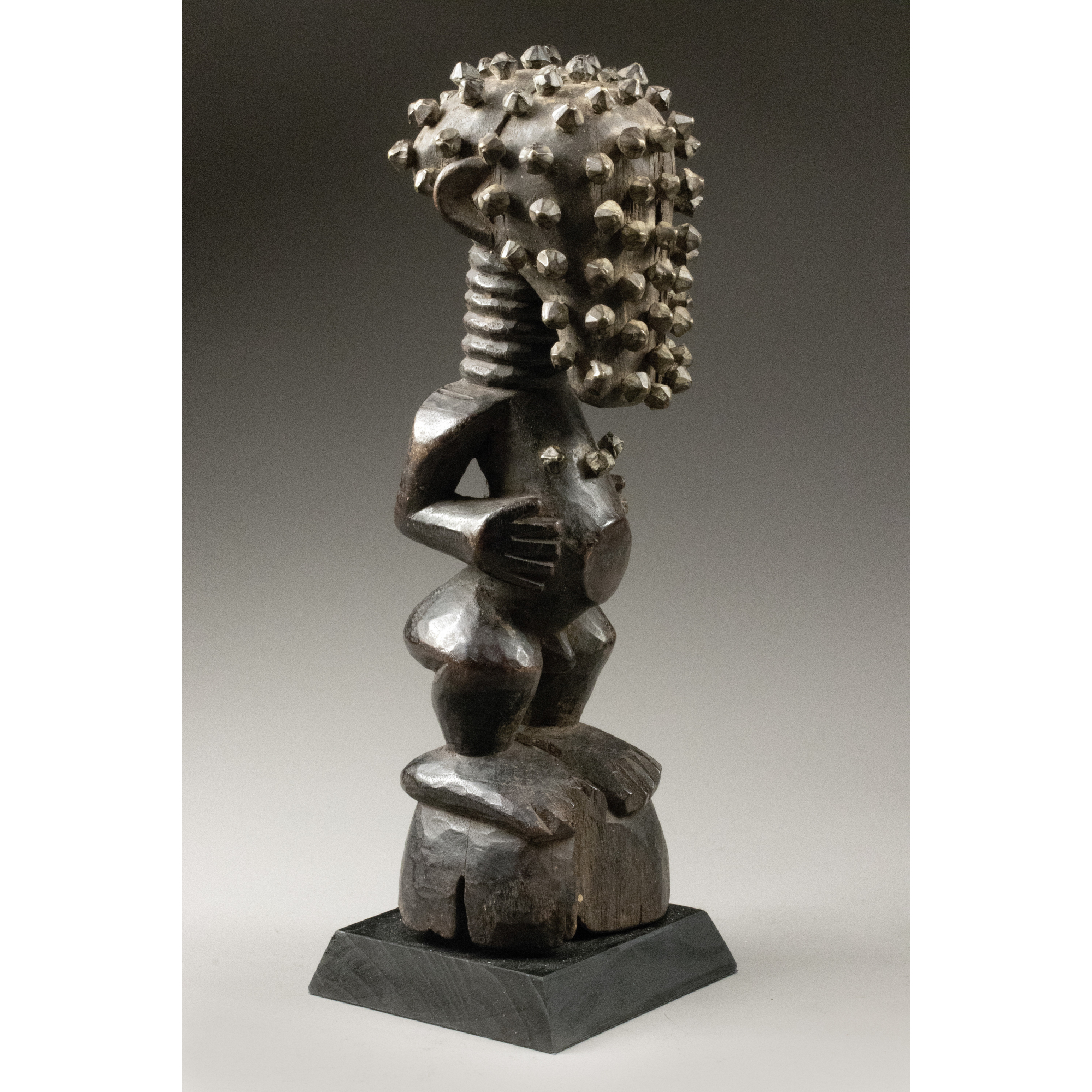
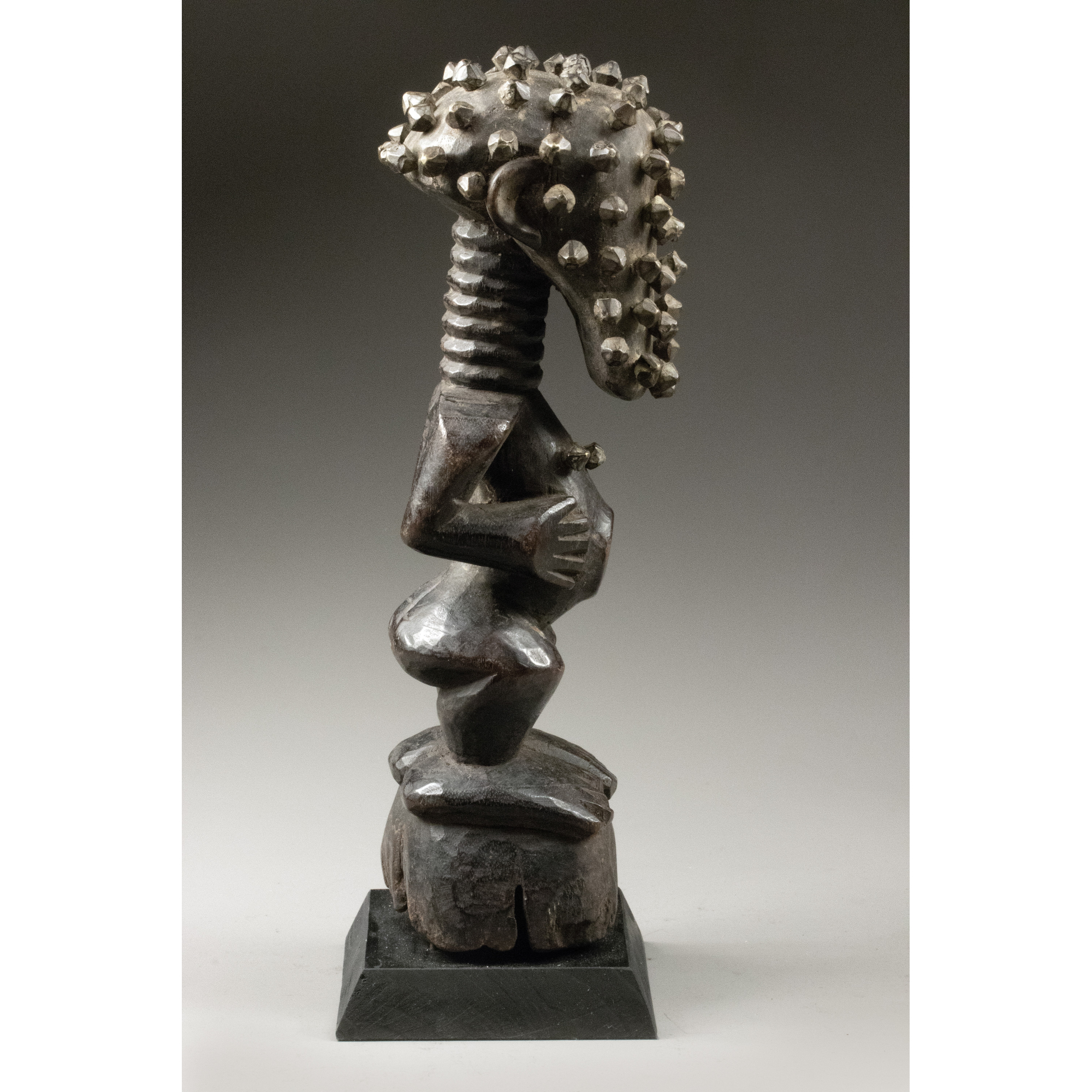
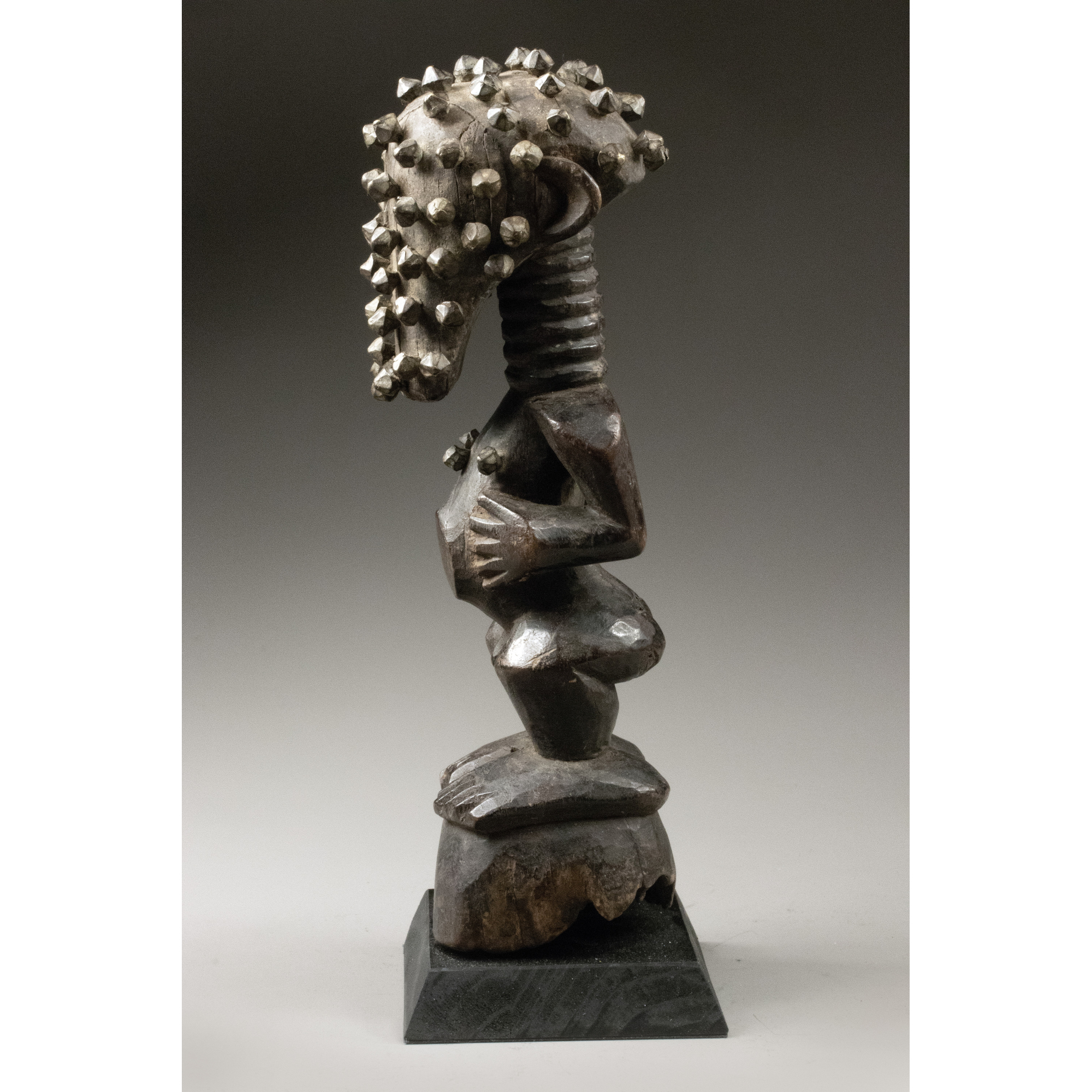
Power Figure "Nkisi"
New
Democratic Republic of the Congo, 23 cm (9")
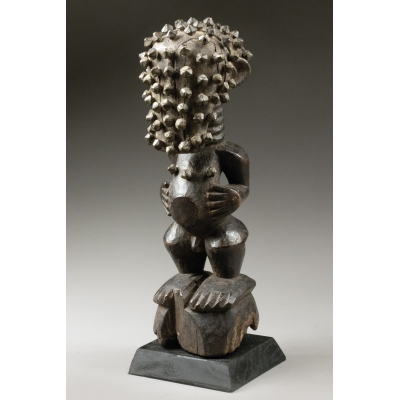
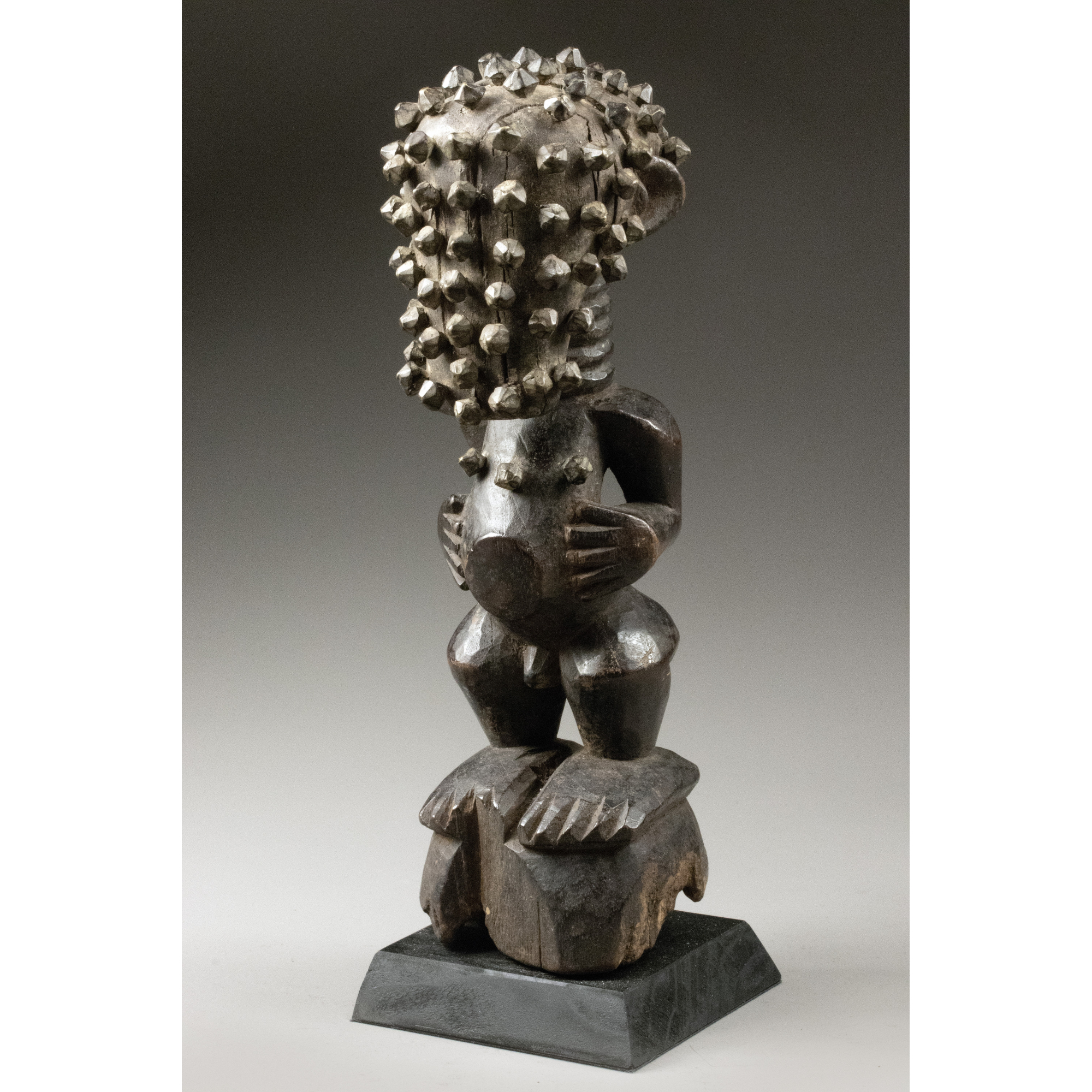
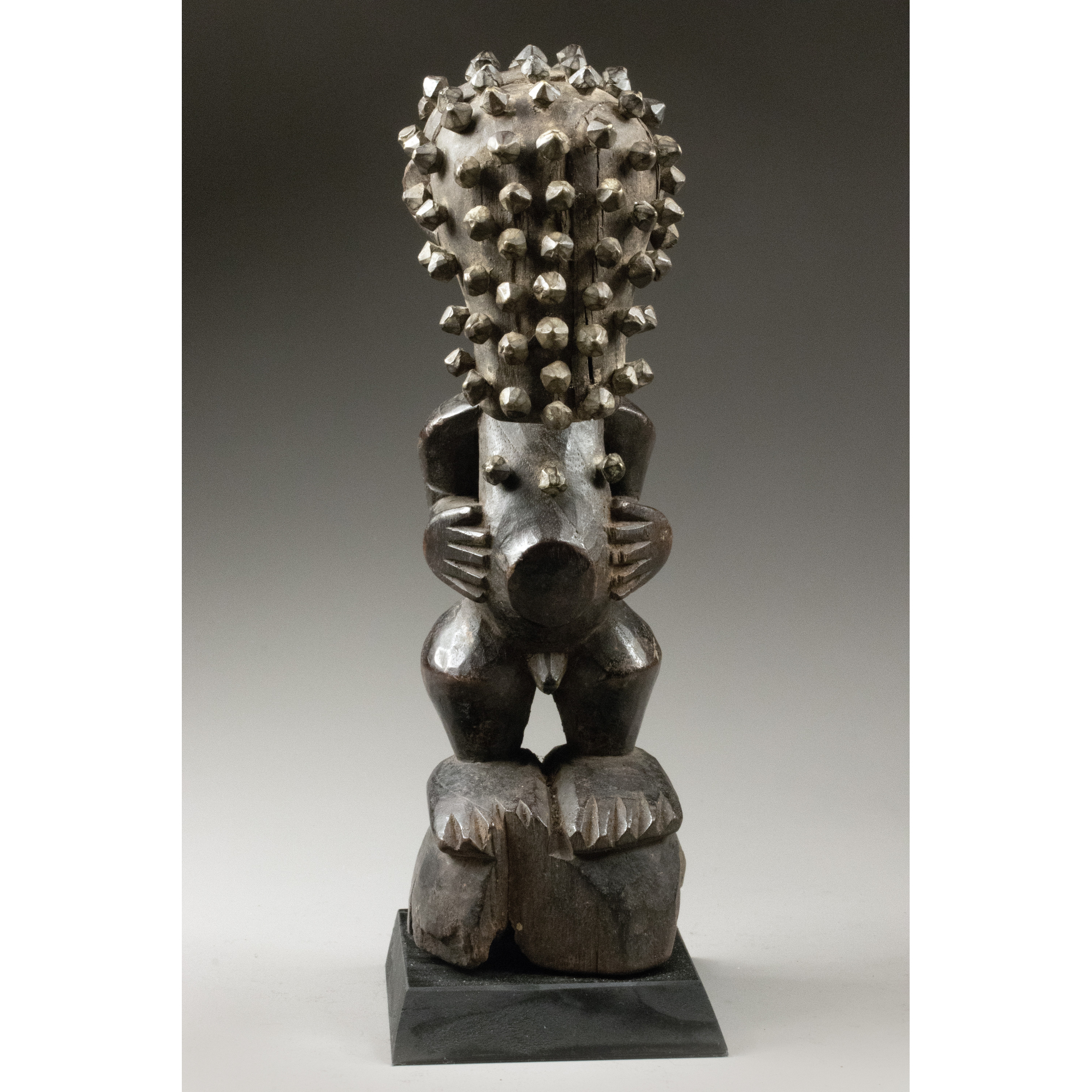
Power figures, known as "Nkisi", played an important role in the traditional religious and social life of various ethnic groups in the Congo region. They served primarily to protect against illness, ward off harmful influences, and promote healing. Once the carver had completed such a figure, it was entrusted to a ritual specialist known as a "Nganga". Only through the ceremonies performed by the Nganga and the insertion of spiritually potent substances did the figure acquire its supernatural power, enabling it to fulfil its protective and healing functions.
The present small male figure is distinguished by its compact and expressive sculptural form. The arms rest closely against the sides of the body, leaving the navel area exposed, where a small, suggested opening was intended to receive medicinal substances. The neck is adorned with several carefully carved rings, lending the figure additional sculptural definition.
Particularly remarkable is the unusual treatment of the head, face, and upper torso, which are densely covered with handmade brass nails. This striking surface decoration is associated with protection against and the treatment of smallpox, a disease once greatly feared. The numerous metal pins may symbolically refer to the characteristic skin lesions caused by the disease.
The combination of a rigorously simplified bodily form, ritual significance, and extraordinary metal embellishment lends this small power figure a compelling presence, making it a remarkable testament to the traditional healing and protective practices of the Congo region.
Provenance: Miguel Porta, Spain; Gerhard F. Vesely, Austria.
Estimate: € 1200 - 1400