
Cart
0
Product
Products
(empty)
No products
Free shipping!
Shipping
0 €
Total
Product successfully added to your shopping cart
Quantity
Total
There are 0 items in your cart. There is 1 item in your cart.
Total products
(tax incl.)
Total shipping (tax incl.)
Free shipping!
Total
(tax incl.)
167
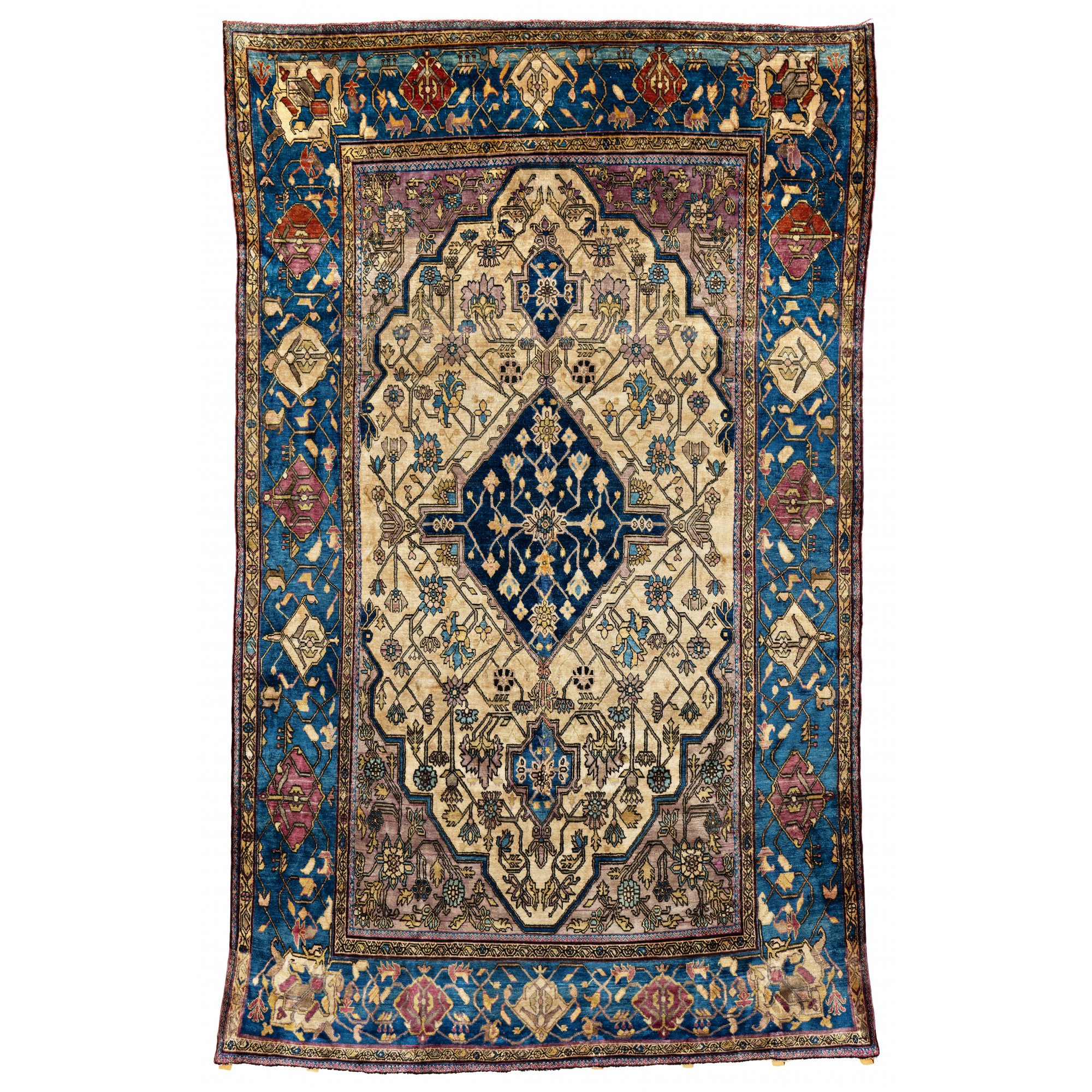
Silk Ferahan
New
193 x 115 cm (6' 4" x 3' 9")
Persia, late 19th century
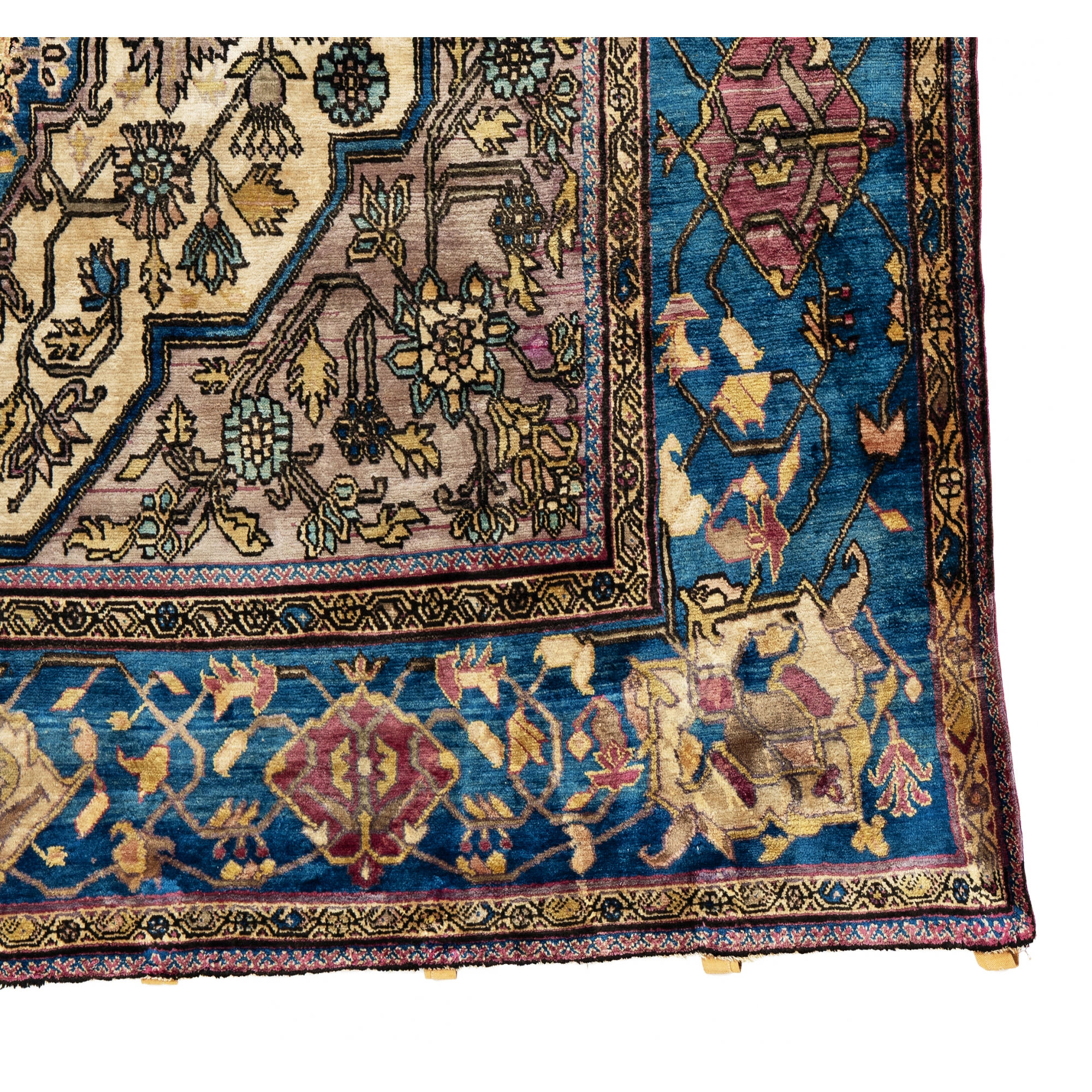
Condition: good, mostly good pile, one narrow long repair in the field, scattered small repairs, signs of use at the ends
Warp: silk, weft: silk, pile: silk
The Ferahan region of central Persia developed into one of the most important centres of Persian carpet production during the 19th century. Particularly under the Qajar dynasty (1789 - 1925), carpets of exceptional artistic quality were produced here, their ornamentation drawing upon the classical design traditions of the Safavid period. Growing demand from European and American buyers led to a flourishing of the regions weaving industry during the second half of the 19th century. While most Ferahan carpets were woven with wool pile on a cotton founda-tion, examples made entirely of silk are exceedingly rare.
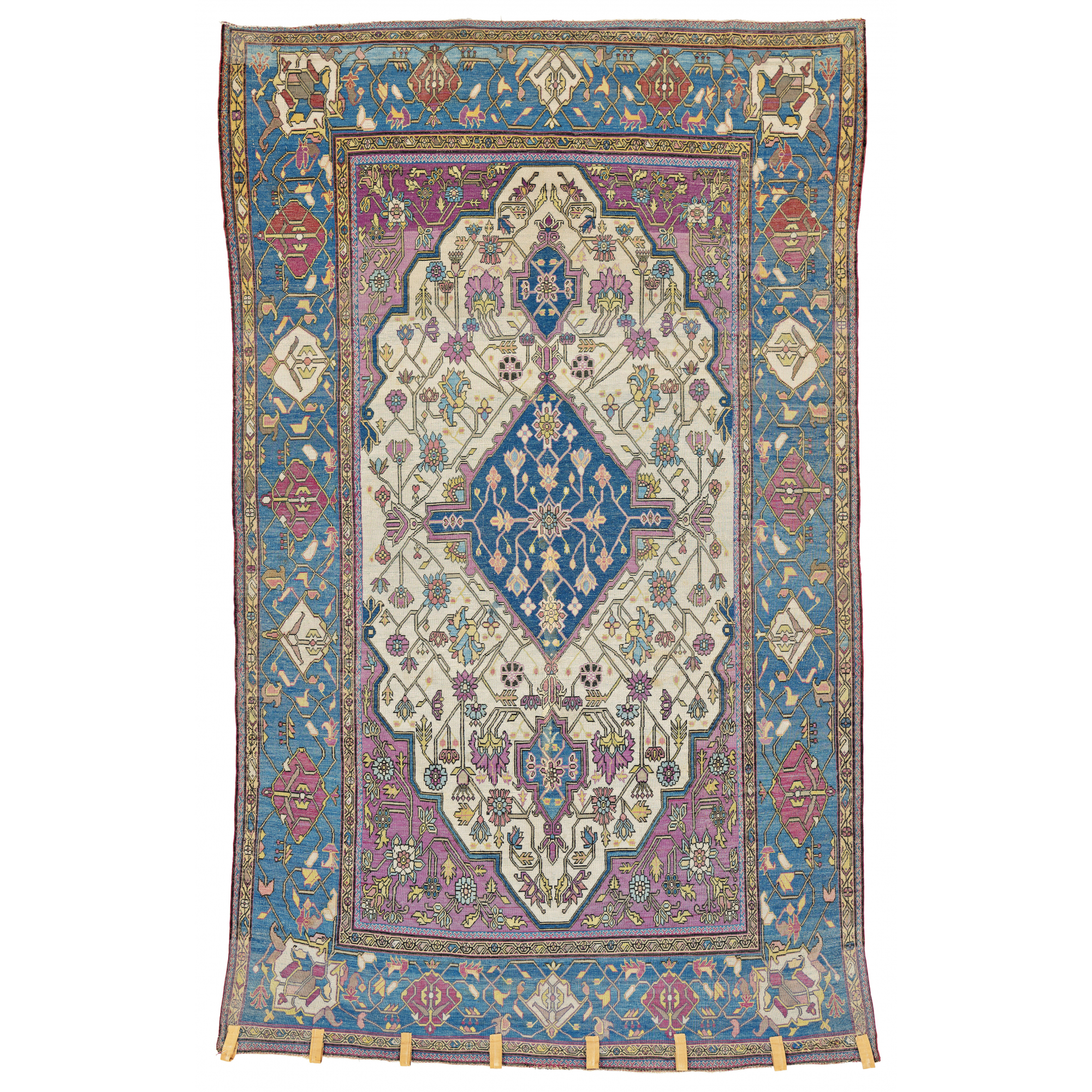
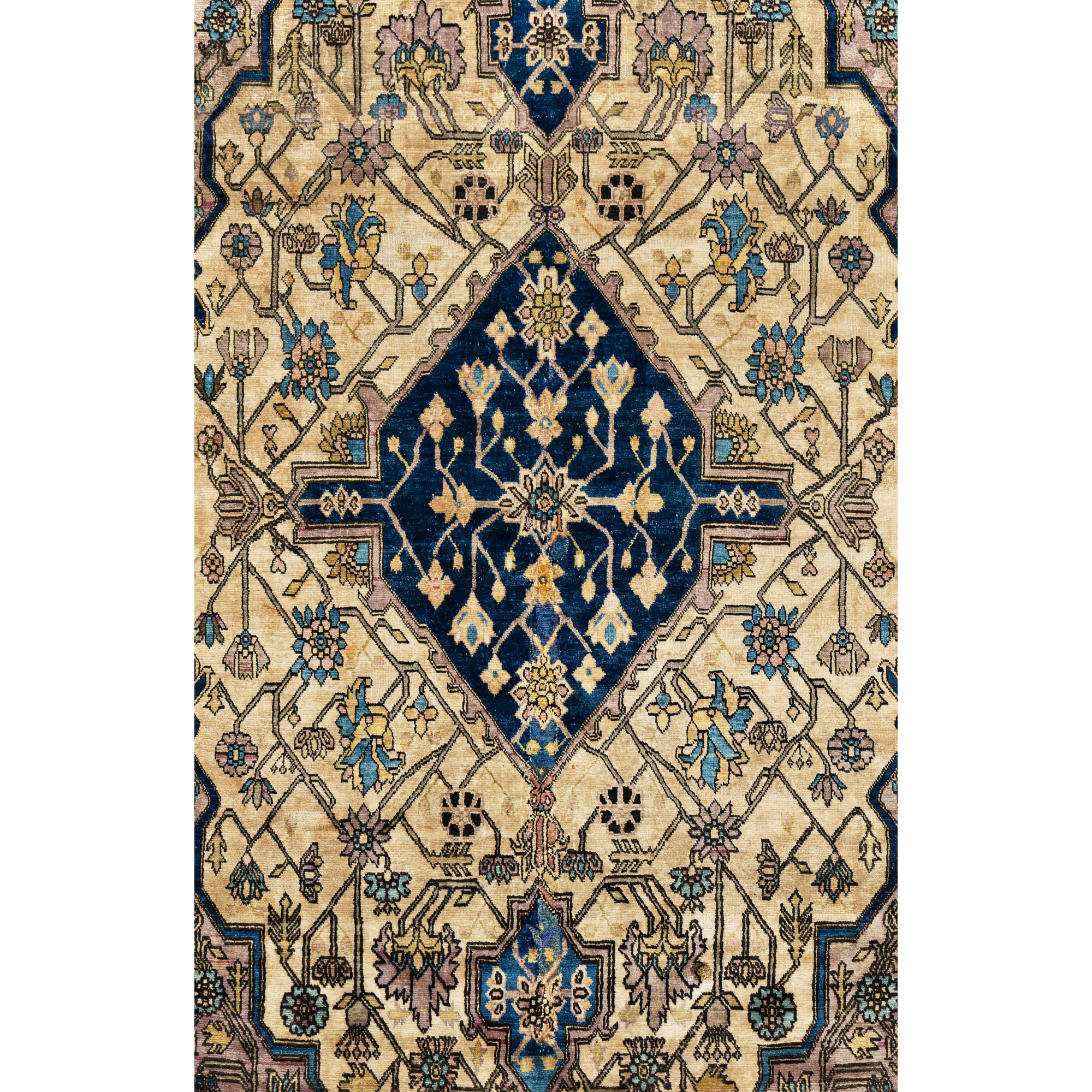
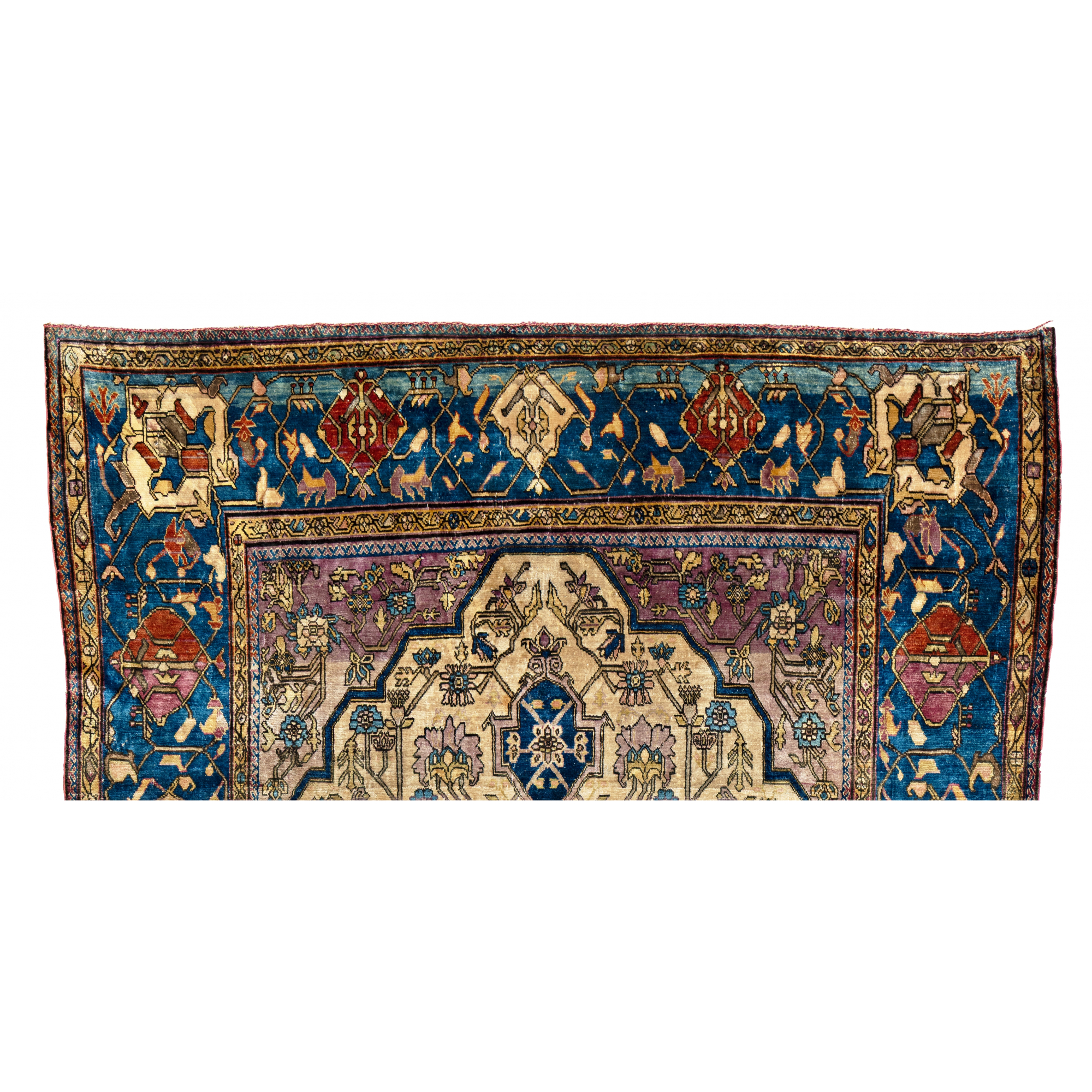
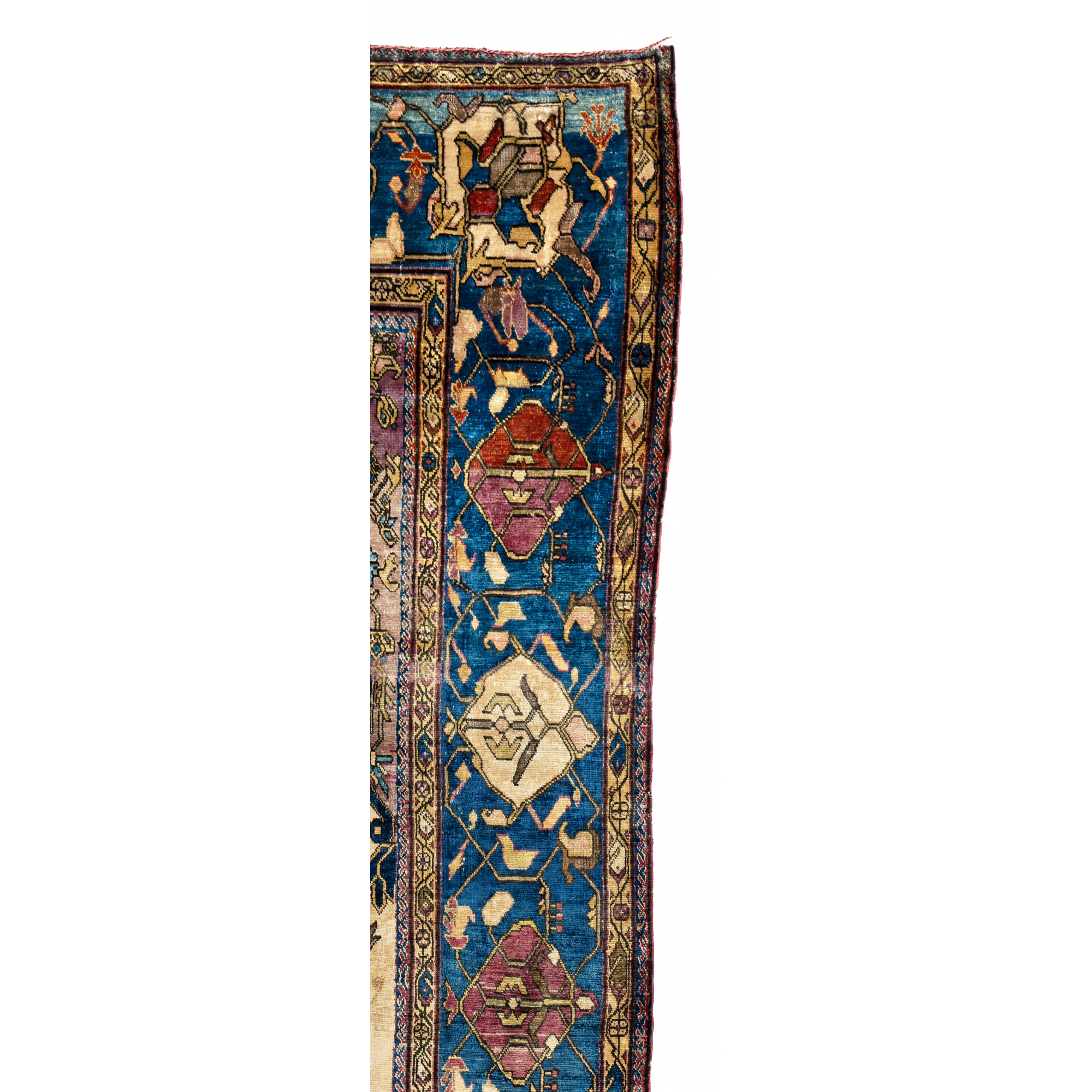
The present carpet features an elegant medallion composition rooted in the courtly carpet traditions of the 16th and 17th centuries. A large, intricately stepped ivory-coloured medallion with a dark blue centre dominates the field. Delicately branching floral vines, palmettes and rosettes form a dense network of floral ornamentation. The purplish-brown corner spandrels echo these motifs and complete the symmetrical composition. The broad main border, set against a deep blue ground and decorated with large alternating ivory and crimson palmettes, recalls the clas-sical Persian palmette-and-vine designs.
Of particular interest is the combination of Safavid design traditions with the more refined and highly decorative artistic vocabulary of the Qajar period. The meticulous drawing and the use of silk for the warp, weft and pile testify to the exceptionally fine craftsmanship of this carpet. With its unusual all-silk construction and classical medallion composition, this Ferahan represents a remarkable example of Persian carpet weaving from the late 19th century.
Estimate: € 6000 - 8000