
Cart
0
Product
Products
(empty)
No products
Free shipping!
Shipping
0 €
Total
Product successfully added to your shopping cart
Quantity
Total
There are 0 items in your cart. There is 1 item in your cart.
Total products
(tax incl.)
Total shipping (tax incl.)
Free shipping!
Total
(tax incl.)
136
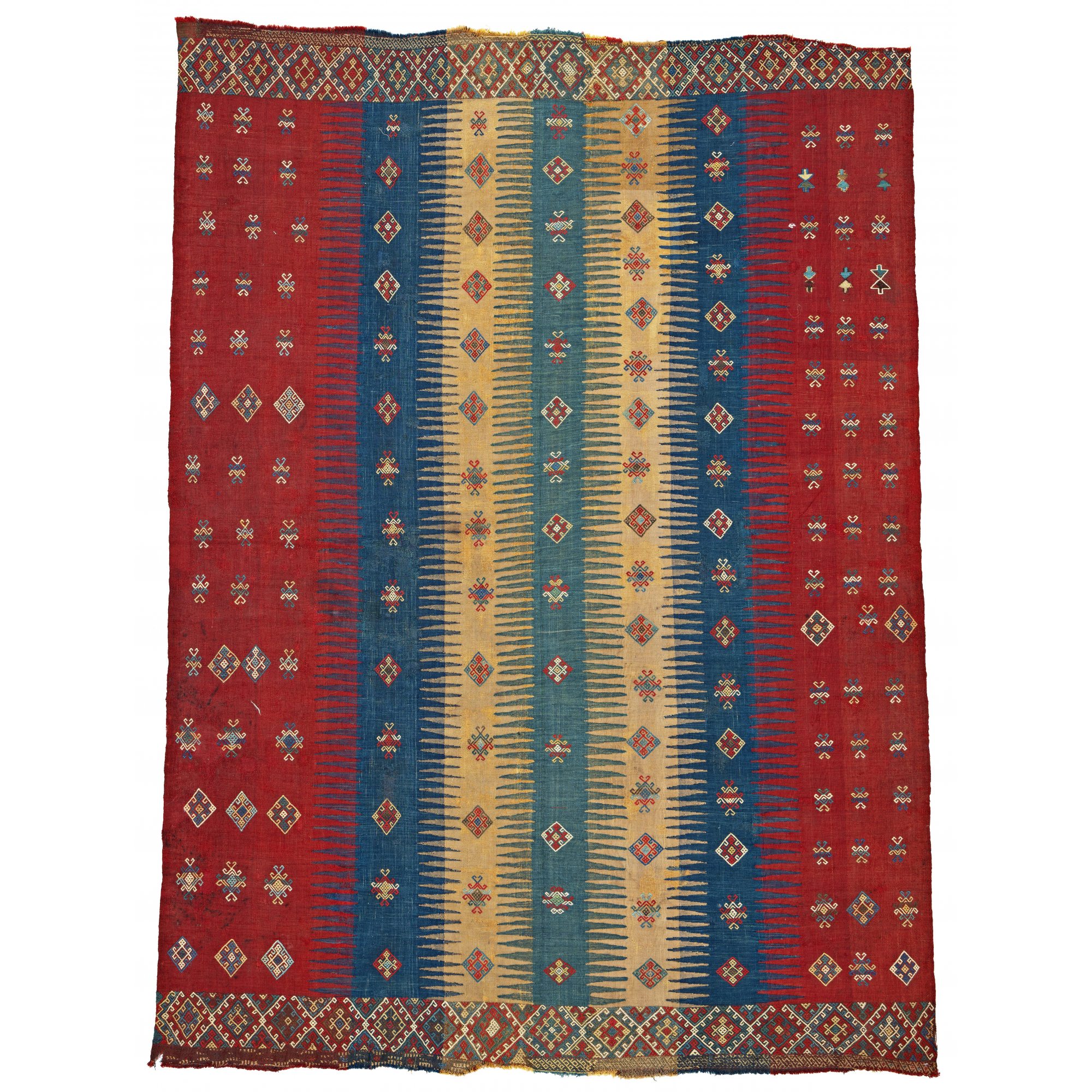
Fine Early Verneh
New
230 x 166 cm (7' 7" x 5' 5")
Caucasus, mid 19th century
Condition: good, both ends partially slightly incomplete, some old repairs, slightly stained
Warp: wool, weft: wool
Verneh weavings are among the most distinctive creations of Caucasian textile art. They were produced primarily in the southeastern Caucasus and the adjoining northwestern Persian region of Azerbaijan and are traditionally associated with the Shahsavan and other Turkic-speaking communities. Early examples are particularly distinguished by their original compositions and remarkable freedom of design.
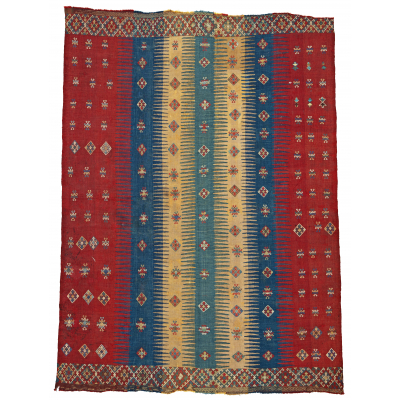
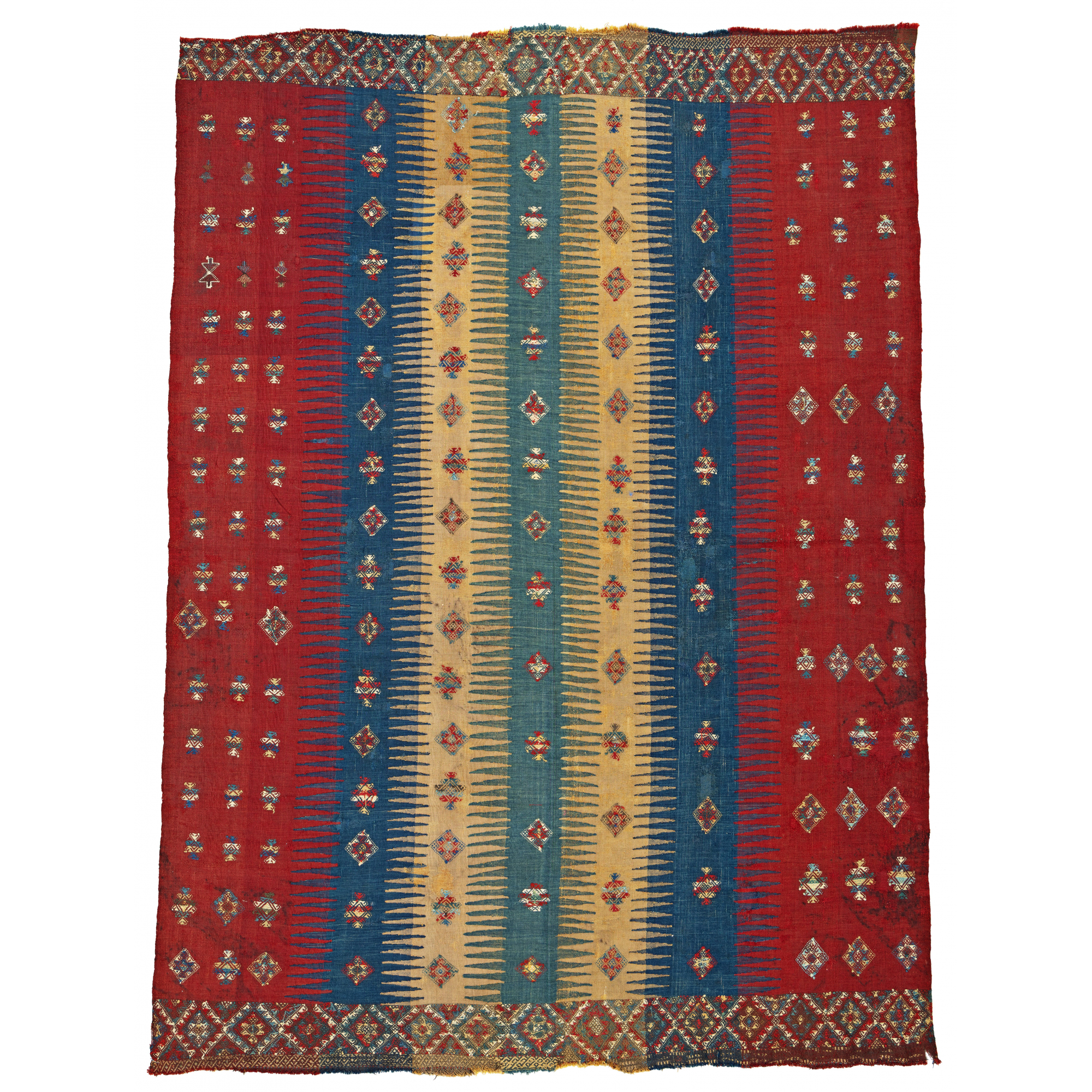
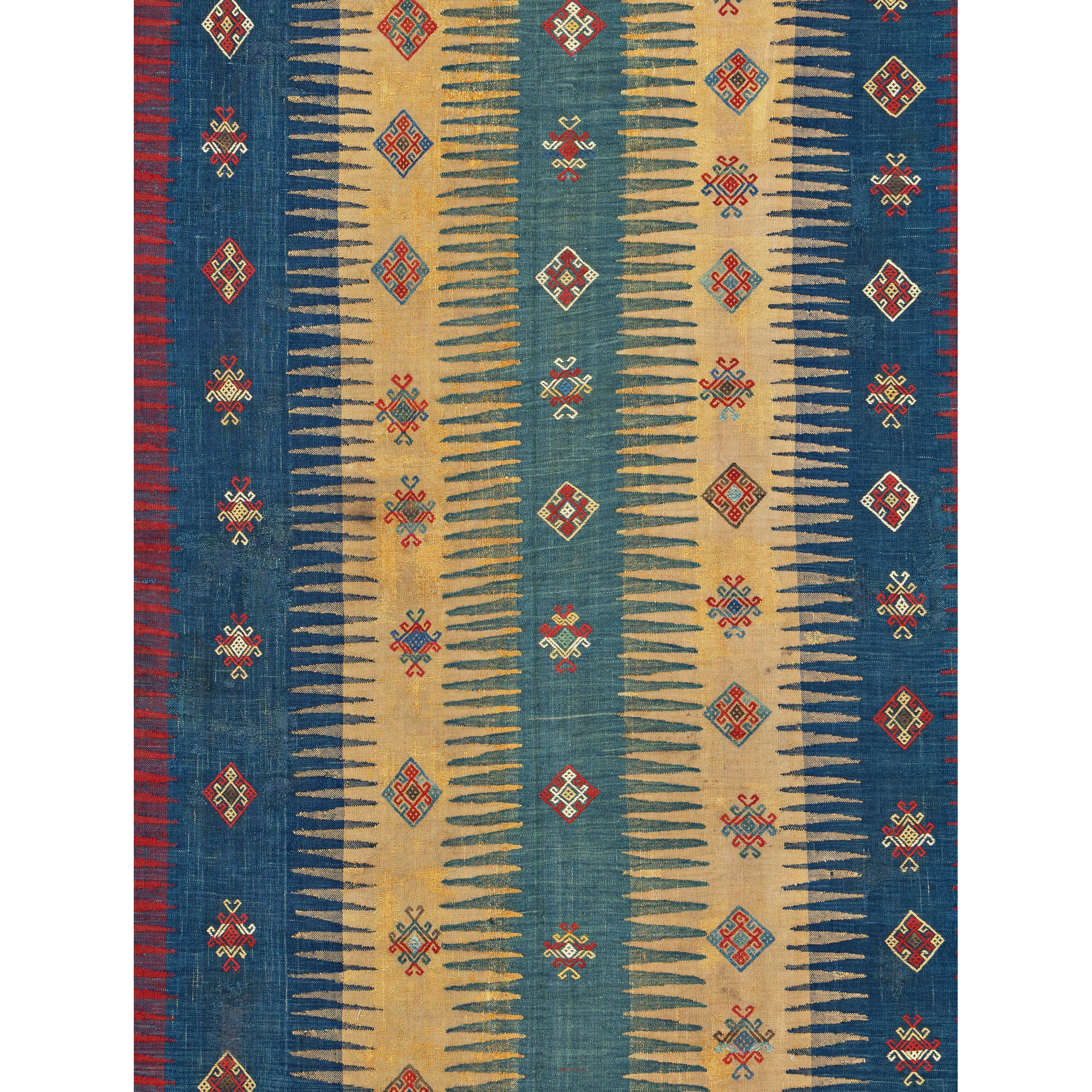
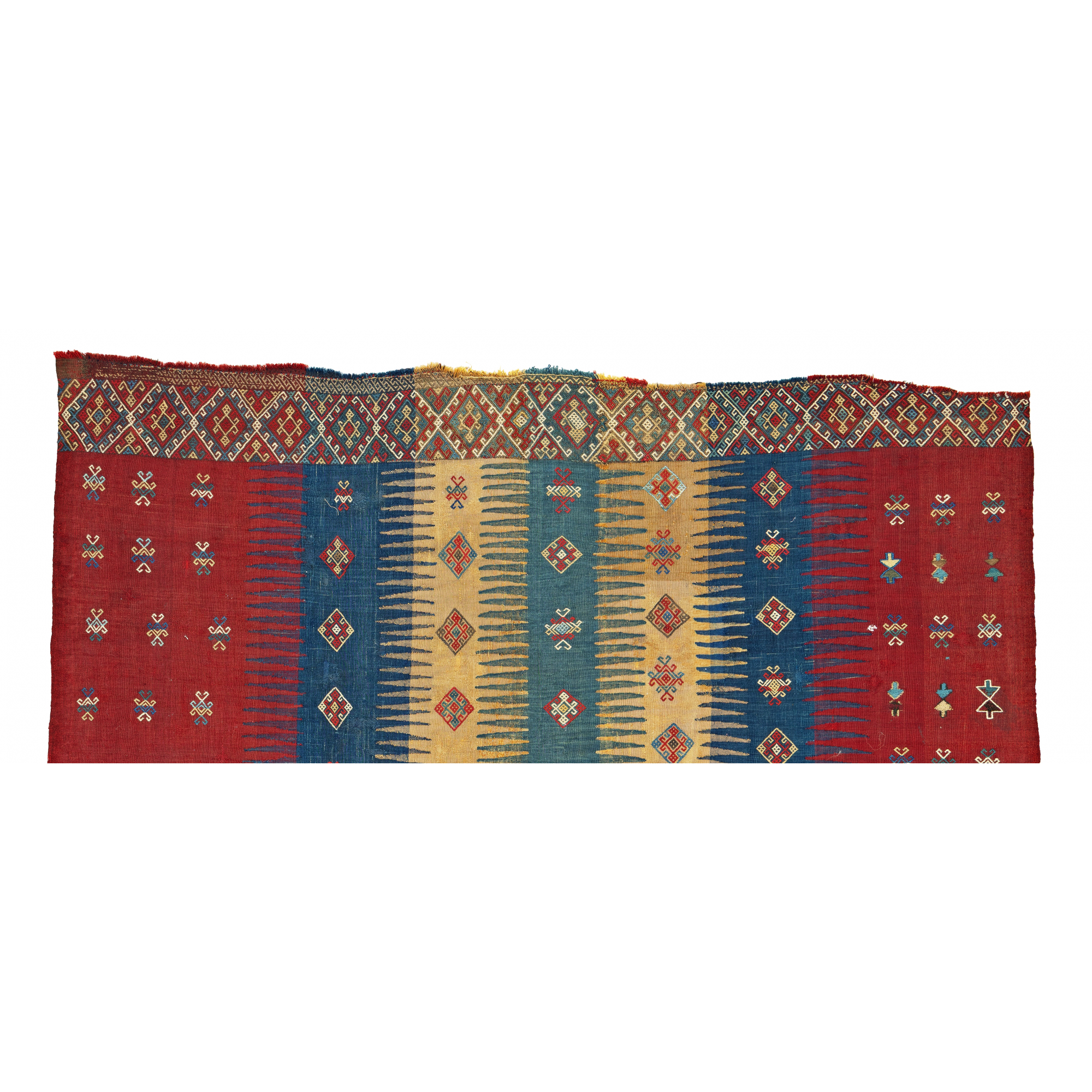
The present Verneh is distinguished by its spacious, strictly vertical composition. Two broad brick-red outer panels enclose alternating stripes of indigo blue, turquoise, and ivory. Numerous short, horizontally extending lines create flowing transitions between the individual colour fields, lending the weaving a surprisingly modern appearance.
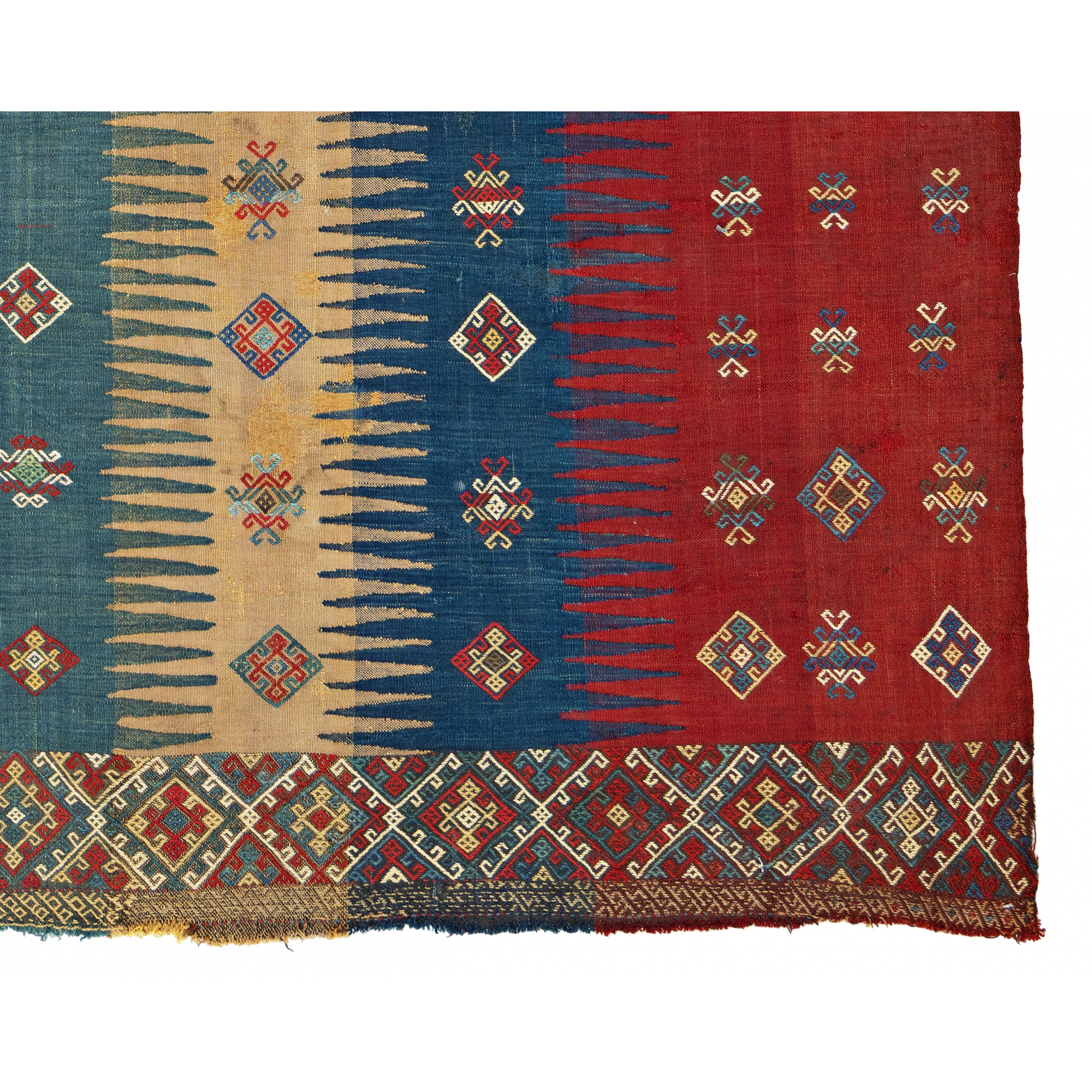
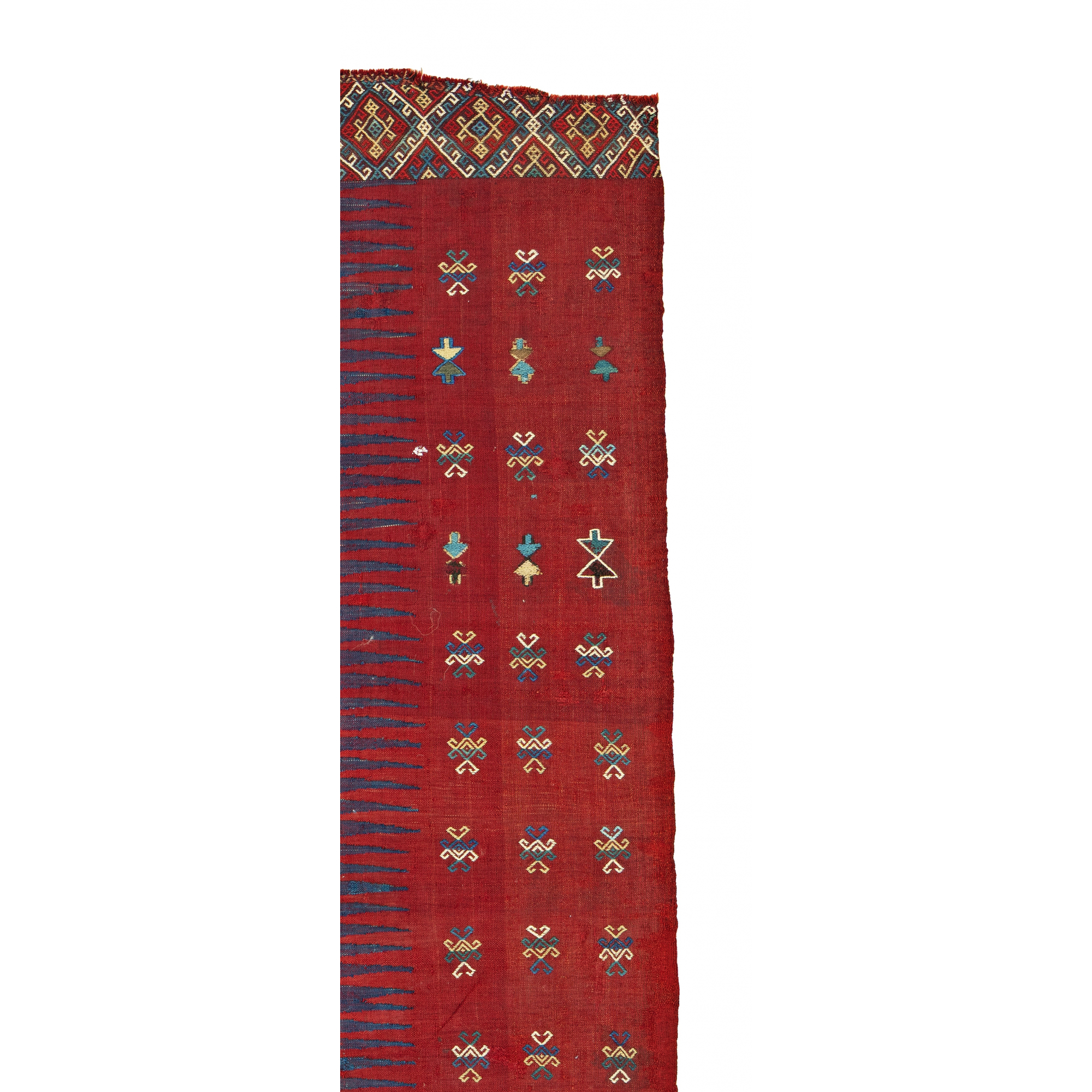
Small, multicoloured diamonds and hooked ornaments are scattered across the entire field. Within the central stripes, they follow a regular vertical arrangement, while in the red outer panels they appear in loosely arranged groups. The contrast between the finely executed motifs and the generous open spaces gives the weaving its distinctive character.
The two broad end borders feature a dense network of interlocking diamonds and angular hooked motifs. Their intricate ornamentation provides a striking contrast to the open composition of the main field.
With its unusual arrangement of colours, delicately distributed geometric motifs, and clear, almost abstract design, this early Verneh is a remarkable example of 19th-century Caucasian flatweaving.
Estimate: € 4000 - 6000