
No products
Product successfully added to your shopping cart
There are 0 items in your cart. There is 1 item in your cart.
ERLESENE ANTIKE ORIENTTEPPICHE 45 There are 215 Lots.
-
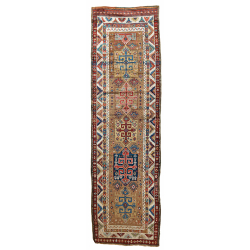
Startpreis / Startingbid
500 €Lot: 141
Shahsavan384 x 113 cm (12' 7" x 3' 8")
Azerbaijan, second half 19th century
Condition: good, scattered low pile, scattered old repairs
Warp: wool, weft: wool, pile: wool
Estimate: € 1000 - 1500500 € -
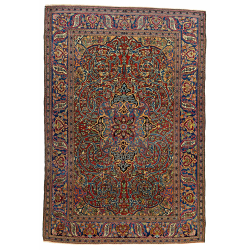
Startpreis / Startingbid
700 €Lot: 142
Isfahan210 x 145 cm (6' 11" x 4' 9")
Persia, early 20th century
Condition: good, low pile in places but not worn through, upper end minimally incomplete
Warp: cotton, weft: cotton, pile: wool
Estimate: € 1400 - 1800700 € -
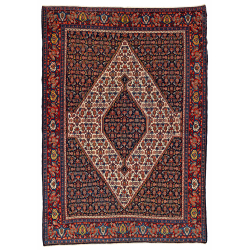
Startpreis / Startingbid
1 000 €Lot: 143
Senneh195 x 137 cm (6' 5" x 4' 6")
Persia, ca. 1930
Condition: very good, full pile, two restored folds at the upper end
Warp: cotton, weft: cotton, pile: wool
Estimate: € 2000 - 30001 000 € -
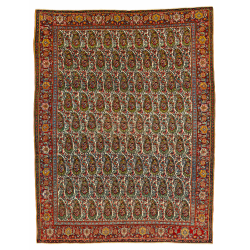
Startpreis / Startingbid
1 500 €Lot: 144
Fine Senneh186 x 143 cm (6' 1" x 4' 8")
Persia, early 20th century
Condition: very good, full pile, minor small repairs
Warp: cotton, weft: cotton, pile: wool
Estimate: € 3000 - 40001 500 € -
Startpreis / Startingbid
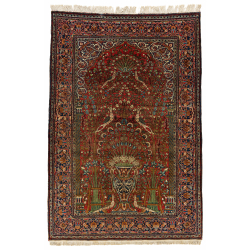
1 200 €Lot: 145
Fine Kashan198 x 134 cm (6' 6" x 4' 5")
Persia, ca. 1920
Condition: very good, full pile, minor signs of use
Warp: cotton, weft: cotton, pile: wool
Estimate: € 2400 - 32001 200 € -
Startpreis / Startingbid
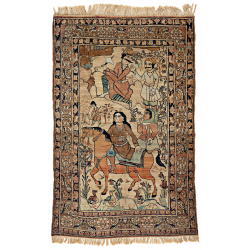
800 €Lot: 146
Kirman Pictorial Rug200 x 129 cm (6' 7" x 4' 3")
Persia, ca. 1900
Condition: good, good pile, one restored tear at upper right (ca. 70 cm), slight signs of use, some small repairs
Warp: cotton, weft: cotton, pile: wool
Estimate: € 1600 - 2200800 € -
Startpreis / Startingbid
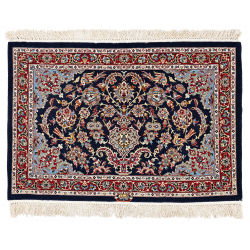
400 €Lot: 147
Small Isfahan signed "Davari"73 x 108 cm (2' 5" x 3' 7")
Persia, ca. 1970
Condition: excellent
Warp: silk, weft: silk, pile: wool with silk highlights
Estimate: € 800 - 1200400 € -
Startpreis / Startingbid
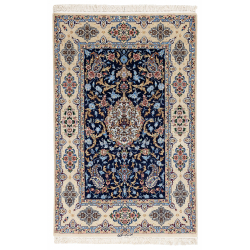
500 €Lot: 148
Isfahan signed "Isfahan Amini"198 x 126 cm (6' 6" x 4' 2")
Persia, ca. 1970
Condition: very good, full pile, minor signs of use
Warp: silk, weft: silk, pile: wool with silk highlights
Estimate: € 1000 - 1500500 € -
Startpreis / Startingbid
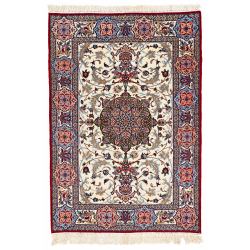
500 €Lot: 149
Isfahan160 x 110 cm (5' 3" x 3' 7")
Persia, ca. 1970
Condition: excellent
Warp: silk, weft: silk, pile: wool with silk highlights
Estimate: € 1000 - 1500500 € -
Startpreis / Startingbid
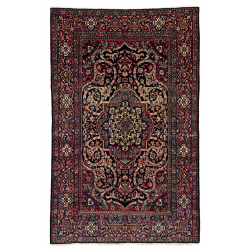
1 000 €Lot: 150
Yazd220 x 142 cm (7' 3" x 4' 8")
Persia, ca. 1920
Condition: excellent
Warp: cotton, weft: cotton, pile: wool
Estimate: € 2000 - 30001 000 € -
Startpreis / Startingbid
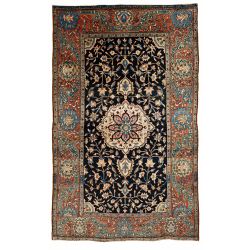
1 500 €Lot: 151
Sarouk Ferahan202 x 124 cm (6' 8" x 4' 1")
Persia, ca. 1920
Condition: very good, full pile, minor small repairs, minor signs of use at both ends
Warp: cotton, weft: cotton, pile: wool
Estimate: € 3000 - 40001 500 € -
Startpreis / Startingbid
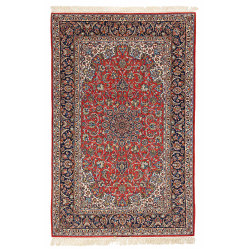
1 000 €Lot: 152
Isfahan signed "Isfahan Bahrami"248 x 159 cm (8' 2" x 5' 3")
Persia, ca. 1980
Condition: excellent
Warp: silk, weft: silk, pile: wool with silk highlights
Estimate: € 2000 - 30001 000 € -
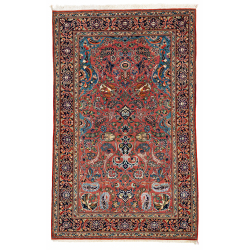
Startpreis / Startingbid
500 €Lot: 153
Kashan with Silk210 x 131 cm (6' 11" x 4' 4")
Persia, ca. 1950
Condition: very good, full pile, minor signs of use
Warp: cotton, weft: cotton, pile wool and silk
Estimate: € 1000 - 1500500 € -
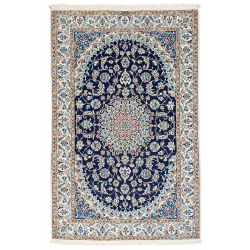
Startpreis / Startingbid
1 000 €Lot: 154
Fine Nain signed "Iran Habibian Nain"200 x 128 cm (6' 7" x 4' 2")
Persia, ca. 1970
Condition: excellent
Warp: cotton, weft: cotton, pile: wool with silk highlights
Estimate: € 2000 - 30001 000 € -
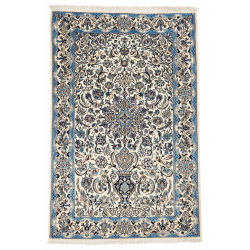
Startpreis / Startingbid
500 €Lot: 155
Nain186 x 123 cm (6' 1" x 4')
Persia, ca. 1970
Condition: excellent
Warp: cotton, weft: cotton, pile: wool with silk highlights
Estimate: € 1000 - 1500500 € -
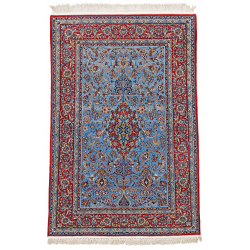
Startpreis / Startingbid
1 000 €Lot: 156
Isfahan signed "Iran Isfahan Enteschari"219 x 148 cm (7' 2" x 4' 10")
Persia, ca. 1980
Condition: excellent
Warp: silk, weft: silk, pile: wool
Estimate: € 2000 - 30001 000 € -
Startpreis / Startingbid
1 500 €Lot: 157
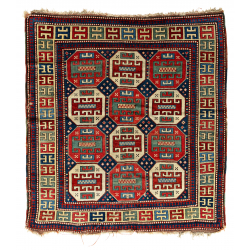
Moghan175 x 165 cm (5' 9" x 5' 5")
Caucasus, mid 19th century
Condition: good, scattered low pile, both sides and ends damaged, minimal small moth damage, signs of use
Warp: wool, weft: wool, pile: wool
The rugs of the Moghan region in the southeastern Caucasus are among the most characteristic examples of 19th-century Caucasian weaving. They are distinguished by their strictly geometric designs, powerful colors, and clearly structured compositions.
The present example is particularly remarkable for its unusual, almost square format and the symmetrical arrangement of twelve large octagonal medallions in four rows of three. Against a deep indigo-blue ground, brick-red and ivory-colored octagons alternate, each containing bold, hooked ornaments reminiscent of the so-called Memling güls. Small diamond-shaped motifs decorated with stars fill the spaces between the medallions, adding further vitality to the com-position.
Particularly appealing is the wide ivory-colored main border, featuring large, multicolored dou-ble-hook motifs that create a striking contrast with the strictly organized central field. The har-monious palette of rich brick red, deep indigo, and various shades of blue and green enhances the exceptional visual impact of this rug.
Especially noteworthy is the rare, almost square format with three columns of medallions, whereas comparable Moghan rugs were generally woven as elongated runners with only two columns. A related example is illustrated in Eberhart Herrmann, Asiatische Teppich- und Tex-tilkunst, Munich 1991, p. 33, fig. 12. Further comparisons can be found in Ulrich Schürmann, Caucasian Rugs, pl. 59, and Peter Bausback, Antike Orientalische Knüpfkunst, Mannheim 1976, p. 112.
The archaic character of its ornamentation, exceptionally beautiful colors, and balanced compo-sition make this Moghan a particularly attractive example of 19th-century Caucasian weaving.
Estimate: € 3000 - 40001 500 € -
Startpreis / Startingbid
1 500 €Lot: 158
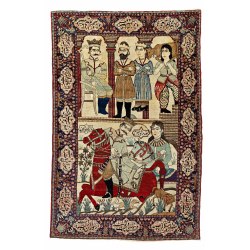
Fine Kashan Pictorial Rug with Inscriptions204 x 134 cm (6' 8" x 4' 5")
Persia, ca. 1920
Condition: very good, full pile, scattered small repairs in the field
Warp: cotton, weft: cotton, pile: wool
Estimate: € 3000 - 40001 500 € -
Startpreis / Startingbid
1 500 €Lot: 159
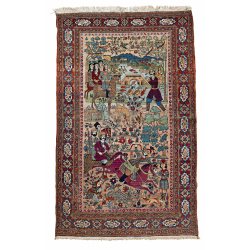
Fine Isfahan Pictorial Rug206 x 126 cm (6' 9" x 4' 2")
Persia, ca. 1920
Condition: very good, mostly good pile, one minor moth damage
Warp: cotton, weft: cotton, pile: wool
Since the Safavid period, the city of Isfahan has been one of the most important centers of Persian art and carpet weaving. Courtly miniature painting, particularly under Shah Abbas I (15871629), influenced Persian carpet design for centuries. In the early 20th century, the workshops of Isfahan revived this tradition, producing pictorial carpets of remarkable fineness.
The present carpet features a lively composition of hunting and equestrian scenes set against a light, sand-colored ground within a lush landscape. Magnificently dressed horsemen on richly adorned horses, numerous wild animals, and an idyllic waterscape with fish, birds, and a small bridge dominate the scene. Blue mountain ranges, flowering trees, and finely rendered figures evoke the paradisiacal gardens of classical Persian miniature painting.
Particularly appealing are the extraordinary attention to detail, harmonious colors, and meticulous rendering of the figures and garments. The deep blue border, decorated with figural and floral motifs, provides a striking contrast to the light-colored central field.
A particularly beautiful example of early 20th-century Persian pictorial carpet weaving, impressively illustrating the close relationship between miniature painting and carpet design.
Estimate: € 3000 - 40001 500 € -
Startpreis / Startingbid
2 000 €Lot: 160
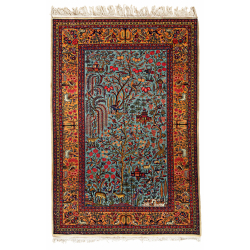
Fine Manchester Kashan Pictorial Rug203 x 136 cm (6' 8" x 4' 6")
Persia, ca. 1930
Condition: very good, full pile, minor signs of use at the ends
Warp: cotton, weft: cotton, pile: wool
Estimate: € 4000 - 60002 000 €